
Small US start-up hopes to have big impact on defense
By DRONELIFE Features Editor Jim Magill
A tiny California-based start-up company, led by a 22-year-old Ukrainian software engineer, is hoping to market its tube-launched foldable quadcopter counter-UAS system to the U.S. military, in order to make future attacks by large drones and missiles prohibitively expensive for an enemy.
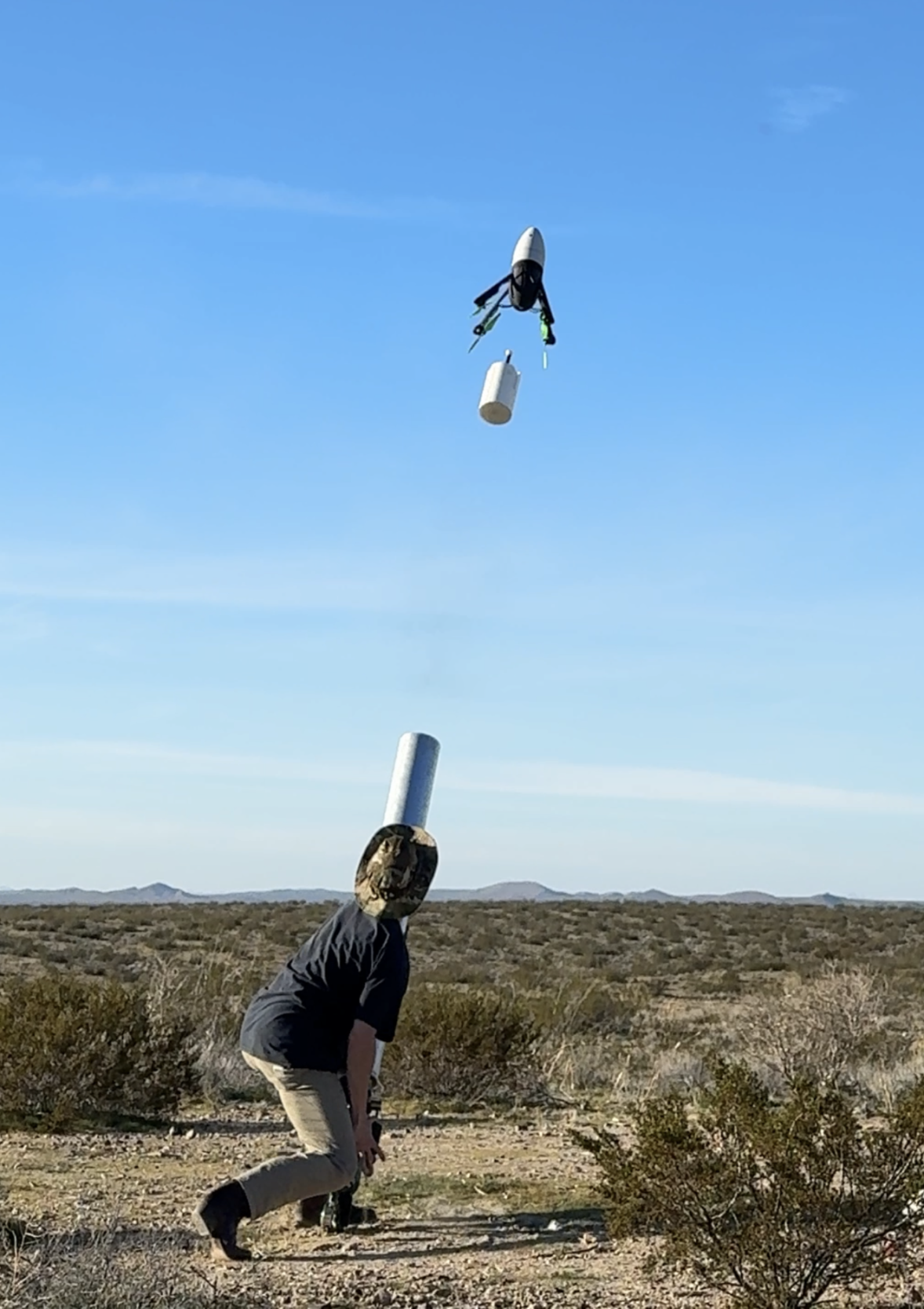
“I believe that if we can develop an air defense system that will be so cheap and so effective at the same time, then any attack in the world will become obsolete just because it will be economically irrational to spend so much money to achieve nothing,” Yehor Balytskyi, cofounder and CEO of Thermopylae Aerospace, said in an interview.
The company, named for the historic battle in 480 BC, in which 300 elite Spartan warriors held off a vastly superior force of the Persian army for three days, was launched last year to show how a small innovation can create big changes in warfare.
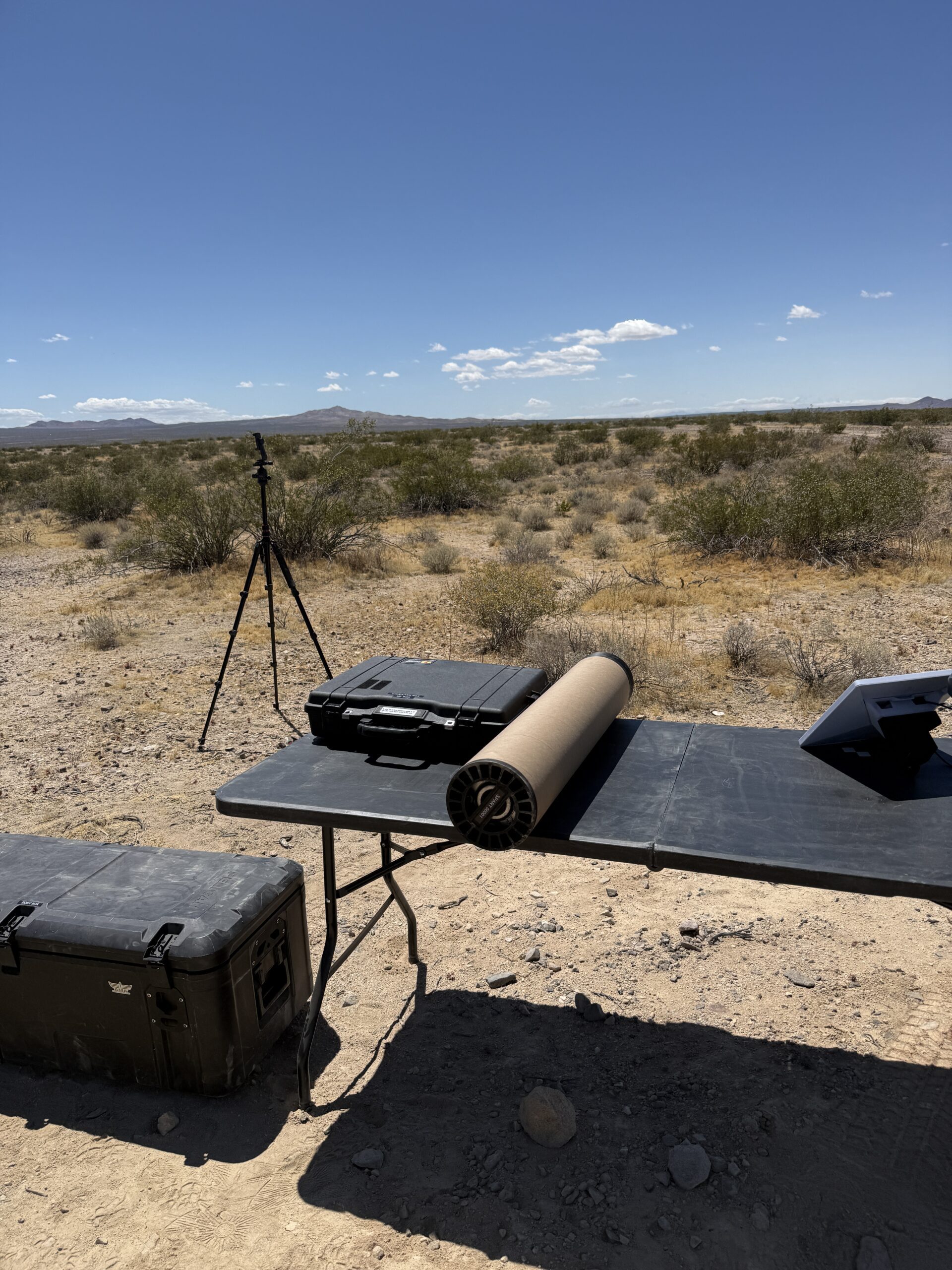
With a staff of five, Thermopylae operates out of a research-and-development facility in Hawthorne, California near the headquarters of SpaceX. Its principal product, the SPART — part of an asymmetric, affordable, multi-layered air-defense system — launches from a pneumatic tube similar to a recreational potato gun.
“It deploys into the air very quickly and goes towards the target. You can take this tube in any vehicle, like a boat, an aircraft or an unmanned system on the ground,” Balytskyi said.
The system is designed to be inexpensive to operate, only costing about $10,000 per launch. Upon launch, the electric-powered interceptor vehicle uses thermal guidance to find its target. The interceptor can reach speeds of up to about 220 mph and has a flight time of up to 20 minutes. If the interceptor fails to reach its target and crashes, it is designed to be reusable for another attempted launch.
Balytskyi added that the company currently is developing a complete end-to-end system that will incorporate an interceptor, the launcher, RF communication and a command-and-control system that can be integrated into any available radar system.
Although the SPART platform initially was designed to perform air defense missions in military applications, it can also be used as a counter-UAS tool to protect stadiums and critical infrastructure “to make sure that, the humanity will not destroy all this important infrastructure that’s been built,” Balytskyi said.
As part of its testing process for the use of its technology by the U.S. armed forces, Thermopylae is working within an Air Force evaluation window, which is expected to last from three to four months. It’s all basically designed to validate our solution, to test it,” he said. At the end of the evaluation period, Balytskyi said the company hopes that the Pentagon will approve a contract to procure SPART for use in conflict zones, such as the Middle East.
Born out of conflict in Ukraine
Growing up in Ukraine, Balytskyi had an early interest in software engineering, with an initial ambition to work in the fields of distributed systems and cybersecurity. However, developments in his native country convinced him to pursue studies in counter-drone technology and set him on his current entrepreneurial path.
In 2014, Russia invaded and occupied the Crimea peninsula, then a part of Ukraine. That event had a profound effect on the future company founder.
“I’m quite native to the defense industry. My family, my friends back in Ukraine, since 2014, they’ve been quite engaged in supporting the Ukrainian army,” he said. “I was not a fan of war. I actually was opposing war a lot.”
Balytskyi said it was then that he began to think of ways to tip the scales, to be able to provide smaller countries a way to stop the aggression of powerful adversaries such as Russia.
He left Ukraine at the age of 17, following Russia’s full-scale invasion of Russia in 2022. He initially traveled to London, where he spent some time at technology accelerator Entrepreneurs First, and worked at several European companies in the fields of distributed systems, cryptography and cybersecurity. In 2025, he secured a refugee visa and immigrated to the United States.
With a small team of like-minded U.S.-based engineers, Balytskyi cofounded Thermopylae to develop a low-cost, highly transportable counter-UAS solution capable to bringing down Group 2 drones such as the Iranian-produced Shahed, which have been deployed to deadly effect in the conflicts in Ukraine and the Middle East.
The fledgling company raised $2.5 million in pre-seed funding, with financing from well-known Silicon Valley Naval Ravikant, Balytskyi said. After raising the capital, Thermopylae moved from the small hardware lab in San Francisco where it was born, to its current home in the Los Angeles area.
While the company’s core R&D team would likely stay in the area, he said the company plans to establish a manufacturing base somewhere in the United States. “There are some supply chain aspects that will be outsourced to allied countries. But currently we’re planning to be in Los Angeles,” he said.
Balytskyi said he is proud to be able to help contribute to the defense of his adopted country.
“The U.S. has provided me the opportunity to grow as an engineer, as an entrepreneur, and I want to return the effort,” he said.
Read more:
- Terra A1 Interceptor Drone Begins Operational Deployment in Ukraine
- What Comes After China? Ukraine’s Growing Role in the U.S. Drone Industry
- Ukraine Looks to Export Drone Expertise as It Pursues New NATO Partnerships

Jim Magill is a Houston-based writer with almost a quarter-century of experience covering technical and economic developments in the oil and gas industry. After retiring in December 2019 as a senior editor with S&P Global Platts, Jim began writing about emerging technologies, such as artificial intelligence, robots and drones, and the ways in which they’re contributing to our society. In addition to DroneLife, Jim is a contributor to Forbes.com and his work has appeared in the Houston Chronicle, U.S. News & World Report, and Unmanned Systems, a publication of the Association for Unmanned Vehicle Systems International

We currently have a Counter Drone project we would like to speak with you. Please contact me at the email below to discuss and assist Ukraine with their defense when you have some time. We would like to collaborate and assist you.
Labrador Aerospace, LLC
Alan M Chatfield.