
Company says proposed “military-grade” categories could reach aircraft used in public safety, agriculture, inspection and other civilian applications
DJI is warning U.S. drone operators that a Federal Communications Commission proposal targeting certain foreign-made “military-grade” drones could reach much further than the terminology suggests.
In a new response to the FCC’s July 21 action, DJI argues that several categories under consideration describe capabilities commonly found in commercial drones. Those include thermal imaging, LiDAR, agricultural spraying, docking stations and aircraft weighing 55 pounds or more.
“Although the proposal is framed as targeting “military-grade” drones, the FCC’s definition could include drones with thermal imaging or LiDAR capabilities, agricultural spraying drones, docking stations, and other products widely used by first responders, farmers, infrastructure inspectors, small businesses, and hobbyists.”
DJI says the proposal could therefore affect products ranging from enterprise and agricultural aircraft to FlyCart and Dock systems.
“This could affect DJI FlyCart and agricultural drones, enterprise platforms, and dock stations – even though these are civilian and commercial tools, not “military-grade” equipment.”
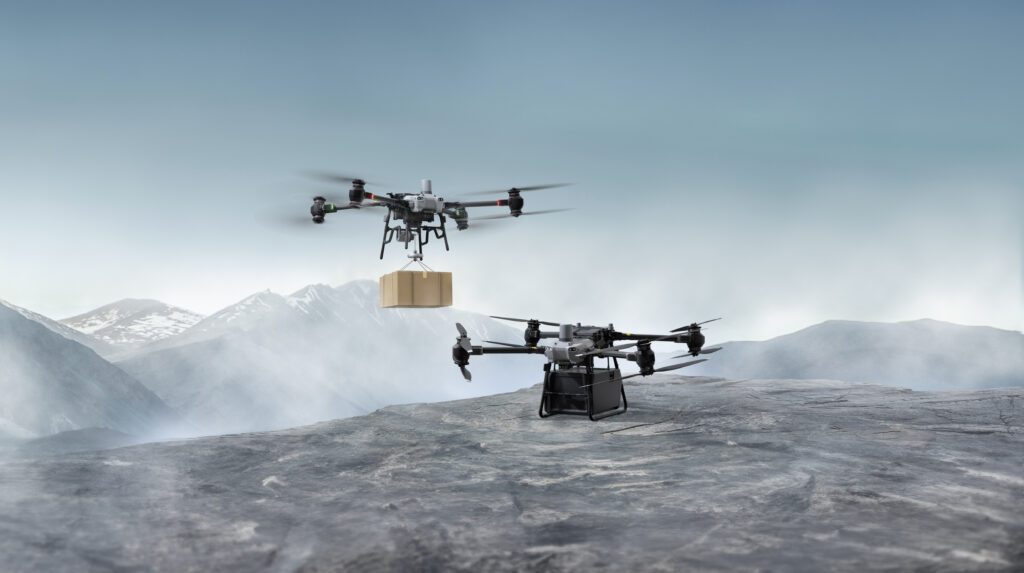
DJI Challenges the Definition
At the center of DJI’s response is the distinction between a drone’s technical capabilities and its intended use.
The FCC is seeking comment on whether additional restrictions should apply to several categories of foreign-produced UAS already on its Covered List. Those categories include thermal imaging drones, drones integrating LiDAR, aerosol drones capable of dispensing “economic poison” under FAA rules, docking stations and UAS weighing 55 pounds or more.
DJI argues that those technologies are not inherently military.
“DJI does not design or manufacture military-grade equipment, nor has it marketed or sold its products for military use. DJI develops technology for commercial, agricultural, recreational, and public safety applications, and has consistently opposed the weaponization of civilian drones.”
The company points to LiDAR as an example.
“Yet the FCC’s proposed definition is broad enough to capture many of the civilian drones Americans rely on every day. It could even include consumer models used by hobbyists simply because they use LiDAR to improve positioning and obstacle avoidance – a safety feature, not a military capability.”
That argument highlights a broader policy question: whether technologies with both civilian and potential defense applications should themselves determine how a drone is classified.
DJI Says Currently Available Models Could Be Affected
DJI also focuses on a significant difference between the existing Covered List restrictions and the new proposal.
DJI says its addition to the Covered List in December 2025 prevented new DJI products from receiving FCC authorization. Products already cleared for the U.S. market, however, could continue to be imported and sold.
The July proceeding could go further. The FCC is seeking comment on whether it should prohibit the “import, marketing, or sale” of certain covered foreign-made UAS and critical components.
DJI describes the possible impact this way:
“People could continue using DJI products they already own, but the same models in use today might no longer be available to purchase in the future. This is a total reversal from the FCC’s previous position, and it is U.S. operators that would bear the cost.”
The FCC confirms one important limitation. Any prohibition under consideration would exclude “the use or operation of any already-purchased drones.”
The proposal therefore would not ground aircraft operators already own. The potential impact instead concerns future imports, sales and, depending on the final rules, replacement components.
For organizations operating fleets, that distinction matters. Agencies and businesses need replacement aircraft and components as equipment ages, is damaged or programs expand.
Public Safety and Agriculture Among DJI’s Concerns
DJI argues that the proposed categories could reach several established civilian applications.
Thermal imaging is widely used in search and rescue, firefighting and inspection. Agricultural drones dispense crop treatments and other materials. Docking stations enable remote and automated operations for infrastructure inspection, security and public safety.
Heavy-lift aircraft also have civilian applications, including transporting cargo in difficult terrain and disaster response.
DJI says restrictions affecting these categories could impose significant costs on operators.
“Public safety agencies could lose access to life-saving tools. Farmers could face significantly higher costs for precision agriculture. Small businesses and infrastructure operators could be forced to replace functioning equipment with more expensive alternatives – or abandon drone programs altogether. For many, there are no comparable domestic alternatives.”
These are DJI’s assessments of the potential consequences, not findings made by the FCC.
DJI Urges Drone Operators to Comment
DJI is encouraging customers and other U.S. drone operators to participate in the FCC proceeding.
The company suggests that commenters explain how they use drones, why specific capabilities matter, how restrictions could affect their work or communities, and whether comparable alternatives are available.
According to DJI, the FCC is accepting comments through September 2, 2026.
The FCC has not adopted the proposed restrictions. Its July action seeks public comment on whether additional prohibitions should extend to categories of foreign-produced drones that the U.S. government views as having military capability or posing particular national security risks.
DJI’s response puts the central issue in practical terms for commercial operators. Advanced capabilities such as thermal imaging, LiDAR, automated docking and heavy lift increasingly serve both civilian and defense applications.
How the FCC ultimately draws that line could determine whether some drone models already used across public safety, agriculture and industry remain available for future purchase in the United States.
Read more:
- Military or Farm Tool? FCC’s Proposed Drone Categories Blur the Line
- FCC Eyes Next Step in Drone Supply Chain Overhaul With Proposed Sales Ban on Military-Grade Foreign Drones
- DJI Releases Independent Security Assessment as FCC Covered List Debate Continues

Miriam McNabb is the Editor-in-Chief of DRONELIFE and CEO of JobForDrones, a professional drone services marketplace, and a fascinated observer of the emerging drone industry and the regulatory environment for drones. Miriam has penned over 3,000 articles focused on the commercial drone space and is an international speaker and recognized figure in the industry. Miriam has a degree from the University of Chicago and over 20 years of experience in high tech sales and marketing for new technologies.
For drone industry consulting or writing, Email Miriam.
TWITTER:@spaldingbarker
Subscribe to DroneLife here.

its a shame we are being treated like this,im really tempted to move out of country America the free huh
Did I miss it or is there no link or instructions in how/where to send a comment to the FCC. Would sure be useful for most of the readers.