
VEX AIR receives conditional approval through December 2026 as federal agencies continue evaluating individual UAS outside broad Covered List restrictions
The Federal Communications Commission (FCC) has announced another conditional exemption from its Covered List restrictions, adding the VEX AIR uncrewed aircraft system (UAS) to a growing roster of drone products that have been individually reviewed and approved through a federal national security process.
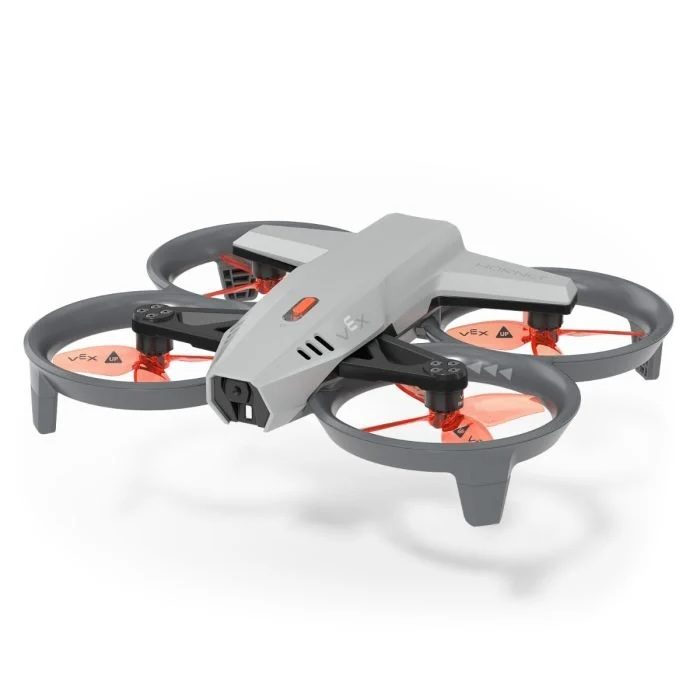
The June 4, 2026 Public Notice from the FCC’s Public Safety and Homeland Security Bureau updates the Covered List to reflect a new Conditional Approval granted by the Department of War (DoW) for Innovation First International’s VEX AIR UAS. The approval exempts the system from Covered List restrictions through December 31, 2026.
While the addition of a single drone platform may appear modest, the decision highlights a larger shift in how the federal government is implementing drone supply chain security policy.
From Broad Restrictions to Individual Reviews
In December 2025, the FCC added all foreign-produced UAS and UAS critical components to the Covered List following a national security determination by an Executive Branch interagency body. That action effectively established a presumption that foreign-produced drone systems pose an unacceptable risk to U.S. national security unless specifically exempted.
The FCC also indicated at the time that it would update the Covered List if it received a determination from the Department of War or the Department of Homeland Security (DHS) finding that a particular drone system or component did not present unacceptable risks.
The latest announcement reflects that process in action.
According to the FCC, manufacturers can submit products for review through a federal interagency process. If DoW or DHS determines that a specific product does not pose unacceptable national security risks, the FCC updates the Covered List to exempt that product.
Importantly, the FCC is not conducting the technical evaluations itself. The agency’s role is to maintain and update the Covered List based on determinations made by designated national security agencies.
Temporary Approvals, Not Permanent Exemptions
The VEX AIR approval, along with most of the exemptions on the list, remains temporary.
According to the FCC notice, the exemption is valid only through December 31, 2026. Most of the drone systems that have received conditional approvals to date share the same expiration date.
That means manufacturers still face uncertainty about what happens after the current approval period ends. The FCC has not yet outlined a long-term framework for renewing or extending conditional approvals.
The temporary nature of these exemptions suggests that federal agencies continue to evaluate both the products themselves and the broader review process.
What Is the VEX AIR?
The VEX AIR is an educational drone developed by Innovation First International, the Texas-based company behind the VEX Robotics platform used in schools and robotics competitions worldwide.
The drone is designed for STEM education and autonomous flight instruction. Published specifications highlight onboard vision cameras, range sensors, inertial measurement systems, programmable autonomous flight capabilities, and support for both block-based and Python programming environments.
The system is intended for classroom use, robotics programs, and technical education initiatives rather than industrial or military applications.
The FCC notice does not identify the country of manufacture for the VEX AIR system.
Growing List of Approved Drone Systems
The VEX AIR joins a growing list of drone platforms that have received conditional approvals for exemption from he covered list since March 2026.
Previously approved systems include:
- SiFly Aviation Q12
- Mobilicom SkyHopper Series
- ScoutDI Scout 137
- Verge X1
- Sees.ai v.USA. 1.0
- Air6 AIR8 and AIR4 series
- Elevon Aerial Z30, Z50, and Z80
- Blueflite Cobalt 461
- Verity Series 4 Indoor Autonomous Inventory System
- Air VEV 120C and 060C
The June 4 notice also added router products to the exemption list, including models from Sagemcom USA.
A New Phase of U.S. Drone Policy
For drone manufacturers and operators, the significance of the announcement extends beyond a single educational drone.
The FCC’s Covered List framework appears to be continuously evolving from a broad country-of-origin restriction into a more nuanced system that allows individual products to receive security-based exemptions following federal review.
That approach aligns with a broader trend in U.S. drone policy. Rather than treating all foreign-developed technologies equally, federal agencies are increasingly establishing pathways for specific products to demonstrate compliance with security requirements.
Whether the current conditional approval process becomes a long-term mechanism or a transitional step toward a permanent certification framework remains an open question. For now, however, the growing list of exemptions demonstrates that federal agencies are willing to evaluate drone systems on a product-by-product basis rather than relying solely on broad classifications.
Read more:
- Congress Introduces GUARD Act, Extending FCC Covered List Framework to Robotics
- BREAKING: FCC Updates Covered List to Exempt Blue UAS and Qualified Domestic Products, Releases Additional Guidance
- Not Just DJI: How the FCC’s Foreign Drone Rule Changes the Market

Miriam McNabb is the Editor-in-Chief of DRONELIFE and CEO of JobForDrones, a professional drone services marketplace, and a fascinated observer of the emerging drone industry and the regulatory environment for drones. Miriam has penned over 3,000 articles focused on the commercial drone space and is an international speaker and recognized figure in the industry. Miriam has a degree from the University of Chicago and over 20 years of experience in high tech sales and marketing for new technologies.
For drone industry consulting or writing, Email Miriam.
TWITTER:@spaldingbarker
Subscribe to DroneLife here.


So which Trump family member owns a stake in this company? Did they happen to publish the security criteria by which they were evaluated?
It is the DoD, Department of Defense… Do better!