
Lidar company’s agreement with German counter-UAS firm highlights growing market for drone detection and interception technologies
Shares of lidar manufacturer Ouster rose sharply last week after the company announced a strategic partnership with German counter-UAS company ARGUS Interception. The market reaction reflects growing investor interest in technologies that support drone detection, tracking, and interception as governments and infrastructure operators increase spending on airspace security.
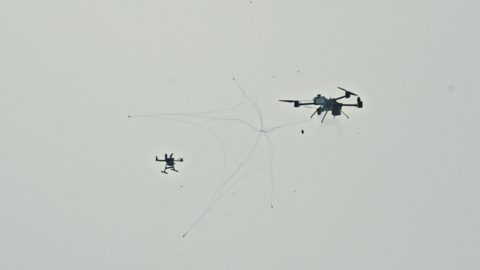
Ouster’s stock climbed approximately 15% following the announcement that ARGUS plans to integrate Ouster’s digital lidar sensors into its A1-Falke drone interception system. The companies say the technology will improve the precision and reliability of the system’s net-based drone capture capability.
While the agreement itself is relatively modest, the investor response points to a broader trend. As drone threats become a growing concern for airports, public events, military installations, and critical infrastructure, companies that provide enabling technologies for counter-drone systems are increasingly attracting attention from both customers and investors.
Beyond Aircraft Manufacturers
The drone industry’s recent stock activity has focused largely on aircraft manufacturers. However, the Ouster announcement highlights the expanding ecosystem of companies that stand to benefit from increased drone adoption and increased investment in counter-UAS systems.
Ouster is best known for its lidar technology, which creates detailed three-dimensional maps of the surrounding environment. The company serves markets including robotics, industrial automation, autonomous vehicles, and smart infrastructure. More recently, it has begun positioning its sensors as a key component of next-generation security and defense systems.
Under the agreement, ARGUS will equip its A1-Falke interceptor drones with Ouster’s digital lidar sensors. The A1-Falke uses a non-kinetic approach to drone mitigation, launching nets to capture unauthorized aircraft rather than destroying them. The system is designed for environments where explosive or ballistic countermeasures would be unsafe or impractical.
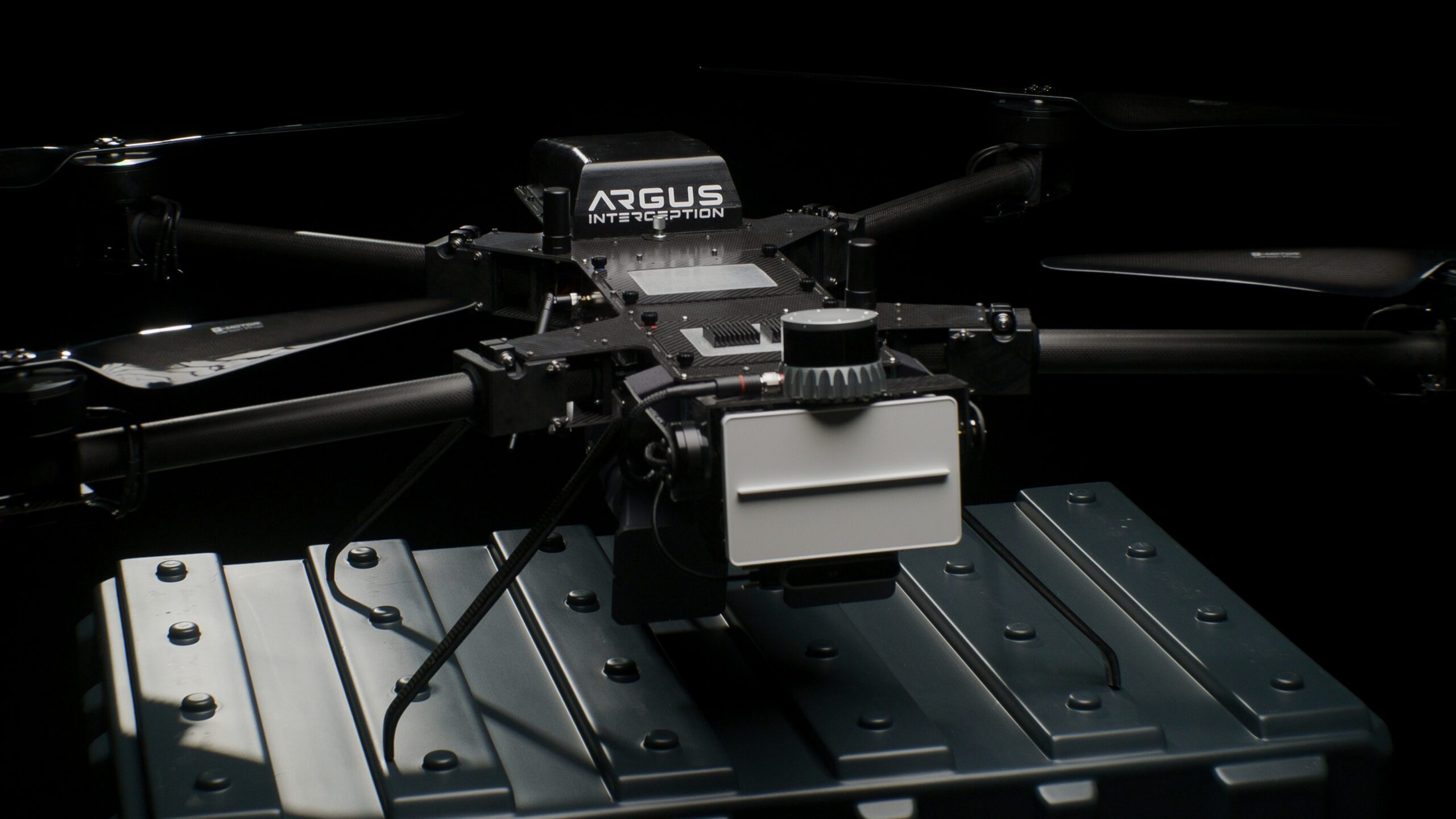
According to the companies, the lidar integration is intended to improve close-range target tracking and interception accuracy. ARGUS also plans to evaluate Ouster’s newer Rev8 lidar platform for future counter-drone applications.
Counter-UAS Becomes a Growth Market
The partnership arrives at a time when governments worldwide are increasing focus on counter-drone capabilities.
Recent drone incidents near airports, military facilities, and critical infrastructure have highlighted the challenge of detecting and responding to small unmanned aircraft. Major international events, including the 2026 FIFA World Cup, are also driving demand for systems capable of monitoring and protecting sensitive airspace.
As a result, the counter-UAS market has expanded beyond traditional defense applications. Public safety agencies, airport operators, utilities, and transportation authorities are increasingly evaluating technologies that can detect, identify, track, and, when authorized, mitigate drone threats.
That trend has created opportunities not only for companies that manufacture counter-drone systems, but also for suppliers of supporting technologies such as radar, radio-frequency detection, artificial intelligence software, communications systems, and lidar sensors.
Investors Watching the Broader Drone Ecosystem
The market’s reaction to the Ouster announcement suggests investors are beginning to view counter-UAS as a significant growth segment within the broader drone industry.
While aircraft manufacturers often attract the most attention, drone operations rely on a growing network of supporting technologies. As governments continue to invest in airspace awareness and drone defense capabilities, companies that provide those enabling technologies may increasingly benefit from the sector’s growth.
For the drone industry, the Ouster-ARGUS partnership serves as another indication that the market for drone-related technologies now extends well beyond the aircraft themselves. Sensors, software, communications systems, and counter-UAS solutions are becoming an increasingly important part of the industry’s investment story.
Read more:
- Government Signals Drive Rally in US Drone Stocks
- Volatus Aerospace Graduates to Toronto Stock Exchange
- Joby, Archer and the Air Mobility Race: When Certification, Sentiment, and Stocks Collide

Miriam McNabb is the Editor-in-Chief of DRONELIFE and CEO of JobForDrones, a professional drone services marketplace, and a fascinated observer of the emerging drone industry and the regulatory environment for drones. Miriam has penned over 3,000 articles focused on the commercial drone space and is an international speaker and recognized figure in the industry. Miriam has a degree from the University of Chicago and over 20 years of experience in high tech sales and marketing for new technologies.
For drone industry consulting or writing, Email Miriam.
TWITTER:@spaldingbarker
Subscribe to DroneLife here.

Leave a Reply