
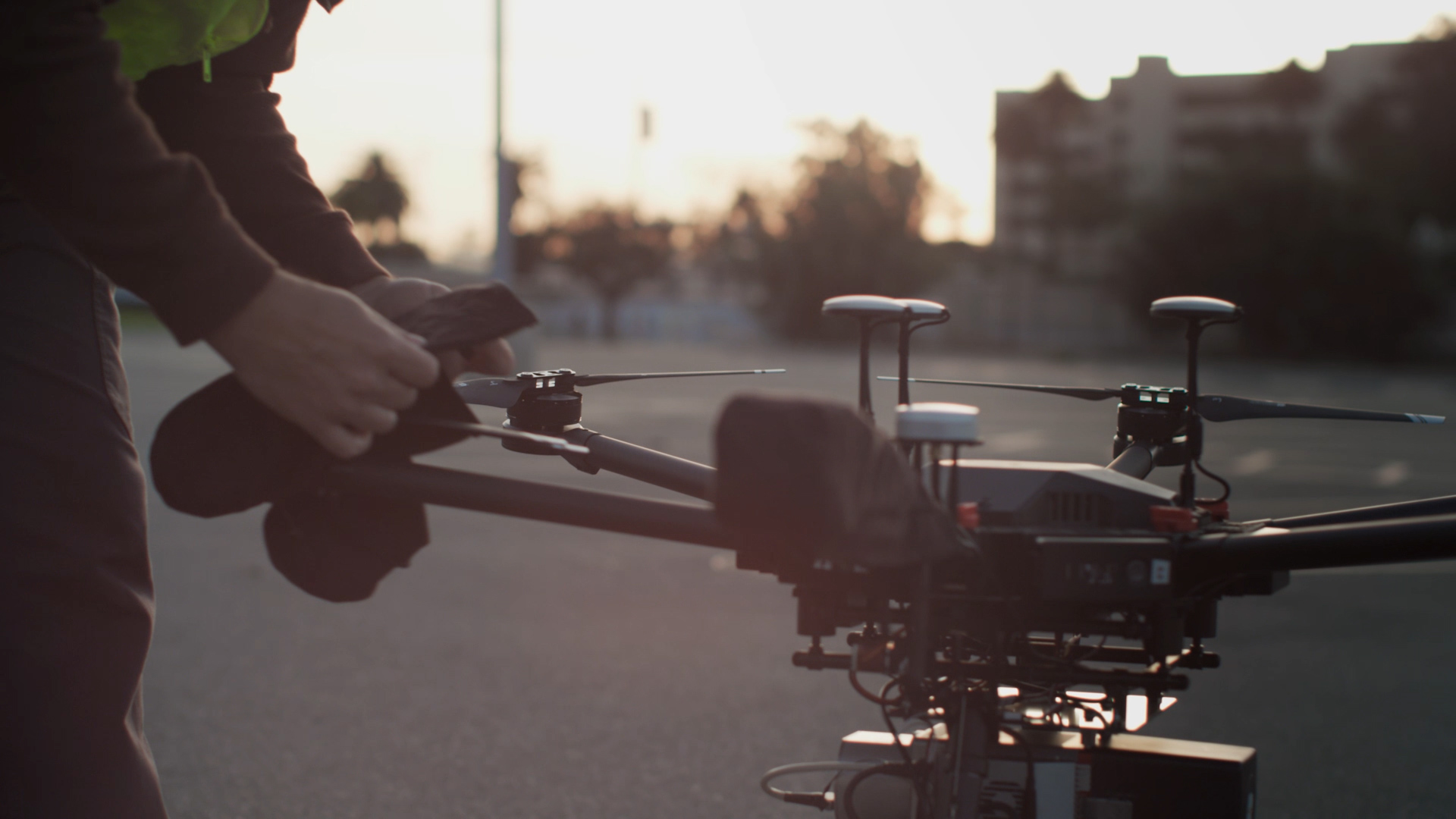
 Guest post by Dr. Allison Ferguson, Director of Airspace Safety Research at leading commercial drone platform PrecisionHawk.
Earlier this year, the Federal Aviation Administration (FAA) projected in its annual forecast that the number of commercial drones in the sky could triple by 2023. Companies are just starting to scratch the surface of incorporating drones into their operations, and the unmanned aircraft systems (UAS) and small unmanned aircraft systems (sUAS) market is providing positive benefits to improve operational efficiency and safety. Despite this growth and excitement, the industry faces operational challenges when integrating drones and pilots into existing airspace – and if these challenges aren’t overcome, safety concerns could ground drones before they truly take off.
Industry organizations and the FAA are working to mitigate potential integration problems that will naturally come with the increase in drone use. However, fully enabling the pending influx of commercial UAS operations requires a blend of operational and technological improvements, while preserving the current level of service to other operators within the system. UAS operation will need to be as routine and as structured as possible throughout all aspects of the flight.
The FAA has a long and proven track record of maintaining the safest and most complex airspace in the world. As a result, as the business case for drones continues to develop, keeping the airspace safe will remain top priority. Any approach that seeks to integrate with air traffic control (ATC) services must ensure that any additional workload on ATC be minimized, as air traffic management largely remains a manual process in the U.S. and ATC professionals are already experiencing maximum overload.
A successful integration strategy will capture the requirements of ATC by applying a scalable solution which captures the needs of ATC operations at the local and national level. Requirements must dovetail with existing ATC processes, providing intent, predictability and recall capability. Information sharing strategies are also foundational elements of any integration scheme, and it is crucial that all parties access common data (i.e. ground obstacle data, UAS position and trajectory) to make decisions at both the planning stage and during operations. This tactic allows operators to secure sensitive information while enabling the UAS traffic management system to resolve user issues without needlessly burdening ATC.
A Forecast for the Skies of Tomorrow
NASA’s UAS Unmanned Traffic Management (UTM)
To make sUAS operations in controlled airspace routinely possible, a workflow for UAS missions is required for all aspects of the flight, from flight planning, through in-flight monitoring, to separation assurance and collision resolution. This ensures an acceptable level of risk that the UAS can accomplish its mission and safely land. To satisfy the need for scalability in the future, this workflow must function without significant changes across multiple, existing airspace classes – supporting an assortment of device types and performance characteristics, while enabling different mission deliverables beyond point-to-point travel.
NASA’s UTM project conducts research to make it possible for sUAS to safely access low-altitude airspace beyond visual line of sight. The proposed UTM system currently under development and testing by NASA, in collaboration with many industry participants, is an excellent example of such a potential workflow infrastructure. The design philosophy incorporates lessons learned from air traffic management in manned aviation, and proposes the development of a long list of potentially valuable services – including airspace design, corridors, dynamic geofencing, severe weather and wind avoidance, congestion management, terrain avoidance, route planning and re-routing, separation management, sequencing and spacing, and contingency management.
Ultimately, there is an underlying structure to uncontrolled airspace that is relevant to sUAS operators in particular, and the UTM concept offers a potential pathway to manage that structure without unduly burdening existing ATC operations. Additionally, it adopts the perspective that in an end-state, human operators will not be required to monitor every vehicle continuously, reserving human intervention for top level tasks. And as the industry evaluates the long-term commercial interest in sUAS, larger operators will create a need for fleet management tools and procedures, as drone pilots may be managing more than one sUAS simultaneously.
A UTM system like this is ultimately intended to satisfy the requirements of maintaining vehicle separation and executing collision avoidance, but an outstanding question is how to integrate the UTM system with ATC in such a way that disruptions to existing ATC procedures are minimized. At a highlevel, one potential vision is that UTM becomes a “system within a system,” independently managing those parts of the sUAS traffic that are located outside a given tower’s active control region. UTM, andany operators using it, would then interface with ATC using an appropriate infrastructure that allows for ATC to dynamically alter airspace restrictions, issue alerts, directly communicate with the sUAS operator as necessary, retrieve historical data, or perform any other required operations.
In order for sUAS to maintain a dynamic capability to operate outside of today’s structured routing and positive control, it requires an innovative means for the operators to provide information for ATC decision-making. This system within a system allows for maximum flexibility while providing a means of reliable information for ATC awareness and decision making.
Evolving Technologies
Achieving successful integration while providing ATC with adequate information, situational awareness, and contact or recall capability is key to success. These requirements present a formidable challenge, but meeting them in the near-term is achievable due in part to evolving technologies, such as LTE and cloud-based data transmission and analytics services – which are uniquely suited to enabling a safe and scalable UAS-integrated airspace.
GPS data has improved in accuracy and availability, and in parallel, miniaturization of computer electronics has created a corresponding increased demand for mobile GPS services and the infrastructure to support them. And with the increasing availability of LTE and other high-capacity networks, it is now possible to send larger parameter sets from low-altitude traffic to cloud-based processing engines – rapidly and securely – to perform the necessary calculations.
As the number of UAS grows, so will the quantity of operational data that is fed back to airspace management systems. In addition to efficiently performing low-latency calculations to support real-time operations, this data can aid in decision-making for system level concerns: quality metrics, statistical examination of collective behavior, large-scale predictions, and more sophisticated alerting. The current interest in novel predictive analytics and data science strategies has created a host of tools and algorithms to support these applications.
Remote ID
Remote ID is the concept that drones should have a digital license plate that can verify its base location and operator while airborne. As the use of sUAS grows, this system will be essential to ensure transparency and responsibility of complex operations, including flights beyond visual line of sight. And even though a final ruling from the FAA on remote ID could be as far out as two more years, the industry is eager to move it forward. Some companies have proactively deployed remote ID solutions to start solving safety and security challenges, and the FAA’s Drone Advisory Committee (DAC) was recently tasked with providing advice on how to get operators to voluntarily use remote ID.
FAA Drone Oversight
A patchwork of inconsistent, confusing or burdensome UAS regulations that differ from state to state, city to city or even block to block could have a severely negative impact on the growth of the sUAS industry. There have been proposals in Congress over the last two years to undermine the FAA’sexclusive jurisdiction over the safety of the skies—and it’s the largest regulatory threat that the industryfaces. It also poses a threat to the United States itself, as it could easily lose its global leadership advantage should these policies come into effect. The UAS Integration Pilot Program, which will advance understanding of the possible state, local and tribal government interests in UAS, is an example of the smart, collaborative research and development the industry needs to advance – while maintaining theFAA’s exclusive jurisdiction over airspace.
A Blue Sky Future
A UAS revolution is underway in America’s skies. Thanks to readily available technologies that make it possible to meet both safety and scalability requirements, this revolution is helping professionals work more safely and efficiently, in addition to opening up new opportunities for hobbyists – and it can even save lives. And while overcoming regulation is important, it remains only one component of a complex solution – so while the UAS industry evolves within the aviation ecosystem, safety should always be at the forefront. Finally, short- and long-term approaches to the integration of UAS will rely on collaboration.
Ultimately, it is the UAS industry’s goal to keep its footprint small and not overwhelm the current ATCsystem – nor the professionals that work to keep the United States’ airspace the safest in the world.

Dr. Allison Ferguson is the Director of Airspace Safety Research at leading drone platform PrecisionHawk, where she leads all research projects related to airspace safety, including the FAA Pathfinder Initiative on Extended Visual Line of Sight and NASA’s UTM effort.

[…] the past three years, the agency has partnered with UAS companies to address the need for a robust unmanned traffic management system that integrates unmanned and manned air […]