
Blue UAS manufacturer Inspired Flight sees an open payload ecosystem as a way to extend aircraft value and give operators more choices
As the U.S. commercial drone market adjusts to new restrictions on foreign-made technology, operators face a difficult question: how can they invest in a platform today without limiting the missions they can perform tomorrow?
For U.S. drone manufacturer Inspired Flight, part of the answer is openness.
In an interview with DRONELIFE on the show floor at Commercial UAV Expo in Las Vegas this week, Inspired Flight co-founder and Director of Sales and Marketing Adam Bilmes described a strategy built around an open aircraft platform. Rather than pairing an aircraft with one proprietary sensor ecosystem, Inspired Flight designed its platform to accommodate a growing range of payloads.
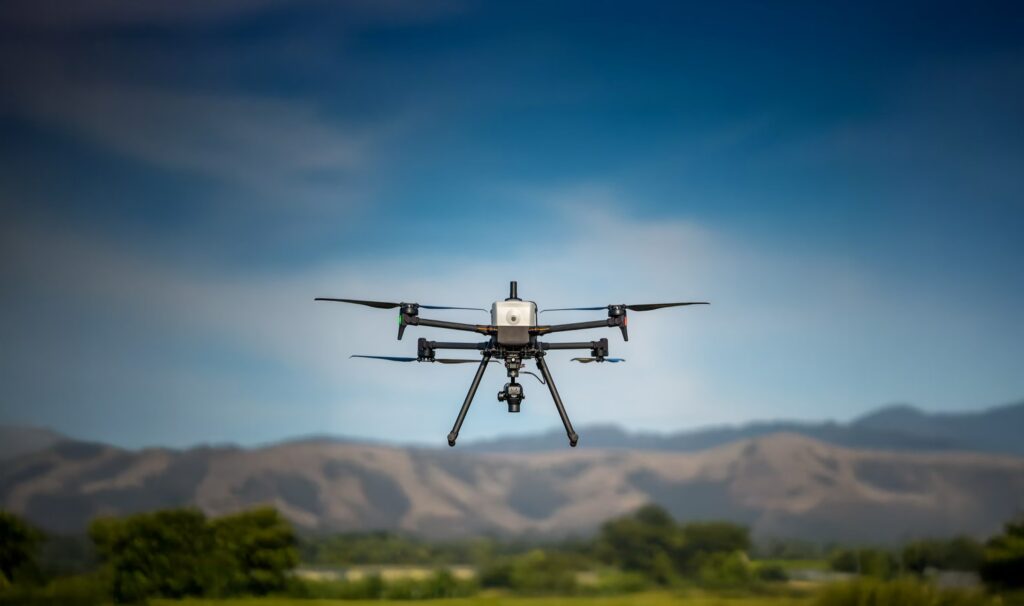 That approach has new significance as the U.S. drone market changes. The Federal Communications Commission has added foreign-produced UAS and critical components to its Covered List, limiting access to new FCC equipment authorizations. The FCC currently provides exemptions for several categories, including systems on the Blue UAS Cleared List through January 1, 2028. Inspired Flight’s IF800 Tomcat is a U.S.-made, NDAA-compliant Blue UAS platform.
For commercial operators looking for alternatives to foreign-made systems, however, compliance is only part of the equation. A replacement platform also needs to support the range of missions operators already perform.
Building Around the Mission, Not the Sensor
Bilmes said Inspired Flight recognized early that the rapid development of new sensors made it difficult to predict what customers might need over the lifetime of an aircraft.
“There are new payloads being developed every day,” Bilmes said. “Recognizing that, we decided not to build around a particular payload, but around openness and flexibility.”
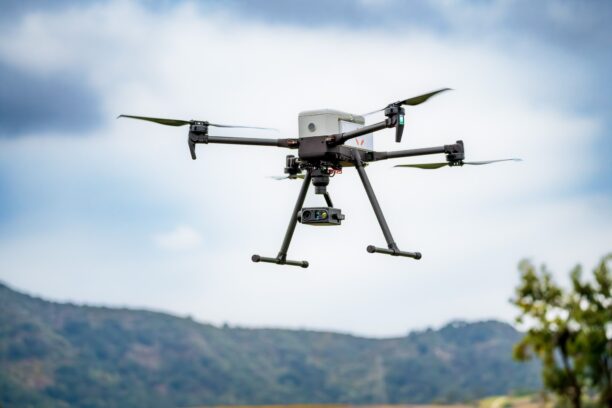
Inspired Flight now supports more than 20 payloads through a standardized dovetail payload system. Developed within the Pixhawk/ArduPilot ecosystem, the interface allows compatible payloads from Inspired Flight’s partners to be plug-and-play and swapped in the field. An operator can use the same aircraft for a LiDAR mission one day and thermal imaging the next.
“We wanted to build an open system that provided the connections for whatever comes next,” Bilmes said.
That matters, because payload technology can evolve faster than the aircraft carrying it. Instead of designing the drone around today’s sensor, Inspired Flight aims to provide an aircraft that can accommodate new capabilities as they emerge.
“The aircraft is technologically advanced, but the real value of the aircraft is its reliability and ease of use – and how it fits into an operators workflow to collect data,” Bilmes said. “Where you can truly push innovation is through the payloads.”
Building an Ecosystem Around the Aircraft
The open approach also shapes Inspired Flight’s relationships with technology partners.
Bilmes said the company provides CAD models, documentation, and other information that allow third parties to develop around its aircraft.
“We want to be the basic chassis,” he said.
That allows sensor manufacturers and other partners to bring new capabilities to the platform while Inspired Flight concentrates on the aircraft itself. It also expands the range of applications the company can address without developing every payload in-house.
For customers, there is another benefit. Once an organization has trained personnel and established workflows around an aircraft, changing platforms can carry significant costs.
“I find in this industry that retraining and switching costs are high – when organizations are successful with a platform they want to stay with it, if its working and you can provide the payload that they need,” Bilmes said.
For Inspired Flight, the same model supports a broader go-to-market strategy.
“It’s helped us tremendously with our go to market strategy because we’ve really been able to lean into partnerships and channels,” Bilmes said. “Where the industry is at an inflection point right now, the ability to broaden our base has really been good.”
An Open Platform at an Industry Inflection Point
That ecosystem approach could become increasingly important as U.S. operators reconsider their fleets.
The FCC’s Covered List now encompasses foreign-produced UAS and UAS critical components, subject to specified exemptions and conditional approvals. Blue UAS-cleared systems are currently among those exemptions.
For customers moving toward U.S.-made and approved platforms, the challenge is broader than finding an aircraft that meets regulatory requirements. Commercial fleets may need mapping cameras, thermal sensors, LiDAR, inspection payloads, and specialized equipment, sometimes within the same organization.
The number of available Blue UAS platforms appropriate for commercial use is relatively limited. For Inspired Flight, that makes the ability to support many capabilities on one approved aircraft an important part of the value proposition. As Bilmes put it in the interview, being a Blue UAS manufacturer means operating within a smaller universe of available platforms, making it particularly valuable to allow others to build on the aircraft.
An open platform offers flexibility as operators navigate that transition. Customers can change the sensor without necessarily changing the aircraft, training program, or underlying workflow. It also recognizes a basic reality of a fast-moving technology market: nobody knows exactly what the most valuable drone payload will be several years from now.
Inspired Flight’s strategy is to make that uncertainty less important. Build a reliable aircraft around an open architecture, make it easy for partners to add capabilities, and give operators the ability to adapt the platform as their missions change.
In a U.S. drone market where the range of available aircraft may be narrowing even as the range of potential applications continues to expand, that flexibility could become increasingly valuable.
Read more:
- FCC Keeps September 2 Deadline for Comments on Proposed “Military-Grade” Drone Restrictions
- Inspired Flight Drones Achieve Both Green UAS and Blue UAS Certifications
- BREAKING: FCC Updates Covered List to Exempt Blue UAS and Qualified Domestic Products, Releases Additional Guidance

Miriam McNabb is the Editor-in-Chief of DRONELIFE and CEO of JobForDrones, a professional drone services marketplace, and a fascinated observer of the emerging drone industry and the regulatory environment for drones. Miriam has penned over 3,000 articles focused on the commercial drone space and is an international speaker and recognized figure in the industry. Miriam has a degree from the University of Chicago and over 20 years of experience in high tech sales and marketing for new technologies.
For drone industry consulting or writing, Email Miriam.
TWITTER:@spaldingbarker
Subscribe to DroneLife here.


Leave a Reply