
Company says sixfold expansion will bring drone delivery to tens of millions of customers by the end of 2026
Amazon plans a major expansion of its Prime Air drone delivery service across the United States. The company says it expects to reach nearly 500 cities and towns by the end of 2026.
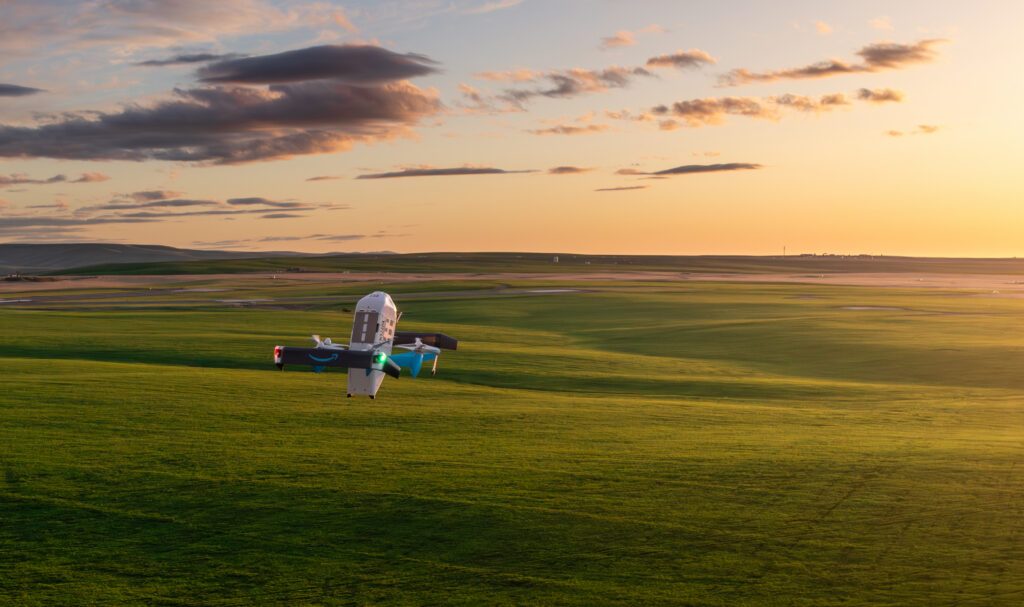
The expansion would increase Prime Air’s footprint about sixfold. Amazon currently operates drone delivery from 11 sites across 10 U.S. metro areas.
“Customers already turn to Amazon for fast Same- and Next-Day Delivery, and Prime Air provides them an even speedier option when they need it, with deliveries in as fast as 30 minutes,” said David Carbon, vice president of Amazon Prime Air. “We’ve already delivered hundreds of thousands of packages to customers by drone this year, and by the end of 2026 we plan to reach customers in nearly 500 cities and towns. We’re pairing the convenience of ultrafast drone delivery with the low prices and selection customers love about Amazon.”
Prime Air Expands Its U.S. Footprint
Prime Air currently operates in metro areas that include Phoenix, Tampa, Kansas City, Omaha, Baton Rouge, Detroit, Houston, San Antonio, Dallas and Waco. Amazon says each Prime Air site serves an area of about 175 square miles.
The company plans to launch service soon in the Chicago, Syracuse, Cleveland, Atlanta and Boise metro areas. More communities will follow later this year.
The expansion represents a significant increase in the scale of Amazon’s drone delivery program. Prime Air began commercial operations under its FAA air carrier certificate in 2020. The FAA says Amazon became the first company to operate a drone weighing more than 55 pounds as a standard Part 135 operator.
Amazon has also received FAA authorization for beyond visual line of sight operations without visual observers. BVLOS operations allow drones to travel beyond the direct sight of a pilot or observer, an important capability for scaling delivery networks.
Millions of Products Eligible for Drone Delivery
Amazon says most Prime Air locations now offer millions of products for drone delivery. Eligible categories include groceries, electronics, cosmetics, medications and household goods.
Nearly all products weighing five pounds or less and fitting inside a large shoebox can qualify. According to Amazon, that includes more than 60% of the items its customers purchase most often. Deliveries can arrive in as little as 30 minutes, although most arrive about an hour after checkout.
Prime members receive free drone delivery for orders of $50 or more. Amazon charges Prime members $2.99 for smaller orders and non-Prime customers $4.99.
Prime Air operates as part of Amazon’s existing shopping and delivery system. Customers in eligible areas can select drone delivery during checkout and choose a delivery point for the aircraft.
At the delivery location, the drone checks for people, pets and vehicles before releasing the package.
MK30 Supports Larger-Scale Operations
Amazon’s expansion uses the company’s MK30 delivery drone. FAA documents describe the electric aircraft as having a maximum takeoff weight of 83.2 pounds and an operating range of 7.5 miles. That range can support an operating area of about 174 square miles around a Prime Air Drone Delivery Center.
Amazon says the aircraft uses onboard cameras and sensors for navigation and obstacle detection. Its Detect-and-Avoid system monitors the surrounding airspace and allows the aircraft to respond to obstacles during flight.
Prime Air holds an FAA Part 135 air carrier certificate, the regulatory framework used for commercial package delivery by drone in the United States.
The planned expansion marks a shift in scale for Amazon’s drone program. Rather than operating in a limited number of individual markets, Prime Air is moving toward a network designed to reach communities with tens of millions of potential customers across the country.
Read more:
- Amazon Prime Air Adjusts Course After Richardson Setbacks
- Amazon Halts Drone Delivery Plans in Italy: A Reminder That Business Factors Matter As Much As Regulations
- Amazon Shifts Drone Delivery Strategy to New U.S. Cities

Miriam McNabb is the Editor-in-Chief of DRONELIFE and CEO of JobForDrones, a professional drone services marketplace, and a fascinated observer of the emerging drone industry and the regulatory environment for drones. Miriam has penned over 3,000 articles focused on the commercial drone space and is an international speaker and recognized figure in the industry. Miriam has a degree from the University of Chicago and over 20 years of experience in high tech sales and marketing for new technologies.
For drone industry consulting or writing, Email Miriam.
TWITTER:@spaldingbarker
Subscribe to DroneLife here.

What does Liability Insurance and CAB approval look like on these Drone Operations certified by the FAA look like. Liability Insurance on the public and Property.
No one has discussed that in any of these articles.
Alan