
FAA says major NextGen systems are operational as it begins looking toward the next phase of airspace modernization
The Federal Aviation Administration released a new NextGen fact sheet on August 17, outlining changes to the National Airspace System [NAS] and plans for continued modernization.
The Next Generation Air Transportation System, known as NextGen, has transformed much of the technology behind U.S. air traffic management. The effort moved the system toward digital communications, satellite-enabled navigation and surveillance, automation, and integrated data sharing.
The FAA says NextGen programs are now operational. Digital communications supplement voice communications between pilots and controllers. Navigation and surveillance have shifted from ground-based systems to primarily satellite-enabled technology. Information sharing has advanced from segmented systems to enterprise-level sharing through a single connection.
The FAA says NextGen delivered $10.9 billion in benefits between 2010 and 2023. Those benefits came from more than 20 capabilities implemented more than 200 times across the country.
Digitizing and Connecting the Airspace
Several technologies underpin the transition.
Automatic Dependent Surveillance-Broadcast, or ADS-B, replaced ground-based radar as the primary source of aircraft surveillance. Performance Based Navigation provides more precise routes and procedures that primarily use satellite-enabled navigation. Data Communications allows controllers and pilots to exchange some instructions digitally instead of relying only on radio communications.
System Wide Information Management, or SWIM, provides a common infrastructure for sharing aeronautical, flight, weather and surveillance information in near-real time. The FAA calls SWIM the “digital data-sharing backbone of NextGen.”
The FAA says NextGen also enables a shift from tactical, reactive air traffic control toward strategic, integrated air traffic management. One goal is Trajectory Based Operations, which provides stakeholders with a common understanding of planned aircraft paths in three dimensions plus time.
Where Drones Fit Into NextGen
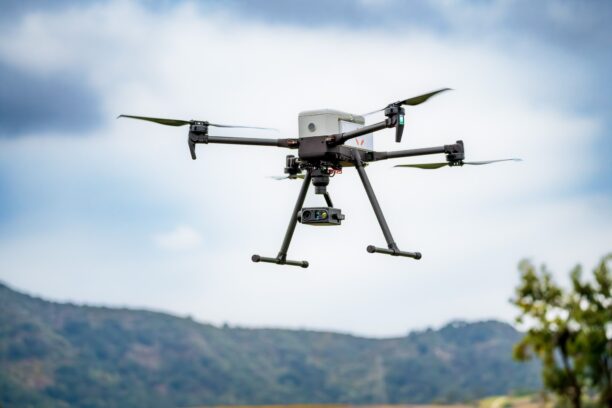
The FAA specifically includes uncrewed aircraft in its discussion of “Non-Traditional Operations.”
“Part of NextGen is accommodating the growth of non-traditional forms of aviation operating at different altitudes,” the FAA states.
The agency says it is developing traffic management concepts and evaluating technologies to safely incorporate UAS, spacecraft and other emerging aircraft into the NAS without disrupting existing traffic.
The FAA identifies DroneZone, the Low Altitude Authorization and Notification Capability [LAANC], Airborne Collision Avoidance System and Remote Identification as technologies supporting UAS growth and integration. It also points to published concepts of operation for UAS Traffic Management and Urban Air Mobility.
Beyond NextGen
The fact sheet concludes by looking toward the next phase of airspace modernization.
“With NextGen firmly in place, the FAA is beginning to pivot to a new iteration of airspace modernization,” the agency states.
The FAA describes a future airspace system interconnected through communications networks and flexible enough to accommodate diverse operations. Traffic management services, the agency says, will integrate an increased number and variety of aircraft and new missions into the NAS.
Read more:
- FAA Data Shows Drone Sightings Near Airports Nearly Doubled in Second Quarter
- FAA Modernizes Airspace Management as Demand Grows Across Aviation Sectors
- FAA Publishes Proposed Rule for Drone Restrictions Around Critical Infrastructure

Miriam McNabb is the Editor-in-Chief of DRONELIFE and CEO of JobForDrones, a professional drone services marketplace, and a fascinated observer of the emerging drone industry and the regulatory environment for drones. Miriam has penned over 3,000 articles focused on the commercial drone space and is an international speaker and recognized figure in the industry. Miriam has a degree from the University of Chicago and over 20 years of experience in high tech sales and marketing for new technologies.
For drone industry consulting or writing, Email Miriam.
TWITTER:@spaldingbarker
Subscribe to DroneLife here.


Leave a Reply