
The 2-in-1 device from ZeroZero Robotics records 4K 60fps video and converts from a pocket gimbal camera into a self-flying camera with modular propeller accessories.
HOVERAir introduced HOVERAir VERSA, a 2-in-1 handheld gimbal camera and self-flying camera. The device targets creators who want handheld stability plus aerial perspectives from a single tool. Lightweight snap-on propeller accessories convert VERSA from handheld to airborne mode. The system supports handheld selfies, POV shots, AI follow footage and cinematic aerial views. HOVERAir is a product line from ZeroZero Robotics, which pioneered the self-flying camera category.
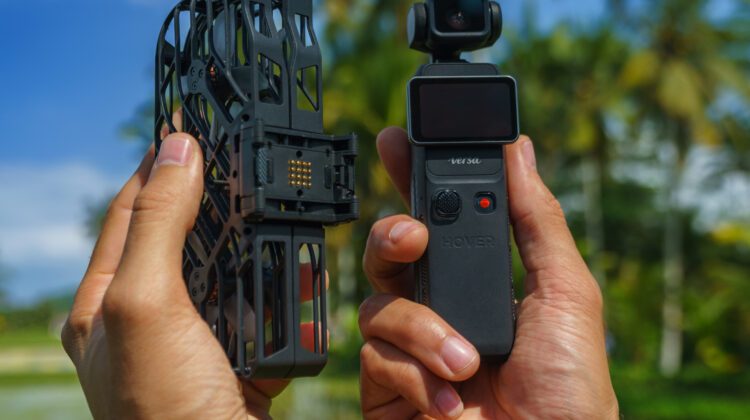
Camera specifications
VERSA uses a 1/1.3-inch CMOS sensor and captures video up to 4K at 60 frames per second. The device records 4K 30fps in 10-bit HDR and 10-bit H-Log for professional workflows. Dynamic range reaches up to 17.5 stops. Still photos capture at 12 MP resolution. A 3-axis mechanical gimbal handles stabilization in both modes. The field of view runs 98 degrees standard and 106 degrees in Ultra-Wide mode. Onboard storage covers 64 GB internally with microSD support up to 1 TB.
Flight and control
VERSA weighs 230 grams (about 8.1 ounces). Handheld mode measures 36 by 31 by 147 millimeters and flying mode extends to 176 by 31 by 147 millimeters. Maximum flight time reaches 14 minutes. The drone hits a top speed of 36 kilometers per hour (about 22 miles per hour). Maximum take-off altitude is 3,500 meters (about 11,483 feet). Maximum flight altitude is 120 meters (about 394 feet). Wind resistance rates at Level 5. Flying features include Palm Take-off and Landing, AI Tracking, Auto Framing, Orbit, Bird’s Eye, Zoom Out and OmniTerrain. Control options span smartphone, HOVERAir Beacon, joystick, voice and gestures plus the MiCo controller. Creative modes cover Inception Shot, Dolly Zoom, Motion Timelapse, Timelapse and 3D Worlds.
Stanford PhDs MQ Wang and Tony Zhang co-founded ZeroZero Robotics in 2014. The company holds more than 140 core patents including fully enclosed portable propeller and bi-copter designs. More information is available at HOVERAir.
Read More
-
Amazon Prime Air Plans Drone Delivery Expansion to Nearly 500 U.S. Cities and Towns
-
AUVSI Names Heather Lee Acting President and CEO as Michael Robbins Plans Departure
-
Appeals Court Partially Reverses Ruling in DJI Challenge to Pentagon Designation

Ian McNabb is a journalist focusing on drone technology and lifestyle content at Dronelife. He is based between Boston and NH and, when not writing, enjoys hiking and Boston area sports.
The snap-on propeller accessories are a clever way to shift from handheld stabilization to aerial footage without carrying two separate devices. I’m especially curious to see how well the AI follow mode performs in real-world creator workflows.
The snap-on propeller accessories are a clever way to turn one device from a handheld gimbal into a self-flying camera. AI follow footage combined with cinematic aerial views could make this especially useful for creators traveling light.
The snap-on propeller accessories are a clever way to turn one compact device from a handheld gimbal into a self-flying camera. AI follow and cinematic aerial modes could make switching between creator-style POV footage and overhead shots much more seamless.
The snap-on propeller accessories are a clever way to turn one handheld gimbal into an aerial camera without carrying separate gear. I’m especially curious to see how well the AI follow mode performs in real-world creator workflows.
The snap-on propeller accessories are a clever way to switch from stabilized handheld footage to aerial perspectives without carrying two separate devices. I’m especially curious to see how reliably the AI follow mode performs in real-world creator workflows.
The snap-on propeller accessories are a clever way to turn a handheld gimbal into an aerial camera without carrying two separate devices. I’m especially curious to see how well its AI follow mode performs in real-world moving shots.
The snap-on propeller accessories are a clever way to turn the VERSA from a handheld gimbal into a self-flying camera without carrying two separate devices. I’m especially curious to see how well its AI follow mode performs in real-world POV and cinematic shots.
The snap-on propeller accessories are a clever way to turn one compact device from a handheld gimbal into a self-flying camera. AI follow footage and aerial perspectives could make it especially useful for creators who want dynamic shots without carrying separate gear.
The snap-on propeller accessories are a clever way to turn the VERSA from a handheld gimbal into a flying camera without carrying two separate devices. I’m especially curious to see how well its AI follow mode performs in real-world creator workflows.
The snap-on propeller accessories are a clever way to turn a handheld gimbal into an airborne camera without carrying two separate devices. I’m especially curious to see how smoothly the AI follow mode performs during transitions between handheld and aerial footage.
The snap-on propeller accessories are a clever way to turn the VERSA from a handheld gimbal into a self-flying camera without carrying two separate devices. I’m curious to see how well its AI follow mode performs in real-world outdoor conditions.
The snap-on propeller accessories are a clever way to switch from stabilized handheld footage to aerial shots without carrying two separate devices. I’m especially curious how the AI follow mode performs in crowded or fast-moving environments.
The snap-on propeller accessories are a clever way to shift from stabilized handheld footage to aerial shots without carrying two separate devices. I’m especially curious to see how reliably the AI follow mode performs in real-world creator workflows.
The snap-on propeller accessories make the VERSA’s shift from handheld gimbal to self-flying camera especially interesting. AI follow footage and cinematic aerial views in one lightweight device could be a practical setup for creators who want multiple perspectives without carrying separate gear.
The snap-on propeller accessories are a clever way to combine stabilized handheld footage with aerial perspectives in one compact tool. I’m especially curious to see how reliably the AI follow mode performs when switching between walking shots and flight.
The snap-on propeller accessories are a clever way to turn the VERSA from a handheld gimbal into a self-flying camera without carrying a separate drone. AI follow footage combined with handheld POV shots could make it especially useful for creators who want both perspectives in one lightweight setup.
The snap-on propeller accessories are a clever way to switch from stabilized handheld footage to aerial shots without carrying two separate devices. I’m especially curious how reliably the AI follow mode handles fast-moving subjects in real-world conditions.
This 2-in-1 gimbal and drone is a game-changer for creators. It reminds me of the satisfaction I get from the silhouette resizing game on Size It Up – both are all about mastering perspective and scale! silhouette resizing game
The snap-on propeller accessories are a clever way to switch from stabilized handheld shots to aerial footage without carrying two separate devices. I’m especially curious to see how reliably the AI follow mode performs in real-world creator workflows.
The snap-on propeller accessories are a clever way to turn a handheld gimbal into an aerial camera without carrying two separate devices. AI follow and POV modes could make VERSA especially useful for creators who want quick, hands-free footage.
The snap-on propeller accessories are a clever way to combine handheld gimbal stability with aerial perspectives in one lightweight device. AI follow footage and quick switching between POV and cinematic shots could make the VERSA especially useful for solo creators.
The snap-on propeller accessories are a clever way to shift from stabilized handheld footage to aerial shots without carrying two separate devices. I’m especially curious how well the AI follow mode performs in real-world moving scenes.
The snap-on propeller accessories are a clever way to switch from stabilized handheld footage to aerial shots without carrying two separate devices. AI follow and POV modes could make VERSA especially useful for solo creators capturing dynamic outdoor content.
The snap-on propeller approach is clever—it means the gimbal isn’t dead weight when you’re shooting handheld, and you get seamless transitions from POV to aerial without swapping gear. Curious how the battery life holds up in airborne mode, though, since that’s usually where compact hybrids struggle.
The snap-on propeller approach is a clever way to bridge two form factors, but I’m curious how the gimbal handles the shift in weight and balance when you attach the propellers mid-shoot. Does the VERSA automatically recalibrate its stabilization when switching from handheld to airborne mode, or is that a manual step in the workflow?
The snap-on propeller approach is a neat workaround, but I’m curious whether the gimbal’s calibration holds up after repeatedly switching between handheld and flight modes. Also, does the AI follow tracking behave differently when the VERSA is airborne versus in your hand?
The snap-on propeller accessory is the key differentiator here—it makes the transition from handheld gimbal to self-flying camera genuinely seamless, which could be a game-changer for solo creators who don’t want to pack two separate devices. Curious how the AI follow footage holds up in airborne mode compared to dedicated drones like the Mini series.