
AOPA’s opposition to ADS-B billing highlights a growing issue for both crewed and uncrewed aviation
News and Commentary.
A new statement from the Aircraft Owners and Pilots Association may have implications far beyond general aviation airport fees.
This week, AOPA publicly supported comments from FAA Administrator Bryan Bedford opposing the use of ADS-B data for billing and fee collection. The discussion emerged during Senate debate over aviation safety legislation following the fatal 2025 collision between a regional jet and a military helicopter near Washington, D.C.
At first glance, the issue appears narrow. Pilots and aviation groups do not want airport operators or local governments using ADS-B broadcasts to collect landing fees or taxes.
But underneath that debate is a much larger question that directly affects the drone industry: What happens if operators stop trusting electronic visibility systems?
That question sits at the center of what aviation regulators increasingly describe as “universal conspicuity,” the idea that every aircraft operating in shared airspace electronically identifies itself and broadcasts its location.
For drones, that future depends heavily on systems like Remote ID and future UAS Traffic Management (UTM) services.
If operators begin to see those systems as enforcement or monetization tools instead of safety tools, participation could become much more difficult.
ADS-B Was Built for Safety, Not Revenue Collection
ADS-B, or Automatic Dependent Surveillance-Broadcast, was designed as a situational awareness and collision avoidance system for crewed aircraft.
Aircraft equipped with ADS-B Out continuously broadcast their position, altitude, speed, and identification information. The system helps pilots and air traffic managers maintain awareness of nearby traffic.
During the Senate hearing, Sen. Tim Sheehy argued that using ADS-B data for billing creates incentives for operators to avoid broadcasting altogether. FAA Administrator Bedford agreed, stating that ADS-B “was intended to be a safety and situational awareness tool,” not a tax collection mechanism.
The debate centers on the proposed Pilot and Aircraft Privacy Act (PAPA), portions of which were incorporated into the House-passed Airspace Location and Enhanced Risk Transparency (ALERT) Act. The legislation would prohibit the use of ADS-B data for fee collection.
For the drone industry, however, the larger significance lies in the behavioral argument behind the legislation.
If operators believe visibility systems will be used against them financially or operationally, some may try to avoid participation. That concern already exists in the drone ecosystem.
Remote ID Created Similar Tensions
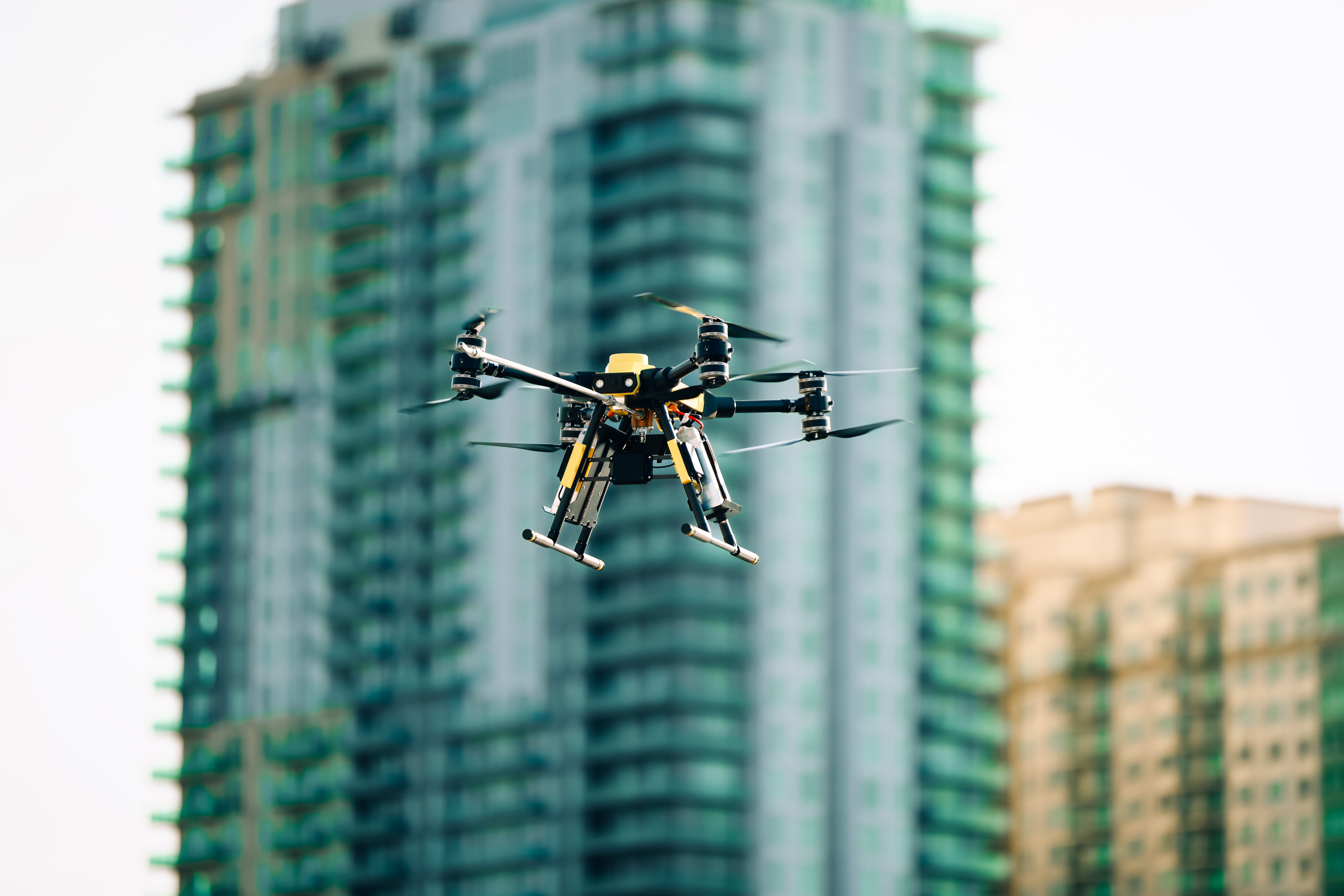
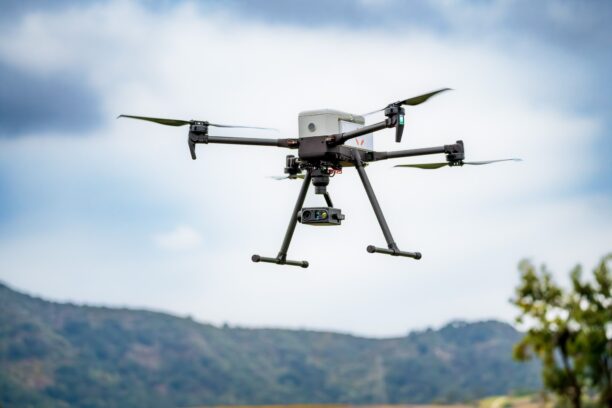
The FAA’s Remote ID framework effectively serves as a digital license plate system for drones. The rule requires most drones to broadcast identification and location information during flight.
Remote ID became fully enforceable in 2024. From the beginning, the rule generated resistance from some recreational pilots, FPV operators, privacy advocates, and commercial users. Critics argued that publicly broadcast location data could expose sensitive operations, business activity, infrastructure inspections, or proprietary flight patterns.
Industry advocates generally accepted Remote ID as a necessary step toward broader integration into the National Airspace System. Many also recognized that advanced operations such as beyond visual line of sight (BVLOS) flight would likely require some form of cooperative electronic visibility.
Still, the rule established an important precedent: aircraft operating in shared low-altitude airspace may be expected to continuously broadcast their identity and location.
Universal Conspicuity Is Becoming Part of a Larger Digital Infrastructure
The aviation industry increasingly assumes that future airspace will rely on networked visibility.
That includes:
- ADS-B
- Remote ID
- UTM systems
- Network-based traffic management
- Cooperative detect-and-avoid systems
- Digital routing and authorization systems
For drone operators, especially those conducting BVLOS flights, electronic visibility may eventually become unavoidable.
But conspicuity is no longer just a transponder problem.
It is becoming part of a much larger digital aviation infrastructure built around constant connectivity, shared situational awareness, and automated coordination between aircraft and ground systems.
In traditional aviation, ADS-B primarily functions as a broadcast system for traffic awareness. In the drone ecosystem, however, visibility systems are increasingly tied to software platforms, network services, cloud-based management tools, and regulatory compliance frameworks.
The FAA’s BVLOS proposal references electronically detectable aircraft and alternative methods of electronic conspicuity as part of scalable airspace integration. That evolution changes the stakes surrounding visibility systems.
As aircraft become more digitally connected, operators may begin asking broader questions about how broadcast and tracking data could eventually be used for:
- operational monitoring
- automated enforcement
- airspace access management
- infrastructure coordination
- future fee structures
The AOPA debate over ADS-B billing highlights why those concerns matter.
The Industry Already Sees the Privacy Debate Emerging
Researchers have increasingly examined the tension between accountability and privacy in Remote ID systems.
Several academic studies have warned that publicly broadcast drone location data could allow persistent tracking of operators or sensitive operations. Other researchers have explored authenticated Remote ID systems designed to prevent spoofing while maintaining operational utility.
Those debates may become more important as drone traffic scales.
The drone industry has largely accepted the idea that electronic visibility is necessary for integration. The unresolved question is how that visibility data will ultimately be used.
The Risk to Airspace Integration
The core challenge is not technological. It is behavioral. Universal conspicuity only works if operators willingly participate.
If pilots or drone operators begin to see electronic visibility primarily as a liability rather than a safety benefit, participation incentives may weaken.
That creates a difficult balancing act for regulators. The FAA, NASA, industry groups, and technology providers all envision increasingly connected low-altitude airspace. Those systems promise safer integration between drones, helicopters, advanced air mobility aircraft, and traditional aviation.
But connected airspace requires trust.
AOPA’s opposition to ADS-B billing highlights an issue the drone industry may soon face at much larger scale:
once a safety system becomes associated with surveillance, enforcement, or monetization, operators may begin treating visibility itself as a liability.
For an aviation system increasingly built around universal conspicuity, that could become a serious problem.
Read more:
- AOPA Calls on FAA to Address ADS-B Privacy and Enforcement Issues
- Why the ADS-B Fee Debate Matters for the Future of Drones and Shared Airspace
- House Blocks ROTOR Act; Focus Shifts to ALERT Act and ADS-B Policy

Miriam McNabb is the Editor-in-Chief of DRONELIFE and CEO of JobForDrones, a professional drone services marketplace, and a fascinated observer of the emerging drone industry and the regulatory environment for drones. Miriam has penned over 3,000 articles focused on the commercial drone space and is an international speaker and recognized figure in the industry. Miriam has a degree from the University of Chicago and over 20 years of experience in high tech sales and marketing for new technologies.
For drone industry consulting or writing, Email Miriam.
TWITTER:@spaldingbarker
Subscribe to DroneLife here.
When this Remote ID entered the Airspace, my drones and aircraft sit wasting away….a hobby became untenable because of cost and location. Where I once was able to notify the Airport of all the Pertinent information associated with the drone and Call them back when operations ceased now is unlikely to happen….my drones are grounded with Geofencing.
They made it so everyone flies except my house whether they can come that low or not…..
Where are my rights as a Disabled Citizen