
SkyElements displays first drone scoreboard at World Cup
By DRONELIFE Features Editor Jim Magill
As World Cup fever grips the U.S., fans in Seattle are being treated to a new way to share in the excitement, with the final scores of the matches played there displayed in lights, as part of a drone show held above the city’s famous skyline.
The world’s first drone scoreboard debuted in Seattle next to the city’s iconic Space Needle on June 15 following the first match of the tournament at the Lumen Field, which has temporarily been renamed Seattle Stadium. The match, between Belgium and Egypt match ended in a 1-1 tie.
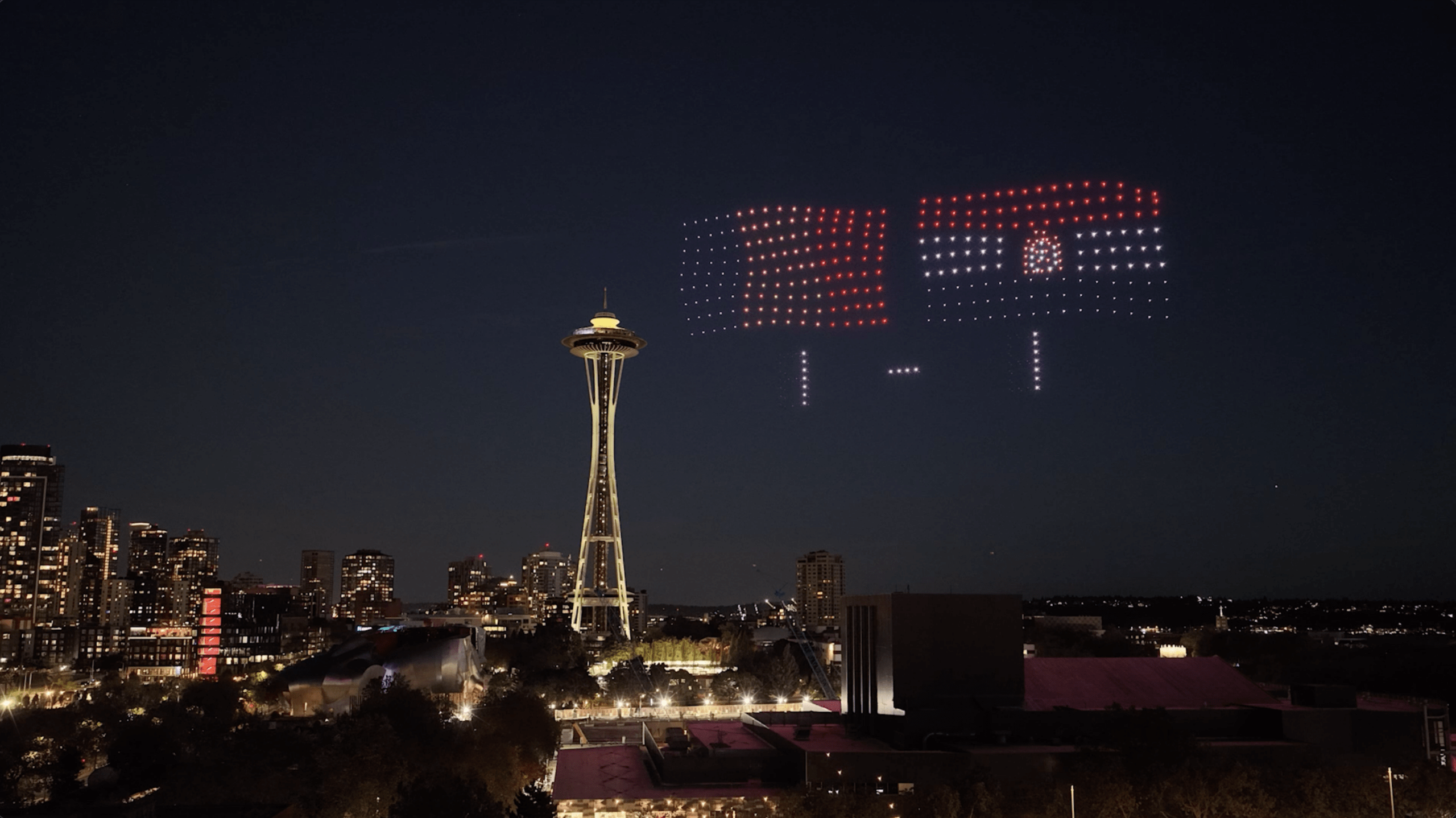
Visit Seattle, the city’s destination marketing organization, sponsored the scoreboard display, part of a larger drone show staged by SkyElements.
Hayes Walsh, content director for SkyElements, said the UAV light show company has had to make special preparations to present the world’s first display of its type anywhere in the world.
“It’s a little bit more legwork, but we are happy to do it just to make it a fun, exciting moment when it’s lit up in the sky,” he said.
For SkyElements, which has orchestrated and flown some of the largest drone shows in the world, incorporating a scoreboard displaying the results of a contest taking place the same day as the UAV display presented a unique challenge, as most such shows are carefully preprogrammed well ahead of launch time.
“They are predetermined, pre-designed, locked in position. You usually have to go through approvals with your clients for days, weeks, even months in advance,” he said. “So, to do this requires our team to be really focused and dialed in, so that we can actually change those numbers, because it’s not like just flipping an LED screen or updating your computer screen.”
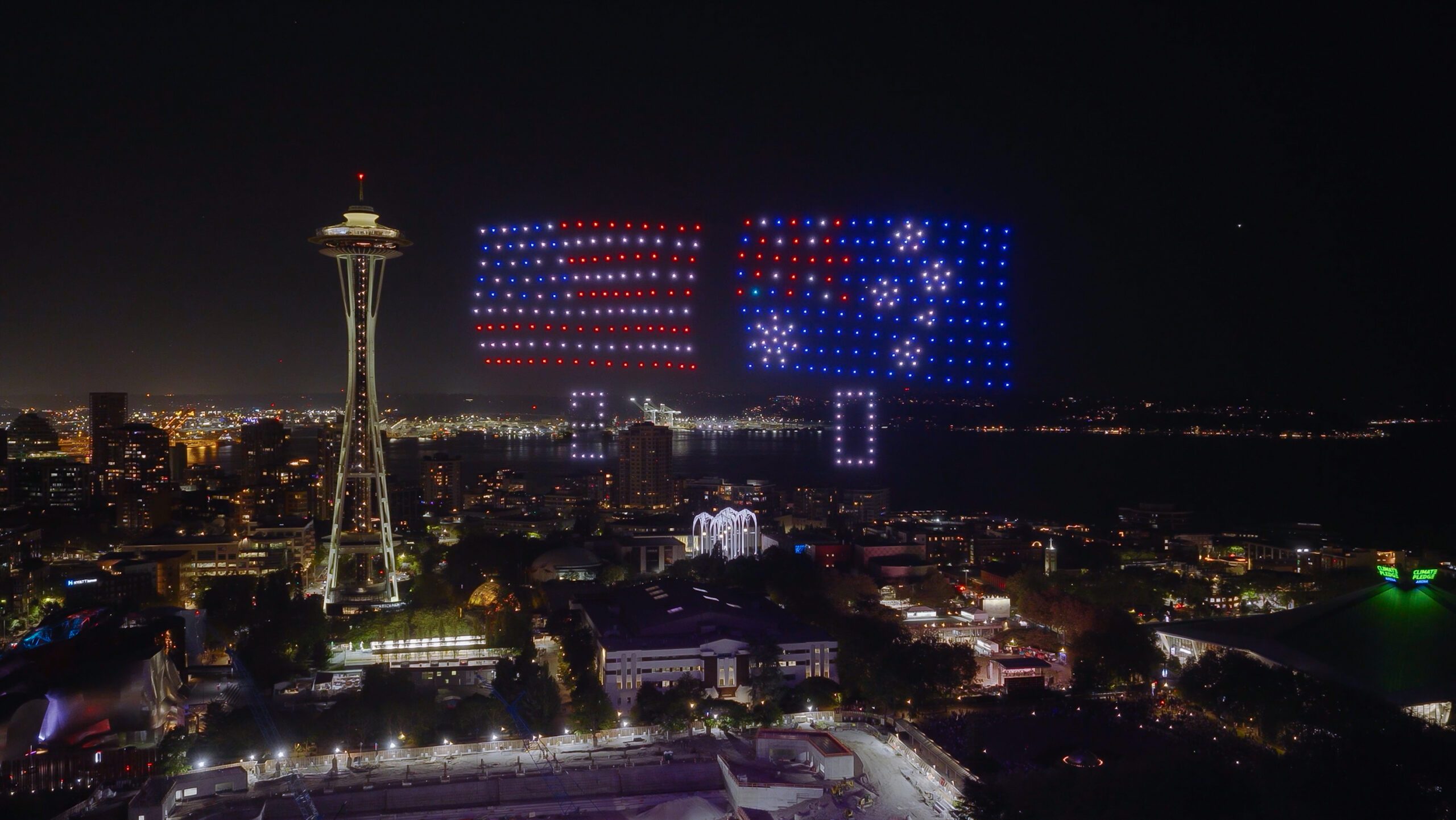
In as little as 30 to 45 minutes after the conclusion of the match, the proper lighting sequences have to be coordinated and the drones placed in the proper launching position. Walsh said the work involves close coordination among the different specialist teams staging the drone display.
First, the animation team needs to update the 3D programming software, which controls the look of the show. “Then they have to export those files, those path files, which probably takes 15 to 20 minutes,” he said. Then, with all the drones laid out in their launch position, the UAV pilot will push the software instructions to the drones.
“That’s really why there is still a little bit of a technical limitation in terms of this is why you don’t see an actual drone scoreboard flying above an MLB stadium quite yet, because there’s not enough time to do it,” Walsh said. “But we’re always happy to just keep pushing the boundaries of the technology and eventually everyone else will catch up to what we’re trying to do. That’s our philosophy here.”
Only a small section of the drones involved in the larger show are required to display the number that will indicate the final score. For the World Cup, the task is made somewhat simpler because of the limited number of scores possible in a typical soccer match.
“Obviously we know it’s probably going to be between zero and 10. I don’t know of any football game that scored over 10,” he said.
Walsh, who was not in town for the initial match in Seattle, said he was especially excited to view the scoreboard display scheduled to take place following the match between the U.S. national team and Australia on Friday, June 19.
Seattle is one of 11 U.S. cities to host World Cup matches. Visit Seattle announced that the drone scoreboard has been scheduled to be displayed at all six matches to take place in the city.
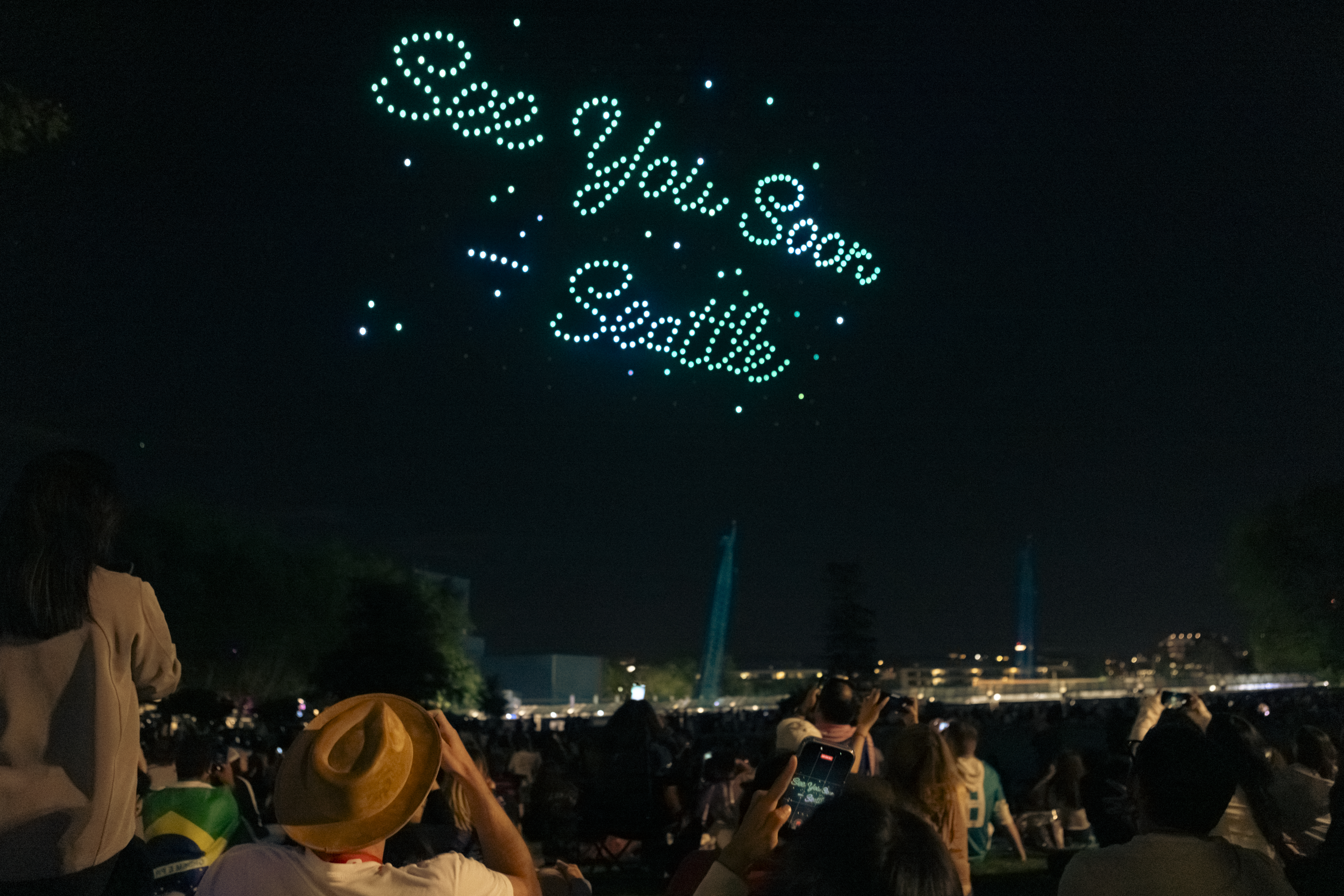
The next matches to take place in Seattle include: Bosnia & Herzegovina vs. Qatar on June 24; Egypt vs. Iran on June 26; Round of 32 match on July 1, and Round of 16 match on July 6.
“Celebrating the city’s first ever World Cup, the scoreboard embodies Seattle’s history of innovation (the city is home to some of the world’s most influential tech companies), strong sports fandom and iconic skyline,” Visit Seattle said in a statement about the scoreboard display.
Read more:
- Sky Elements Sets Guinness World Record with 5,000-Drone Gingerbread Village Holiday Show
- Sky Elements’ Super Bowl Drone Show Lights Up Las Vegas
- More Than 50 Drones Seized Near World Cup Events

Jim Magill is a Houston-based writer with almost a quarter-century of experience covering technical and economic developments in the oil and gas industry. After retiring in December 2019 as a senior editor with S&P Global Platts, Jim began writing about emerging technologies, such as artificial intelligence, robots and drones, and the ways in which they’re contributing to our society. In addition to DroneLife, Jim is a contributor to Forbes.com and his work has appeared in the Houston Chronicle, U.S. News & World Report, and Unmanned Systems, a publication of the Association for Unmanned Vehicle Systems International

The debut of the drone scoreboard at the World Cup in Seattle is such an innovative way to bring fans closer to the action! It’s exciting to think about how technology can enhance these big events and create unforgettable moments above the city skyline. I often rely on local event websites for real-time updates on matches and activities during major events like this.
Seeing the drone scoreboard during the World Cup matches in Seattle sounds incredible! It’s a unique way to enhance the fan experience and celebrate the event. recommended