
New thermal imaging module combines SXGA resolution with compact size and U.S. manufacturing
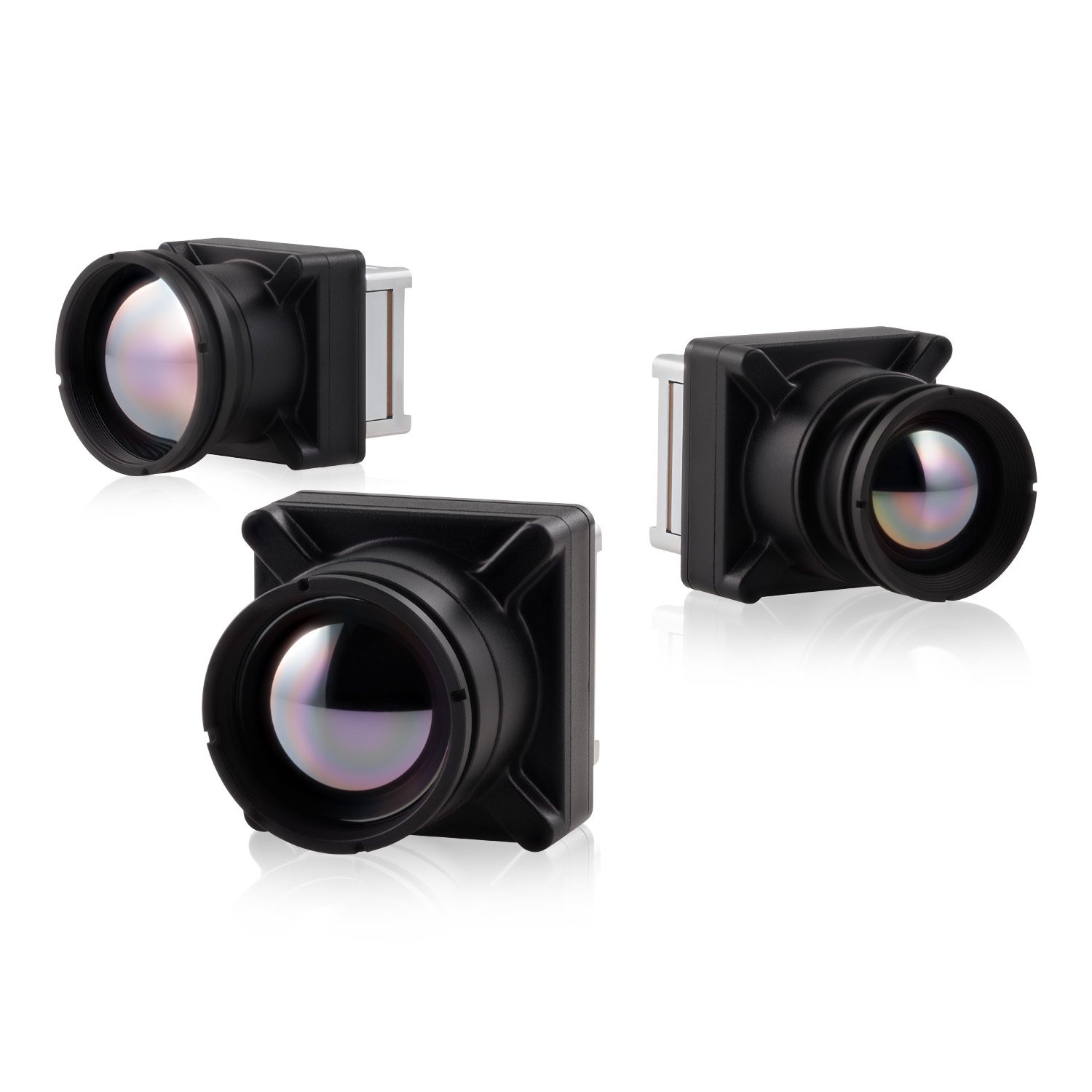
Teledyne FLIR OEM has announced the Boson SX8, a new longwave infrared (LWIR) thermal camera module designed for defense, industrial, and uncrewed systems applications. According to the company, the Boson SX8 is the first NDAA-compliant, volume-production uncooled thermal camera module to combine SXGA (1280 × 1024) resolution with an 8-micron pixel pitch.
The launch comes as government agencies and many commercial operators place greater emphasis on trusted supply chains and domestically manufactured components for drones, counter-UAS systems, and other critical technologies.
The Boson SX8 is manufactured in the United States and is ITAR-free. Teledyne FLIR says the new camera delivers four times the resolution of today’s high-volume VGA (640 × 512) thermal camera modules while maintaining a compact size suitable for size, weight, and power (SWaP) constrained platforms.
The company says the camera is designed for applications including uncrewed aircraft systems (UAS), counter-UAS, perimeter security, intelligence, surveillance and reconnaissance (ISR), handheld devices, seekers, and visual augmentation systems.
Thermal Imaging Becomes a Core Drone Capability
Thermal cameras have become increasingly common across the drone industry. Public safety agencies use them for search and rescue, firefighting, and law enforcement operations. Infrastructure operators rely on thermal imaging for inspections of power lines, solar installations, and industrial facilities. Defense and security users deploy thermal payloads for surveillance and target detection in low-light and nighttime conditions.
As these applications expand, manufacturers continue to seek higher-resolution sensors that can improve detection and identification performance without adding significant weight or power requirements.
The Boson SX8’s 1280 × 1024 resolution represents a significant increase in image detail compared to the 640 × 512 sensors commonly found in many uncooled thermal imaging systems. Higher-resolution thermal imagery can help operators detect and classify objects at longer distances while maintaining a wider field of view.
Focus on Performance and SWaP
According to Teledyne FLIR, the Boson SX8’s 8-micron pixel architecture reduces pixel area by 55% compared to the standard 12-micron LWIR format.
“By reducing pixel area by 55% compared to the standard 12-micron LWIR pixel format, Boson SX8 represents a transformational moment for thermal imaging,” said Paul Clayton, President, Teledyne FLIR OEM. “By pairing this advanced 8-micron pixel architecture with SXGA thermal resolution at full-rate production, we’re giving customers greater situational awareness and longer effective range without compromising SWaP or supply-chain confidence.”
The company also introduced the Boson SX8-CZ 15-75, which integrates a 15-75 mm continuous zoom lens. Teledyne FLIR says the lens and camera are engineered and calibrated as a single system, providing focus-through-zoom capability and reducing integration complexity for OEM customers.
Supply Chain Considerations Continue to Drive Procurement
The release reflects a broader trend across the drone and defense sectors. Procurement decisions increasingly consider not only aircraft performance but also the origin of critical subsystems such as sensors, communications equipment, and onboard electronics.
Federal programs and many state and local agencies have adopted purchasing requirements that emphasize trusted supply chains and NDAA-compliant technologies. As a result, component manufacturers are increasingly highlighting domestic production and compliance credentials alongside technical performance.
For drone manufacturers serving government, public safety, and defense customers, access to NDAA-compliant payload options can help simplify procurement and certification processes while reducing supply chain concerns.
Teledyne FLIR OEM will demonstrate the Boson SX8 family at Eurosatory 2026 in Paris.
Read more:
- Teledyne FLIR OEM Launches Prism Software to Detect Small Drones at Longer Range
- Teledyne FLIR Defense Expands Payload Program with Emesent Hovermap for GPS-Denied Operations
- Teledyne FLIR OEM Upgrades Prism SKR Software for Autonomous Target Recognition

Miriam McNabb is the Editor-in-Chief of DRONELIFE and CEO of JobForDrones, a professional drone services marketplace, and a fascinated observer of the emerging drone industry and the regulatory environment for drones. Miriam has penned over 3,000 articles focused on the commercial drone space and is an international speaker and recognized figure in the industry. Miriam has a degree from the University of Chicago and over 20 years of experience in high tech sales and marketing for new technologies.
For drone industry consulting or writing, Email Miriam.
TWITTER:@spaldingbarker
Subscribe to DroneLife here.


Leave a Reply