
Additive Manufacturing Helps Build Flexibility, Scale, and Supply Chain Resilience
At AUVSI’s XPONENTIAL 2026 conference in Detroit, one theme surfaced repeatedly across panels and interviews: the future of U.S. drone manufacturing may not look anything like the mass-production model pioneered in China.
Instead of trying to recreate enormous factories optimized for millions of identical consumer drones, many U.S. manufacturers are pursuing a different strategy. The focus is on flexibility, resilient supply chains, rapid iteration, and mission-specific production.
Interviews with representatives from HP Additive Manufacturing and discussions during a session with Robinson Unmanned (Ascent Aerosystems) highlighted how industrial-scale 3D printing is moving beyond prototyping and into production aerospace environments.
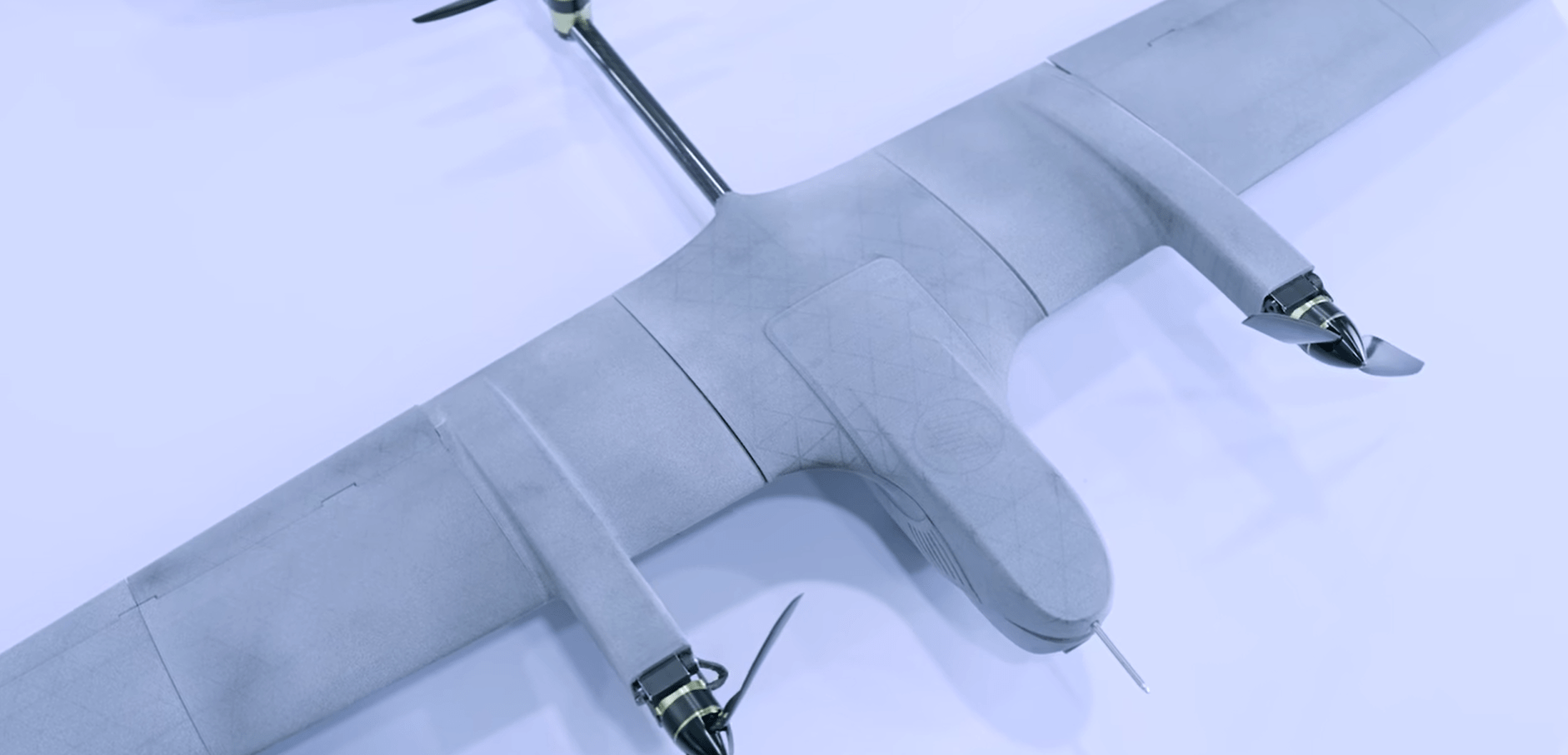
The shift reflects the realities of the U.S. drone market. Commercial, defense, and public safety operators often need specialized aircraft built in smaller volumes. Requirements change quickly. Systems may also need to evolve in response to mission feedback, new payloads, or changing regulations. Supply chain traceability is now non-negotiable.
That environment rewards manufacturing systems designed for adaptability rather than sheer volume.
Manufacturing for a Different Market
For years, the drone industry has been shaped by China’s consumer electronics ecosystem, where large production runs, centralized supply chains, and vertically integrated factories enabled rapid scaling and low costs.
But duplicating that system in the United States may be neither realistic nor necessary. Instead, U.S. manufacturers are building a more agile production model centered on smaller batches, customizable platforms, and faster redesign cycles.
That shift reflects the realities of today’s drone market. Sensors evolve rapidly. AI-enabled capabilities continue to expand. Operators frequently request design changes based on field experience, while defense requirements can shift within months. Many drones are no longer consumer products, but operational systems tailored to specific industrial, public safety, logistics, infrastructure, or defense missions.
Manufacturers increasingly need production systems that can adapt at the same pace.
Industrial additive manufacturing fits naturally into that framework. Unlike traditional manufacturing, additive manufacturing allows parts to be produced directly from digital designs without extensive tooling or molds. Components can be modified quickly without rebuilding production infrastructure, shortening the gap between design and deployment. Instead of waiting for tooling changes or production line modifications, manufacturers can update digital files and move directly into production.
For drone manufacturers, that creates several advantages. Airframes can be redesigned easily for new payloads or changing regulatory requirements. Parts can be strengthened or lightened quickly. Production can also move closer to final assembly, reducing dependence on overseas supply chains.
HP representatives emphasized that additive manufacturing has evolved well beyond prototyping. Industrial systems are now capable of producing end-use aerospace components at production scale with repeatable quality and traceability, capabilities that are becoming increasingly important for defense and dual-use programs that require both speed and manufacturing consistency.
During a session with drone manufacturers, speakers discussed how unmanned aviation development is increasingly driven by operational flexibility and supply chain realities rather than assumptions about large-scale production alone.
“[Using additive manufacturing] we can iterate, cycle very quickly. It helps the operator because it gets the product downrange more quickly – and it helps us to design for tolerances for ease of manufacturing,” said Paul Fermo, President of Robinson Unmanned (Ascent Aerosystems.)
That reflects a broader industry trend. Manufacturers are balancing three priorities simultaneously:
- Production scalability
- Domestic or allied supply chain sourcing
- Rapid iteration and customization
Traditional manufacturing methods often force tradeoffs between those goals. Additive manufacturing may help reduce them.
Designing for Manufacturing
Additive manufacturing is not simply a new way to produce existing parts. It also changes how engineers approach design itself.
HP described a growing focus on designing for manufacturing, where aircraft and component designs are engineered specifically for efficient printing, simplified assembly, and operational durability. The company has a drone team that combines aeronautics engineering expertise with additive manufacturing specialists to help manufacturers redesign parts and production workflows around those goals.
In practice, that can mean engineering components to maximize the number of parts that fit within a single production batch, reducing production time and cost. It can also involve simplifying assembly by printing labels or instructions directly onto components, designing parts so they only fit together one way, or even adding temporary “throwaway” structures that make difficult assembly tasks easier. One example discussed was incorporating removable guide features that simplify pulling cables through tight internal spaces inside an airframe. The part incorporating the throw-away guide is a piece of complex engineering – but one that means you need fewer people on an assembly line because it simplifies the process so much.
“You can come up with parts that cannot be produced any other way. Those small parts may be more expensive, but the whole manufacturing process is much cheaper,” pointed out Alex Monino, SVP and GP at HP Additive Manufacturing.
The approach reflects a broader shift in thinking. Instead of designing a product first and adapting it later for manufacturing, additive manufacturing allows production considerations to shape the design from the beginning.
This has been a feature that Robinson Unmanned utilizes in its process. Robinson Unmanned leverages Robinson’s helicopter manufacturing experience and manufacturing floor. The Unmanned team engineers up to a “ready to manufacture” stage and then hands it to the manufacturing team. “”There is a big difference between manufacturing at prototype level and manufacturing 4,000 drones,” Fermo points out. “We had to think about how to send the design over in a form that is as easy as possible to produce,” said Fermo.
Resilience as a Manufacturing Strategy
Supply chain resilience was another major topic throughout the conference.
Over the last several years, geopolitical tensions, component shortages, and regulatory uncertainty have pushed drone companies to rethink sourcing strategies. Government initiatives supporting domestic manufacturing have accelerated that shift.
“The supply chain in general is a bottleneck,” said Fermo. “We’ve been focused on tier one supplier bottleneck… now we have to look into tier 2 and tier 3 suppliers. Not just motors but capacitors, resistors… at the same time, we have fewer suppliers and more companies looking to those suppliers.”
With supply chain pressures mounting, the goal is not necessarily complete independence from global suppliers. It is reducing critical vulnerabilities and creating more flexibility.
Additive manufacturing supports that effort in several ways.
Manufacturers can utilize a mix of printed parts and very basic components, like carbon steel rods used for rigidity, available anywhere. They can reduce the need to store large inventory by producing parts on demand. Digital inventories can replace some physical stockpiles. Production can also be distributed across multiple facilities in different locations instead of concentrated in a single factory, limiting the need to ship large airframes overseas.
“We’ve tuned the process to use AI-enabled calibration to provide consistency, even if parts are produced in entirely different sites in different locations. This really supports flexibility and reliability,“ said Monino.
That flexibility may prove especially important for defense and public safety applications, where continuity of production matters as much as cost efficiency.
The model also aligns with the industry’s growing focus on modular drone architectures.
Instead of building one fixed aircraft, manufacturers are increasingly developing adaptable platforms that support different payloads, communications systems, and mission packages. Additive manufacturing allows components to evolve alongside those operational needs.
A New Industrial Model
Detroit provided an appropriate backdrop for the discussion.
For decades, the city symbolized large-scale industrial manufacturing. But many conversations at XPONENTIAL focused on how advanced manufacturing is changing.
The future may involve fewer massive production lines dedicated to a single product and more digitally driven manufacturing systems capable of adapting quickly to changing demands.
Drone manufacturing appears to be moving in that direction.
Rather than competing directly with high-volume consumer electronics production, many U.S. drone companies are prioritizing speed, adaptability, and specialized capability.
Read more:
- Designing the Optimal Drone: How HP Additive Manufacturing Enables Speed, Scale, and Supply-Chain Flexibility
- Building Smarter, Flying Further: How HP’s Additive Manufacturing Team Is Changing the Way Drones Are Made
- At XPONENTIAL 2026, AUVSI Signals a New Phase for the Drone Industry

Miriam McNabb is the Editor-in-Chief of DRONELIFE and CEO of JobForDrones, a professional drone services marketplace, and a fascinated observer of the emerging drone industry and the regulatory environment for drones. Miriam has penned over 3,000 articles focused on the commercial drone space and is an international speaker and recognized figure in the industry. Miriam has a degree from the University of Chicago and over 20 years of experience in high tech sales and marketing for new technologies.
For drone industry consulting or writing, Email Miriam.
TWITTER:@spaldingbarker
Subscribe to DroneLife here.

Leave a Reply