
Cloud Century has implemented more than 200 drone docks in China, learning what urban drone operations require. In this guest post, Cloud Century’s Meng Xu says the future low-altitude economy depends on infrastructure, autonomous operations, drone docks, and AI-assisted operational intelligence. DRONELIFE does not accept or make payment for guest posts.
Urban UAV Operations Need More Than Drones: They Need Infrastructure
As the global low-altitude economy continues to develop, the drone industry is evolving from isolated aircraft applications toward urban-scale operational systems.
According to Meng Xu, Head of R&D and Chief System Architect at Cloud Century, the future challenge of the low-altitude economy is no longer simply getting drones into the air, but building infrastructure capable of supporting stable, long-term autonomous operations.
From Isolated Flights to Urban Operational Networks
Xu believes many UAV systems still rely heavily on manual scheduling and isolated workflows. While this may work for small-scale deployments, it becomes increasinglydifficult to scale when drones begin supporting urban inspection, environmental monitoring, emergency response, and smart city operations.
“That’s why the industry’s focus must gradually shift from aircraft themselves to the infrastructure layer behind them,” Xu explains.
Compared with individual drone capabilities, large-scale urban UAV operations depend far more heavily on operational continuity, airspace coordination, and system-level collaboration.
Drone Docks as Infrastructure Nodes
Over the past several years, Cloud Century has deployed more than 200 unattended drone dock systems.
In Qingdao’s Laoshan District, the company participated in building a district-wide low-altitude operational network consisting of 44 unattended drone dock systems. These systems have operated continuously for more than four years and currently support over 10,000 UAV missions annually.The systems are used in urban inspection, environmental monitoring, emergency response, and smart governance.
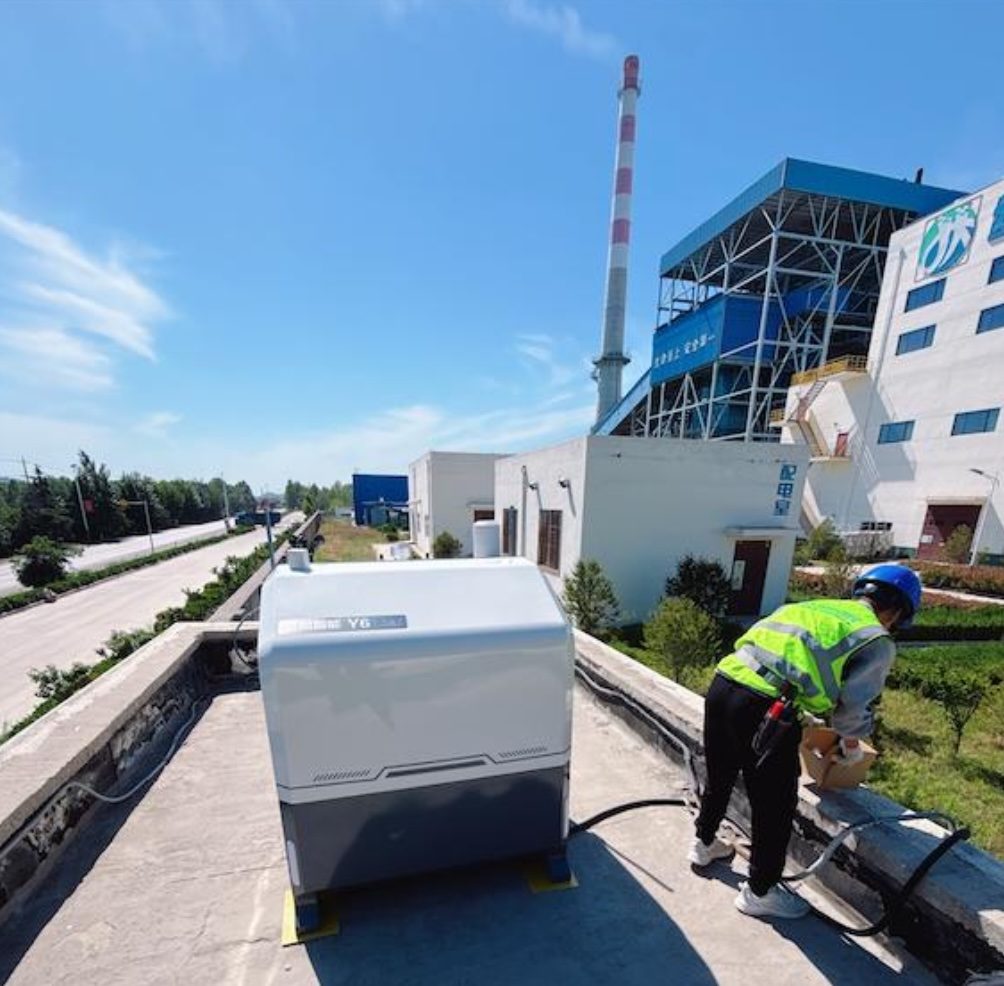
“Drone docks transform UAVs from standalone devices into persistent infrastructure nodes,” says Xu.
Industry observers note that while many UAV deployments globally still remain at the pilot-project stage, long-term unattended urban UAV infrastructure operating continuously at scale remains relatively uncommon.
The Real Challenge Is No Longer Flight — It Is Operations
As UAV systems continue scaling, Xu believes the real challenge is no longer flight itself, but maintaining stable operations in complex urban environments.
Real-world deployments are far more complicated than controlled testing environments. UAV systems must continuously operate despite GPS interference, communication instability, dense urban structures, dynamic airspace conditions, and persistent scheduling demands.
“Once systems reach a certain scale, the real challenge becomes operations,” Xu says.
Xu’s team focuses heavily on dynamic airspace adaptation, intelligent route replanning, remote diagnostics, and multi-UAV coordination. He also believes future low-altitude infrastructure will increasingly depend on AI-assisted operational intelligence capable of combining visual perception, telemetry data, environmental awareness, and operational events into real-time decision-making workflows.
The team has explored AI-assisted capabilities including multimodal scene recognition, intelligent event analysis, operational anomaly detection, and autonomous aerial lighting coordination for emergency-response scenarios.
“Future autonomous UAV systems will require more than automation. They will require operational intelligence capable of understanding complex environments and coordinating system-level responses.”
Xu also believes future autonomous operational systems will increasingly rely on agent-based coordination between UAVs, docking infrastructure, and sensing platforms operating under continuously changing environments.
Remote ID and Low-Altitude Safety Infrastructure
As low-altitude operational density continues to increase, airspace awareness is becoming increasingly important.
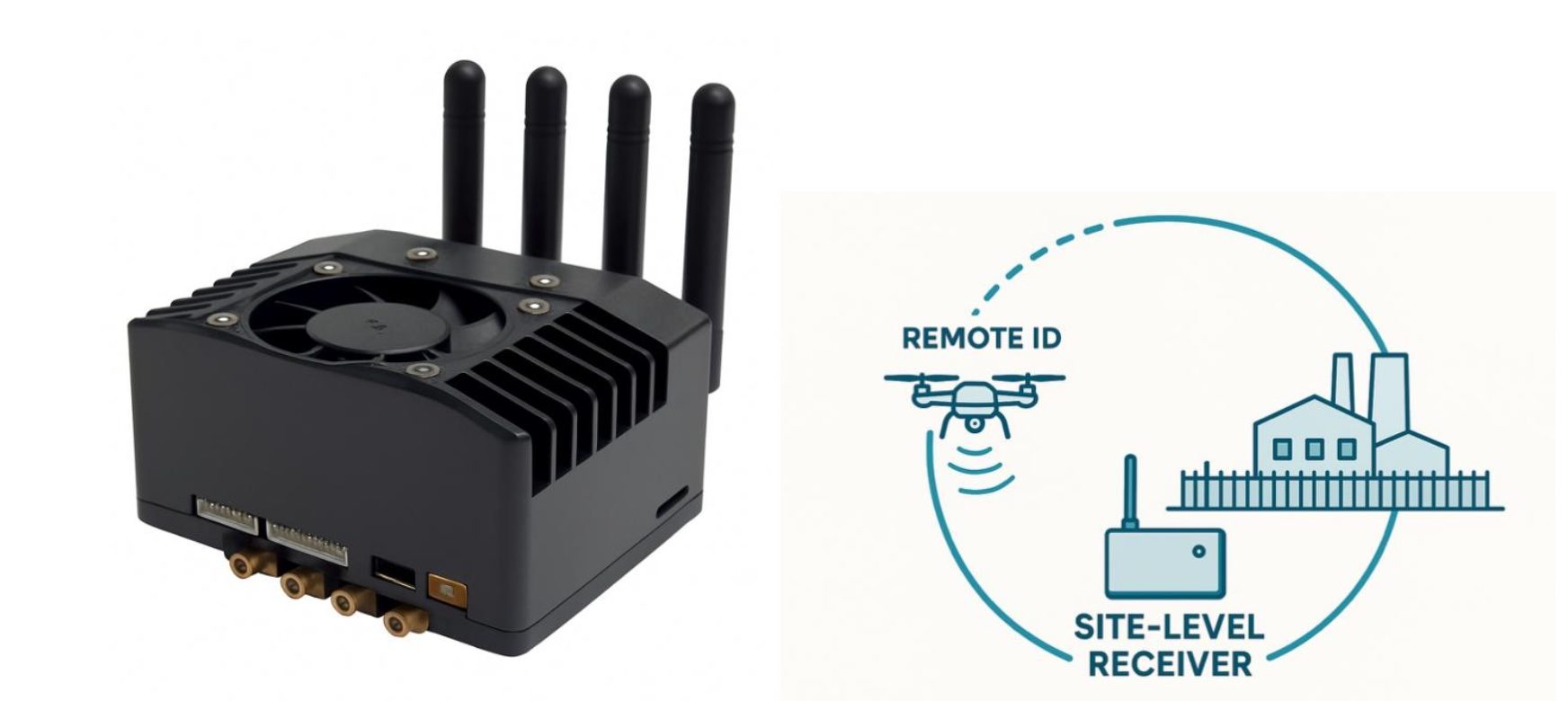
To support localized low-altitude awareness, Xu’s team integrated Remote ID-based detection and monitoring capabilities into its systems and continues researching the role of Remote ID in site-level low-altitude safety systems.
Beyond airspace awareness, Xu believes large-scale autonomous UAV infrastructure cannot rely entirely on a single positioning link or communication channel. To address this, his team developed an independent UAV recovery module capable of supporting drone location and retrieval during communication or positioning failures.
Precision Landing and the Next Phase of Infrastructure
Within unattended operational systems, precision landing remains one of the most important enabling technologies.Xu’s team developed a vision-assisted precision landing system capable of achieving approximately 99.5 percent landing success rates in real-world environments.
Looking ahead, Xu believes AI-enabled autonomous infrastructure will become increasingly important in large-area operational environments where human coverage is limited — particularly in scenarios such as remote infrastructure inspection, environmental monitoring, disaster management, and emergency response.
“The next phase of the industry will not simply be defined by more advanced drones. It will be defined by smarter, more stable, and more sustainable low-altitude operational infrastructure.”
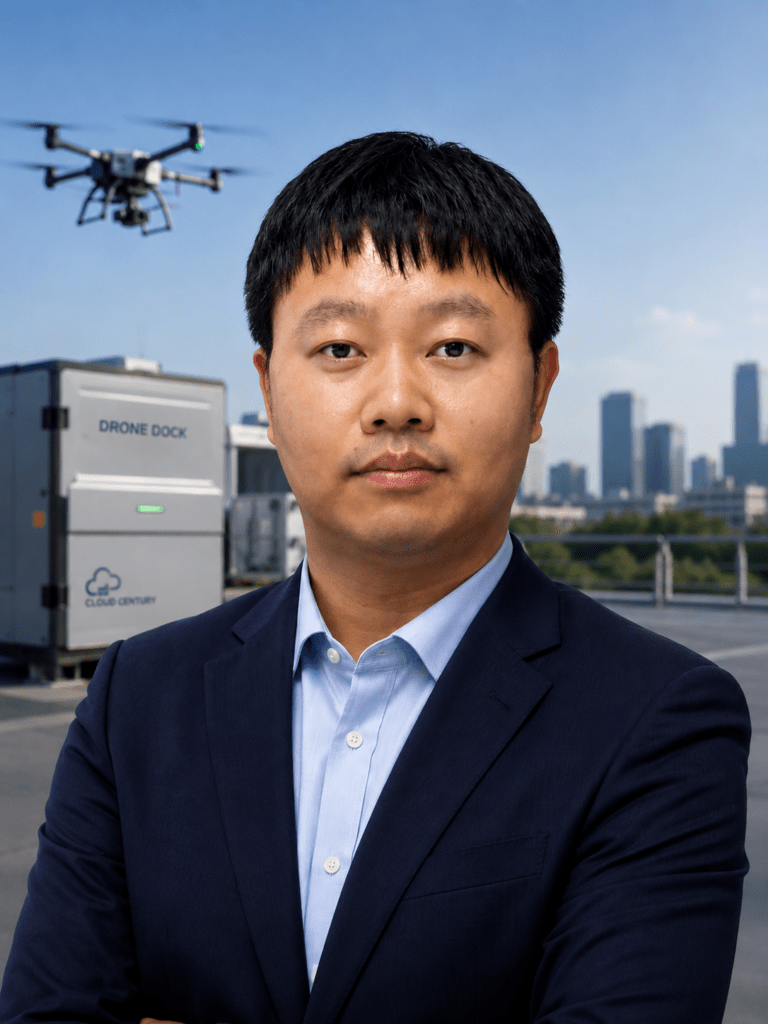 Meng Xu, IEEE Senior Member, is the Head of R&D and Chief System Architect at Qingdao Cloud Century Information Technology Co., Ltd., leading the development of city-scale autonomous UAV platforms and drone dock systems. He specializes in large-scale UAV deployment, precision landing, dynamic geo-fencing, multi-vendor integration, and AI-based perception for real-world UAV operations. Meng has contributed peer-reviewed IEEE publications, international conference presentations, and multiple patents in UAV safety and autonomous systems.
Read more:
- Inside the Coachella Valley’s Plan to Centralize Drone First Responder Operations
- Beijing’s Drone Ban Goes Into Effect Today: A New Model for Urban UAV Control
- Michigan’s Bet on the Low Altitude Economy: How M Air Connects Aerospace Innovation and Detroit Manufacturing

Miriam McNabb is the Editor-in-Chief of DRONELIFE and CEO of JobForDrones, a professional drone services marketplace, and a fascinated observer of the emerging drone industry and the regulatory environment for drones. Miriam has penned over 3,000 articles focused on the commercial drone space and is an international speaker and recognized figure in the industry. Miriam has a degree from the University of Chicago and over 20 years of experience in high tech sales and marketing for new technologies.
For drone industry consulting or writing, Email Miriam.
TWITTER:@spaldingbarker
Subscribe to DroneLife here.

Leave a Reply