
Papa Johns, Wing, and Google Cloud offer a glimpse of a future where AI systems, autonomous logistics, and drone delivery operate as one connected ecosystem.
Drone delivery stories often focus on the aircraft. Payloads. Batteries. Range. Regulations.
But a recent partnership between Wing and Papa Johns suggests the commercial drone industry may be entering a different phase. One where the drone itself becomes only one part of a much larger autonomous commerce system.
The companies announced a drone delivery pilot tied to what Papa Johns describes as “end-to-end agentic commerce.” The phrase sounds like classic tech jargon. Behind the buzzwords, however, is a meaningful shift in how retailers, AI systems, and autonomous logistics networks may eventually work together.
The pilot itself is modest. Customers in the Charlotte, North Carolina area can order select menu items for drone delivery through Wing’s platform.
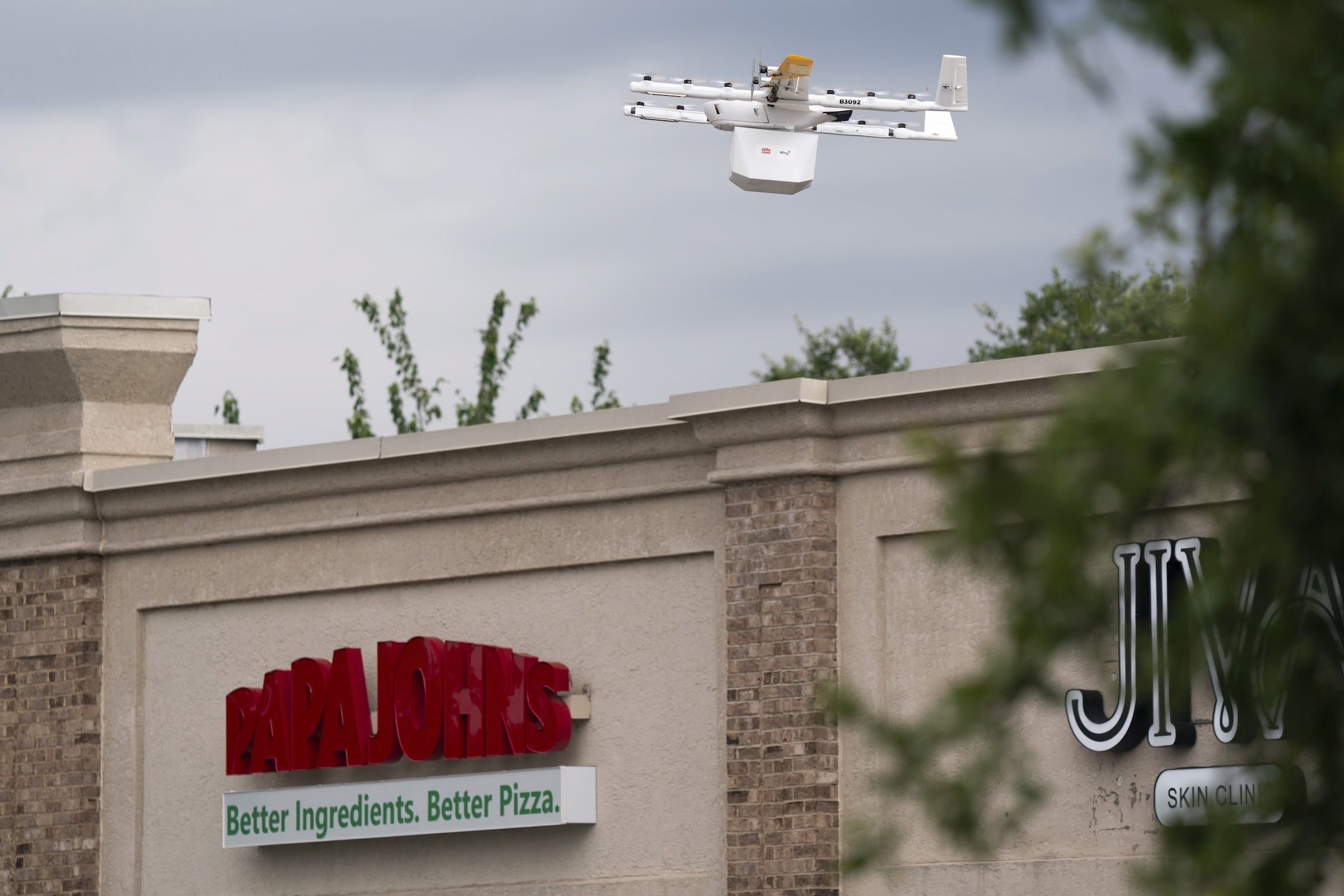
Interestingly, the initial focus is not traditional pizza. Instead, the first drone-delivered products are toasted Papa Johns Papadias sandwiches.That detail matters.
Pizza remains surprisingly difficult for drone delivery. Large pizza boxes create aerodynamic and packaging challenges, and maintaining food quality during flight is complicated. Toasted sandwiches are easier to package, easier to stabilize, and better suited to current drone payload systems. (In a recent DRONELIFE Interview, drone delivery company Flytrex says they’ve solved the pizza problem.)
In many ways, the Papadia may be a more realistic bridge between traditional food delivery and scalable autonomous logistics. But the bigger story may not be the food at all.
What “Agentic Commerce” Actually Means
The phrase “agentic commerce” has begun appearing more frequently in AI and retail discussions. Google Cloud describes it as a new commerce model where AI agents can increasingly act on behalf of consumers.
Unlike traditional apps, which wait for users to manually enter commands, agentic systems are designed to help manage goals and workflows. The “end-to-end” portion is equally important. Historically, automation in retail has been fragmented. Ordering systems, kitchen operations, dispatch software, delivery networks, and customer communication tools often operate separately.
Agentic commerce attempts to connect those layers into one coordinated system.
IBM describes the concept as AI agents acting “on behalf of consumers.” In practical terms, that means future retail systems may increasingly handle routine decisions automatically, from recommending products to coordinating fulfillment and delivery timing.
That may sound futuristic, but the early pieces are already emerging.
Meet Lou AI
Papa Johns recently introduced “Lou AI,” which the company describes as a next-generation digital pizza assistant built on Google Cloud technology.
According to the company, Lou AI is designed to personalize ordering, simplify group purchases, recommend deals, and adapt in real time. RetailTech Innovation Hub described the platform as an “always-on digital concierge.”
Today, systems like Lou AI still function largely as enhanced customer interfaces. But they point toward a broader future where AI increasingly manages the retail workflow itself.
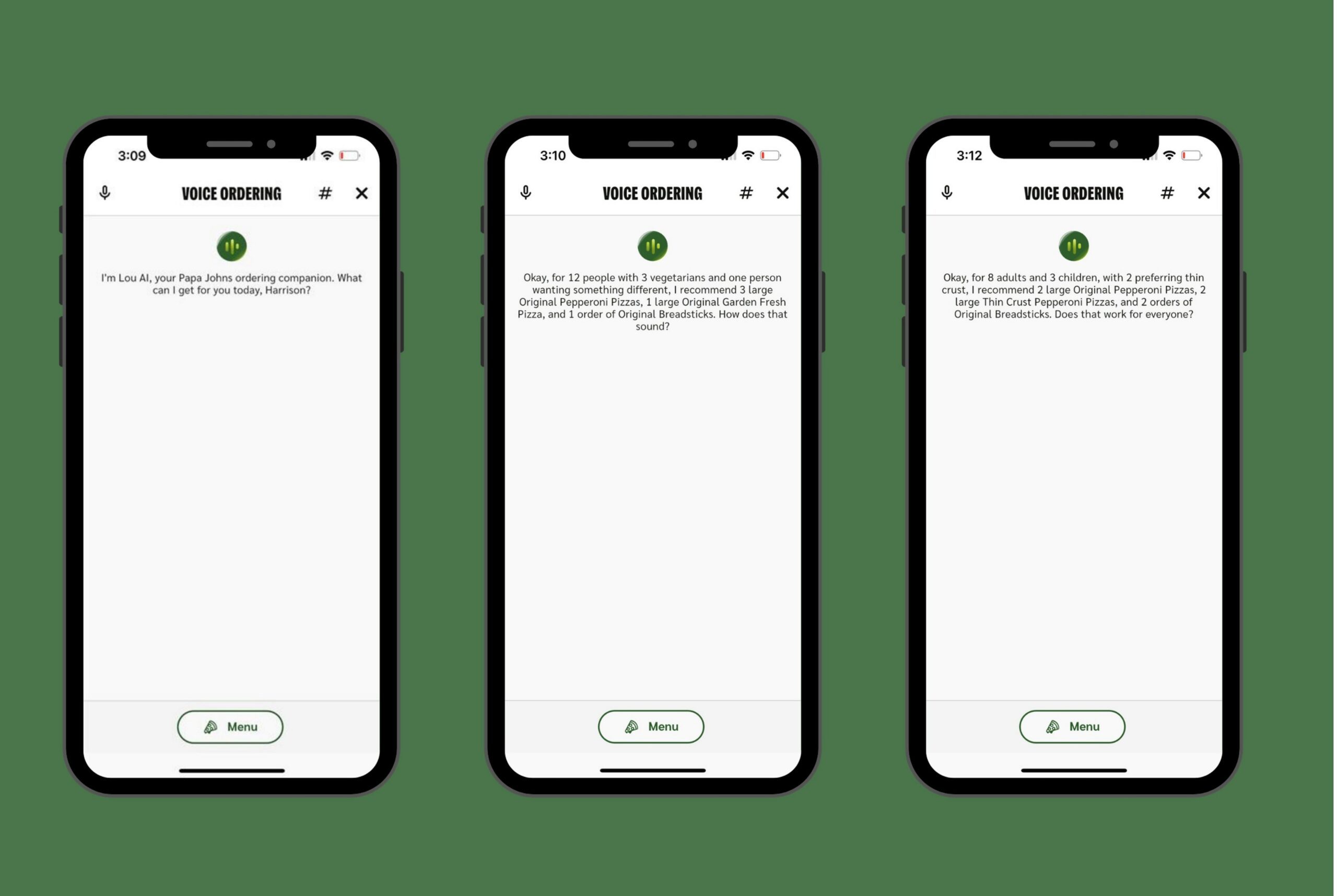
Instead of manually navigating menus, future customers might simply tell an AI assistant to order dinner for the family at a certain time. The system could potentially determine likely preferences, account for dietary restrictions, apply discounts, predict preparation timing, and coordinate delivery automatically.
That is where drone delivery becomes especially interesting.
The Drone Is Only One Layer
For years, drone delivery companies focused primarily on aviation challenges such as beyond visual line of sight operations, detect-and-avoid systems, battery life, payload capacity, and regulatory approvals.
Those challenges remain significant. But the industry has increasingly learned that flying the drone is often the easiest part.
Scaling delivery economically is much harder.
The real complexity involves coordinating restaurant workflows, inventory management, dispatch timing, routing efficiency, packaging, weather response, and customer communication. Many drone delivery pilots proved technically successful but struggled to scale because retail logistics are inherently complicated.
This is why the Wing and Papa Johns announcement may represent something larger than another restaurant delivery test.
The companies are attempting to connect:
- AI-driven ordering
- fulfillment automation
- retail operations
- autonomous aviation
into one integrated system.
In that model, the drone becomes less of a standalone product and more of an infrastructure layer inside a larger autonomous commerce network.
Why Pizza Is Still a Useful Test Case
Pizza delivery has long served as a proving ground for futuristic delivery concepts. Autonomous cars, sidewalk robots, and drones all seem to begin with food delivery for a reason.
Restaurant delivery combines high order frequency, predictable suburban geography, repeat customer behavior, and time-sensitive fulfillment. That makes it valuable training ground for AI-assisted logistics systems.
Even the shift toward Papadias instead of pizza reflects how the industry is evolving from flashy demonstrations toward operational practicality.
The focus is moving from whether a drone can carry food to whether autonomous delivery systems can operate reliably at scale.
That is a far more important question.
The Bigger Industry Shift
The Wing and Papa Johns partnership also reflects a larger transition happening across retail and logistics. Companies including Amazon Prime Air, Zipline, and Flytrex are increasingly building integrated delivery ecosystems rather than standalone drone programs.
The likely winners in autonomous delivery may not simply be the companies with the best aircraft. They may be the companies that best combine AI systems, customer data, fulfillment operations, retail integrations, and autonomous logistics into one seamless workflow.
That could eventually expand well beyond restaurant delivery into pharmacy delivery, grocery fulfillment, healthcare logistics, and suburban same-hour commerce.
Read more:
- The Challenge of Drone Pizza Delivery: Flytrex Finally Solved It
- Walmart and Wing Launch Major Drone Delivery Expansion from Houston
- Zipline Surpasses 2 Million Deliveries with Expansion to Houston and Phoenix
- Amazon Halts Drone Delivery Plans in Italy: A Reminder That Business Factors Matter As Much As Regulations

Miriam McNabb is the Editor-in-Chief of DRONELIFE and CEO of JobForDrones, a professional drone services marketplace, and a fascinated observer of the emerging drone industry and the regulatory environment for drones. Miriam has penned over 3,000 articles focused on the commercial drone space and is an international speaker and recognized figure in the industry. Miriam has a degree from the University of Chicago and over 20 years of experience in high tech sales and marketing for new technologies.
For drone industry consulting or writing, Email Miriam.
TWITTER:@spaldingbarker
Subscribe to DroneLife here.
Leave a Reply