
Trump order aims to promote commercial drone exports
By DRONELIFE Features Editor Jim Magill
While U.S. drone manufacturers are hopeful that a presidential executive order could make it easier for them to sell their products abroad, a number of challenges remain to be overcome before the country becomes a leading exporter of non-military UAVs.
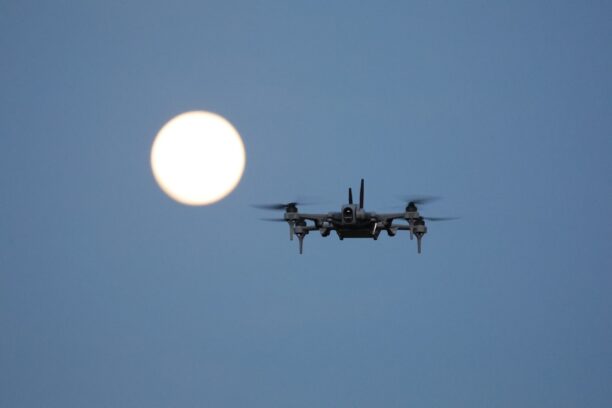
The order, Unleashing American Drone Dominance, was one of two UAV-related orders issued by President Trump on June 6. It seeks “to accelerate testing and to enable routine drone operations, scale up domestic production, and expand the export of trusted, American-manufactured drone technologies to global markets.”
Brendan Stewart, vice president of regulatory affairs at UAS manufacturer Red Cat Holdings, said the document, and its companion order, Restoring American Airspace Sovereignty, mark a new beginning for U.S. drone producers.
“We believe that this is a good signal in the right direction,” he said. “It’s what are frankly visionary solutions compared to what we’ve seen over the past probably 10 to 15 years in this industry.”
Although China’s DJI accounts for an estimated 90% of the global consumer drone market, North American (U.S. and Canada) exports account for about 40% of entire global UAS market share, with much of that total comprising high-end military drones, according to a GlobalNewswire report.
Under the current regulatory framework, drones are classified as a “dual-use” item, meaning one that can be used for both military and civilian/commercial purposes. Depending on the capabilities of their hardware and software, the rules regarding drone exports can fall under two regulatory umbrellas.
Exports of unmanned aerial systems (UAS) designed primarily for military uses are regulated under the International Traffic in Arms Regulations (ITAR) rules administered by the U.S. State Department. For drones that are designed for civilian use, but which also might be deployed for military uses, their export falls under the Commerce Department’s Export Administration Regulations (EAR).
The Trump executive order seeks to promote the export of U.S.-made civilian UAS. It calls on the Commerce secretary, in coordination with the secretaries of the State, Defense and Energy departments, “to review and, as appropriate and consistent with applicable law, amend export control regulations,” within 90 days in order “to enable the expedited export of United States-manufactured civil UAS to foreign partners.”
In addition, the order directs a host of top administration export officials — including the secretary of Defense, the president of the Export-Import Bank of the United States, the chief executive officer of the United States International Development Finance Corporation and the director of the Trade and Development Agency — to “prioritize and support the export of United States-manufactured civil UAS and related systems.” This support could come in the form of direct loans and loan guarantees; equity investments and co-financing; political risk insurance and credit guarantees; technical assistance, feasibility studies and grant mechanisms; and market access facilitation.
Stewart said the financial incentives offered by the federal government to domestic manufacturers, such as using the Export Import Bank of the United States to offer financing mechanisms, could go a long way toward encouraging the export of U.S. drones.
“One of the challenges that we run into as a manufacturer is that a lot of our foreign competition is state-subsidized,” he said. “We can’t be price-comparable unless we receive state backing to get to price parity.” Financial help from the Export-Import Bank could help make U.S.-manufactured drones become more price-competitive on the international market.
He said another way in which the executive order could help incentivize domestic drone exports would be to reform the way drones are classified under the ITAR system.
“ITAR prevents certain exports to certain countries based on the capabilities of the drone,” he said. For example, Red Cat faces restrictions if it attempts to sell a drone with advanced thermal capabilities to an overseas customer. In another example of unnecessary red tape, Stewart described a friend who has barriers to the export of the agricultural spray drones he produces.
“The US government considers that a potential chemical weapons delivery platform. However, you can go buy imported spray drones off the shelf right now, so there’s a natural imbalance right there,” he said.
However, determining which drone-related technologies are benign and which should be restricted for export could prove to be a difficult puzzle to solve for government officials, said Dr. Jamey Jacob, executive director for the Oklahoma Aerospace Institute for Research and Education.
“it’s really about releasing some of those restrictions for components that are widely used in consumer and recreational drone applications,” he said. However, he cautioned that, “The same components that go into a drone could go into a cruise missile.”
Another factor that export regulators must take into account when deciding whether to allow the export of a drone manufactured in the United States, is the percentage of components that go into that UAV that might come from what is considered to be a hostile foreign country, Jacob said. Many manufacturers of drones that are built in the U.S. nevertheless relay on the use of components made in China to power them and facilitate their operation.
“That’s just the nature of the supply chain. Our access to this technology is really limited to where it can be produced in mass quantities relatively cheaply,” Jacob said.
“That’s why it’s very difficult for US government to come in and say, ‘Hey, we’re going to ban the use of Chinese drones., What does that mean? Does that mean just drones that are manufactured in China? Does that mean drones that are using Chinese components? Are all components equal in that ban?” he asked.
He added that while this problem tends to have the most impact on the consumer drone market, “you see this across the entire board with drone technology.”
Jacob said that while the president’s executive orders mark a good first step in efforts to ramp up the export of civilian drones from the U.S., much work needs to be done to complete that process.
“This is an executive order and that in and of itself doesn’t mean a lot until directives are flowed down to the proper authorities, in this case the FAA, and you find appropriations to be able to support those,” he said.
“This provides at least some strategy to be able to help counter some of those issues. I don’t know if it will provide either all of the funding nor the really detailed battle plans in order to be able to make that happen. It’s a challenging problem.”
Read more:
- Trump Issues Executive Orders on Drones
- Trump’s Drone Executive Orders: Beyond the Fact Sheets
- Executive Order Lifts eVTOL Stocks, Tackles Regulatory Barriers, but Leaves Technical Challenges
 Jim Magill is a Houston-based writer with almost a quarter-century of experience covering technical and economic developments in the oil and gas industry. After retiring in December 2019 as a senior editor with S&P Global Platts, Jim began writing about emerging technologies, such as artificial intelligence, robots and drones, and the ways in which they’re contributing to our society. In addition to DroneLife, Jim is a contributor to Forbes.com and his work has appeared in the Houston Chronicle, U.S. News & World Report, and Unmanned Systems, a publication of the Association for Unmanned Vehicle Systems International.



This made me rethink my own approach. Thanks for putting this together. I鈥檒l definitely share this with others.