
Maintaining New York City’s gleaming skyscrapers has long been a dangerous and costly endeavor—but new drone technology is changing that reality. In this guest post, Aviram Adi, founder of SkyClean NYC, explains how drones are revolutionizing building maintenance by improving safety, cutting costs, and enhancing sustainability. DRONELIFE neither makes nor accepts payment for guest posts.
Drone technology in action: Cleaning a glass facade on a commercial building
By Aviram Adi, Founder of SkyClean NYC

In the concrete canyons of New York City, maintaining the gleaming facades of our iconic skyline has traditionally been a dangerous, expensive, and disruptive operation. For decades, the sight of workers suspended on scaffolding or dangling from ropes has been as much a part of the city landscape as yellow taxis and hot dog stands. But a revolution is quietly taking place above the busy streets of Manhattan, Brooklyn, and beyond. Drone technology is transforming how we approach building maintenance, offering safer, more cost-effective, and less disruptive alternatives to traditional methods. As someone working at the intersection of drone technology and building maintenance, I’ve witnessed firsthand how this technology is changing the game for property managers across major urban centers. Here are five ways drone technology is revolutionizing urban building maintenance.
1. Eliminating Height-Related Safety Risks
The statistics are sobering. According to the Bureau of Labor Statistics, falls remain one of the leading causes of workplace fatalities in the construction and maintenance industry. In 2023 alone, over 300 workers lost their lives due to falls from heights, with many of these accidents occurring during building maintenance operations. Drone technology fundamentally changes this equation by keeping workers safely on the ground. Instead of suspending maintenance
personnel hundreds of feet in the air, specialized cleaning drones equipped with advanced stabilization systems can access building exteriors while operators remain firmly on terra firma. The safety implications are profound. A recent analysis of 50 major building maintenance projects across NYC showed that drone-based operations experienced zero safety incidents, compared to an average of 2.3 reportable incidents per project using traditional methods. For property managers, this translates to more than just worker safety—it means reduced liability exposure, lower insurance premiums, and peace of mind. As one Manhattan property manager told me, “The elimination of height-related risks alone justified our switch to drone maintenance, regardless of other benefits.”
2. Dramatic Cost Reduction Through Technological Efficiency
The economics of building maintenance are being completely rewritten by drone technology. Traditional facade and window cleaning for a typical 20-story commercial building in Manhattan involves numerous expenses beyond the actual cleaning service: – Scaffolding installation and rental: $15,000-25,000 – Multiple permits and sidewalk closure fees: $2,000-5,000 – Extended labor costs due to setup/breakdown time: $8,000-12,000 – Insurance premium increases: $3,000-7,000 annually – Tenant disruption costs (difficult to quantify but significant) By contrast, drone cleaning operations eliminate most of these expenses. Our data from over 100 building maintenance projects shows an average cost reduction of 40-50% compared to traditional methods. A case in point: A 32-story commercial building in Midtown Manhattan recently switched from traditional to drone-based cleaning: – Previous annual cleaning cost: $72,000 – New annual cleaning cost: $38,000 – Annual savings: $34,000 (47%) – Cleaning duration reduced from 18 days to 5 days – Zero tenant complaints (compared to 12 the previous year) These aren’t isolated results. Across different building types and sizes, the cost advantages of drone technology remain consistent, with ROI typically realized from the very first maintenance cycle.

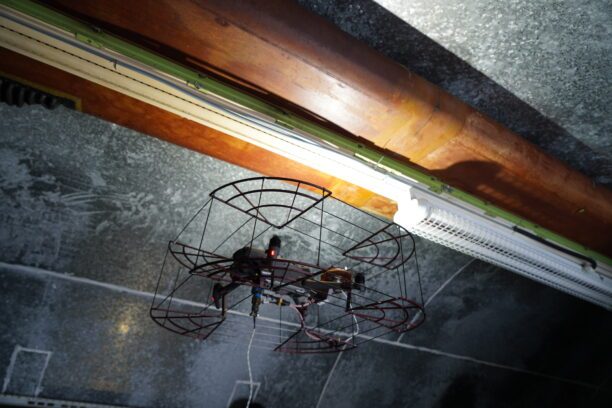
Close-up view of a cleaning drone in operation on a glass facade
3. Advanced Imaging and Inspection Capabilities
Perhaps the most underappreciated aspect of drone maintenance technology is its dual-purpose capability. Modern maintenance drones don’t just clean—they simultaneously perform detailed inspections that would be costly or impossible with traditional methods. Today’s specialized maintenance drones are equipped with: – 4K or higher resolution cameras – Thermal imaging capabilities – LiDAR sensors for precise distance measurement – AI-powered defect detection algorithms This technology allows for the identification of potential issues before they become major problems. During routine cleaning operations, drones can detect: – Facade cracks and deterioration – Failing sealants around windows and joints – Water infiltration points – Thermal anomalies indicating insulation failures – Structural deformations The value of this early detection capability is substantial. In a recent project on a 15-year-old residential tower in Brooklyn, our drone inspection identified deteriorating sealant around several window installations that would have led to significant water damage if left unaddressed. The property manager estimated the early detection saved approximately $120,000 in potential repair costs. Furthermore, the comprehensive documentation provided by drone inspections is proving invaluable for building maintenance planning, compliance reporting, and insurance purposes. The detailed visual record of a building’s condition at regular intervals creates an unprecedented level of transparency and accountability in maintenance operations.
4. Environmental Impact Reduction
As urban centers like New York City implement increasingly stringent environmental regulations, the sustainability advantages of drone maintenance technology are becoming a significant factor in adoption decisions. Traditional building cleaning methods are notoriously resource-intensive: – Water usage: 500-1,000 gallons per day for a typical high-rise cleaning – Chemical cleaning agents: 10-20 gallons per project – Carbon emissions from transportation and operation of heavy equipment – Significant noise pollution affecting tenants and neighbors Drone cleaning technology dramatically reduces these environmental impacts: – Water conservation: 70-80% reduction in water usage through precision application – Reduced chemical usage: 60-70% less cleaning solution required – Lower carbon footprint: No fuel-consuming lifts or transportation of heavy equipment – Noise pollution reduction: Drone operations are significantly quieter than traditional cleaning These environmental benefits help buildings meet sustainability goals and comply with local environmental regulations. For buildings pursuing or maintaining LEED certification, the reduced environmental impact of drone maintenance can contribute valuable points toward certification requirements. A luxury residential development in Manhattan recently highlighted the water conservation aspect in their sustainability report, noting that switching to drone cleaning saved approximately 22,000 gallons of water annually—a compelling statistic for environmentally conscious residents and investors.
5. Technological Integration with Smart Building Systems
The most forward-looking aspect of drone maintenance technology is its potential for integration with broader smart building systems. As buildings become increasingly connected through IoT (Internet of Things) technology, drone maintenance is evolving from a standalone service to an integrated component of comprehensive building management systems. Advanced implementations are already demonstrating this potential: – Integration with Building Information Modeling (BIM) systems for precise maintenance planning – Automated scheduling based on environmental data (pollution levels, weather patterns) – Digital twin creation of building exteriors for predictive maintenance – Data-driven cleaning frequency optimization – Maintenance record integration with property management software One particularly innovative application we’ve implemented involves using machine learning algorithms to analyze historical cleaning data alongside environmental factors. This system can predict when specific sections of a building will require maintenance, allowing for optimized scheduling that maximizes cleaning effectiveness while minimizing costs. A commercial property in Downtown Brooklyn is using this approach to reduce their cleaning frequency by 30% while maintaining the same appearance standards—an example of how data-driven maintenance is creating new efficiencies beyond the direct benefits of the drone technology itself.
Challenges and Solutions in Urban Drone Operations
Despite these revolutionary benefits, implementing drone maintenance in dense urban environments like New York City presents unique challenges that require specialized solutions. Regulatory Considerations Operating drones in urban airspace involves navigating complex FAA regulations and local restrictions. Professional drone maintenance providers must: – Maintain proper Part 107 certification for all operators – Secure appropriate airspace authorizations – Comply with local regulations regarding drone operations – Carry specialized
insurance coverage Technical Challenges The urban environment presents specific technical challenges: – Wind tunnels between buildings requiring advanced stabilization systems – GPS signal interference from tall structures – Limited takeoff and landing areas – Complex flight patterns to access all building surfaces These challenges have driven significant innovation in drone technology specifically for urban maintenance applications. The latest generation of maintenance drones features: – Advanced stabilization systems that can operate in winds up to 25 mph – Redundant navigation systems that don’t rely solely on GPS – Specialized cleaning attachments designed for different surface materials – Collision avoidance systems for safe operation near buildings Best Practices for Implementation Based on our experience implementing drone maintenance across hundreds of NYC buildings, we’ve developed a set of best practices: 1. Comprehensive site assessment before operations 2. Custom flight planning for each building’s unique architecture 3. Notification protocols for tenants and neighboring buildings 4. Weather monitoring and scheduling flexibility 5. Integration with existing maintenance schedules and building operations These practices ensure safe, effective, and minimally disruptive maintenance operations even in the most challenging urban environments.
The Future of Urban Building Maintenance
As drone technology continues to evolve, we’re only beginning to scratch the surface of its potential impact on urban building maintenance. Several emerging trends point to even more transformative applications in the near future: Autonomous Operations While current drone maintenance requires skilled operators, the industry is moving toward increasingly autonomous systems. Advanced path-planning algorithms and computer vision systems are enabling drones to navigate complex building exteriors with minimal human intervention, further reducing operational costs. Expanded Service Capabilities Beyond cleaning and inspection, next-generation maintenance drones are being developed with capabilities for minor repairs and treatments: – Application of protective coatings and sealants – Installation of simple sensors and monitoring devices – Targeted treatments for biological growth or contamination – Minor repairs to sealants and accessible components AI-Powered Maintenance Planning Artificial intelligence is transforming how maintenance is planned and executed. By analyzing thousands of building inspections, AI systems can: – Predict maintenance needs before visible signs appear – Optimize cleaning schedules based on environmental exposure – Identify patterns of deterioration specific to building materials and designs – Recommend preventative measures to extend facade life Integration with Emerging Technologies The combination of drone technology with other emerging technologies promises even greater capabilities: – 5G connectivity enabling real-time high-definition video and data transmission – Edge computing for on-device analysis of building conditions – Augmented reality interfaces for maintenance planning and execution – Blockchain for immutable records of building condition and maintenance history
A New Era in Urban Building Maintenance
The integration of drone technology into urban building maintenance represents more than just an incremental improvement—it’s a fundamental shift in how we approach the care of our built environment. The five revolutionary aspects discussed—safety enhancement, cost reduction, advanced inspection capabilities, environmental benefits, and smart building integration—collectively create a compelling case for adoption. For property managers and building owners in urban centers, the question is increasingly not whether to adopt drone maintenance technology, but when and how to implement it most effectively. Those who embrace this technology early are already realizing significant competitive advantages in terms of cost, efficiency, and tenant satisfaction. As drone technology continues to evolve and integrate with broader building management systems, we can expect to see even more innovative applications that further transform urban building maintenance. The scaffolding that has long been a fixture of urban landscapes may soon be a relic of the past, replaced by the quiet efficiency of drone technology. The future of building maintenance isn’t just coming—it’s already here, hovering just outside your window.
Aviram Adi is the founder of SkyClean NYC, a drone cleaning service helping property managers across NYC reduce maintenance costs by up to 50% while eliminating safety risks. With extensive experience in both traditional building maintenance and drone technology, Aviram is at the forefront of implementing innovative maintenance solutions for urban buildings. For more information call (347) 688-2225.

Miriam McNabb is the Editor-in-Chief of DRONELIFE and CEO of JobForDrones, a professional drone services marketplace, and a fascinated observer of the emerging drone industry and the regulatory environment for drones. Miriam has penned over 3,000 articles focused on the commercial drone space and is an international speaker and recognized figure in the industry. Miriam has a degree from the University of Chicago and over 20 years of experience in high tech sales and marketing for new technologies.
For drone industry consulting or writing, Email Miriam.
TWITTER:@spaldingbarker
Subscribe to DroneLife here.
I’ve seen a noticeable difference when hiring professionals for power washing near me compared to trying DIY equipment. The results last longer, and they know how to handle different surfaces without causing damage. It’s especially helpful for maintaining curb appeal in commercial spaces where first impressions really matter.
Good article.
Thanks.