

Weather and Drone as First Responder: Scalable DFR Requires Trusted Digital Weather Services
By: Dawn Zoldi
All images courtesy Virginia Innovation Partnership.
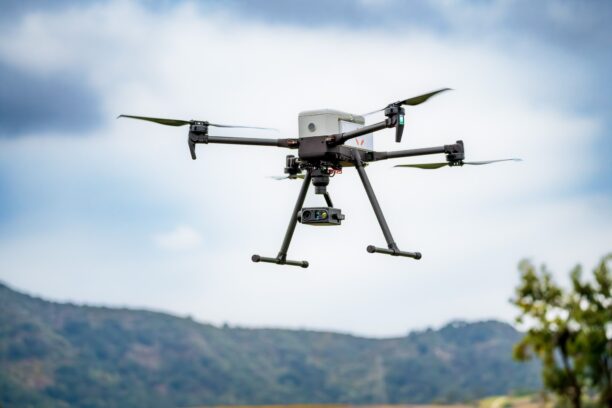
Drone as First Responder (DFR) programs, in which a remote pilot in command (RPIC) can instantly activate a drone in response to a 911 call to provide incident awareness and assessment before first responder deployment, has taken hold. Many public safety agencies have these programs. Those who don’t have them, want them.
With advances in technology, DFR will soon transition to the point where one RPIC will remotely fly several drones, beyond visual line of sight (BVLOS). These changes to operational constructs demand a related evolution in weather monitoring methods.
This past week, at the DRONERESPONDERS National Public Safety UAS Conference, an expert panel took the stage to discuss how to exploit weather to achieve more flight time, while maintaining the highest level of safety. Led by moderator Don Berchoff, CEO of TruWeather Solutions, the all-star panelists (Chris Zarzar, TruWeather’s Director Strategy and innovation; John Eberhardt, Managing Director at ATA Aviation; Dave Cameron, Field Engineer, City of Campbell DFR Program Manager for MatrixSpace; and Tyler Willhite, NASA Aerospace Engineer) agreed: scalable DFR requires trusted digital weather services.
Weather Impacts DFR
DFR removes first responders from the heat of the moment (sometimes literally, in the case of firefighters). It enhances awareness of the situation, defuses potentially hazardous scenarios and safeguards public safety officers and the community. Public safety organizations can only realize the full benefits of DFR if they can actually launch their drones. Weather, in particular micro weather conditions, can sometimes get in the way.
Micro weather, localized atmospheric conditions, can vary significantly over small distances. These conditions can be influenced by factors such as terrain (e.g., buildings in a city), bodies of water, fields or vegetation growth (e.g. forests). Micro weather may cause mission-critical variations in temperature, humidity, wind speed and direction, cloud cover and precipitation. For DFR RPICs, these micro weather conditions can significantly differ from those reported at airports and have a profound impact on operational decision-making. (See, e.g., this study on micro weather in North Carolina).
Setting A New Standard
Today, aviators can only use approved government sources of weather data from certified instruments which have undergone rigorous certification and validation processes. One of these systems, expensive Automated Weather Systems (ASOS) at airports, help inform the Meteorological Terminal Air Reports (METARs) used by all pilots.These sources do not take microclimates, specifically measurements below 5,000 feet above ground level (AGL), into account. (See
Berchoff questioned this status quo: “Why should RPICs have to decode a METAR? METAR codes were invented when we had a teletype. And the approved weather sources that feed into the METAR right now are not granular enough for drone operations.”
However, deploying strategically placed low-cost supplementary sensors to conduct comprehensive area monitoring could provide localized data to access key parameters, such cloud height and visibility.
“Great sensor technology is out there – something between an ASOS and a wind sock,” Berchoff explained. “There are plenty of reliable lower cost sensor technologies out there. We had to get the rules changed.”
For several years, Berchoff led the ASTM-38 Working Group which ultimately approved a new performance-based Weather Supplemental Data Service Provider (SDSP) specification. This new standard allows for the use of these sensors, contingent on a science-driven reliability case, without the need for traditional certification processes. The Federal Aviation Administration (FAA), which endorsed this initiative, is developing an Advisory Circular (AC) to implement it.
Harnessing the Data

Working with other industry partners, the FAA and National Aeronautics and Space Administration (NASA), TruWeather Solutions continues to test and demonstrate new sensor capabilities under waivers in controlled environments to fill in current data gaps at lower altitudes.
Utilizing the new ASTM weather standard, TruWeather and its partners now leverage the FAA’s recently introduced Near Term Application Process (NTAP). NTAP streamlines approval procedures by providing pre-designed templates for various use cases. This expedited approval process extends to third-party weather providers and other service providers in Uncrewed Aircraft System Traffic Management (UTM).
“We continue to compile a comprehensive package encompassing diverse weather sensor applications tailored to different operational scenarios. By aligning our chosen weather solutions with the new standard and innovative sensors, operators can utilize them under this waiver,” Berchoff explained.
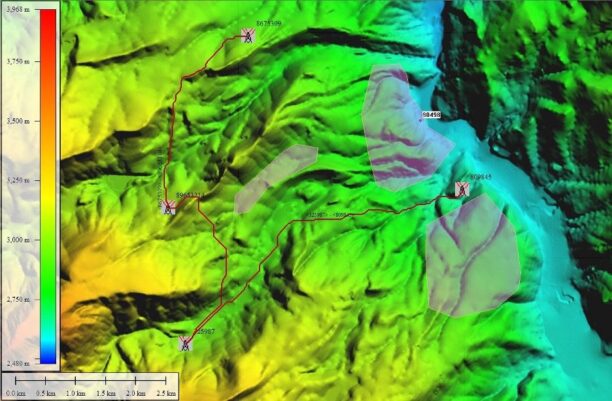
One project that leverages these authorities, a NASA-funded Urban Weather Sensing Infrastructure Testbed initiative in Hampton, Virginia, aims to provide detailed low altitude weather data and forecast services. It involves use of both ground-based weather sensor systems and two cutting-edge doppler LiDARs.
A System of Systems

To be most effective, DFR systems must be scalable and cover large areas, resilient and cost-effective. A system-of-systems approach, which incorporates weather and other related sensors, makes this best achievable.
ATA’s Eberhardt has produced the Flight Information Exchange (FIX), data networks for government agencies and the public, which creates a mesh of relatively inexpensive sensors that complement each other. He explained, “If you want to become an advanced capable system to respond, it takes an orchestration of capabilities. We can roll out a half dozen or dozen surveillance and weather sensors and put them all together as a public network to cover a wider area and share it across agencies. Then everyone has the same picture. This also provides more resilience. If three break, nine still work.”
Cameron of MatrixSpace, who runs a DFR program in California, added, “With TruWeather, we’ve already started creating this digital observer system-of-systems. You can join this ecosystem to use a wide range of integrated local sensors and data systems that include weather sensors, optical, radar and ADS-B. This can help build your safety case for the FAA. The best path to DFR and BVLOS program approval is to tap into an integrated system of systems.”
Tapping into the New Paradigm
Public safety organizations can benefit from the efforts of TruWeather’s ever-growing weather resilience consortium now. According to TruWeather’s Zarzar, “We are submitting a package to use various weather sensors for different operations including surveillance, DFR, drone-in-a-box (DIB) and BVLOS. Then operators can use them under our NTAP waiver.” This will allow public safety organizations and TruWeather to test these sensors and provide data to the FAA to move the AC forward.
“It’s a win-win-win,” exclaimed Zarzar. “We are going to be able to use these technologies before the AC has been released and everyone will be able to take advantage of this.”
Eberhardt chimed in, “And it doesn’t have to break the bank. Mixed mode networks drop costs dramatically.”
“Each individual piece is budget dust,” Berchoff noted. “The biggest expense for DFR is for the drone-in-a-box. All you are doing is building capabilities around that.”
Making the Case
At the end of the day, public safety needs to fly during emergency situations. Period.
Harnessing the data from advanced weather sensors can enhance situational awareness for operators beyond conventional METAR reports. New standards and streamlined regulatory processes have paved the way to use new weather sources, using cutting-edge technology. Access to comprehensive weather data, and other networked sensors, helps operators anticipate and navigate potential challenges, such as adverse wind conditions or sudden precipitation. This results in more informed decision-making and ensures safe operations, even in emergency situations, to guarantee mission success.
“You can get to calls faster for DFR if you use prevailing tailwinds,” Cameron said, “This is how you need to start using the power of accurate digital weather observation data to your advantage.”
“On the other hand,” Berchoff joined in, “what are those headwinds going to do to you? How long is it going to take you to get to the incident? What happens when you get there and experience moderate rain?” Ultimately, he said, it’s the responsibility of the RPIC to be ready for any condition, to achieve mission success.
Leveraging the power of more accurate weather data aids in truly understanding weather conditions, provides higher levels of confidence for planning and bolsters operational safety of flight.
“We all need to think about weather in a new way to make DFR scalable,” Berchoff said. “Reach out to us. We have world experts tackling this problem for you.”
Read more from the National Public Safety UAS Conference:
- Counter UAS Update, From the Floor of National Public Safety UAS Conference
- FAA Updates and Open Questions: From the Floor of the National Public Safety UAS Conference
- Former DOI Director on the Impact of the American Drone Security Act: From the Floor of the National Public Safety UAS Conference
 Dawn M.K. Zoldi (Colonel, USAF, Retired) is a licensed attorney with 28 years of combined active duty military and federal civil service to the U.S. Air Force. She is the CEO & Founder of P3 Tech Consulting and an internationally recognized expert on uncrewed aircraft system law and policy. Zoldi contributes to several magazines and hosts popular tech podcasts. Zoldi is also an Adjunct Professor for two universities, at the undergraduate and graduate levels. In 2022, she received the Airwards People’s Choice Industry Impactor Award, was recognized as one of the Top Women to Follow on LinkedIn and listed in the eVTOL Insights 2022 PowerBook. For more information, follow her on social media and visit her website at: https://www.

Miriam McNabb is the Editor-in-Chief of DRONELIFE and CEO of JobForDrones, a professional drone services marketplace, and a fascinated observer of the emerging drone industry and the regulatory environment for drones. Miriam has penned over 3,000 articles focused on the commercial drone space and is an international speaker and recognized figure in the industry. Miriam has a degree from the University of Chicago and over 20 years of experience in high tech sales and marketing for new technologies.
For drone industry consulting or writing, Email Miriam.
TWITTER:@spaldingbarker
Subscribe to DroneLife here.
[…] FAA Part 107 Certification: In the United States, this certification is required for commercial drone operations. […]