
This is Part 2 in a two-part series that summarizes my views on why video/film/cinema – not agriculture and farming — will be the largest driver of sUAS commercial businesses. In Part 1, I explore thoughts on the market for video/film/cinema, and below I outline why I believe agriculture will lag in market uptake.
The March 2013 market study produced by the Association of Unmanned Vehicle Systems International (AUVSI) titled “The Economic Impact of Unmanned Aircraft Systems Integration in the United States,” says precision agriculture and public safety will make up more than 90% of the market growth for unmanned aerial systems. The report confidently states, “…the commercial agriculture market is by far the largest segment, dwarfing all others.”
I don’t buy it, and here’s why:
Let’s start with the AUVSI forecast. Read what one commenter said in my last post:
“There is a basic problem with the AUVSI study methodology – it took the total arable land area of Japan and divided it by the number of registered UAS performing agricultural roles in that country to provide a demand factor. It then divided the total amount of arable land in the United States by that same demand factor and used this to forecast its prospective future demand for the agricultural sector as a whole. The problem is, the Japanese agricultural land areas do not correlate in size, capacity, or type of agriculture as performed in the United States. In fact the Japanese usage is largely restricted to spraying of rice paddies on small allotments as a replacement for labor which has shifted to the cities. The only possible comparison that the Japanese land area to UAS numbers ratio that could have potential validity is to compare the Japanese ratio with the total amount of land used in rice cultivation in the United States. That is a very different equation than that used by the AUVSI study and can be predicted to give a very different set of economic figures as a result. AUVSI has used very bad modelling to build its argument on, and its figures should be used very, very, very cautiously.”
He’s right. So how do we get a proper forecast? That will take some time to work out and look for material from me on that later. For now let’s look how modern agriculture has historically adopted and used technology, because the devil’s in the detail.
The farmer and the satellite
With the launch of the Landsat 1 satellite in 1972, NASA funded a number of investigations, including one that examined the spring vegetation green-up and subsequent summer and fall dry-down throughout the Great Plains region of the Central U.S. The researchers for this study found a way to quantify the biophysical characteristics of vegetation from the satellite images. They were able to calculate the ratio of the difference between the red and infrared radiation being reflected back by plants on the ground as a means to determine the vigor of plant life. This led to a metric known as the Normalized Difference Vegetation Index, or NDVI.
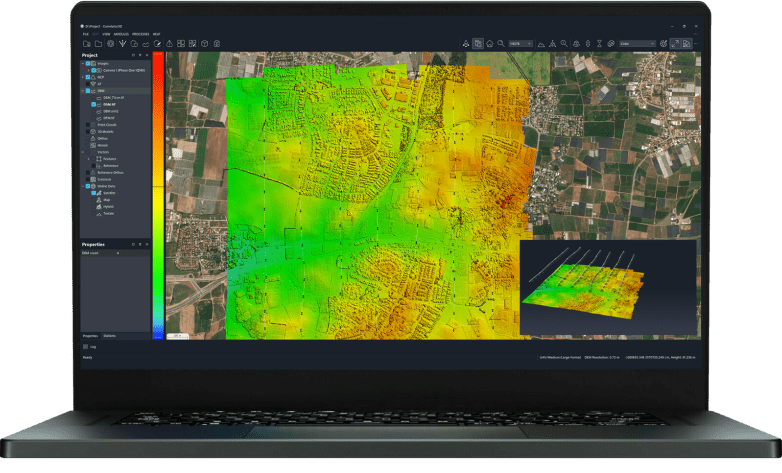
NDVI attempts to simply and quickly identify vegetated areas and their condition, and it remains the most well-known and used index to detect the health of live green plants today. Since early satellites acquired data in visible and near-infrared, it was natural to sell it packed up in maps to farmers.
NDVI allows agronomists and producers to identify problem areas and make timely decisions. Scouting maps can be requested at key dates as guidance for field visits. NDVI-based scout maps show variations in the field, so users know where to look in the field to determine where corrective or preventative measures are needed. Users can plan their field visit locations, take it to their GPS or a printable pdf report, and accurately evaluate the reasons for in-field variability.
Monitoring fields
NDVI maps are also used for monitoring fields, detecting anomalies, and for estimating crop yields. A strong correlation has been demonstrated between yields and NDVI at certain crop growth stages, as described in this research. Besides satellite-generated images, farmers also have access to more resolute imagery taken from manned aircraft. They can subscribe to a service like Terravion and GeoVantage to get NDVI maps every week if they like. The greater the frequency, the lower the cost per acre.
Here’s the rub: use of aerial imagery all sounds great until you start to look at the numbers. According to this report, only 21% of service providers (referred to as dealers in the report) who offer aerial imagery say it’s profitable, and it remains less profitable than other precision application services.
To spray or not to spray?
Here’s more interesting detail from examining how farmers are using technology today. Farmers know that plant growth regulators, insecticides, herbicides, fungicides, and mid-season fertilizers applied to selective locations can be effectively used to maximize farm output. Since NDVI maps from satellites or manned aircraft show variation of biomass within a field, farmers can divide those differences into management zones and address crop issues with variable rate spray applications (i.e. use more of this nutrient here, less of that pesticide there). The idea is to minimize costs while increasing yields by using as little as possible of expensive inputs, applying them precisely where and when they are needed.
But here’s some breaking news. The vast majority of farmers do not use variable rate prescriptions, and the trend is currently in the wrong direction. This well-regarded survey says variable rate pesticide application usage decreased from 22% of all farmers in 2011 to 16% in 2013. And it seems there is low adoption of aerial imaging when it comes to providing guidance for targeted nitrogen application as well. Nitrogen fertilizers, which are expensive, are one way farmers are able to achieve the high yields we see today with modern agriculture. But a recent poll of Iowa farmers’ nitrogen management practices show only 25% of corn and soy farmers use aerial imagery to reduce nitrogen application.
The key takeaway is this: farmers already have data-driven tools available to them to make better crop management decisions, and the vast majority are not using them.
The farmer and the drone
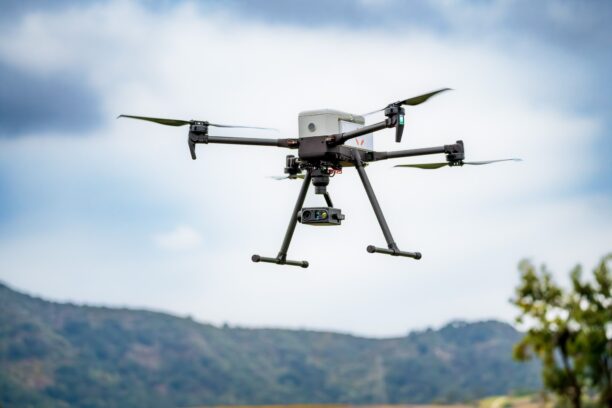
Today, farmers have access to low-cost drones with cameras and image sensors on board. These can be purchased for a few thousand dollars and flown by the farmer himself, or if they are lucky – and regulations aside – a local service provider. Basically, the drones can produce the same NDVI images and maps that specialized satellite or manned aircraft image specialist do – only now with much higher resolution images.
You would think farmers would be thrilled with the combination of higher resolution images and more precise GPS coordinates, since it lets them identify problem areas within a few feet of accuracy. In some cases, that is true, and others it is not. A higher resolution means you see more detail – detail that actually may detract from the usefulness of the image, like when it shows a shadow. Is that a shadow or a bad crop area? Hard to tell from the picture. For that, you need to see it with your own eyes, as is done with crop scouting.
Crop scouting – the act of inspecting crops to look for problems such as pests, weeds, irrigation issues, and so forth — is generally done today via a simple drive-by in a pickup or an ATV. Scouting is not a perfect science, and neither farmer nor service provider can assess every plant’s health and crop pressures. However, small drones are portable, and users can fly them over a field and see real-time images on a monitor. Since many farmers go out and scout their crops every couple of weeks manually, a drone crisscrossing the air could perform that work much more effectively. This helps cut down on the time identifying areas that need detail scouting and helps give the proper inputs on where to eventually spray weed control or pesticide, or even determine when it is time to harvest.
Beyond clarity of regulations, what’s missing for widespread adoption?
With the total value of our nation’s crop estimated at $140 billion per year, even a modest improvement in yield would have a substantial aggregate economic impact. However, it’s not yet clear how a UAS can deliver more usable data to a farmer or provides a cost benefit over the existing image solutions available to them today.
What seems to be missing from today’s solution is the expertise to interpret the data, correlate it with what is actually happening on the ground, and recommend a course of action. Services that deliver aerial imaging can provide the data, but someone needs to invest the time, money, skills and software to get actionable insight from it. Right now, it appears that’s not being done well by the dealers who already offer imaging from satellites and manned aircraft. How’s that going to change when they start offering imagery from drones?
Here are few more questions:
- What’s the incentive for a farmer to adopt a new imaging technology when 75% of farmers (at least in Iowa) don’t use what’s available to them now and dealers countrywide say it’s not profitable?
- How will drones change that equation? Why will farmers or crop consultants invest the money, time and expertise analyzing UAS-derived datasets if they aren’t doing the same with the manned aircraft or satellite derived data they can already purchase?
- How will UAS service providers convince farmers that their data is more valuable, more actionable, and has a high ROI when so many farmers seem to be relatively uninterested in data in the first place?
- Are farmers prepared to adjust their field operations and personnel to be data driven, and how will they make this happen?
I’m not saying that farmers won’t use UASs to improve their operations. Some absolutely will, and in fact, some already are. But given all of the underlying complexity, it does beg the question: Is agriculture really the biggest UAV market, “dwarfing all others” as AUVSI asserts?
My answer: I don’t think so. To date, I’ve seen no research that really digs into the critical questions underlying the use of UAS in agriculture and shows the rationale supporting massive, rapid adoption; this despite the massive bets – in terms of time and capital investment – that are already being placed. With so much at stake, I’m thinking that should be the subject of a considerable research study, one that I am currently formulating in partnership with Mitch Solomon of Aironovo Advisors (www.aironovo.com). Stay tuned for details. Until then, my bet is that film – not agriculture — is the biggest sUAS market.
Colin Snow is CEO and Founder of Drone Analyst and Koptervision. He loves making, programming, and piloting small drones. He got into this business because of his passion for photography and small business, and he finds it’s a great fit with his experience with model aircraft, electronics, software, industry research, and vendor analysis.
You can read more of Colin’s excellent insight into the commercial drone industry on his blogdroneanalyst.com
He is always open to field questions and comments so hit him up at colin@droneanalyst.com and follow him on Twitter @droneanalyst

Alan is serial entrepreneur, active angel investor, and a drone enthusiast. He co-founded DRONELIFE.com to address the emerging commercial market for drones and drone technology. Prior to DRONELIFE.com, Alan co-founded Where.com, ThinkingScreen Media, and Nurse.com. Recently, Alan has co-founded Crowditz.com, a leader in Equity Crowdfunding Data, Analytics, and Insights. Alan can be reached at alan(at)dronelife.com
Leave a Reply