• Skip to main content
  • Skip to secondary menu
  • Skip to primary sidebar
  • Skip to secondary sidebar
  • Skip to footer
  • DroneRacingLife
  • DroneFlyers
  • Newsletter
DroneLife

DRONELIFE

Stay up to date on all the latest Drone News

  • News
  • Products
  • Industries
    • Agriculture
    • Construction
    • Delivery
    • Dual Use
    • Inspection
    • Public Safety
    • Surveying
  • Enthusiasts
  • Regulations
  • Business
  • Video
  • Podcasts

Smarter Drone Searches May Require Less Replanning, Not More

October 6, 2026 by Miriam McNabb Leave a Comment

New research finds that autonomous vehicles can gain most of the benefits of adaptive route planning with only a few course corrections

For an autonomous drone searching for a missing person, new information can change the mission. An image or sensor reading may suggest that the aircraft should search somewhere else.

But how often does the drone need to reconsider its route?

New research from The University of Texas at Austin suggests the answer may be surprisingly few times. Researchers found that an autonomous vehicle could gain most of the benefits of fully adaptive route planning by recalculating its path only two or three times.

The approach could make autonomous searches faster and less computationally demanding. Potential applications include search and rescue, infrastructure monitoring, scientific research and agriculture.

Finding a Middle Ground for Drone Autonomy

Rohan Ghuge, assistant professor of information, risk, and operations management at the McCombs School of Business at The University of Texas at Austin, led the research. He worked with Rayen Tan and Viswanath Nagarajan of the University of Michigan.

The researchers examined a common challenge in autonomous operations. A drone may start a mission with limited information. As it collects data, the best route can change.

“How much data do you need to get to say, ‘OK, now I need to stop. I need to change my mind. I need to change the path I’ve been going on.’” Ghuge said.

One option is a fully adaptive system. It continually changes its planned route as new information arrives. This can produce better routes, but repeated calculations require computing resources and time.

At the other extreme, a nonadaptive system follows its original route regardless of what it discovers.

The researchers developed a hybrid approach between those two models. The autonomous vehicle follows a planned route for a set period, called a “round.” It then uses the information collected during that round to calculate its next route.

Two or Three Adjustments May Be Enough

Computer simulations showed a significant difference in processing speed.

A hybrid solution using two adaptive rounds was 15 times faster than the fully adaptive model. Its cost was only 12% higher than that of a comparable fully adaptive search.

The researchers also found diminishing returns from additional adjustments. After three rounds, accuracy did not improve significantly.

“You don’t really need all the data to make good decisions,” Ghuge said. “If you’re doing the searches sequentially, two or three rounds are sufficient.”

The finding could be important for drone operations, where aircraft face limits on battery power, onboard computing resources and communications.

“Constantly replanning can itself be very expensive,” Ghuge said. “When you have a robot which changes its solution just a few times, you still get most of the benefit of being fully adaptive. It’s more practical, with a small added cost.”

Implications for Real-World Drone Operations

The principle could apply to missions where drones search large areas while gathering new information. Utilities, for example, could use autonomous systems to help locate the source of an outage.

The research does not mean that drones themselves can search an area 15 times faster. Rather, the researchers found that their two-round model solved the path-planning problem 15 times faster than the fully adaptive model in simulations.

The broader finding points to a practical issue as drone autonomy advances. More frequent decision-making does not necessarily produce proportionally better results. For some missions, a few well-timed course corrections may provide much of the value of continuous adaptation.

Read more:

  • FAA Awards $12 Million for Drone Research and Testing
  • Texas A&M Team Uses Drones to Map Ocean Currents
  • University of Kentucky Researcher Wins NSF Award for Drone Fleet Safety Research

Miriam McNabb

Miriam McNabb is the Editor-in-Chief of DRONELIFE and CEO of JobForDrones, a professional drone services marketplace, and a fascinated observer of the emerging drone industry and the regulatory environment for drones. Miriam has penned over 3,000 articles focused on the commercial drone space and is an international speaker and recognized figure in the industry.  Miriam has a degree from the University of Chicago and over 20 years of experience in high tech sales and marketing for new technologies.
For drone industry consulting or writing, Email Miriam.

TWITTER:@spaldingbarker

Subscribe to DroneLife here.
Filed Under: Applications, Drone News, Drone News Feeds, Featured – Safety and Security, Fire and Police, First Responder, News, Rescue, Research, safety and security, Search and Rescue Tagged With: artificial intelligence, autonomous drones, drone autonomy, drone navigation, drone path planning, search and rescue drones, UAS research

Reader Interactions

Leave a Reply Cancel reply

Your email address will not be published. Required fields are marked *

Primary Sidebar

LATEST

From Flight Logs to Fleet Intelligence: Nick Donarski, CTO and Co-Founder, RotorLab on the Drone Radio Show

In the latest episode of the Drone Radio Show, Nick Donarski talks to host Randy Goers about the challenges of…

Continue Reading From Flight Logs to Fleet Intelligence: Nick Donarski, CTO and Co-Founder, RotorLab on the Drone Radio Show

Mapping in 2027: Four Trends Shaping the Future of Aerial Mapping

Upcoming SimActive webinar will explore advances in lidar, 3D technology, aerial imaging, and faster mapping workflows. As drone mapping technology…

Continue Reading Mapping in 2027: Four Trends Shaping the Future of Aerial Mapping

FCC Approves New Rules for Drone Communications and Detection

New spectrum rules aim to support drone command-and-control networks, expand detection capabilities, and improve aviation broadband. The Federal Communications Commission…

Continue Reading FCC Approves New Rules for Drone Communications and Detection

SkyeBrowse Updates 3D Mapping Platform With Faster Processing and More Realistic Models

New AI-powered features aim to improve the speed and visual detail of 3D models used for public safety, inspections, and…

Continue Reading SkyeBrowse Updates 3D Mapping Platform With Faster Processing and More Realistic Models

Auterion and SkyFall Plan German Drone Factory to Supply Ukraine

Proposed joint venture would expand production of combat-tested drones outside Ukraine, with potential future supplies for German forces. Drone software…

Continue Reading Auterion and SkyFall Plan German Drone Factory to Supply Ukraine

Nomadic Raises $6 Million for Drones That Land on and Charge From Power Lines

Munich-based startup uses drones to monitor live power lines, helping utilities identify weak points and make better use of existing…

Continue Reading Nomadic Raises $6 Million for Drones That Land on and Charge From Power Lines

From Farm Fields to Oyster Beds: Agricultural Drones Find a New Use

Projects in Texas and Florida demonstrate how heavy-lift drones can seed oyster beds quickly, opening new opportunities for aquaculture and…

Continue Reading From Farm Fields to Oyster Beds: Agricultural Drones Find a New Use

FCC Considers New Rules for Drone Communications and Counter-Drone Radar

Proposed spectrum changes could support drone operations, detection systems, and advanced aviation connectivity. The Federal Communications Commission (FCC) is scheduled…

Continue Reading FCC Considers New Rules for Drone Communications and Counter-Drone Radar

Red Cat Withdraws 2026 Revenue Forecast as Defense Contracts Progress More Slowly Than Expected

Third-quarter results show continued revenue growth, while procurement delays and the Drone Dominance competition affect the company’s near-term outlook. Red…

Continue Reading Red Cat Withdraws 2026 Revenue Forecast as Defense Contracts Progress More Slowly Than Expected

Pentagon Selects Seven Counter-Drone Laser Systems for Live-Fire Competition

December testing could lead directly to military purchases as the Pentagon seeks lower-cost defenses against drone threats. The Pentagon has…

Continue Reading Pentagon Selects Seven Counter-Drone Laser Systems for Live-Fire Competition

Secondary Sidebar

Footer

SPONSORED

drone cleaning

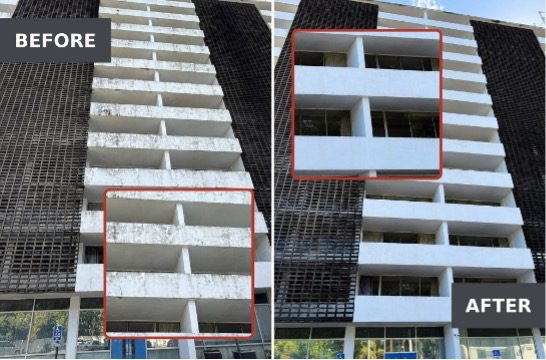
Do Cleaning Drones Actually Work? 15 Apellix Before-and-After Jobs Show the Results

What Is the Best Commercial Cleaning Drone in 2026? Specs, Prices, and a Head-to-Head Comparison

Inspired Flight Gremsy IF800 VIO F1 drones geo week

What Will It Take to Strengthen U.S. Drone Manufacturing? A Conversation with Inspired Flight’s CEO

Global Mapper Mobile data collection

Collection Ground Control Points with Global Mapper Mobile

Military Drone Mapping Solutions

How SimActive’s Correlator3D™ is Revolutionizing Military Mapping: An Exclusive Interview with CEO Philippe Simard

Photogrammetry Accuracy Standards

SimActive Photogrammetry Software: Enabling Users to Meet Accuracy Standards for Over 20 Years

About Us | Contact Us | Advertise With Us | Write for Us | Privacy Policy | Terms of Service

The Trusted Source for the Business of Drones.

This website uses cookies and third party services. By clicking OK, you are agreeing to our privacy policy. ACCEPT

Manage consent

Privacy Overview

This website uses cookies to improve your experience while you navigate through the website. Out of these, the cookies that are categorized as necessary are stored on your browser as they are essential for the working of basic functionalities of the website. We also use third-party cookies that help us analyze and understand how you use this website. These cookies will be stored in your browser only with your consent. You also have the option to opt-out of these cookies. But opting out of some of these cookies may affect your browsing experience.
Necessary
Always Enabled
Necessary cookies are absolutely essential for the website to function properly. These cookies ensure basic functionalities and security features of the website, anonymously.
CookieDurationDescription
cookielawinfo-checkbox-analytics11 monthsThis cookie is set by GDPR Cookie Consent plugin. The cookie is used to store the user consent for the cookies in the category "Analytics".
cookielawinfo-checkbox-functional11 monthsThe cookie is set by GDPR cookie consent to record the user consent for the cookies in the category "Functional".
cookielawinfo-checkbox-necessary11 monthsThis cookie is set by GDPR Cookie Consent plugin. The cookies is used to store the user consent for the cookies in the category "Necessary".
cookielawinfo-checkbox-others11 monthsThis cookie is set by GDPR Cookie Consent plugin. The cookie is used to store the user consent for the cookies in the category "Other.
cookielawinfo-checkbox-performance11 monthsThis cookie is set by GDPR Cookie Consent plugin. The cookie is used to store the user consent for the cookies in the category "Performance".
viewed_cookie_policy11 monthsThe cookie is set by the GDPR Cookie Consent plugin and is used to store whether or not user has consented to the use of cookies. It does not store any personal data.
Functional
Functional cookies help to perform certain functionalities like sharing the content of the website on social media platforms, collect feedbacks, and other third-party features.
Performance
Performance cookies are used to understand and analyze the key performance indexes of the website which helps in delivering a better user experience for the visitors.
Analytics
Analytical cookies are used to understand how visitors interact with the website. These cookies help provide information on metrics the number of visitors, bounce rate, traffic source, etc.
Advertisement
Advertisement cookies are used to provide visitors with relevant ads and marketing campaigns. These cookies track visitors across websites and collect information to provide customized ads.
Others
Other uncategorized cookies are those that are being analyzed and have not been classified into a category as yet.
SAVE & ACCEPT