• Skip to main content
  • Skip to secondary menu
  • Skip to primary sidebar
  • Skip to secondary sidebar
  • Skip to footer
  • DroneRacingLife
  • DroneFlyers
  • Newsletter
DroneLife

DRONELIFE

Stay up to date on all the latest Drone News

  • News
  • Products
  • Industries
    • Agriculture
    • Construction
    • Delivery
    • Dual Use
    • Inspection
    • Public Safety
    • Surveying
  • Enthusiasts
  • Regulations
  • Business
  • Video
  • Podcasts

Six Years After the Pandemic, the Hard Lessons Still Matter: An Op-Ed from ACSL Global CTO Chris Raabe

August 6, 2026 by Miriam McNabb Leave a Comment

The pandemic exposed weaknesses in global manufacturing that many companies had never been forced to confront. While the immediate crisis has passed, the pressures facing drone manufacturers today, from component restrictions to supply chain uncertainty, demand many of the same responses. In this guest commentary, ACSL Global CTO Chris Raabe reflects on how the industry’s most difficult period reshaped engineering, sourcing, and product development, and why those lessons remain just as relevant in 2026.  DRONELIFE does not make or accept payment for guest posts.

Six Years Later, The Lessons of the Pandemic Remain True

By ACSL Global CTO Chris Raabe

Six years ago, manufacturers everywhere were staring down the same crisis. Factories slowed or shut entirely. Semiconductor shortages stalled the reproduction of critical components. Shipping timelines that once took weeks turned into months. Almost overnight, teams that had never worked remotely had to adjust the entire way they worked.

At ACSL, we dealt with the same issues as every other manufacturer. Looking back, it’s evident those companies that pushed through pandemic-era product development hurdles came out fundamentally different, more disciplined, more resilient, and better prepared for whatever comes next. The pressure of that period forced smarter engineering, stronger and more vetted supply chains, and faster decision-making. Those lessons continue to shape how ACSL works, and I have no doubt other companies as well.

Exposing Weaknesses in Product Development and Supply Chains

Before 2020, manufacturing ran on predictable cycles and assumptions around supply chains that had rarely been tested: parts and components would be readily available, delivery of these components was on time, and manufacturers could build products at scale. The pandemic broke this cycle and these assumptions at once. Trusted supply chains became fragile almost overnight, and teams had to completely rethink timelines, sourcing, and collaboration in real time.
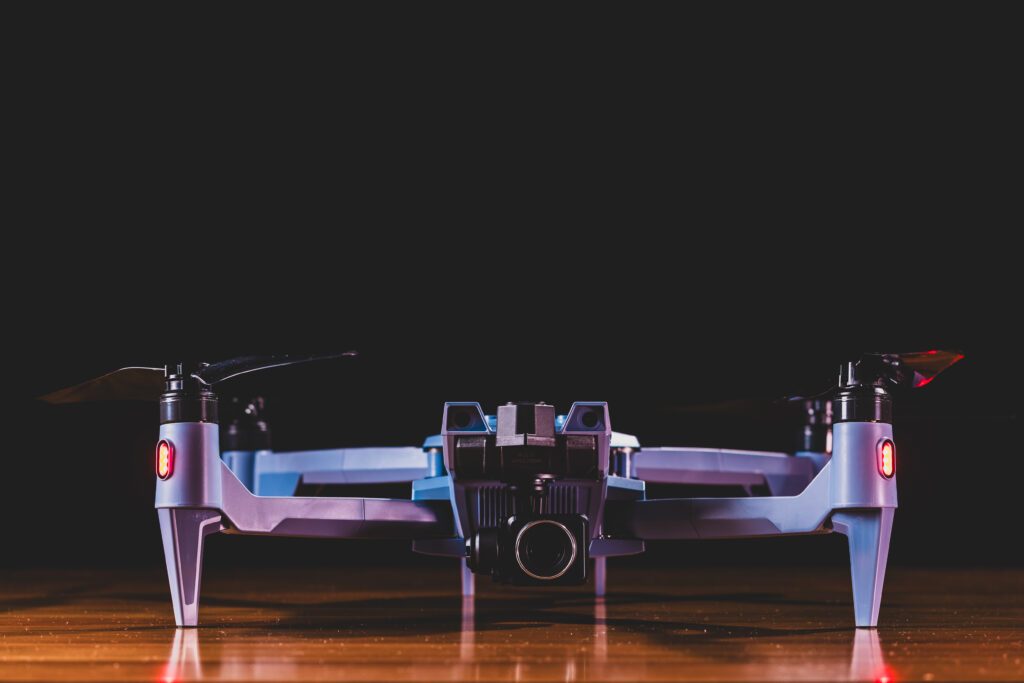
ACSL was there with every other manufacturer. Just like them, we had to confront scarcity head-on. At one point, the processor we relied on for our flight controllers became nearly impossible to source through normal channels, official lead times stretched to a year and a half, with the only faster option being gray-market resellers charging a steep premium.

Scarcity Forced Better Engineering, and Built a Faster, Stronger Team

Chip shortages meant our engineers couldn’t simply order a replacement part and wait. They had to redesign around components that were actually available, prioritize modular systems, and simplify wherever possible. Every component decision suddenly carried strategic weight, and that constraint created focus. Our product teams became more intentional and efficient.

At the same time, these constraints changed how quickly we could move. Decision cycles shortened, cross-functional communication improved, and rapid prototyping became critical for turning an idea into something tangible and worth testing. Remote collaboration pushed us toward clearer communication, documentation, and accountability. None of it was comfortable at the moment, but it made us move faster with fewer resources than we could before.

Resilient Supply Chains and Building Platforms Around Whole Lifecycles

A great product means little if you can’t consistently and reliably build it. Like many other manufacturers, we learned the risk of relying too heavily on a single partner or supplier, and worked to build in redundancy where possible. Multiple suppliers, alternative sourcing paths,and closer relationships with the partners we depend on most have become essential.

Procurement moved front and center for ACSL, and became part of how we design products from the very beginning.

There’s no denying that this problem persists. Like the pandemic, the drone industry is yet again facing supply chain pressure, this time from component and product restrictions. Supply chain constraints are still an issue for many manufacturers, and it’s something that requires attention when developing a new product. But there’s a significant difference between being aware of a risk and proactively planning for it, and that difference is where we’ve tried to focus and be thoughtful in our approach.

It’s also where I think ACSL stands apart. Instead of cobbling together just enough supply chain partners for a product release and calling it done, we’ve built our approach around the whole lifecycle. Our goal is to support customers not only through a production run, but for years after.

These are multiyear production timeframes, and we maintain fleets, parts, and repairs long after a unit ships. After 13 years in business, that consistency is something we can point to, not just promise.

Why These Lessons Matter Today

Companies that endured the pandemic, adapted and built protocols for supply chain issues are far better positioned in today’s everchanging market. Those pandemic-era lessons still matter because the same underlying issues keep reappearing in new forms. What were chip shortages due to factories closing, now take the form of geo-restrictions on components. Different cause, same disruption.

Six years later, the pandemic is still shaping this industry, and the lessons we learned from it should be part of every new product being developed.

Read more:

  • ACSL Announces New TAITEN Controller, New Thermal Tech via Flir
  • ACSL Partners with Exertis Almo to Expand SOTEN Drone Availability in North America
  • ACSL Unveils TENSO: The Next-Gen Smart Controller for SOTEN Drones

Chris Raabe has been a pioneer in the Japanese drone industry since 2010. He began his journey by developing robust control and non-GPS navigation systems for multicopters as a doctoral candidate and later as a faculty member at the renowned University of Tokyo. He then transitioned to the role of CTO and board member at ACSL, Japan’s leading manufacturer of multicopter drones. Throughout his career, Chris has collaborated with various governmental and industrial entities across Japan, focusing on infrastructure inspection, surveying and mapping, disaster response, logistics, and other specialized applications.

Since joining ACSL in 2017, Chris has overseen the development of over 10 products, achieved more than a tenfold increase in revenue, and played a critical role in ACSL’s IPO on the Tokyo Stock Exchange in December 2018. In 2023, Chris relocated to the US to spearhead ACSL’s expansion into the North American market.

Before his tenure in Japan, Chris worked as an engineer at Boeing starting in 2006, where he supported autopilot and flight control engineering for the 737-NG and 747-8 programs. Chris holds a bachelor’s degree in aerospace engineering from Georgia Tech and a master’s degree in electrical engineering from the University of Michigan.

 

Miriam McNabb

Miriam McNabb is the Editor-in-Chief of DRONELIFE and CEO of JobForDrones, a professional drone services marketplace, and a fascinated observer of the emerging drone industry and the regulatory environment for drones. Miriam has penned over 3,000 articles focused on the commercial drone space and is an international speaker and recognized figure in the industry.  Miriam has a degree from the University of Chicago and over 20 years of experience in high tech sales and marketing for new technologies.
For drone industry consulting or writing, Email Miriam.

TWITTER:@spaldingbarker

Subscribe to DroneLife here.

Filed Under: DL Exclusive, Drone News, Drone News Feeds, drone parts, Dual Use, Featured, NDAA Compliant, News Tagged With: ACSL, Autonomous Systems, Chris Raabe, Commercial Drones, component sourcing, Drone Industry, Drone Manufacturing, drone supply chain resilience, engineering, opinion, product development, resilient supply chains, semiconductor shortage, supply chain management, UAV manufacturing

Reader Interactions

Leave a Reply Cancel reply

Your email address will not be published. Required fields are marked *

Primary Sidebar

LATEST

Flytrex Adds Rooftop Drone Docks and AI Fleet Positioning in Dallas

The company says prepositioning drones at restaurants can cut delivery costs by 60% and reduce delivery times by half. Flytrex…

Continue Reading Flytrex Adds Rooftop Drone Docks and AI Fleet Positioning in Dallas

From Wildfire Detection to Fast Mapping: AIVE AI Systems Expands Access to Geospatial Data

The startup is developing tools that create georeferenced 2D maps from a small number of images, without requiring specialized infrastructure.…

Continue Reading From Wildfire Detection to Fast Mapping: AIVE AI Systems Expands Access to Geospatial Data

FirstEnergy Grant Expands Drone Training for Educators and Police

WarrenUAS will use the funding to provide FAA Part 107 preparation and hands-on flight training in New Jersey. A FirstEnergy…

Continue Reading FirstEnergy Grant Expands Drone Training for Educators and Police

Airwise Solutions and UAS Sentry Integrate Drone Detection and Airspace Intelligence

Partnership brings Remote ID detection into a common operating picture for critical infrastructure, public safety and enterprise users. Airwise Solutions…

Continue Reading Airwise Solutions and UAS Sentry Integrate Drone Detection and Airspace Intelligence

GeoCue Launches TrueView 550 Aerial LiDAR System at INTERGEO

New system combines advanced LiDAR, dual mapping cameras and two positioning options for professional surveying and mapping. GeoCue has expanded…

Continue Reading GeoCue Launches TrueView 550 Aerial LiDAR System at INTERGEO

The Drone Is No Longer the Point

At INTERGEO, attention has shifted from individual platforms to complete geospatial workflows. One of the clearest drone industry trends at…

Continue Reading The Drone Is No Longer the Point

FCC Clears Nationwide Test of Cellular Networks for Drone Safety

Temporary waiver will allow DOT to measure airborne wireless coverage for command and control, detect and avoid, Remote ID and…

Continue Reading FCC Clears Nationwide Test of Cellular Networks for Drone Safety

From Cars to Drones: Birdstop Taps Detroit’s Auto Supply Chain to Scale U.S. Manufacturing

UAV maker turns to auto industry as source of domestic components By DRONELIFE Features Editor Jim Magill While Silicon Valley…

Continue Reading From Cars to Drones: Birdstop Taps Detroit’s Auto Supply Chain to Scale U.S. Manufacturing

Wingcopter 262 Debuts as All-Electric Tactical Reconnaissance eVTOL for Defense Users

The all-electric Wingcopter 262 carries a 262-centimeter (103-inch) wingspan, a 150-kilometer (93-mile) tactical range and a 10-kilogram (22-pound) maximum takeoff…

Continue Reading Wingcopter 262 Debuts as All-Electric Tactical Reconnaissance eVTOL for Defense Users

Kite Aero Commences KITE UAS Production in Geelong

Sovereign Five Eyes aligned production of the KITE autonomous logistics aircraft moves to Sykes’ composite facility as the company builds…

Continue Reading Kite Aero Commences KITE UAS Production in Geelong

Secondary Sidebar

Footer

SPONSORED

What Is the Best Commercial Cleaning Drone in 2026? Specs, Prices, and a Head-to-Head Comparison

Inspired Flight Gremsy IF800 VIO F1 drones geo week

What Will It Take to Strengthen U.S. Drone Manufacturing? A Conversation with Inspired Flight’s CEO

Global Mapper Mobile data collection

Collection Ground Control Points with Global Mapper Mobile

Military Drone Mapping Solutions

How SimActive’s Correlator3D™ is Revolutionizing Military Mapping: An Exclusive Interview with CEO Philippe Simard

Photogrammetry Accuracy Standards

SimActive Photogrammetry Software: Enabling Users to Meet Accuracy Standards for Over 20 Years

NACT Engineering Parrot ANAFI tether indoor shot

Smart Tether for Parrot ANAFI USA from NACT Engineering

About Us | Contact Us | Advertise With Us | Write for Us | Privacy Policy | Terms of Service

The Trusted Source for the Business of Drones.

This website uses cookies and third party services. By clicking OK, you are agreeing to our privacy policy. ACCEPT

Manage consent

Privacy Overview

This website uses cookies to improve your experience while you navigate through the website. Out of these, the cookies that are categorized as necessary are stored on your browser as they are essential for the working of basic functionalities of the website. We also use third-party cookies that help us analyze and understand how you use this website. These cookies will be stored in your browser only with your consent. You also have the option to opt-out of these cookies. But opting out of some of these cookies may affect your browsing experience.
Necessary
Always Enabled
Necessary cookies are absolutely essential for the website to function properly. These cookies ensure basic functionalities and security features of the website, anonymously.
CookieDurationDescription
cookielawinfo-checkbox-analytics11 monthsThis cookie is set by GDPR Cookie Consent plugin. The cookie is used to store the user consent for the cookies in the category "Analytics".
cookielawinfo-checkbox-functional11 monthsThe cookie is set by GDPR cookie consent to record the user consent for the cookies in the category "Functional".
cookielawinfo-checkbox-necessary11 monthsThis cookie is set by GDPR Cookie Consent plugin. The cookies is used to store the user consent for the cookies in the category "Necessary".
cookielawinfo-checkbox-others11 monthsThis cookie is set by GDPR Cookie Consent plugin. The cookie is used to store the user consent for the cookies in the category "Other.
cookielawinfo-checkbox-performance11 monthsThis cookie is set by GDPR Cookie Consent plugin. The cookie is used to store the user consent for the cookies in the category "Performance".
viewed_cookie_policy11 monthsThe cookie is set by the GDPR Cookie Consent plugin and is used to store whether or not user has consented to the use of cookies. It does not store any personal data.
Functional
Functional cookies help to perform certain functionalities like sharing the content of the website on social media platforms, collect feedbacks, and other third-party features.
Performance
Performance cookies are used to understand and analyze the key performance indexes of the website which helps in delivering a better user experience for the visitors.
Analytics
Analytical cookies are used to understand how visitors interact with the website. These cookies help provide information on metrics the number of visitors, bounce rate, traffic source, etc.
Advertisement
Advertisement cookies are used to provide visitors with relevant ads and marketing campaigns. These cookies track visitors across websites and collect information to provide customized ads.
Others
Other uncategorized cookies are those that are being analyzed and have not been classified into a category as yet.
SAVE & ACCEPT