
Company earns invitation to Gauntlet II while completing Phase One deliveries for the Department of Defense
Robinson Unmanned has advanced to the next stage of the U.S. Department of Defense’s Drone Dominance Program, a milestone that highlights a growing shift in defense procurement. The program no longer evaluates drone performance alone. It also measures whether manufacturers can produce reliable, low cost systems at scale using secure U.S. supply chains.

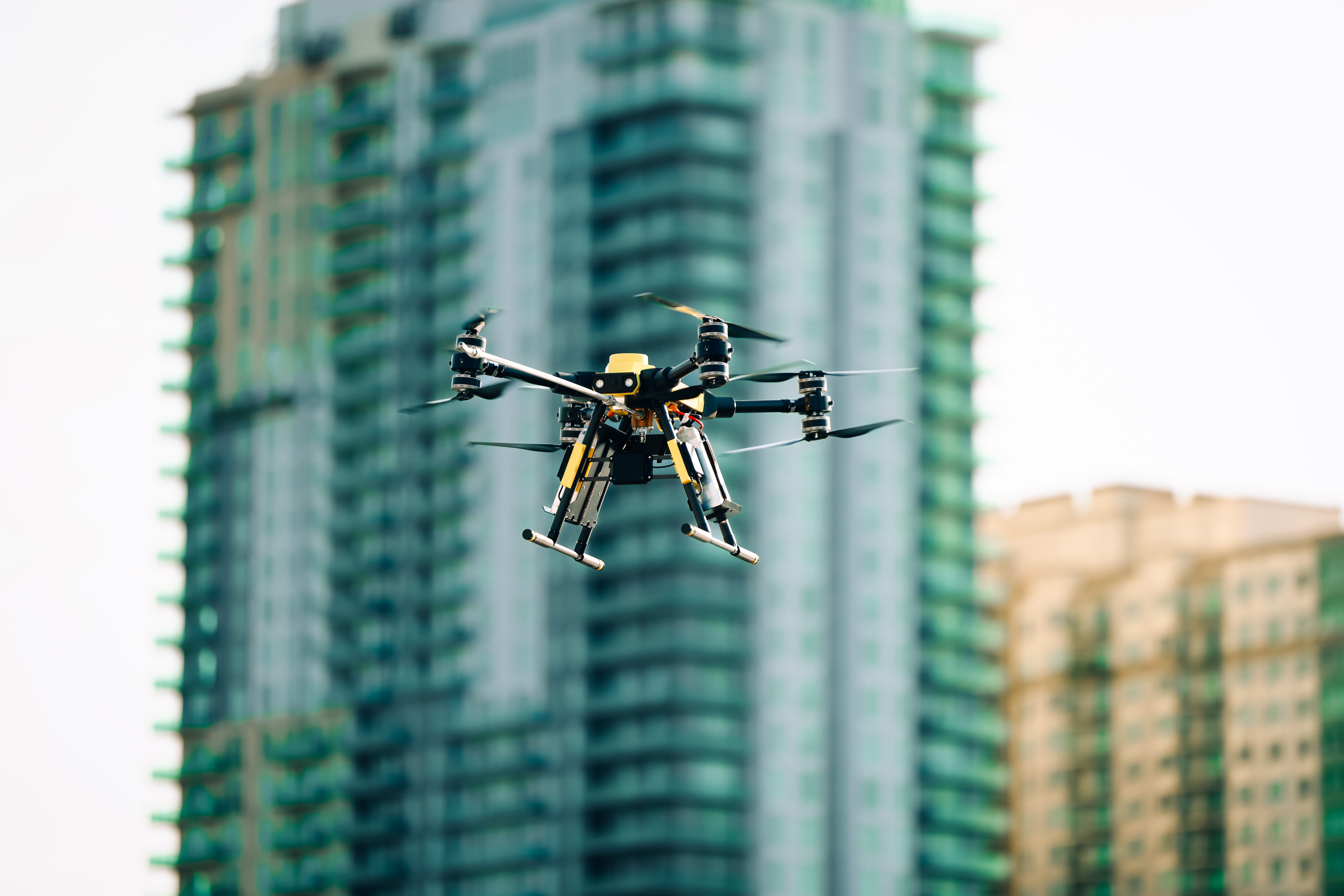
The company announced that it has been invited to compete in Gauntlet II while continuing deliveries under the program’s first phase. Robinson Unmanned is competing under its Ascent AeroSystems brand with the SPIRIT-FPV system, a first-person-view drone built on the company’s Blue UAS Cleared SPIRIT platform.
The announcement comes as the Drone Dominance Program moves into a new phase centered on manufacturing readiness. The Pentagon’s challenge-based acquisition process aims to identify companies that can rapidly deliver thousands of mission-ready drones while maintaining secure, resilient supply chains.
From Prototype to Production
The Drone Dominance Program represents a different approach to military procurement. Rather than awarding contracts based primarily on technical demonstrations, the program combines operational testing with production and delivery requirements.
Companies advancing through the program must prove they can manufacture complete systems on demanding timelines. Before competing in Gauntlet II, invited vendors were required to deliver an order of approximately 120 complete drone systems with supporting equipment within about five weeks. Failure to meet those production requirements could disqualify a participant before flight testing begins.
According to the program’s published framework, each phase begins with a Gauntlet competition and concludes with deliveries of production-quality aircraft. Military operators, rather than company pilots, evaluate the systems during the final Gauntlet events using realistic operational scenarios.
That emphasis reflects a broader lesson from recent conflicts. A capable drone matters, but sustained manufacturing capacity has become equally important.
Robinson Unmanned Advances to Gauntlet II
Robinson Unmanned earned its place in Gauntlet II after participating in the Phase II qualifier at Camp Grayling, Michigan. The event brought together 49 companies testing about 79 drone designs across long-range strike and close-quarters tactical assault missions. Nineteen companies advanced to the next stage.
The company is entering Gauntlet II with its SPIRIT-FPV system.

“As we advance to Gauntlet II, we recognize that unmanned systems will play an increasingly important role within the Department of Defense, but the future of unmanned systems won’t be defined by drone capability alone. It will be defined by which companies can manufacture reliable systems at scale,” said Paul Fermo, president of Robinson Unmanned.
“This milestone validates that Robinson Unmanned, backed by Robinson Helicopter Company’s 53-years of aerospace manufacturing excellence, has the U.S. engineering, manufacturing capability, and resilient supply chain required to rapidly deliver reliable, NDAA-compliant unmanned systems to operators at the speed of relevance.”
The company says SPIRIT-FPV is built on its NDAA-compliant, Blue UAS Cleared SPIRIT airframe.
“At Robinson Unmanned we understand that true operational capability begins with aerospace-grade reliability. Built on our NDAA-compliant, Blue UAS Cleared SPIRIT airframe, SPIRIT-FPV is a rugged, modular, easy to deploy system that is ready for real-world missions,” Fermo added.
A Broader Industry Trend
Robinson Unmanned’s announcement also reflects a larger trend across the U.S. drone industry. Federal agencies increasingly seek domestic manufacturing capacity alongside technical performance. Programs such as Drone Dominance place greater emphasis on secure component sourcing, production scalability, and rapid delivery than many earlier procurement efforts.
For manufacturers, success now depends on more than designing a capable aircraft. Companies must demonstrate that they can build thousands of consistent, reliable systems using resilient supply chains that meet evolving national security requirements.
Gauntlet II, scheduled for August at Fort Carson, Colorado, will continue that evaluation as military operators assess competing platforms under operational conditions. The results will help determine which manufacturers move forward into larger-scale production opportunities under the Drone Dominance Program.
Read more:
- Drone Dominance: The Defense Department’s Push to Build a Scalable U.S. Drone Supply Chain
- From Drones to Helicopters: Robinson, Ascent Build a Scalable Autonomous Rotorcraft Ecosystem
- Ascent’s SPIRIT™ Gains Dual Blue UAS Clearance, Highlighting U.S. Drone Innovation

Miriam McNabb is the Editor-in-Chief of DRONELIFE and CEO of JobForDrones, a professional drone services marketplace, and a fascinated observer of the emerging drone industry and the regulatory environment for drones. Miriam has penned over 3,000 articles focused on the commercial drone space and is an international speaker and recognized figure in the industry. Miriam has a degree from the University of Chicago and over 20 years of experience in high tech sales and marketing for new technologies.
For drone industry consulting or writing, Email Miriam.
TWITTER:@spaldingbarker
Subscribe to DroneLife here.


Leave a Reply