
European companies combine detection, command-and-control, and interception technologies in layered air defense approach
European counter-drone company Alpine Eagle and Latvian defense technology firm Origin Robotics have signed a memorandum of understanding to integrate their technologies into a unified counter-drone system.
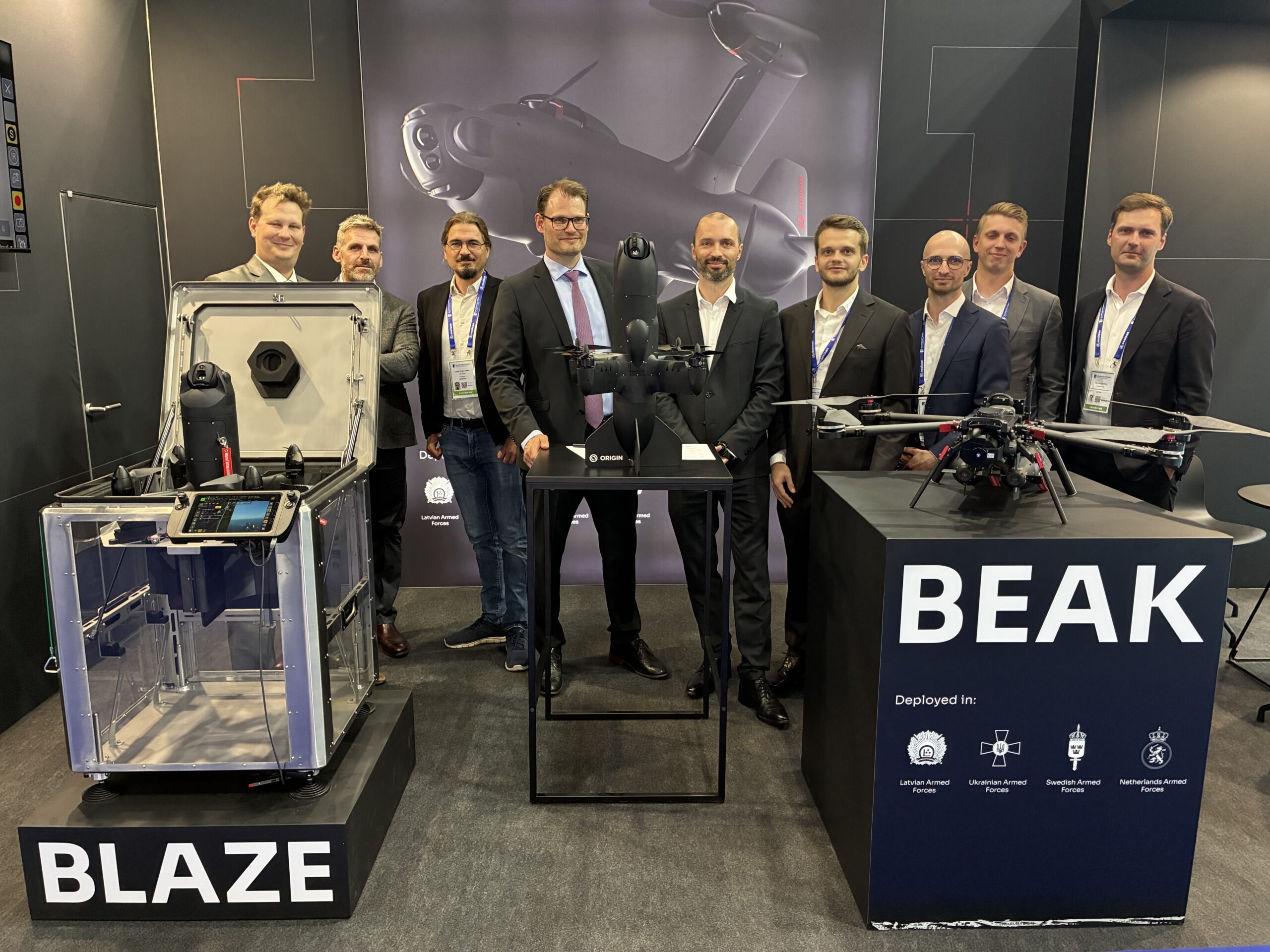
The agreement will combine Origin Robotics’ BLAZE interceptor with Alpine Eagle’s Sentinel architecture. The companies say the partnership will create a layered sensor-to-effector capability designed to detect, track, and defeat drone threats.
The announcement reflects a broader trend in modern air defense. Military organizations increasingly seek integrated systems that connect sensors, command-and-control software, and interception tools into a single operational network.
Building a Layered Defense Architecture
Alpine Eagle’s Sentinel architecture combines airborne and ground-based radar with distributed sensor networks. The system operates through Sentinel-OS, the company’s software platform that connects sensors, platforms, and effectors.
According to the company, the architecture aims to provide earlier threat detection and greater situational awareness. The goal is to give operators more time to assess and respond to threats.
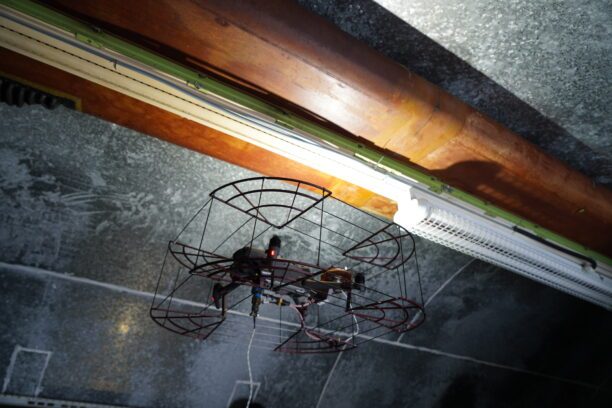
The addition of Origin Robotics’ BLAZE interceptor expands the system’s response options. BLAZE is a radar-guided autonomous interceptor designed to counter drones and loitering munitions.
“The challenge is to bring detection, tracking, and interception together into an integrated system that can respond quickly and scale with the threat,” said Jan-Hendrik Boelens, co-founder and CEO of Alpine Eagle. “Integrating BLAZE into Sentinel expands our sensor-to-effector architecture and gives customers another effective layer within a broader counter-drone network.”
The companies plan to focus first on technical integration, customer demonstrations, and operational validation. They also intend to establish a pathway for future local manufacturing of BLAZE in Germany.
Counter-Drone Demand Continues to Grow
The partnership comes as governments across Europe increase investment in counter-drone capabilities.
Recent conflicts have highlighted the growing role of drones in modern warfare. The war in Ukraine has accelerated development of both drone and counter-drone technologies. Military planners have also studied large-scale drone attacks seen in conflicts across the Middle East.
These events have reinforced the importance of early detection, layered defense strategies, and cost-effective interception methods. Rather than relying on a single technology, many defense organizations now seek systems that combine multiple sensors and response options.
“The future of drone defence depends on combining the right sensors, software and effectors. No single system can solve the challenge alone,” said Agris Kipurs, co-founder and CEO of Origin Robotics. “By integrating BLAZE into Sentinel, we are bringing together complementary capabilities that help customers detect threats earlier and respond more effectively.”
Growing Focus on European Defense Technology
The agreement also reflects a wider movement within the European defense sector. Companies increasingly partner to combine specialized technologies into integrated systems.
This approach can help speed deployment and adaptation compared to traditional defense procurement programs. It may also support efforts to strengthen Europe’s defense industrial base while increasing production capacity.
Founded in 2023, Alpine Eagle develops airborne counter-drone systems and software. The company says it has raised more than €10 million from investors including IQ Capital, General Catalyst, and HCVC.
Origin Robotics develops autonomous defense systems for military applications. Its BLAZE interceptor is a NATO-codified platform that the company says is already deployed by multiple NATO member states. The system uses radar data to guide an onboard autopilot that approaches, acquires, and intercepts aerial threats under operator supervision.
Both companies will exhibit at Eurosatory 2026 in Paris, where they plan to showcase their technologies and discuss the integration effort with customers and partners.
Read more:
- From Predictable Surprise to Policy Priority: The Push for Faster Counter-Drone Deployment
- Origin Robotics Unveils BLAZE: Autonomous, Cost-Effective Drone Interceptor for Modern Battlefields
- Alpine Eagle Scales Counter-Drone Production as European Demand Grows

Miriam McNabb is the Editor-in-Chief of DRONELIFE and CEO of JobForDrones, a professional drone services marketplace, and a fascinated observer of the emerging drone industry and the regulatory environment for drones. Miriam has penned over 3,000 articles focused on the commercial drone space and is an international speaker and recognized figure in the industry. Miriam has a degree from the University of Chicago and over 20 years of experience in high tech sales and marketing for new technologies.
For drone industry consulting or writing, Email Miriam.
TWITTER:@spaldingbarker
Subscribe to DroneLife here.

Leave a Reply