In this DRONELIFE Exclusive: What if we consider drones as community entities and assets, rather than just robots flying in the sky delivering goods and services?
DRONELIFE is honored to publish this guest post by Salima Bhimani, Alphabet’s first Chief Strategist and Director for Inclusive Technology, Business, and Leaders from 2017. DRONELIFE neither accepts nor makes payment for guest posts.
Re-imagined Lives: Drones as Community Assets
by Salima Bhimani
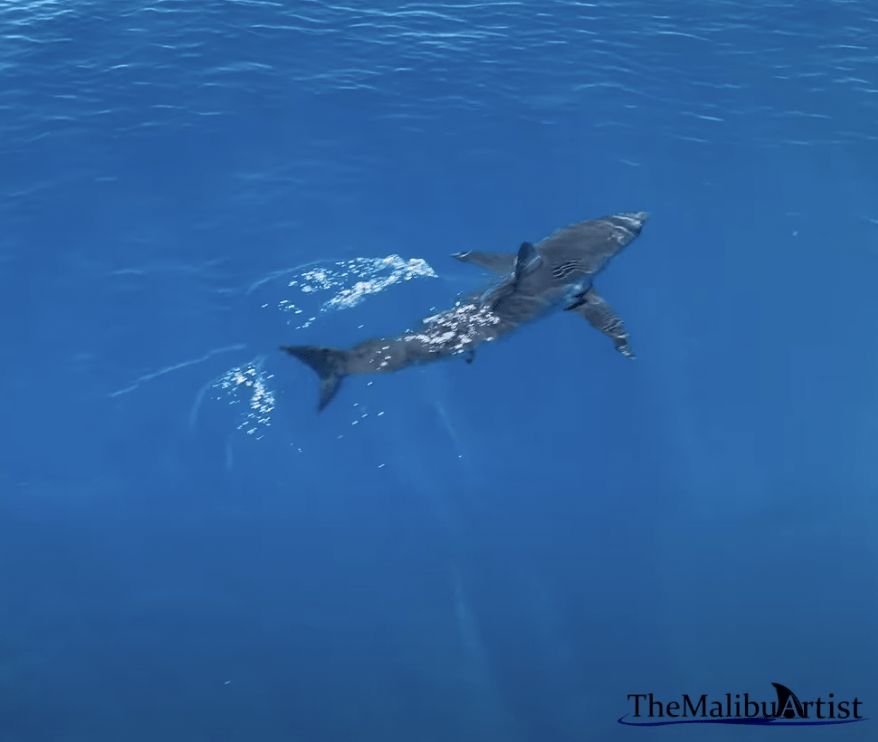
Do you recall the film “Jaws”? I watched the first one in the 1980s. After watching it I couldn’t get into the ocean without dread of what was lurking beneath the surface. But it wasn’t until about 7 years ago that I began watching videos from TheMalibuArtist, who captures the everyday life of sharks using drones. My terror transformed into curiosity and admiration for these incredible animals that call Southern California home. As an aerial custodian of sharks, The Malibu Artist captures data about sharks that has literally changed my feelings about the ocean. So it wasn’t the drone flying above us during a family picnic that initially piqued my interest in the potential of drone technology; instead, it was sharks. I didn’t know it then but I’d end up working with Wing, a subsidiary of Alphabet, one of the world’s leading drone companies in my role as the Chief Strategist and Director of Inclusive Technology, Business, and Leaders at Alphabet (Google).
As fascinating as sharks are, what’s even more compelling to me are the examples of drone use that are creating opportunities to access resources, knowledge and skills that are literally changing the direction and opportunities of people’s lives. Consider this real scenario: a woman in a remote village, surrounded by harsh terrains, is about to deliver a baby and faces complications. Medical devices and medicines are hours away. In this critical moment, a drone flies over these obstacles, delivering life-saving supplies immediately. Having had a baby myself a few years ago, I can’t imagine the stress for a mom facing harsh physical and medical barriers. This is the power of drone technology. Zipline, a drone company that operates in North America, Africa and Asia, was able to reduce maternal deaths by 51% due to postpartum hemorrhaging in hospitals by enhancing their blood management systems through drone delivery of blood in Rwanda.
As someone who works on and helps leaders and tech companies build inclusive and responsible innovation and technology, I am finding myself thinking more about drones as community entities and assets, rather than just robots flying in the sky delivering goods and services. And if what I am feeling has any truth in it, then it’s even more important to consider how drone technology can and should be designed, deployed and have impact through a responsible tech and AI lens. There are many definitions of responsible AI and tech these days, but here is one I propose for our purposes:
Technology designed and deployed with people, communities and contexts, enhancing life outcomes through knowledge, opportunity and resources, once unattainable.
Growing drone tech footprint
The aerial innovation industry is anticipated to skyrocket, reaching a valuation of $50 billion by 2030. A significant contributor to this growth is the commercial drone sector, projected to hit $127 billion by next year (2025), creating solutions to problems that might have not otherwise been possible. Given the expansion of the industry and the plethora of solutions drones can unlock to critical problems for people all around the world, it will be even more paramount that the drone industry continues to hone its skills in responsible AI and innovation.
AI: The Driving Force Behind Drones
While AI advancements are not solely responsible for the expanding drone market, they play a pivotal role. AI-powered algorithms enable drones to navigate complex environments, avoid obstacles, and perform tasks autonomously, minimizing human intervention. According to Prof Banafa, an expert in tech advancements, AI is expanding what drones can do and for whom in 4 ways:
- Enhanced autonomy
- Improved data processing
- Adaptive behavior
- Increased safety
A Historical Perspective and Modern Applications
Since their inception for military use in the early 20th century, drones have continually evolved. Today, their applications are multifaceted, with the potential to revolutionize various sectors such as:
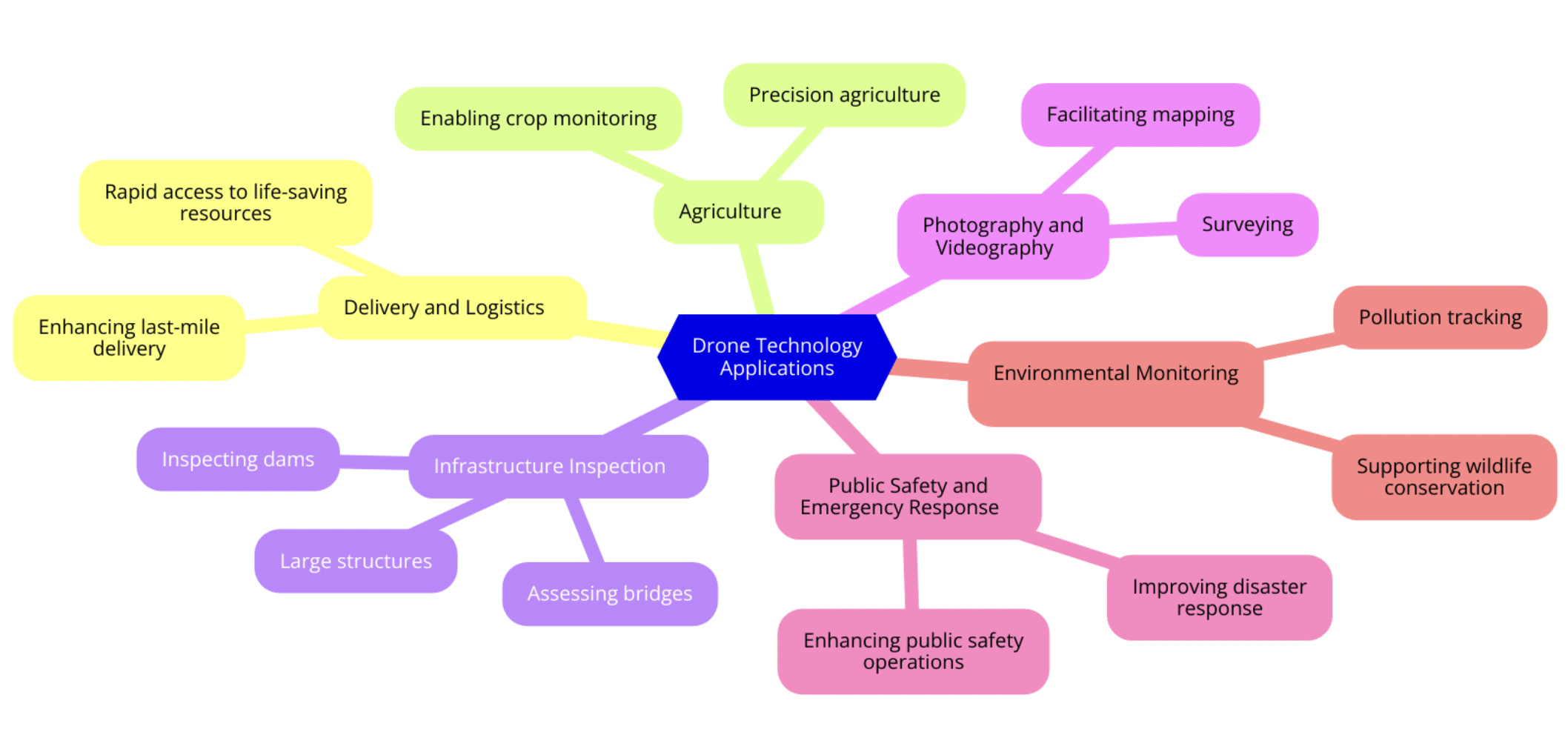

- Delivery and Logistics: Enhancing last-mile delivery for rapid access to life-saving resources.
- Agriculture: Enabling crop monitoring and precision agriculture.
- Infrastructure Inspection: Assessing bridges, dams, and other large structures.
- Photography and Videography: Facilitating mapping and surveying.
- Public Safety and Emergency Response: Improving disaster response and public safety operations.
- Environmental Monitoring: Supporting wildlife conservation and pollution tracking.
Despite the high impact of drones in these areas, public perception is dependent on the context in which they are used. But there are continued concerns about privacy, surveillance, military use and the lack of understanding about the range of drone applications.
How can we continue to advance drone technology through the lens of responsible innovation and AI?
Building on my premise that drones have and can have a substantial impact on communities and contexts, I propose three considerations for responsible innovation that should continue to be incorporated into the conceptualization, design, and implementation of drones. These considerations aim to ensure that drones serve as community assets and entities:
Participatory problem and solution definitions
Oftentimes technology is built for people, rather than with people. And we see the drawbacks of this approach, where technology can cause harm, misidentify solutions or create greater problems. Ideating with communities on where drones could in fact be an additive asset to addressing needs, problems and solutions, could create greater relevance, and more localized high impact integrations of drone technology.
WeRobotics Flying Labs Network
The WeRobotics Flying Labs Network exemplifies this approach by establishing “Flying Labs” in various countries. These labs empower local communities to use drones for projects addressing localized challenges, such as informal settlements, deforestation monitoring, and medical supply delivery. By building local capacity, these labs ensure community ownership and control over drone technology.
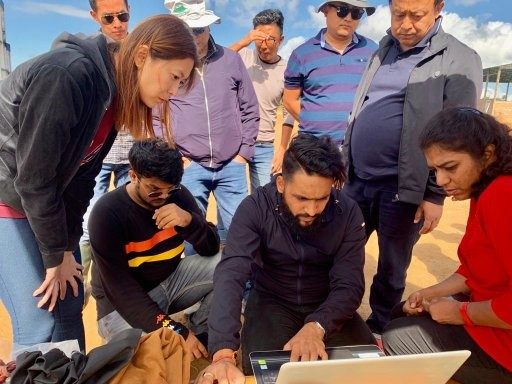
In Nepal, a Flying Lab partnered with local communities to map disaster-prone areas and create 3D models of villages. This data improved disaster preparedness and response plans, enhancing community resilience.
Data Ownership and Ethical Use
When we look up in the air and see this robot taking in information about us, it can feel quite unsettling. Technology can feel like and be an extractive tool that takes people’s experience, behaviors and actions for its own use. One way to change this experience is by seeing drones as a collector of community based information that communities have ownership of. For example drones collect vast amounts of data about their environments to navigate effectively and serve specific needs. AI acts as the “brain,” processing this information, making decisions, and performing complex tasks autonomously. However, what data is most relevant to address a specific need or problem? How is this data contextually relevant and analyzed with societal knowledge? Meaningful insights will come from communities who understand the nuances of their needs and can be co-pilots on the impact drones could have for them. A drone company partnered with the community will be better positioned to develop innovative technology.
The DRONe Project
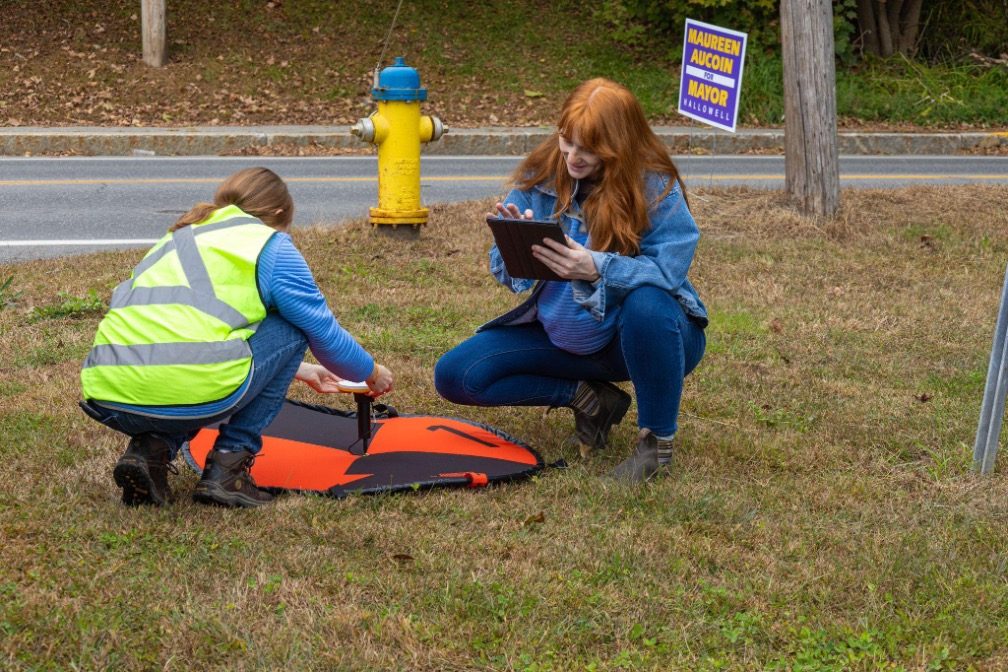
The DroNe Project (Descendants Recovering Our Names) is an insightful example of this. The DRONe project empowers young women from Black, Indigenous, and other communities of color to use drones to uncover graves in overrun cemeteries in Southern California. For these communities it means tracing their heritage, unearthing stories about their families and stitching together lost lineage. Partnering with DroneDeploy, this project helps communities reconnect with their heritage, demonstrating how drone data can foster recovery and connection.
AI Evaluation and Community Engagement
In the process of AI evaluating data collected by drones, it’s crucial to ensure that AI models are tested using data derived from community-based knowledge. This approach empowers drone operators to analyze AI decision-making processes from a community standpoint. While human oversight and accountability play a significant role, a community engagement approach to evaluating AI models in drone outcomes and impact centers around communities viewing drones as an extension of themselves. The AI “brain” of the drone is fueled by the knowledge and experiences of communities and contexts, enabling it to align with their needs and evolve alongside their mission.
PlantVillage
PlantVillage is a non-profit organization based in Kenya that leverages AI and cloud computing to empower smallholder farmers in Africa to combat the effects of climate change, pests, and diseases. Their mission is to scale up climate adaptation for millions of farmers across Africa, Asia and the Americas and enhance their livelihood. They leverage community based knowledge, experience and feedback in farming to test how well their technological interventions are meeting needs. For example, Nuru is an AI-powered mobile app that diagnoses crop diseases offline. Farmers can take pictures of their plants, and the app analyzes the images to identify potential problems. This enables early detection and intervention, saving crops and increasing yields. Feedback loops are created with farmers to improve app functionality and efficiency. And in this way the community continuously sees their knowledge and experience informing how well the AI models are shaping what the app can do for them. Although this example is not drone specific, it does provide an illustration of how we can build technology that is in a relational and active process with communities, rather than simply being a static solution.
Conclusion
The drone industry, powered by AI, is creating precision social change. It’s not just a technological revolution, but perhaps a revolution in how people are able to live life, solve problems, and find the otherwise impossible. By focusing on participatory problem solving, data ownership and responsible AI model testing, we can ensure that drones become invaluable community assets that enhance quality of life, experience, and outcomes.
 Salima Bhimani was Alphabet’s first Chief Strategist and Director for Inclusive Technology, Business, and Leaders from 2017. She empowered Alphabet’s moonshot companies, such as Waymo, Wing, and X, to help shape sustainable businesses with visionary global impact. As a trusted partner to tech CEOs in fields from AI and biotech to robotics, self-driving cars, and venture, she helped unlock billion-dollar business opportunities for people and products. With over 25 years of global leadership in technology, government, nonprofits, and education, Salima stands out as a hightouch builder, connector and problem solver. Reach Salima on LinkedIn or at salimabhimani@10xresponsibletech.com.
- India Flying Labs Teaches Drone Skills in Nagaland
- Flying Labs: “The Power of Local” for Drone Technology

Miriam McNabb is the Editor-in-Chief of DRONELIFE and CEO of JobForDrones, a professional drone services marketplace, and a fascinated observer of the emerging drone industry and the regulatory environment for drones. Miriam has penned over 3,000 articles focused on the commercial drone space and is an international speaker and recognized figure in the industry. Miriam has a degree from the University of Chicago and over 20 years of experience in high tech sales and marketing for new technologies.
For drone industry consulting or writing, Email Miriam.
TWITTER:@spaldingbarker
Subscribe to DroneLife here.
Leave a Reply