• Skip to main content
  • Skip to secondary menu
  • Skip to primary sidebar
  • Skip to secondary sidebar
  • Skip to footer
  • DroneRacingLife
  • DroneFlyers
  • Newsletter
DroneLife

DRONELIFE

Stay up to date on all the latest Drone News

  • News
  • Products
  • Industries
    • Agriculture
    • Construction
    • Delivery
    • Dual Use
    • Inspection
    • Public Safety
    • Surveying
  • Enthusiasts
  • Regulations
  • Business
  • Video
  • Podcasts

COVID-19 is Here. Now, Where are the Drones? [Guest Op-Ed]

June 23, 2020 by Miriam McNabb 21 Comments

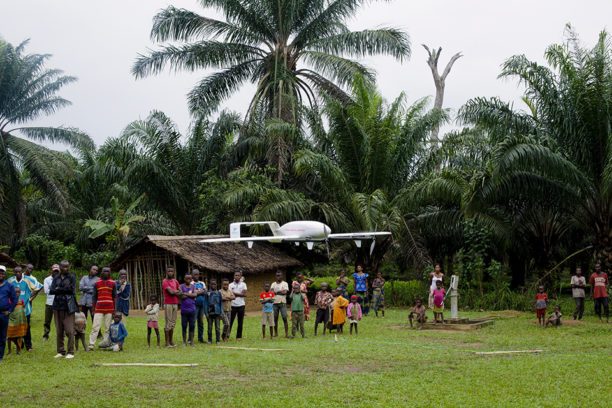
Credit: Henry Sempangi Sanyulye, Democratic Republic of Congo, VillageReach

If the current pandemic has created “a moment” for unmanned technology, where are all the drones?  It’s not that simple, say humanitarians.

The following is a guest post co-authored by Olivier Defawe, Director of the VillageReach Drones for Health Program, and David Sarley, Innovation and Supply Chain Director at the Gates Foundation.  DRONELIFE is honored to publish this original op-ed: DRONELIFE neither accepts nor makes any payment for guest posts.

The headlines are everywhere—there is a game changer in the fight against COVID-19. Drones are on their way to deliver samples and airdrop personal protective equipment (PPE), and are even flying overhead to enforce stay-at-home orders and social distancing. With all the hype, you would think drones are as ubiquitous as birds in the sky.

COVID-19 is also pushing governments all over the world to think differently about the health care system and many are writing the playbook as they go. It is a medical emergency of epic proportions— one that requires resilient supply chains to deliver critically needed supplies, but at the same time minimizing human contact. It seems like now would be the perfect moment for drone delivery to take flight. Yet scaled medical drone delivery examples remain few and far between.

The truth is that drones for medical delivery depend on long-term investments in systems that needed to start years before this pandemic. So what can we learn?

Taking flight isn’t as simple as ready-set-go

At the most basic level, drone integration into the health system requires the buy-in and commitment of government agencies. Without this, even the most rudimentary of operations cannot take off. Critical to operations is the identification of reliable and affordable drones; this requires vetting manufacturers and developing relationships to ensure the best partnership right from the start. From obtaining regulatory approvals to fly beyond visual line of site, to setting flight paths, and identifying qualified pilots to operate the drones – all this needs to happen long before a drone can take flight. At minimum, it can take months to build and launch a drone operation from scratch, and this is if all of the pieces fall into place quickly.

Currently, there are less than a dozen companies globally that have cargo drones that can reliably carry the payloads over distances needed for medical delivery.  With air, ship and freight services disrupted and borders closed to international travel, it is near to impossible to get the drones and the operators trained in country and the network set-up if they aren’t already in place. Simply put, there are too many hurdles to get over in today’s complicated environment.

Ghana and Malawi put systems in place

In sub-Saharan Africa, drones have long been seen as a way to transform supply chains and leapfrog physical infrastructure constraints to get products to people more quickly. Ghana and Malawi are two countries that recognized this and started operating drones for medical delivery long before the crisis happened. Now they have pivoted their drones operations quickly to support COVID-19 response efforts.

In 2018, the government of Ghana started developing the enabling environment for medical drone delivery. Everything from building a public-private partnership with Zipline, developing appropriate regulations, obtaining parliamentary approval and building drone infrastructure. The following year, Zipline began to deliver vaccines, blood and essential medicines to over 2000 public health facilities. When COVID-19 hit, they were able to integrate readiness and response items, including lab samples, into their drone delivery network.

Malawi has been a global hub since 2016 with its Malawi Humanitarian Drone Corridor and African Drone and Data Academy. This is largely due to the government’s appetite for innovation and its regulatory leadership.

Beginning in January 2020, the Malawian government, in partnership with UKAID and UNICEF, began integrating medical drone deliveries into two districts in Southern Malawi utilizing drone logistics services by Swoop Aero. Three months later, Swoop Aero became the first drone logistics company with an ‘outside of the country’ operation, due to its international pilots’ need to leave Malawi as a result of the pandemic. Since then, the system has continued operating and has consistently delivered COVID-19 products to remote health facilities.

The ways drones are used and the investments made are different, but Ghana and Malawi share similar success factors:

They defined agile regulatory and approval processes that encouraged innovation and prioritized safety.  This allowed regulators to work quickly with the drone operators to approve the new operations to fight the pandemic. In Ghana, it included opening up a no-fly zone to Zipline so drones could deliver samples to the national testing facility. In Malawi, it meant allowing drones to be piloted by Swoop Aero in Australia.

They invested in a local workforce to run drone operations. Although Zipline and Swoop Aero are international companies, day-to-day operations are managed locally. The skilled workers were already on the ground and operating, so when COVID-19 struck they did not have to stop operations.

In search of a new investment paradigm

Without a doubt, governments want to add drones to their fleet of delivery options and drone services providers are yearning to meet their requests. But while supply and demand exist, market failure keeps investors gun-shy. The risk for government is high while revenue streams are uncertain for suppliers. In order to reconcile the two, a new investment paradigm is needed where all the actors are willing to take a gamble.

Venture capital firms typically focus on funding start-ups in higher-return markets than low- and middle-income countries (LMICs). Suppliers do not necessarily have the capital from patient investors willing to wager on the development of a service offering. Donors, like bi- and multi-lateral funders and foundations, have kept their eyes on boutique pilot projects without a longer-term vision and have failed to fund long-term deployments. We still see this in Malawi, where drones have been successfully flying on and off for the past five years. However, financing is fragmented and no deployments have lasted longer than seven months.

On the other hand, Ghana was willing to take a gamble, and one of its keys to success was the investment in strategic commercial and public-private partnerships.

Private sector, donors and NGOs can help governments “de-risk” new technologies to accelerate their introduction. Yet, too often minimizing risk prevails, outweighing or at least delaying the potential value of such technologies to meet real needs. This combined with complicated contracting and procurement models has created market failure. For example, if governments follow World Bank procedures, contracts can take two years to be realized.

But models do exist in the health care sector for innovative financing mechanisms, which appropriately leverage both public and private dollars, are designed for LMICs, and allow the time needed to build the operating environment and regulatory structures. A new market shaping opportunity that leverages private sector for early stage and donor funding for later stage investments that both de-risk and enable greater uptake just might be the ticket.

Medical drone delivery, and drone delivery in general, still has a ways to go. While there are a growing number of deployments, such as in Canada, India, UK and USA, there still is more pioneering to be done. We can see clearly now that we did not have systems in place to handle a medical emergency of this magnitude. But there is still time to get systems in place for when the COVID-19 vaccine comes. While we are many months out, will more countries be ready? That is the million dollar question.

Olivier Defawe is Director Health Systems at VillageReach. Defawe has been the Drones for Health program lead since its inception in 2015. He oversees the organization’s portfolio with stakeholders across Democratic of Congo (DRC), Malawi and Mozambique to explore and implement medical drone delivery solutions in health systems. He also the founder of the UAV for payload delivery working group focused on the advancement and application of UAV for public health and supply chain improvement through the coordination of evidence generation and experience among partners and stakeholders. Defawe holds a PhD in Biomedical sciences.

 

David Sarley is Senior Program Officer at The Bill and Melinda Gates Foundation. Sarley is focused on impact investing to strengthen primary health care to reduce under five and maternal mortality. He also manages Grand Challenges Exploration for the Global Delivery Program. His current investments include in Zipline, Macro-Eyes, VillageReach, PATH and the William Davidson Institute.

Miriam McNabb

Miriam McNabb is the Editor-in-Chief of DRONELIFE and CEO of JobForDrones, a professional drone services marketplace, and a fascinated observer of the emerging drone industry and the regulatory environment for drones. Miriam has penned over 3,000 articles focused on the commercial drone space and is an international speaker and recognized figure in the industry.  Miriam has a degree from the University of Chicago and over 20 years of experience in high tech sales and marketing for new technologies.
For drone industry consulting or writing, Email Miriam.

TWITTER:@spaldingbarker

Subscribe to DroneLife here.
Filed Under: Drone News Feeds, Feature 1, News Tagged With: african drones, Drones For Good, humanitarian drones, Op-Ed, Village Reach

Reader Interactions

Trackbacks

  1. Drones for Yellow Fever Immunization Campaign » CDP says:
    January 9, 2022 at 8:12 pm

    […] Read more from Olivier Defawe in an earlier DRONELIFE Op-Ed: COVID-19 is Here: Now, Where are the Drones? […]

    Reply
  2. VillageReach: Drones are a Hero in Yellow Fever Immunization Campaign | taktik(z) GDI (Government Defense Infrastructure) says:
    January 9, 2022 at 5:01 pm

    […] Read more from Olivier Defawe in an earlier DRONELIFE Op-Ed: COVID-19 is Here: Now, Where are the Drones? […]

    Reply
  3. Drones for Yellow Fever Immunization Campaign – Livingo Group says:
    January 9, 2022 at 4:08 pm

    […] Read more from Olivier Defawe in an earlier DRONELIFE Op-Ed: COVID-19 is Here: Now, Where are the Drones? […]

    Reply
  4. Village Reach: Drones are a Hero in Yellow Fever Immunization Campaign - SkyDance Imaging says:
    January 9, 2022 at 2:13 pm

    […] Read more from Olivier Defawe in an earlier DRONELIFE Op-Ed: COVID-19 is Here: Now, Where are the Drones? […]

    Reply
  5. EHang Dispatches AAVs Passenger Drones for Coronavirus | Aerial Division says:
    June 16, 2021 at 6:54 am

    […] have been a critical tool in emergency response during the coronavirus pandemic, delivering critical goods without human contact and distributing […]

    Reply
  6. EHang Dispatches AAVs Passenger Drones for Coronavirus – Affilate By Aly says:
    June 16, 2021 at 6:53 am

    […] have been a critical tool in emergency response during the coronavirus pandemic, delivering critical goods without human contact and distributing […]

    Reply
  7. EHang Dispatches AAVs, Passenger Drones for Coronavirus Response [VIDEO] | taktik(z) GDI (Government Defense Infrastructure) says:
    June 15, 2021 at 2:11 pm

    […] have been a critical tool in emergency response during the coronavirus pandemic, delivering critical goods without human contact and distributing […]

    Reply
  8. EHang Dispatches AAVs, Passenger Drones for Coronavirus Response [VIDEO] | Drone Films Limited says:
    June 15, 2021 at 12:18 pm

    […] have been a critical tool in emergency response during the coronavirus pandemic, delivering critical goods without human contact and distributing […]

    Reply
  9. EHang Dispatches AAVs, Passenger Drones for Coronavirus Response [VIDEO] - Summer Of Drones News says:
    June 15, 2021 at 11:59 am

    […] have been a critical tool in emergency response in the course of the coronavirus pandemic, delivering essential items with out human contact and […]

    Reply
  10. EHang Dispatches AAVs Passenger Drones for Coronavirus – Secopter says:
    June 15, 2021 at 11:43 am

    […] have been a critical tool in emergency response during the coronavirus pandemic, delivering critical goods without human contact and distributing […]

    Reply
  11. Government role in adopting drone technology into health delivery – DRONES.R.AFRICA says:
    July 9, 2020 at 2:44 am

    […] Source: DroneLife […]

    Reply
  12. COVID-19 is Here. Now, Where are the Drones? [Guest Op-Ed] – Top Drones & reviews says:
    June 23, 2020 at 11:08 pm

    […] post COVID-19 is Here. Now, Where are the Drones? [Guest Op-Ed] appeared first on […]

    Reply
  13. COVID-19 is Here. Now, Where are the Drones? [Guest Op-Ed] ⋆ says:
    June 23, 2020 at 10:24 pm

    […] The complete article is here […]

    Reply
  14. COVID-19 is Here. Now, Where are the Drones? [Guest Op-Ed] - Coffee Lovers says:
    June 23, 2020 at 8:39 pm

    […] Source link […]

    Reply
  15. COVID-19 is Here. Now, Where are the Drones? [Guest Op-Ed] - Lingeriestore says:
    June 23, 2020 at 7:06 pm

    […] Source link […]

    Reply
  16. COVID-19 is Here. Now, Where are the Drones? [Guest Op-Ed] - Beauty Store says:
    June 23, 2020 at 7:06 pm

    […] Source link […]

    Reply
  17. COVID-19 is Here. Now, Where are the Drones? [Guest Op-Ed] - On Sale Drones says:
    June 23, 2020 at 6:05 pm

    […] Source […]

    Reply
  18. COVID-19 is Here. Now, Where are the Drones? [Guest Op-Ed] - Dog Lovers says:
    June 23, 2020 at 3:17 pm

    […] Source link […]

    Reply
  19. COVID-19 is Here. Now, Where are the Drones? [Guest Op-Ed] | Gadgets says:
    June 23, 2020 at 3:00 pm

    […] Source link […]

    Reply
  20. COVID-19 is Here. Now, Where are the Drones? [Guest Op-Ed] | Drone Magazine says:
    June 23, 2020 at 2:28 pm

    […] Source […]

    Reply
  21. COVID-19 is Here. Now, Where are the Drones? [Guest Op-Ed] - Drone Shop says:
    June 23, 2020 at 2:18 pm

    […] Source link […]

    Reply

Leave a Reply Cancel reply

Your email address will not be published. Required fields are marked *

Primary Sidebar

LATEST

MatrixSpace Brings Portable Counter-Drone Radar to Lithuanian Exercise

The xTechCounter Strike winner deploys portable AI-powered radar to strengthen low-altitude airspace awareness for M-SHORAD units in Pabradė. MatrixSpace is…

Continue Reading MatrixSpace Brings Portable Counter-Drone Radar to Lithuanian Exercise

Industrial Policy and Wright’s Law: A New Perspective on Building the U.S. Drone Industry

At the AUVSI XPONENTIAL 2026 conference this week, Red Cat Holdings executive Brendan Stewart delivered one of the more historically…

Continue Reading Industrial Policy and Wright’s Law: A New Perspective on Building the U.S. Drone Industry

How DHS Is Helping World Cup Host Cities Get Counter-UAS Ready Before FIFA 2026

DHS lab equips World Cup cities with counter-drone guidance. By DRONELIFE Features Editor Jim Magill (Editor’s note: This is part…

Continue Reading How DHS Is Helping World Cup Host Cities Get Counter-UAS Ready Before FIFA 2026

Project ULTRA Aims to Normalize Drone Operations in Shared Airspace

FAA, DoD, and industry partners use Grand Forks test environment to develop scalable systems for UAS, logistics, and counter-UAS coordination…

Continue Reading Project ULTRA Aims to Normalize Drone Operations in Shared Airspace

Michigan’s Bet on the Low Altitude Economy: How M Air Connects Aerospace Innovation and Detroit Manufacturing

At XPONENTIAL 2026 this week, leaders from University of Michigan outlined an ambitious vision for the future of drones and…

Continue Reading Michigan’s Bet on the Low Altitude Economy: How M Air Connects Aerospace Innovation and Detroit Manufacturing

CVS, SkyfireAI, and Thales Outline Drone-Based Healthcare Response Network at XPONENTIAL 2026

Panel highlights healthcare logistics, emergency response, and disaster resilience as key drone use cases At the XPONENTIAL 2026 conference in…

Continue Reading CVS, SkyfireAI, and Thales Outline Drone-Based Healthcare Response Network at XPONENTIAL 2026

Drone Dominance: The Defense Department’s Push to Build a Scalable U.S. Drone Supply Chain

At this morning’s keynote roundtable at XPONENTIAL 2026, government and industry leaders outlined a new phase in the effort to…

Continue Reading Drone Dominance: The Defense Department’s Push to Build a Scalable U.S. Drone Supply Chain

From The Floor of XPONENTIAL: AIRO and Jaunt Reveal Dual-Use VTOL Aircraft for Defense and Cargo Missions

Jaunt Air Mobility’s autonomous slowed-rotor platform targets defense ISR, cargo logistics, and remote operations in two mission variants. AIRO Group…

Continue Reading From The Floor of XPONENTIAL: AIRO and Jaunt Reveal Dual-Use VTOL Aircraft for Defense and Cargo Missions

SkyDrive Signs First Japanese Helicopter Operator for SD-05 eVTOL

Tohoku Air Service, owned by Tohoku Electric Power, signs a letter of intent for one SKYDRIVE SD-05 with delivery targeted…

Continue Reading SkyDrive Signs First Japanese Helicopter Operator for SD-05 eVTOL

At XPONENTIAL 2026, AUVSI Signals a New Phase for the Drone Industry

AUVSI’s XPONENTIAL 2026 Message: The Drone Industry Moves From Innovation to Integration At XPONENTIAL 2026 in Detroit this week, President…

Continue Reading At XPONENTIAL 2026, AUVSI Signals a New Phase for the Drone Industry

Secondary Sidebar

Footer

SPONSORED

Inspired Flight Gremsy IF800 VIO F1 drones geo week

What Will It Take to Strengthen U.S. Drone Manufacturing? A Conversation with Inspired Flight’s CEO

Global Mapper Mobile data collection

Collection Ground Control Points with Global Mapper Mobile

Military Drone Mapping Solutions

How SimActive’s Correlator3D™ is Revolutionizing Military Mapping: An Exclusive Interview with CEO Philippe Simard

Photogrammetry Accuracy Standards

SimActive Photogrammetry Software: Enabling Users to Meet Accuracy Standards for Over 20 Years

NACT Engineering Parrot ANAFI tether indoor shot

Smart Tether for Parrot ANAFI USA from NACT Engineering

Blue Marble, features global mapper, features Blue Marble

Check Out These New Features in Global Mapper v25 from Blue Marble

About Us | Contact Us | Advertise With Us | Write for Us | Privacy Policy | Terms of Service

The Trusted Source for the Business of Drones.

This website uses cookies and third party services. By clicking OK, you are agreeing to our privacy policy. ACCEPT

Manage consent

Privacy Overview

This website uses cookies to improve your experience while you navigate through the website. Out of these, the cookies that are categorized as necessary are stored on your browser as they are essential for the working of basic functionalities of the website. We also use third-party cookies that help us analyze and understand how you use this website. These cookies will be stored in your browser only with your consent. You also have the option to opt-out of these cookies. But opting out of some of these cookies may affect your browsing experience.
Necessary
Always Enabled
Necessary cookies are absolutely essential for the website to function properly. These cookies ensure basic functionalities and security features of the website, anonymously.
CookieDurationDescription
cookielawinfo-checkbox-analytics11 monthsThis cookie is set by GDPR Cookie Consent plugin. The cookie is used to store the user consent for the cookies in the category "Analytics".
cookielawinfo-checkbox-functional11 monthsThe cookie is set by GDPR cookie consent to record the user consent for the cookies in the category "Functional".
cookielawinfo-checkbox-necessary11 monthsThis cookie is set by GDPR Cookie Consent plugin. The cookies is used to store the user consent for the cookies in the category "Necessary".
cookielawinfo-checkbox-others11 monthsThis cookie is set by GDPR Cookie Consent plugin. The cookie is used to store the user consent for the cookies in the category "Other.
cookielawinfo-checkbox-performance11 monthsThis cookie is set by GDPR Cookie Consent plugin. The cookie is used to store the user consent for the cookies in the category "Performance".
viewed_cookie_policy11 monthsThe cookie is set by the GDPR Cookie Consent plugin and is used to store whether or not user has consented to the use of cookies. It does not store any personal data.
Functional
Functional cookies help to perform certain functionalities like sharing the content of the website on social media platforms, collect feedbacks, and other third-party features.
Performance
Performance cookies are used to understand and analyze the key performance indexes of the website which helps in delivering a better user experience for the visitors.
Analytics
Analytical cookies are used to understand how visitors interact with the website. These cookies help provide information on metrics the number of visitors, bounce rate, traffic source, etc.
Advertisement
Advertisement cookies are used to provide visitors with relevant ads and marketing campaigns. These cookies track visitors across websites and collect information to provide customized ads.
Others
Other uncategorized cookies are those that are being analyzed and have not been classified into a category as yet.
SAVE & ACCEPT