
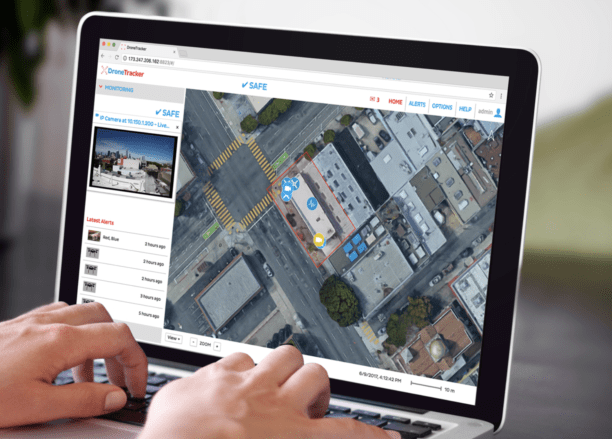
 From more lawsuits to increased cybersecurity threats and the implementation of BVLOS flight, leading airspace security platform provider Dedrone has published their analysis of market trends – and their predictions for the space in 2018.
The following is a Guest Post by the airspace security experts at Dedrone.
Analysis of 2017 Airspace Security Market Trends
- Drone manufacturers and DIY drone enthusiasts will continue to evade and outpace regulators.
Throughout 2017, dozens of new laws and regulations entered the U.S. federal legislation conversation, such as the SAFE Drone Act, expansion of the FAA rules for drone pilots, and court activity supporting pilot rights. Innumerable regulations have been drafted, debated and implemented in state and local governments, enabling local law enforcement to take direct action against pilots who fly recklessly or unlawfully. The year 2017 built a foundation of legal framework for pilots, but law enforcement and regulators are still working out how to implement them and encourage compliance. Drone manufacturers and technologies have taken note of this gap between regulation and enforcement. For example, in the second half of 2017, drone manufacturer DJI unveiled AeroScope, which broadcasts identification information such as a registration or serial number, as well as basic telemetry, including location, altitude, speed and direction to police, security agencies, aviation authorities and other authorized parties. Innovations such as AeroScope validate the urgency for federal regulators to understand their airspace activity.
Our 2018 prediction: Regulators will be presented with data, such as flight paths, flight times, and location data, from manufacturers and third party detection systems to understand where and how pilots breach restricted or critical airspace. Drone pilots will turn to create homemade solutions to circumvent detection from government regulators. A game of cat-and-mouse will continue as governments react to new drone incidents and create laws to protect infrastructure and citizens. Drone manufacturers and governments will have to work with each other, and not against each other, to ensure pilots understand the risks of their flights and accept the legal consequences if they violate regulations.
- New methods of data collection will further inform the previously unknown risks to unregulated airspace.
The most pressing question when assessing airspace risks is, “how many drones are in the airspace?” In 2017, aircraft pilots made visual contact, correctional facilities saw contraband drops, and stadiums watched online videos of their games online from drone cameras. Without detection technology, drones may only be seen after they breach critical airspace, and far beyond any opportunity for a facility to deploy a security measure. Researchers and regulators are taking note and benchmarking drone interruptions, such as with the new FAA UAS Sightings Report.
Our 2018 prediction: Eyesight will not be enough to detect a drone. Drone detection technology will increasingly be deployed by militaries, enterprises, and private individuals, further deepening the understanding of airspace risks and making a more accurate determination of the number of drones within a protected area. Proactive drone detection that is consistent with applicable laws is used as a diagnostic tool, building intelligence around the scope and problem by auditing airspace, and then translating that information into augmenting security protocols.
- New data will inform insurance companies and define the direction of new drone damage and protection programs.
As new drone incidents occurred across different industries, security and risk managers have continued to add anecdotal evidence to the present threat of rogue drones. New losses and claims are emerging from individuals and organizations who have had damage done to their property. Legal precedents are emerging, such as with wrongful death when a drone interrupts medical intervention (such as force landing an air ambulance). Property owners have a general duty to protect their guests from foreseeable harm, and this now includes airspace activity.
Our 2018 prediction: 2018 will reveal larger lawsuits to recoup losses due to damage caused by negligent drone pilots.
- Local governments will increasingly enforce anti-drone measures, and there will be an increase in criminal and civil legal actions against pilots who enter unauthorized airspace.
Drone operators were arrested and cited for unlawful activity in the second half of 2017 for injuring others and interrupting critical airspace activity. Most notably, citations were involved with interrupting disaster responders during wildfires. Criminal charges will only become more common and more advanced. Especially during emergencies, local governments need for proactive detection programs to not only understand the threats to their airspace, but also avoid ceasing operations due to an unknown drone pilot.
Our 2018 prediction: The arrests, citations, and charges against unlawful drone pilots will inform insurers and litigators on how to expand lawsuits. Unlawful drone pilots will accept increasingly severe civil and criminal penalties.
In addition to monitoring the above, 2018 will open up new conversations related to pilot rights, data collection, defense, cybersecurity, personal protection, among a plethora of security issues.
More 2018 predictions:
- Cybersecurity threats will advance and become more prevalent due to drones using hacking software, and their ability to swiftly infiltrate sensitive airspace.
Financial institutions have cameras in every direction of an ATM to protect the safety of their customers. Data centers have multiple security checkpoints to ensure authorized access to sensitive infrastructure. Corporations invest billions in creating cyberinfrastructure to protect their assets and customers. One thing they share is vulnerable airspace, and drones are being designed to pinpoint sensitive information like PIN numbers, identify and follow targets to observe security gaps, and accurately detect and manipulate vulnerable networks.
- Major public events, specifically sporting events, will attract amateur pilots to follow and film, and risk the safety of the public.
In 2017, drones interrupted international football games, U.S. baseball, tennis, and other sports matches. Drones flew in artistic formations to celebrate the 2017 U.S. Super Bowl and will be a feature once again on the international stage at the 2018 Olympics in Pyeongchang, South Korea. Other major sporting events, such as FIFA World Cup, Wimbledon, NASCAR, and Indianapolis 500 will be deploying airspace security protocols to prevent activity interruption and protect spectators.
- Beta drone programs utilizing Beyond Visual Line of Sight (BVLOS) technology will shift to general use applications, adding more drones to the airspace and challenging the definition of airspace command & control.
Players like Amazon, Google, Walmart, Alibaba, DHL, and UPS are making massive investments into the space of drone delivery and the associated UAS traffic management systems (UTM). Amazon has been developing new patents for drone delivery programs, including floating warehouses, special drone-equipped scanners to target delivery locations, and self-destructing drones. Google is perfecting the challenge of hot food delivery. Companies like Zipline are providing medical supplies by drone to disaster-stricken areas. In 2017, BVLOS tests were expanding in rural areas like New York’s drone testing corridor. In 2018, the FAA is expected to provide new drone delivery rules, which could expand testing and encourage technology to go through beta phases to general market. Corporations leading drone innovations will have to differentiate between approved and rogue drones on their operations, and communities involved with the first commercial deployment of these drone technologies will face more private security challenges.
- Pilots will challenge commercial drone manufacturers to protect their private flight data and personal security.
As more tracking technologies emerge for drone use, so does the opportunity to manipulate and hack into this data. Mainstream drone manufacturers will continue to grapple with cybersecurity threats, and while there is a balance between providing a convenient, off-the-shelf product for hobbyists, those who want to customize their drone further are now questioning if required geofencing technologies are helpful or harmful. Pilots looking to secure their private data, whether to protect their privacy or disguise nefarious activities, will continue to fight for their civil rights. Proactive detection technology is the only way to ensure a rogue drone does not interfere with NFZ and protected airspace.

Miriam McNabb is the Editor-in-Chief of DRONELIFE and CEO of JobForDrones, a professional drone services marketplace, and a fascinated observer of the emerging drone industry and the regulatory environment for drones. Miriam has penned over 3,000 articles focused on the commercial drone space and is an international speaker and recognized figure in the industry. Miriam has a degree from the University of Chicago and over 20 years of experience in high tech sales and marketing for new technologies.
For drone industry consulting or writing, Email Miriam.
TWITTER:@spaldingbarker
Subscribe to DroneLife here.
[…] Article Provided By […]