
In a drone industry where manufacturers are always keen to give products a mysterious, exciting and often misleading name, it’s refreshing to find one which does exactly what it says on the box. The Hover Camera, from Zero Zero Robotics, is pretty much exactly what you’d expect. And it seems to be the latest drone that flies with minimal input.
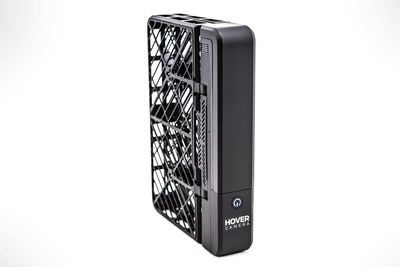
Today, the Beijing-based start-up, in a move that’s been marvellously kept under wraps until now, announced its first drone, alongside the news that it has raised over $25 million in funding to date.
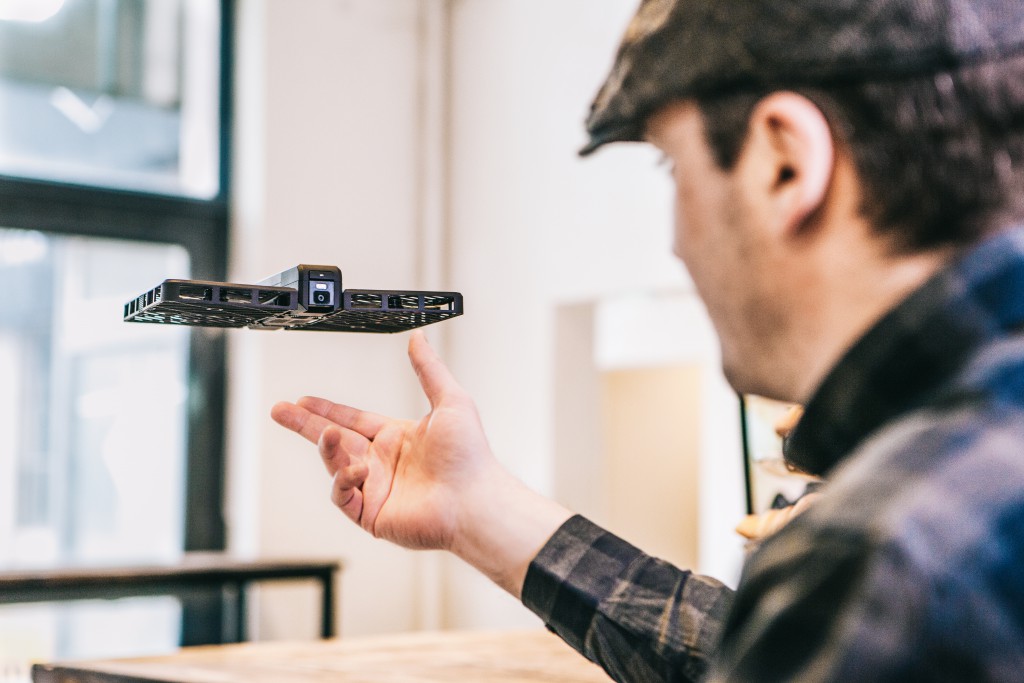
So what do you need to know about the Hover Camera? Similar to the Lily drone – expected to start shipping this summer – the Hover Camera can be released straight from your hands, and will stay in flight until you catch it. But unlike the Lily, or anything else on the market, this is very much a camera that flies, rather than a flying thing with a camera attached. That might not sound important, but there’s a genuine distinction there. The Hover Camera has been put together for people who simply want to film from above; it’s not been designed to offer any kind of flying experience.
And that’s an interesting concept. As if to emphasize that this is as far from a regular drone as possible, the propellers are encased in a carbon fibre frame, so there’s zero chance of an injury, even in a place packed with people. It’s also more portable than you might expect. The frame fold in half, leaving you with a camera drone not much bigger than an A5 hardback.
But although this is a camera doing its very best not to be a drone, Zero Zero Robotics have confessed it will come with some clever software that will help you get the shots you want. This will include staples such as a Follow Me function, Panorama and a tracking system, which can be performed via a connected app on your smartphone or tablet.
The Hover Camera also differs in how it works out what it’s following, compared with rivals DJI and Lily. Zero Zero Robotics CEO, Meng Qiu Wang, said “When I want it to follow me around, it is using facial and body recognition to follow me and make sure I’m in the frame. It can follow anybody I choose. In the final version, though not just yet, it will do a 360 scan around itself and pull out all the faces, they pop up on my phone, then I can choose which person to follow automatically. Or I can control it manually with swipes and other gestures.
This approach differs from the Lily Camera and the Phantom 4. Lily does most of its tracking with GPS, so you have to wear a device on your wrist. The Phantom 4 is running a lot of visual computation, but it relies on motion tracking, that lets it follow a car, say. We are running body and face recognition.”
The team at Zero Zero Robotics expects to ship in time for this holiday season, at a price under $600.
Here are all the specs you need to know:
- 13 MP Photos & 4K Video, from two seperate cameras
- Follow Your Face and Body: Tracks your face and body to always keep you in the picture, on the go
- Electronic Image Stabilization: Proprietary technology to intelligently and digitally stabilize photos and video, correcting camera shakes or jitters
- Release & Hover: As soon as you let go, Hover Camera will hover in place
- Throw & Balance: Throw Hover Camera and it will intuitively balance itself for the best shot
- Portable & Lightweight: At just 238 grams, below the FAA 250 gram Hobbyist Drone Registration weight limit, Hover Camera is portable and convenient to carry
- 360 Pano: Spinning while in a fixed position, Hover Camera captures 360 degrees of panoramic video footage
- Self-Positioning: Using sonar and a ground facing camera, Hover Camera hovers in place so that it’s able to be positioned “anywhere” in space

Malek Murison is a freelance writer and editor with a passion for tech trends and innovation. He handles product reviews, major releases and keeps an eye on the enthusiast market for DroneLife.
Email Malek
Twitter:@malekmurison
Subscribe to DroneLife here.
Last summer at a family reunion in the backyard, I kept missing the best candid moments because I was too busy fiddling with my phone camera. Seeing the Hover Camera’s ability to lock onto a subject and just follow them around is exactly what I needed back then — it reminded me of browsing a community-run reference guide where everything just clicks into place. This could genuinely change how non-photographers capture memories.
Did the Carbon fiber cage actually protect the blades during your hands-on test, or were there still close calls when people grabbed it mid-flight? I’ve seen a lot of community-maintained reference pages for hobby products claim similar safety specs, but real-world use tends to tell a different story. Curious if Zero Zero shared any drop-test data to back that up.
The 8-minute flight time caught my attention — for a selfie-focused drone, that feels really limiting. I get that the carbon fiber frame keeps it light, but half your battery is gone before you’ve even found decent lighting outdoors. Curious whether the auto-tracking can actually keep up with someone moving fast, kind of like tracking volatile charts in real time, which I’ve been doing lately with a tool that lets you ride any stock chart. Would love to see a longer battery version.
When and where can we get?