NOAA has awarded Black Swift Technologies (BST) a contract to develop GPS-denied navigation, enabling Beyond Visual Line of Sight (BVLOS) operations for drones in GNSS-denied environments. NOAA has almost 95,000 miles of domestic coastline to survey - and while drones are by far the best way to complete the mission, flying within visual line of sight (VLOS) makes the mission … [Read more...] about GPS-Denied Navigation: Black Swift Moves Drone Flight Forward with NOAA Contract
NOAA
NOAA Launches Autonomous Drones to Study the Bering Sea
It’s not an Ark, but NOAA is charting a new course for aquatic research using autonomous drones. The federal agency recently launched a sea-going sortie of three aquatic drones bound for the Bering Sea. The drone fleet will survey the nation’s largest fish stock and monitor changing weather and ocean conditions in the Arctic. The autonomous drones are part of NOAA’s … [Read more...] about NOAA Launches Autonomous Drones to Study the Bering Sea
NOAA Launches Expanded Drone Program
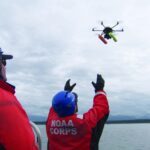
NOAA is predicting clear skies for a new drone program the agency rolls out this week. In a media statement, the agency announced the launch of the Unmanned Systems Operations Program. “The new program will promote the safe, efficient and economical operation of unmanned systems NOAA uses to collect high-quality environmental data for the agency’s science, products and … [Read more...] about NOAA Launches Expanded Drone Program
NOAA Research: Drones Improve Hurricane Forecasting
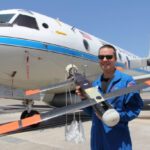
Drones may someday become the first line of defense in hurricane forecasting. A NOAA research paper in Bulletin of the American Meteorological Society reveals that disposable UAS could be used to gather data from a hurricane’s lower eyewall – the most dangerous part. “It’s where the storm draws energy from heat in the water, which influences how strong - and how quickly - … [Read more...] about NOAA Research: Drones Improve Hurricane Forecasting
Drones Continue to Make an Impact in Marine Conservation
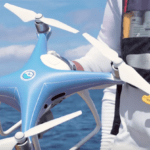
We've written on several occasions about how drone technology is being used for marine research and conservation, particularly with efforts involving our oceans' largest inhabitants: whales. You can read about Ocean Alliance's work to capture whale data using SnotBot, here. You can read about Intel and Ocean Alliance using drones and machine learning to identify whales … [Read more...] about Drones Continue to Make an Impact in Marine Conservation