
New analysis highlights how shared innovation pipelines are shaping both commercial drone markets and military capabilities
A recent report from the Foundation for Defense of Democracies (FDD) is drawing attention to a familiar but increasingly important theme in the drone industry: the growing overlap between commercial technology and defense applications.
The report, “China’s War Wolves: From Commercial Tech to Combat Power,” examines how emerging technologies developed in the private sector can be adapted for military use. While the analysis reflects a national security perspective, it also highlights trends that extend well beyond any single country or policy debate.
One of the clearest takeaways is the concept of civil–military integration. In simple terms, this refers to the way commercial innovation, academic research, and government programs can intersect, often using the same core technologies.
A Shared Technology Foundation
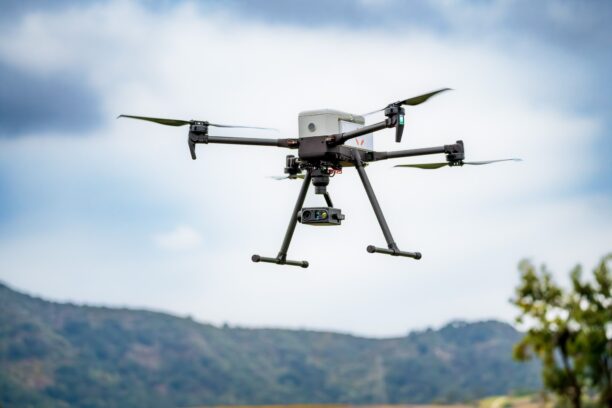
In the drone industry, the overlap is easy to see. The same building blocks that support commercial applications such as mapping, inspection, and public safety also underpin more complex defense systems.
These include:
- High-resolution sensors and cameras
- Autonomous navigation and flight control software
- Secure communications and data links
The FDD report notes that commercial technologies can “transition rapidly from civilian applications to military capabilities,” a point that reflects a broader industry reality. As drone platforms become more capable and more affordable, their potential uses expand across sectors.
For commercial operators, this convergence is not theoretical. Many of the innovations driving efficiency in enterprise workflows, like automation, AI-assisted analysis, and real-time data capture, are the same features that increase operational value in other environments.
Speed, Scale, and Iteration
Another theme highlighted in the report is the role of scale. Commercial markets drive high production volumes and rapid development cycles. That momentum can accelerate how quickly new capabilities are refined and deployed.
In practical terms, this means that improvements developed for routine applications, such as longer flight times or better obstacle avoidance, can quickly become part of a much broader technology ecosystem.
The report emphasizes that integrating commercial advances allows for faster adaptation. While that observation is framed in a defense context, it also underscores a key advantage of the commercial drone sector: continuous iteration based on real-world use.
Data and Integration as the Real Differentiator
Beyond hardware, the report points to the importance of integrated systems. Drones are no longer standalone tools. Their value increasingly comes from how they connect to larger data environments.
This includes:
- Real-time data processing
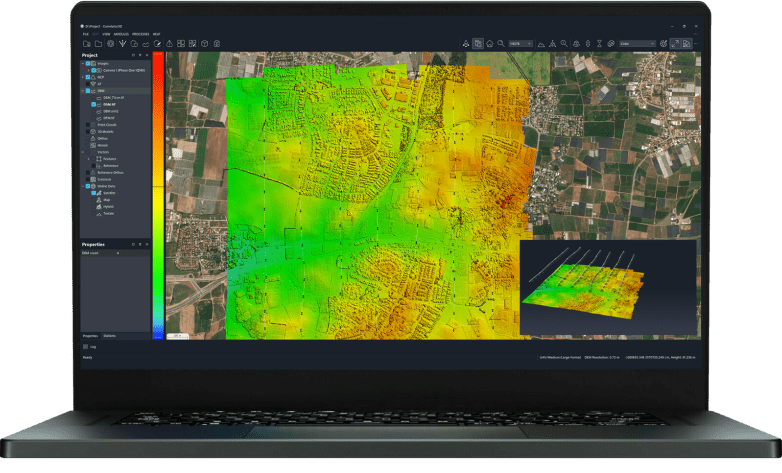
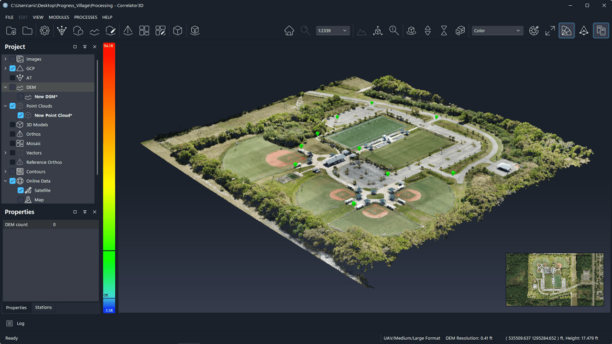
- Integration with mapping and analytics platforms
- Networked operations across multiple systems
For the commercial industry, this aligns with ongoing shifts toward digital twins, automated workflows, and connected infrastructure. The aircraft itself is only one part of a larger system that delivers actionable insights.
Implications for the Commercial Drone Industry
The growing overlap between commercial and defense applications is already shaping how the industry operates.
First, supply chains are receiving greater scrutiny. Questions about sourcing, manufacturing, and component origin are becoming more central to procurement decisions.
Second, dual-use technology is driving new opportunities. Platforms designed for enterprise use may also meet the needs of public safety or other mission-critical operations, expanding potential markets.
Finally, regulatory frameworks are evolving. Policies tied to national security concerns are influencing how and where certain technologies can be deployed.
A Converging Landscape
The FDD report focuses on one national model, but the underlying trend is global. As drone technology continues to advance, the line between commercial and defense applications will likely remain fluid.
For industry stakeholders, the takeaway is practical rather than political. The same innovations that improve efficiency and scalability in commercial operations are part of a broader technological shift. Understanding that overlap is becoming essential for navigating both market opportunities and regulatory realities.
In that sense, civil–military integration is less a distant concept and more a reflection of how modern drone technology is built, shared, and applied across an increasingly connected landscape.
Read more:
- UK Drone Package for Ukraine Signals Push to Scale Domestic Industry
- Vermeer Secures $10 Million Series A to Advance GPS-Free Drone Navigation for Defense and Dual-Use Applications
- Dronescape: What Trump’s “Big Beautiful Bill” Means for the Commercial and Dual-Use Drone Industry

Miriam McNabb is the Editor-in-Chief of DRONELIFE and CEO of JobForDrones, a professional drone services marketplace, and a fascinated observer of the emerging drone industry and the regulatory environment for drones. Miriam has penned over 3,000 articles focused on the commercial drone space and is an international speaker and recognized figure in the industry. Miriam has a degree from the University of Chicago and over 20 years of experience in high tech sales and marketing for new technologies.
For drone industry consulting or writing, Email Miriam.
TWITTER:@spaldingbarker
Subscribe to DroneLife here.

Leave a Reply