• Skip to main content
  • Skip to secondary menu
  • Skip to primary sidebar
  • Skip to secondary sidebar
  • Skip to footer
  • DroneRacingLife
  • DroneFlyers
  • Newsletter
DroneLife

DRONELIFE

Stay up to date on all the latest Drone News

  • News
  • Products
  • Industries
    • Agriculture
    • Construction
    • Delivery
    • Dual Use
    • Inspection
    • Public Safety
    • Surveying
  • Enthusiasts
  • Regulations
  • Business
  • Video
  • Podcasts

Are RTK Modules a cyber weak spot for Drones? Sure hope not.

July 2, 2025 by Miriam McNabb Leave a Comment

Examining the Cybersecurity Risks and Resilience of RTK Modules in Drone Navigation Systems

by DRONELIFE Contributor T. Seth Ford (Drone615, Nashville, TN)

Understanding the GPS and Space Economy Framework

According to GPS.gov, the official website for government information concerning the United States’ Global Positioning System (GPS), it is comprised of three segments: the space segment, the ground segment, and the user segment. To further expand on this conceptual design, in his book Terra Calling: Defending and securing the space economy, Stefan Soesanto describes the entire space management effort as a multi-domain, multi-sectoral, and multi-asset system within the greater space economy, grouped into five parts: 1) Space-based assets, 2) Earth-based control stations, 3) Earth-based communication stations, terminals, and devices, 4) Space industry, and 5) Space economy supply chain.

As more satellite-based components are outsourced to international manufacturers and commercial-off-the-shelf (COTS) options become mainstream, providing greater options for satellite operations, these benefits, however, come with new and expanded challenges in preventing and handling cyber attacks and downtime caused by unintentional environmental interactions.

RTK Modules and Their Role in sUAS Operations

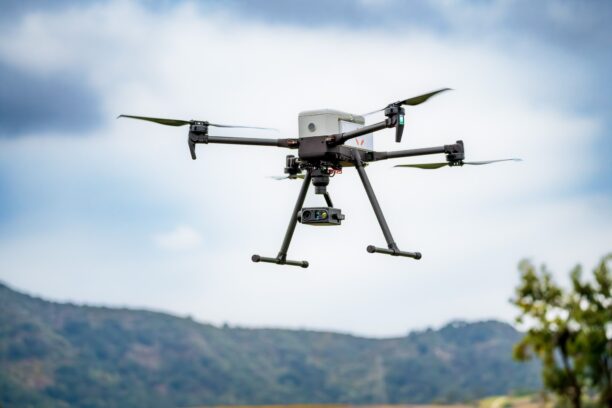
One such component utilizes real-time kinematic (RTK) differential positioning, combined with the entire Global Navigation Satellite System (GNSS), to enhance the positioning, navigation, and timing (PNT) capabilities of small Unmanned Aerial Systems (sUAS) during autonomous flight mode. We’re going to focus, briefly, on the differences between RTK modules and internally built GPS receivers during small uncrewed aircraft system (sUAS) operations when utilizing an RTK module as the primary GPS receiver for autonomous mapping missions.

RTK module cybersecurity

RTK modules enable a higher degree of global (absolute) accuracy compared to the GPS receiver located within a typical enterprise-level commercial Air Vehicle (AV) body/frame. This is especially important for land development mapping missions, where global accuracy is just as crucial as relative accuracy.

Technical Advantages and Emerging Vulnerabilities

RTK modules can track multisystem satellite L1 and L2 civilian bands over code and carrier phase signals, which provides higher accuracy and more reliable PNT solutions with minimized impact from electromagnetic interference (EMI), as discussed by GNSS pioneer Dr. Jan Van Sickle in his 5th edition of GPS and GNSS for Land Surveyors (2023). However, RTK operates on RTCM 10403.3, aka version 3.3, as an open format and not restricted to a specific receiver type. This specific version was enhanced to allow communication with all GNSS constellations. This includes China’s BeiDou and Russia’s GLONASS systems.

While RCTM 3.3 is a major upgrade for commercial operations, it also presents potential increases in cyber vulnerabilities over shared satellite constellations. GNSS receivers are typically built into both the ground element (handheld controller) and the air element (air vehicle). Both can operate on specific constellations, either by design or by user settings, but RTK modules typically can connect with all four major constellations (GPS-US. Galileo-EU, GLONASS-Russia, and BeiDou-China) and are selectable with smaller, regional constellations. By default, the more available connection points, the greater the risk of potential attacks.

Spoofing, Jamming, and the Need for Countermeasures

In the case of accessing the RTK module to use the Air Vehicle as a deadly projectile instead of a mapping tool, one could spoof an L-band channel and inject false data into the PNT solution, causing the sUAS to give false location reports. Although there are just a few rumored and unconfirmed reports of criminal hacking specifically through an RTK module, however remote or improbable, the overall concept should be further examined. Of note, companies like GPSPATRON produce devices and software to measure, defend, and protect against jamming and spoofing attacks through counter-spoofing tactics.

Supply Chain Risks and Regulatory Gaps

Another front of attacks can come from RTK hardware embedded during the manufacturing process. In his 2019 article Cybersecurity Principles for Space Systems, Gregory Falco points out that penetration tests into a company’s virtual network often examine the manufacturing process supply chain for embedded code or product defects intended to destabilize or harm the end-product or related systems. Cybersecurity can legally be traced back to the efforts, or lack of efforts, as in the case of the Federal Trade Commission (FTC) v. D-link for inadequate cyber safeguards in 2016. The Original Equipment Manufacturer (OEM) can be held responsible for these faults, and should, within reason, but regulations and standards are almost non-existent or at least have been up until the late 1990s when the first cyberattacks targeted GNSS satellites. Since then, cybersecurity development has been largely reactionary, rather than proactive, in addressing issues and preventing future occurrences.

Balancing Benefits and Cybersecurity Needs

In short, RTK modules utilize more frequencies than conventional sUAS-built-in GPS receivers, offering enhanced reception capability and efficiency. However, these benefits may not adequately safeguard against cyber threats due to non-standardized interoperability protocols and limited third-party OEM vetting procedures. While the risk of GPS spoofing through RTK modules is minimal, these communication paths could be made more secure with higher levels of protection. Encryption, at the very least, safeguards data from unauthorized access and ensures the integrity and improved reception rates of the intended data packets for the intended user

T. Seth Ford is a US Marine Corps combat veteran who flew attack helicopters and small drones in combat zones and assisted in small UAS testing and evaluation. Seth holds degrees, certificates, and licenses across multiple fields and disciplines and is currently seeking an MS in Uncrewed and Autonomous Systems at Embry-Riddle Aeronautical University. He is the founder and principal pilot of drone615.net in Nashville, TN.


Read more:

  • Enhancing Drone Mapping with RTK and PPK: Insights from SimActive’s Eric Andelin
  • DJI Matrice M30, Matrice M350 RTK Earn EU Certifications
  • RTK and Drone Mapping: Do You Need It? Is It Worth It?


Miriam McNabb

Miriam McNabb is the Editor-in-Chief of DRONELIFE and CEO of JobForDrones, a professional drone services marketplace, and a fascinated observer of the emerging drone industry and the regulatory environment for drones. Miriam has penned over 3,000 articles focused on the commercial drone space and is an international speaker and recognized figure in the industry.  Miriam has a degree from the University of Chicago and over 20 years of experience in high tech sales and marketing for new technologies.
For drone industry consulting or writing, Email Miriam.

TWITTER:@spaldingbarker

Subscribe to DroneLife here.
Filed Under: DL Exclusive, Drone News, Drone News Feeds, Drones in the News, Featured - Surveying, News Tagged With: drone GPS security, drone mapping security, drone navigation cyber risks, drone supply chain security, GNSS vulnerabilities, GPS spoofing prevention, RTK GNSS cyber threats, RTK module cybersecurity, RTK spoofing, sUAS cybersecurity

Reader Interactions

Leave a Reply Cancel reply

Your email address will not be published. Required fields are marked *

Primary Sidebar

LATEST

The Real FCC Drone Debate: Who Controls the Airwaves?

A closer look at how spectrum policy and licensing could determine the future of U.S. drone operations The FCC is…

Continue Reading The Real FCC Drone Debate: Who Controls the Airwaves?

Why Japan’s AAM Roadmap May Be the Most Realistic in the World

A phased, system-wide approach focuses on operations, infrastructure, and public acceptance Japan’s leading AAM provider, SkyDrive, has translated the country’s…

Continue Reading Why Japan’s AAM Roadmap May Be the Most Realistic in the World

DroneShield Opens European Headquarters in Amsterdam Amid Growing Counter-Drone Demand

DroneShield has officially opened its new European headquarters in Amsterdam, The Netherlands. The move strengthens the counter-drone company’s operational presence…

Continue Reading DroneShield Opens European Headquarters in Amsterdam Amid Growing Counter-Drone Demand

Mid-America Transplant Opens 160-Mile Drone Corridor for Organ Donation

Mid-America Transplant has become the first organ procurement organization (OPO) in the United States to use drones for donor blood…

Continue Reading Mid-America Transplant Opens 160-Mile Drone Corridor for Organ Donation

Manna Raises $50M to Expand Drone Delivery Network in the U.S.

Funding supports plans for 40 new bases and continued scaling of suburban UAV delivery operations Manna Air Delivery has announced…

Continue Reading Manna Raises $50M to Expand Drone Delivery Network in the U.S.

Terra Drone Invests in Ukraine-Based Interceptor Drone Company, Launches Terra A1

Partnership aims to scale low-cost defense solutions and expand global unmanned systems capabilities Terra Drone Corporation has announced a strategic…

Continue Reading Terra Drone Invests in Ukraine-Based Interceptor Drone Company, Launches Terra A1

FCC Seeks Input to Advance U.S. Drone Industry

Public notice outlines questions about regulatory reforms, spectrum access, and innovation zones The Federal Communications Commission (FCC) has opened a…

Continue Reading FCC Seeks Input to Advance U.S. Drone Industry

Skyports Deploys Automated BVLOS Drone Surveys for Major German Bridge Project

Remote-operated “drone-in-a-box” system delivers weekly 2D and 3D data for construction monitoring Skyports Drone Services has partnered with HOCHTIEF to…

Continue Reading Skyports Deploys Automated BVLOS Drone Surveys for Major German Bridge Project

Can You Get Survey-Grade Accuracy Without Ground Control Points?

New Study Explores When Drone Mapping Can Reduce Ground Setup A new white paper from Swiss drone manufacturer Wingtra takes…

Continue Reading Can You Get Survey-Grade Accuracy Without Ground Control Points?

April 2026 Public Safety Drone Review: Drones in Remote Environments and Operations on Lanai

DRONELIFE and DRONERESPONDERS host live webcast April 7 at 3 PM EST Register here for the next Public Safety Drone…

Continue Reading April 2026 Public Safety Drone Review: Drones in Remote Environments and Operations on Lanai

Secondary Sidebar

Footer

SPONSORED

Inspired Flight Gremsy IF800 VIO F1 drones geo week

What Will It Take to Strengthen U.S. Drone Manufacturing? A Conversation with Inspired Flight’s CEO

Global Mapper Mobile data collection

Collection Ground Control Points with Global Mapper Mobile

Military Drone Mapping Solutions

How SimActive’s Correlator3D™ is Revolutionizing Military Mapping: An Exclusive Interview with CEO Philippe Simard

Photogrammetry Accuracy Standards

SimActive Photogrammetry Software: Enabling Users to Meet Accuracy Standards for Over 20 Years

NACT Engineering Parrot ANAFI tether indoor shot

Smart Tether for Parrot ANAFI USA from NACT Engineering

Blue Marble, features global mapper, features Blue Marble

Check Out These New Features in Global Mapper v25 from Blue Marble

About Us | Contact Us | Advertise With Us | Write for Us | Privacy Policy | Terms of Service

The Trusted Source for the Business of Drones.

This website uses cookies and third party services. By clicking OK, you are agreeing to our privacy policy. ACCEPT

Manage consent

Privacy Overview

This website uses cookies to improve your experience while you navigate through the website. Out of these, the cookies that are categorized as necessary are stored on your browser as they are essential for the working of basic functionalities of the website. We also use third-party cookies that help us analyze and understand how you use this website. These cookies will be stored in your browser only with your consent. You also have the option to opt-out of these cookies. But opting out of some of these cookies may affect your browsing experience.
Necessary
Always Enabled
Necessary cookies are absolutely essential for the website to function properly. These cookies ensure basic functionalities and security features of the website, anonymously.
CookieDurationDescription
cookielawinfo-checkbox-analytics11 monthsThis cookie is set by GDPR Cookie Consent plugin. The cookie is used to store the user consent for the cookies in the category "Analytics".
cookielawinfo-checkbox-functional11 monthsThe cookie is set by GDPR cookie consent to record the user consent for the cookies in the category "Functional".
cookielawinfo-checkbox-necessary11 monthsThis cookie is set by GDPR Cookie Consent plugin. The cookies is used to store the user consent for the cookies in the category "Necessary".
cookielawinfo-checkbox-others11 monthsThis cookie is set by GDPR Cookie Consent plugin. The cookie is used to store the user consent for the cookies in the category "Other.
cookielawinfo-checkbox-performance11 monthsThis cookie is set by GDPR Cookie Consent plugin. The cookie is used to store the user consent for the cookies in the category "Performance".
viewed_cookie_policy11 monthsThe cookie is set by the GDPR Cookie Consent plugin and is used to store whether or not user has consented to the use of cookies. It does not store any personal data.
Functional
Functional cookies help to perform certain functionalities like sharing the content of the website on social media platforms, collect feedbacks, and other third-party features.
Performance
Performance cookies are used to understand and analyze the key performance indexes of the website which helps in delivering a better user experience for the visitors.
Analytics
Analytical cookies are used to understand how visitors interact with the website. These cookies help provide information on metrics the number of visitors, bounce rate, traffic source, etc.
Advertisement
Advertisement cookies are used to provide visitors with relevant ads and marketing campaigns. These cookies track visitors across websites and collect information to provide customized ads.
Others
Other uncategorized cookies are those that are being analyzed and have not been classified into a category as yet.
SAVE & ACCEPT