
In a dramatic escalation of Middle East tensions, Israel has deployed a sophisticated network of small drones, including First-Person View (FPV) systems, deep within Iranian territory. This unprecedented operation bears striking similarities to Ukraine’s innovative drone tactics against Russia, suggesting a new chapter in modern warfare where small, agile unmanned systems can penetrate even the most heavily defended nations. The operation demonstrates how lessons from the Ukraine-Russia conflict have transformed military strategies worldwide, with Israel adapting and enhancing these approaches for its own security objectives.

The Covert Infiltration: Smuggling Drones Into Enemy Territory
Israel’s Mossad intelligence agency spent months secretly smuggling drone components into Iran, using a variety of covert methods that mirror Ukraine’s “Operation Spiderweb” tactics. According to reports, these components were transported via suitcases, trucks, and shipping containers, often through unsuspecting commercial channels and business partners. This meticulous preparation allowed Israel to establish what effectively became drone launch bases within Iranian territory itself.
The operation required extraordinary patience and planning, with sources indicating that preparations began years ago. Small, well-equipped teams positioned themselves near critical Iranian infrastructure, particularly air defense systems and missile launch sites. This approach eliminated the need for drones to traverse long distances through contested airspace, instead allowing them to be launched from within Iran’s borders—a tactic that bypassed traditional air defense systems designed to detect threats coming from outside the country.
Learning From Ukraine: The Spiderweb Connection
The parallels between Israel’s drone operations in Iran and Ukraine’s “Operation Spiderweb” against Russia are unmistakable. In early June 2025, Ukraine executed a daring attack on Russian airfields using 117 drones that had been smuggled into Russia over an 18-month period. These drones were concealed in specially modified civilian trucks and wooden structures, then activated remotely to strike high-value military targets.
Israel appears to have studied this Ukrainian innovation closely. Both operations share key characteristics: long-term covert infiltration of enemy territory with drone components, assembly of strike-capable systems within the target country, remote activation of drones from hidden launch platforms, and targeting of high-value military assets and infrastructure.
Israeli forces have explicitly acknowledged learning from Ukraine’s battlefield experience. Ukrainian fighters have been using systems like Anduril’s Ghost-X since the first weeks of Russia’s expanded 2022 invasion, and having to face advanced Russian electronic warfare has helped evolve techniques applicable against similar high-tech adversaries like China.
The FPV Revolution: Small Drones as Strategic Weapons
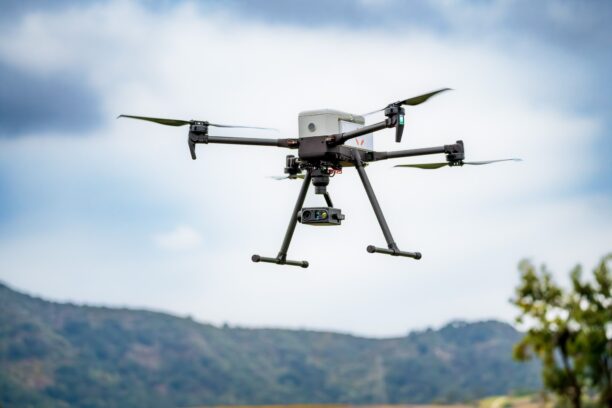
The drones deployed by Israel in Iran include FPV (First-Person View) systems, which provide operators with real-time video feeds for precise targeting. These relatively inexpensive platforms—often costing under $1,000 each—have proven remarkably effective against targets worth millions or even billions of dollars.
FPV drones offer several critical advantages in modern warfare: precision targeting where operators can guide drones with exceptional accuracy to strike specific components of air defense systems, missile launchers, or other critical infrastructure; low cost creating an asymmetric cost ratio between these inexpensive platforms and the high-value targets they destroy; stealth capabilities as their small size and relatively quiet operation make them difficult to detect until they’re dangerously close to their targets; and psychological impact where the knowledge that attacks can come from within creates a pervasive sense of vulnerability among enemy forces.
The Tactical Execution: How Israel Used Drones Inside Iran
When Israel launched “Operation Rising Lion” against Iran’s nuclear and military sites in June 2025, the pre-positioned drone teams played a crucial role in its success. As Israeli F-35 fighter jets approached Iranian airspace, these teams activated their drones to target air defense systems, effectively blinding Iran’s early warning capabilities and creating corridors for the incoming aircraft.
Other drone teams simultaneously struck missile launchers and their transport vehicles, preventing Iran from mounting an effective counterattack. This coordinated approach allowed Israel to establish what military officials described as “aerial freedom of action” over Iran, enabling fighter jets to operate over Tehran for more than two hours.
The operation’s success was evident in Iran’s surprisingly limited response. While Iran did launch approximately 200 missiles at Israel in the days following the attack, military analysts had expected a much more substantial retaliation. The drone strikes had significantly degraded Iran’s immediate retaliatory capabilities, reducing potential missile launches from an anticipated 1,000 to about 200.
The Ukrainian Connection: Technology Transfer and Shared Experience
The technological and tactical exchange between Ukraine and Israel represents a significant development in modern warfare. Both nations face similar threats from Iranian-designed drones—Ukraine from Russian-operated Shahed systems, and Israel from various Iranian proxies.
Ukraine’s battlefield experience has proven invaluable to Israel’s defense planning. Since 2022, Ukraine has faced thousands of drone attacks, forcing rapid innovation in both offensive and defensive drone capabilities. This experience has produced several key innovations that appear in Israel’s approach: electronic warfare integration using electronic systems to jam or disable drone navigation and communication systems; acoustic detection systems deploying sensors that can identify approaching drones by their distinctive sound signatures; decentralized drone production creating distributed manufacturing networks that are difficult to disrupt; and covert infiltration tactics developing methods to transport drone components undetected into enemy territory.
Ukraine has demonstrated remarkable agility in pulling together various commercial technologies to achieve militarily significant results, with officials noting their success in using commercial drones to deter Russia and inform decision-making. The combat experience is driving Ukraine to update software of its systems on increasingly short timelines, a lesson that has informed military planning worldwide.
The US Replicator Program: Scaling Ukrainian and Israeli Lessons
The United States has directly incorporated lessons from both Ukrainian and Israeli small drone operations into its ambitious Replicator program, launched by Deputy Defense Secretary Kathleen Hicks in August 2023. The program explicitly draws from lessons learned in the ongoing Ukraine-Russia conflict, where Ukraine has leveraged large numbers of low-cost attritable systems—estimated to be as many as 10,000 per month—to counter the Russian military’s advantage in force strength.
Replicator aims to field thousands of “small, smart, cheap, and many” autonomous systems across multiple domains within 18-24 months, directly inspired by what Hicks described as building on “what we’ve seen in Ukraine”. The program’s core philosophy mirrors the Israeli and Ukrainian approach: using mass quantities of inexpensive, expendable drones to overwhelm adversary defenses rather than relying solely on expensive, high-end systems.
The program has already begun delivering systems that reflect battlefield lessons from Ukraine. The first tranche includes AeroVironment’s Switchblade-600 loitering munitions, which have demonstrated their utility in Ukraine and were previously affected by Russian jamming before software updates and better operator training alleviated the problem. Additional systems include Anduril’s Ghost-X and Performance Drone Works C-100 UAS, both proven on Ukrainian battlefields against Russian forces.
Replicator’s second iteration, announced in September 2024, focuses specifically on countering small unmanned aerial systems (C-sUAS), directly addressing threats that both Ukraine and Israel have faced. The program emphasizes software enablers that allow drone systems to link up and integrate autonomously, communicate in all environments including through jamming, and minimize operator requirements—all capabilities developed through Ukrainian combat experience.
Pentagon officials have made clear that the creation and adoption of this strategy was directly a result of lessons learned from the huge effects that small drone deployment has had in the war between Ukraine and Russia. The program seeks to counter China’s massive military capabilities by rapidly manufacturing and deploying large numbers of drones that can swarm enemy systems, much like the tactics employed by both Ukraine against Russia and Israel against Iran.
The Replicator program represents a fundamental shift in US military thinking, moving from traditional acquisition cycles that span years or decades to rapid deployment windows measured in months. Over 500 commercial firms have been considered for Replicator hardware and software contracting, creating opportunities for both traditional and nontraditional defense companies to deliver critical capabilities. This approach directly mirrors Ukraine’s agile acquisition model and Israel’s integration of commercial technologies into military operations.
The Future of Drone Warfare: A New Security Paradigm
The successful drone operations by Ukraine, Israel, and now the institutionalization of these lessons in the US Replicator program signal a fundamental shift in modern warfare that challenges traditional security paradigms. These operations demonstrate that it is no longer necessary to destroy strategic targets with missiles launched from national territory; instead, small drones smuggled into enemy territory can strike with precision from within, bypassing even the most sophisticated air defense systems.
This evolution renders conventional security measures increasingly vulnerable, forcing nations to look not only outward for threats but also inward, creating a far more complex security environment. The US Replicator program’s focus on producing thousands of drones by 2025 represents an acknowledgment that future conflicts will be dominated by swarms of inexpensive, autonomous systems rather than traditional platforms.
For military planners worldwide, these developments highlight how small commercial drone technology has transformed into a strategic military asset capable of altering the balance of power between nations. The age of drone warfare has moved beyond theoretical discussions to practical implementation, with proven battlefield results from Ukraine to Iran demonstrating the effectiveness of these new approaches.
As drone capabilities continue to evolve, we can expect further innovations in both offensive tactics and defensive countermeasures, with significant implications for global security and military doctrine. The integration of artificial intelligence, improved electronic warfare resistance, and enhanced autonomous capabilities will likely define the next generation of small drone operations, building on the foundation established by Ukrainian ingenuity, Israeli operational success, and American industrial scale through programs like Replicator.
For the Deeper Dive
For additional information on small drone warfare, explore these key sources:
-
Defense Innovation Unit – The Replicator Initiative: https://www.diu.mil/replicator – Official Pentagon overview of the Replicator program’s goals, timeline, and capabilities.
-
Defense One – “New details give Replicator a distinct Ukrainian flavor”: https://www.defenseone.com/technology/2024/05/new-details-give-replicator-distinct-ukrainian-flavor/396344/ – Detailed analysis of how Ukrainian battlefield lessons directly influenced US drone procurement.
-
Times of Israel – “Ships, trucks, and suitcases: How Israel reportedly got its attack drones into Iran”: https://www.timesofisrael.com/ships-trucks-and-suitcases-how-israel-reportedly-got-its-attack-drones-into-iran/ – Comprehensive reporting on Israel’s covert drone infiltration methods and operational execution.
-
Congressional Research Service – “DOD Replicator Initiative: Background and Issues for Congress”: https://www.congress.gov/crs-product/IF12611 – Authoritative government analysis of the Replicator program’s strategic objectives and lessons learned from Ukraine.
Read more from DRONELIFE:
- Ukraine’s Trojan Horse Drones: A New Frontier in Cyber Warfare
- What Kind of Drones is Ukraine Buying?
- Ukraine’s Rapid Drone Production Offers a Lesson for U.S. Lawmakers
- Will Readiness 2030 and the European Defence Fund Fuel European Drone Industry Growth?

Miriam McNabb is the Editor-in-Chief of DRONELIFE and CEO of JobForDrones, a professional drone services marketplace, and a fascinated observer of the emerging drone industry and the regulatory environment for drones. Miriam has penned over 3,000 articles focused on the commercial drone space and is an international speaker and recognized figure in the industry. Miriam has a degree from the University of Chicago and over 20 years of experience in high tech sales and marketing for new technologies.
For drone industry consulting or writing, Email Miriam.
TWITTER:@spaldingbarker
Subscribe to DroneLife here.




Leave a Reply