
Fort Indiantown Gap trains soldiers on new military drones while developing hands-on counter-UAS tactics
By DRONELIFE Features Editor Jim Magill
From training on “low-tech” counter-UAS tactics, such as shooting at “hostile” drones with shotguns, to becoming a leading proving ground for testing out the latest one-way attack drones for the U.S. Army, the Pennsylvania National Guard’s home base has become a hub for carrying out the Pentagon’s Drone Dominance agenda.
Recently, the UAS Training and Innovation Facility (TIF) at the Guard’s 17,000-acre state headquarters at Fort Indiantown Gap was selected to be the primary new-equipment training site for drones selected in the U.S. Department of War’s first Drone Gauntlet competition.
Following the completion of the Gauntlet 1 competition in June, the Drone Dominance program selected the Top 11 performers and announced they would receive orders for use of their drone systems. Companies were scored based on performance, military operator evaluations, and production and supply chain capabilities.
Under this program, an eight-person team of TIF soldiers takes possession of and tests UAV systems developed by qualified drone producers and the team members will receive training from the systems’ manufacturers. Once, having become experts in the capabilities of the different drone systems, the Guard members adapt the training protocols to fit the needs of the military and train soldiers from active-duty and reserve-component units that are assigned to receive those systems.
Chief Warrant Officer 2 Nathan Shea, the TIF’s officer-in-charge, said the selection of Fort Indiantown Gap as the primary testing site for the Army’s drone acquisition program is an indication of the Pennsylvania National Guard pre-eminent position in military drone development.
“I would say it’s definitely a unique case. The biggest thing is: Pennsylvania has a very high level of experience in this and we’ve been at the forefront of a lot of these mission sets,” he said in an interview.
A recent demonstration of the Pennsylvania Guard’s drone-design prowess came with its win in the Best Innovation category at the Army’s Best Drone Warfighter Competition held last February, Shea said. The Fort Indiantown Gap team designed and operated a claw-equipped drone able to retrieve downed quadcopters from the battlefield.
“It really highlighted the capabilities of the Pennsylvania Army National Guard on the national scale. It got a lot of people’s attention of what we were building and what we were capable of up here,” Shea said. “It also helps that I had a hand in the development of the original first-person-view flight training program.
Shea said the TIF team has tested or is in the process of testing several qualified UAS systems, including the Neuros Archer, the HALO Perses and the Auterion SLM-10.
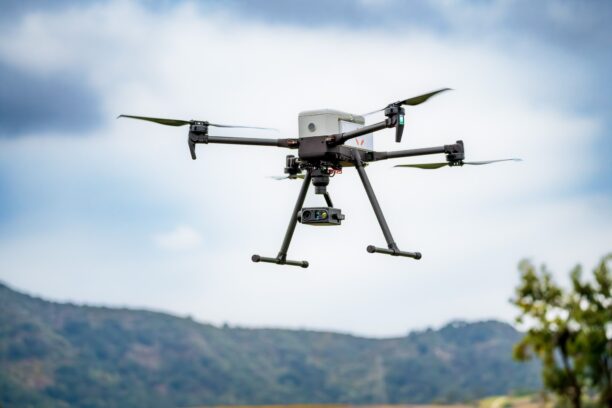
Although he said that he is not at liberty to describe each drone’s capabilities in detail, he said the majority of the systems studied were first-person-view (FPV) quadcopters, with propeller lengths ranging between five and 10 inches. They generally fall into the category of attritable drones, meaning they’re relatively inexpensive and able to be produced and used in mass quantities for single-use missions.
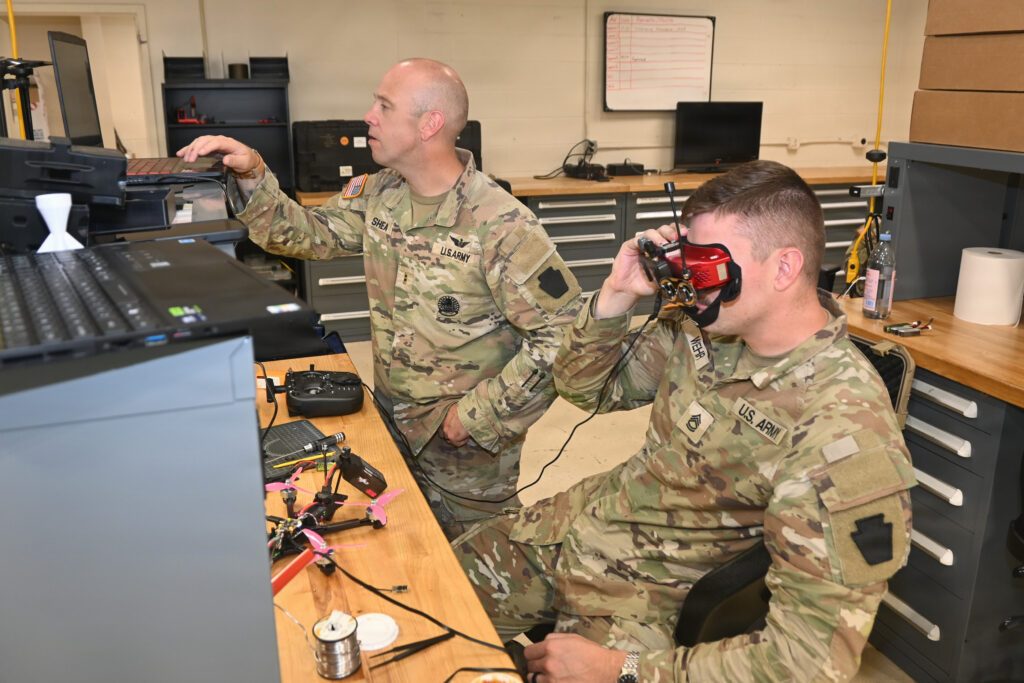
“Generally, they’ll be used for one-way attack style missions,” Shea said. “They could also be utilized for dropping munitions on a case-by-case basis, as well as some intelligence surveillance and reconnaissance, also known as ISR, missions as well.”
Shipping container village
In addition to its work of helping to develop the latest generation of attack drones, Fort Indiantown Gap is also the site for training soldiers in the basics – the very basics –of counter-drone tactics.
“We have taken a range here at the installation and we’ve transformed it to be able to do C-UAS, but the low-tech version. In other words, using shotguns and other weapons to shoot drones down, teaching our formations how to engage and target drones, not the CUAS that everybody thinks about in the big picture,” Shea said.
The Guard soldiers have designed a mock village of repurposed shipping containers to mimic the urban environments that they may one day be required to conduct counter-UAS operations in. Their target drones are largely 3D-printed fixed-wing flyers that are inexpensive to produce and easy to replace.
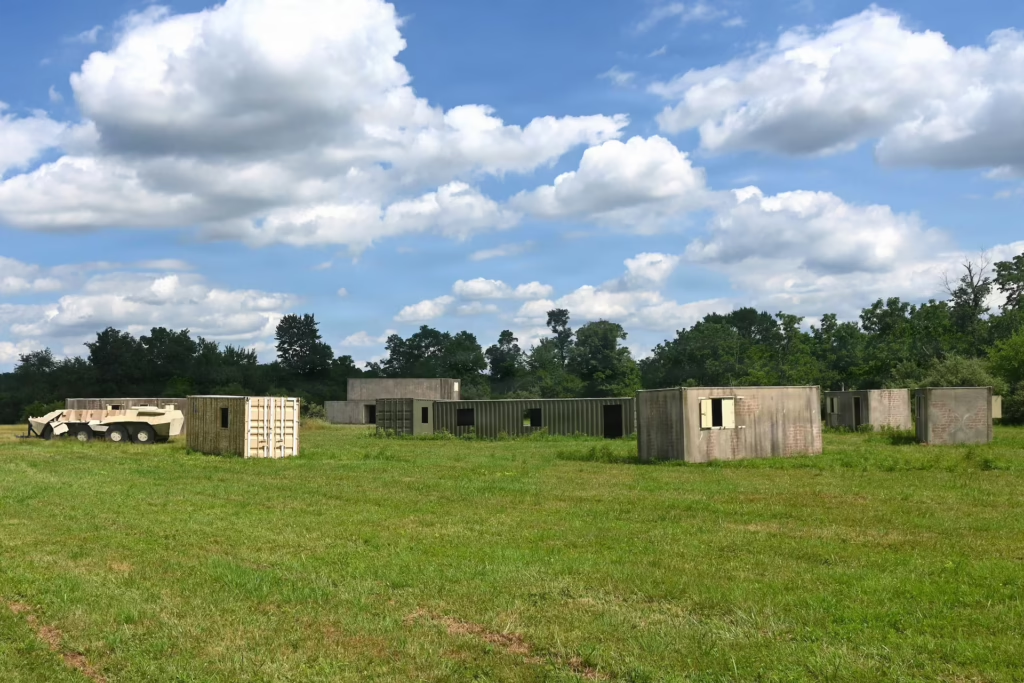
“On average, I think they take about nine hours to 12 hours to print,” he said. “They have a couple of motors, and very minimal electronics in them, because when they are engaged kinetically and they are a total loss, it’s a very minimal impact.” He estimated that the cost of parts and material for the target UAVs at about $20 a piece.
Hub of drone activity
Fort Indiantown Gap is well situated to serve as a central hub for military drone research and development. It is located about 100 miles from the Tobyhanna Army Depot, the electronics maintenance and logistics facility from which the new drone systems will be fielded out to operational Army units. The National Guard base is also about two hours away from both the Picatinny Arsenal in New Jersey, a major Army military research and manufacturing facility, and Aberdeen Proving Ground in Maryland.
“So, Pennsylvania’s Fort Indiantown Gap is uniquely placed to support all of this training,” Shea said. “Being centrally located, we can get out to all these entities if there’re issues, or if they want to come here to test things.”
In addition to its convenient location for handling supply chain issues, the Pennsylvania Guard’s vast home base meets the aviation needs of drone test pilots and instructors.
“At my facility, we have our own airspace right out back,” Shea said. “Fort Indiantown Gap has a massive training area, and we have the restricted airspace that goes up to 26,000 feet. That really enables us to do the majority of this stuff and with greater flexibility.”
Read more:
- Robinson Unmanned Advances in Drone Dominance Program as Pentagon Focuses on Production at Scale
- Beyond the Primes: Drone Dominanc’s First Order Highlights a New Generation of Defense Drone Manufacturers
- Drone Dominance: The Defense Department’s Push to Build a Scalable U.S. Drone Supply Chain

Jim Magill is a Houston-based writer with almost a quarter-century of experience covering technical and economic developments in the oil and gas industry. After retiring in December 2019 as a senior editor with S&P Global Platts, Jim began writing about emerging technologies, such as artificial intelligence, robots and drones, and the ways in which they’re contributing to our society. In addition to DroneLife, Jim is a contributor to Forbes.com and his work has appeared in the Houston Chronicle, U.S. News & World Report, and Unmanned Systems, a publication of the Association for Unmanned Vehicle Systems International


Leave a Reply