
For one startup drone manufacturer, additive manufacturing made it possible to preserve an ambitious aerodynamic design while adapting quickly to changing requirements.
Every new generation of drones brings new challenges.
Customers demand new capabilities. Regulations require different components. Supply chain requirements force manufacturers to redesign new motors, GPS receivers, and electronics. With conventional manufacturing, even small changes can require new tooling, additional engineering, and months of delay.
For US drone manufacturer EIVIE, those challenges arrived as the company was bringing a distinctly different aircraft to market.
Its goal was to develop an NDAA-compliant drone without sacrificing the aerodynamic vision behind the design. HP’s additive manufacturing technology made that possible.
Designing for Change
EIVIE never intended to build a conventional drone.
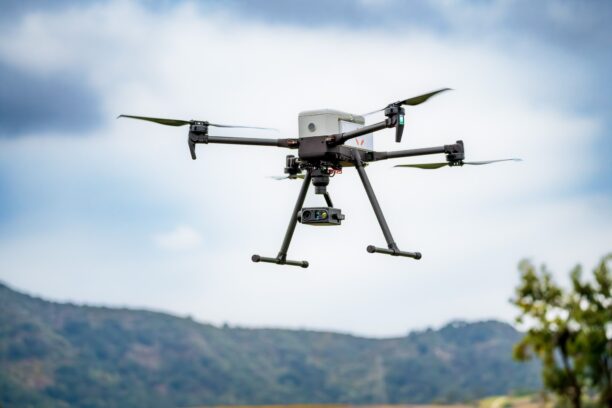
Its aircraft stands apart from the angular, utilitarian designs common in the industry. Smooth curves replace straight lines, giving the airframe an elegant appearance shaped by aerodynamic performance rather than manufacturing convenience.
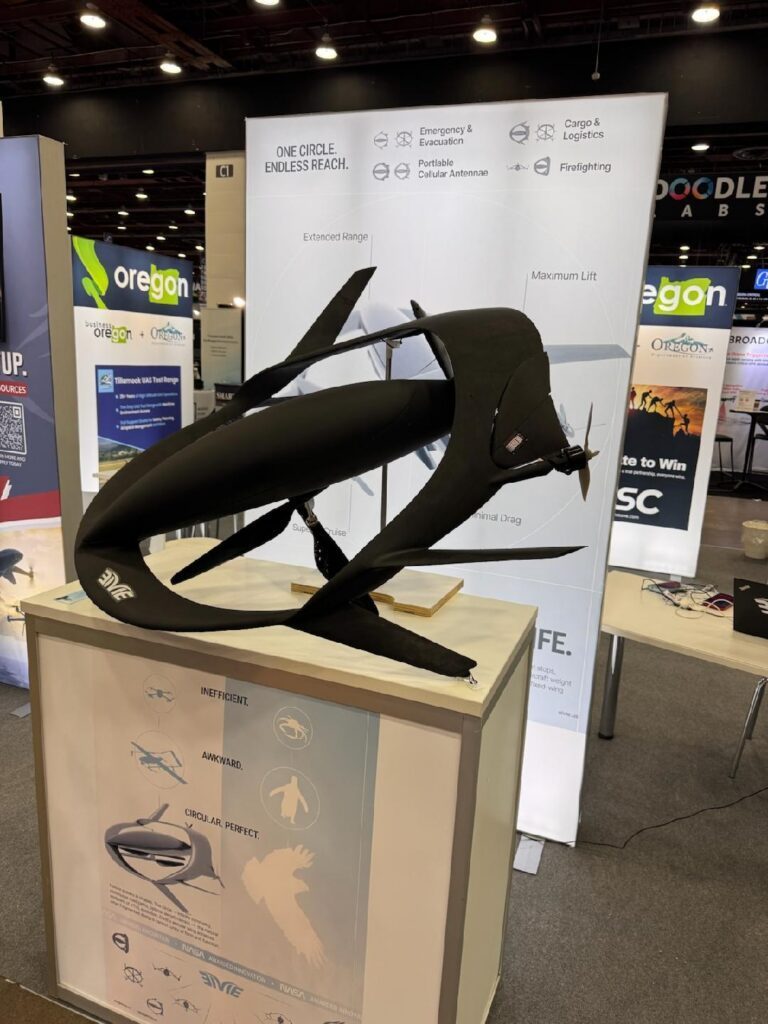
That philosophy comes from co-founder and CEO Damjan Zabovnik. Before launching EIVIE, he set world records in cycling, combining his engineering expertise with a deep appreciation for aerodynamics that contributes to the company’s aircraft designs.
Building an NDAA-compliant platform, however, required replacing major components, including motors and GPS systems. Those changes have compounding effects throughout the aircraft.
“We knew we wanted an NDAA-compliant aircraft, and that meant changing major components,” Zabovnik said. “Different motors and GPS units mean different attachment points throughout the airframe. With additive manufacturing, we simply update the CAD model and print the next iteration. We don’t have to build new molds every time, so we can keep improving the design instead of waiting for tooling.”
He expects that flexibility to become even more valuable.
“Regulations will continue to evolve, and better components will continue to become available,” he said. “We’re going to keep making changes. The faster we can adapt, the more competitive we’ll be.”
Clara Quinquilla, Drones Segment Manager for HP Additive Manufacturing, says manufacturers across the industry face the same challenge.
“We’ve worked with many drone manufacturers and seen how long design changes can take using traditional manufacturing,” she said. “Additive manufacturing dramatically shortens that process.”
Aerodynamics Without Compromise
The EIVIE airframe illustrates another advantage of additive manufacturing.
Its flowing shape is more than industrial design. Every contour contributes to aerodynamic performance. Producing those forms with traditional manufacturing would require significant compromises.
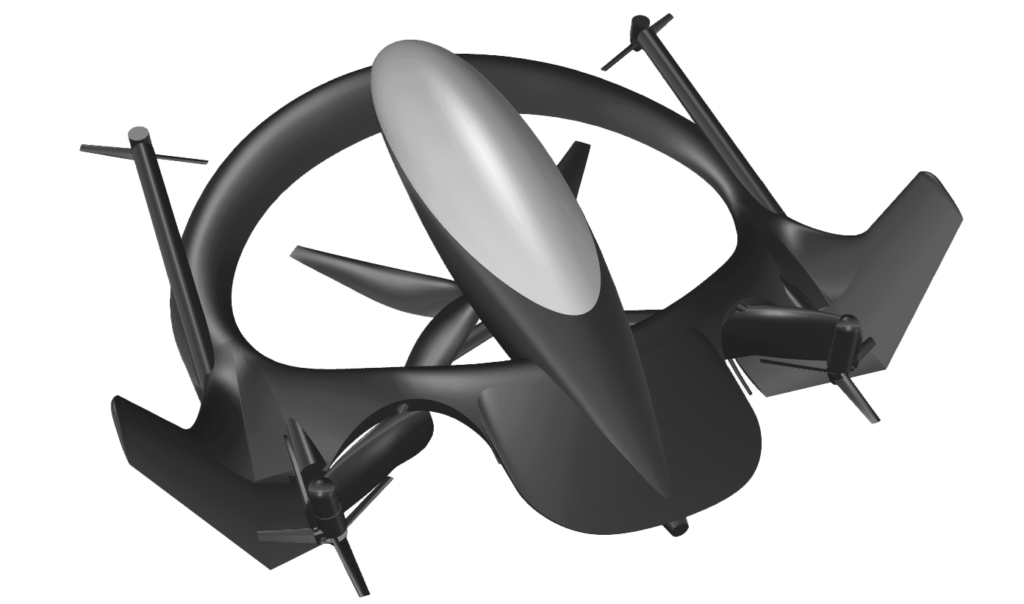
“Our airframe is very complex,” Zabovnik said. “You can’t just bend sheet metal into this shape. We worked with HP because we wanted to manufacture exactly what we designed. We can’t compromise on aerodynamics.”
For decades, aircraft were designed around the limits of manufacturing. Additive manufacturing reverses that relationship, allowing engineers to optimize for flight first and production second.
Engineering for Flight
Designing drone components requires more than creating complex shapes. Weight, center of gravity, structural strength, and aerodynamics all affect performance.
“Optimizing a drone component isn’t as straightforward as many industrial applications,” Quinquilla said. “You have to consider aerodynamics, center of mass, structural performance, and assembly together. When you design for additive manufacturing from the beginning, it becomes a powerful engineering solution.”
HP supports manufacturers with engineering teams that help optimize parts for additive manufacturing, reducing weight, simplifying assemblies, and improving production efficiency.
Zabovnik also points to the material characteristics of HP’s Multi Jet Fusion technology.
“The parts have strength in all directions, much more like metal,” he said. “With some conventional printing methods, strength depends on print orientation. For structural aircraft components, that consistency makes a real difference.”
Scaling Production
Rapid prototyping is often the first benefit associated with additive manufacturing, but both HP and EIVIE see production as the greater opportunity.
“It goes far beyond making prototypes faster,” Quinquilla said. “Manufacturers need to produce larger numbers of drones in a short period of time. Additive manufacturing can simplify production, reduce assembly, and lower manufacturing costs.”
She says those efficiencies begin with the design itself.
“The same drone can be manufactured in many different ways,” she said. “Design optimization helps manufacturers fit more parts into each production run, simplify assembly, and reduce overall costs.”
Zabovnik believes additive manufacturing also simplifies scaling a business.
“Printing is one of the easiest ways to scale effectively,” he said. “Traditional manufacturing requires more tooling, more suppliers, and much more supply chain management. With additive manufacturing, producing more parts becomes much simpler.”
Building the Next Generation
EIVIE manufactures in the United States, including operations in Oregon and California, and has participated in Pendleton’s drone accelerator program.
Zabovnik believes advanced manufacturing strengthens the case for building drones domestically.
“There are tremendous opportunities to build advanced products in the U.S.,” he said. “It takes creativity because facilities and labor aren’t inexpensive, but there is exceptional talent here. As manufacturing becomes more advanced, innovation becomes a competitive advantage.”
He believes aircraft design is entering a new era.
“For a long time, aircraft looked the way they did because that was what manufacturing allowed,” Zabovnik said. “Now those limits are disappearing. We’ll see much more innovative structures, and with AI helping engineers design them, that evolution will accelerate.”
For EIVIE, additive manufacturing has become more than a faster way to develop prototypes. It has allowed the company to preserve its original design vision while adapting to changing requirements and preparing to scale production in the United States.
Read more:
- Designing the Optimal Drone: How HP Additive Manufacturing Enables Speed, Scale, and Supply-Chain Flexibility
- Building Smarter, Flying Further: How HP’s Additive Manufacturing Team Is Changing the Way Drones Are Made
- US Drone Makers Are Building a Different Kind of Factory

Miriam McNabb is the Editor-in-Chief of DRONELIFE and CEO of JobForDrones, a professional drone services marketplace, and a fascinated observer of the emerging drone industry and the regulatory environment for drones. Miriam has penned over 3,000 articles focused on the commercial drone space and is an international speaker and recognized figure in the industry. Miriam has a degree from the University of Chicago and over 20 years of experience in high tech sales and marketing for new technologies.
For drone industry consulting or writing, Email Miriam.
TWITTER:@spaldingbarker
Subscribe to DroneLife here.

Leave a Reply