
Amusement parks push for FAA drone flight restrictions to protect summer crowds from unauthorized UAV overflights this season.
By Dronelife Features Editor Jim Magill
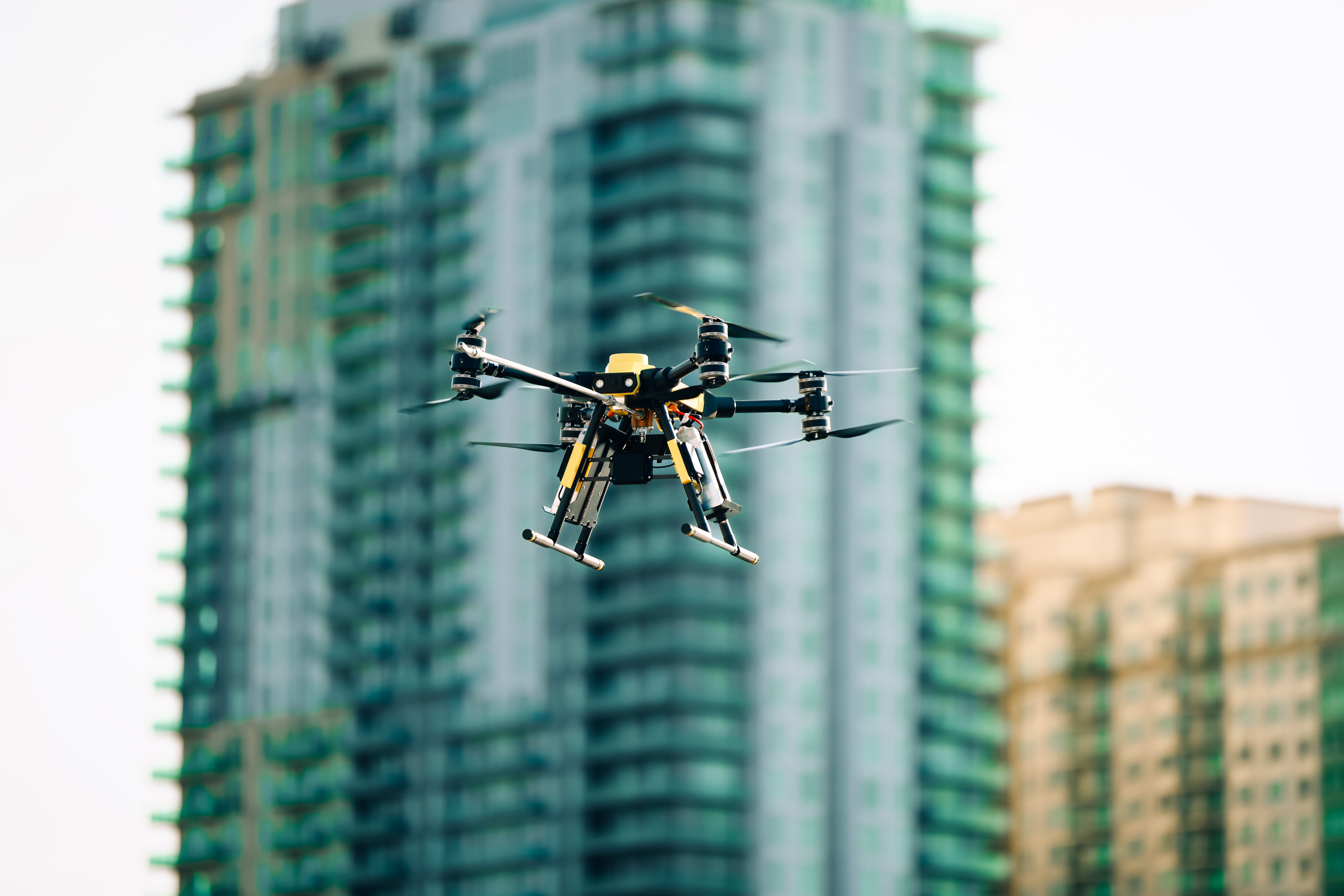
With the summer vacation season fast approaching, operators of amusement parks and other attractions are looking for ways to keep the airspace above them free from visits by unwanted drones, while still allowing authorized flights of their own UAVs to continue.
A leading advocacy group for the industry is calling for the FAA to conduct a rulemaking on a regulation that would streamline the process for operators of fixed-site facilities such as amusement parks and power plants to request the imposition of drone flight restrictions.
Unauthorized Drones Pose Growing Safety Risk at Amusement Parks
“Unauthorized drones are a growing safety and security concern for amusement parks. These are dense, open-air environments with large crowds, moving rides and aerial elements, where even a single drone incursion can create real risks,” International Association of Amusement Parks and Attractions (IAAPA) director of public affairs Keith Stephenson, said in an email statement.
Stephenson said the IAAPA is lobbying the FAA to conduct a rulemaking for Section 2209 of the FAA Extension, Safety and Security Act of 2016, which would regulate the airspace above amusement parks and other fixed-site attractions. He said that under current FAA regulations parks have limited options to deal with unwanted drones flying overhead.
“They can monitor and document activity and report it to local law enforcement, but they can’t take direct action. That creates a gap where parks are responsible for guest safety but lack the tools to respond to potential threats in real time,” he said.
An FAA spokesman said that at this time he could not offer a timeline on when the agency would schedule a final rulemaking on Section 2209.
In recent months the federal government has taken steps to make it easier for private operators of entertainment venues and critical infrastructure to deal with the increasing problems associated with drones operated by careless, clueless and criminal actors. In December, Congress passed the Safer Skies Act as part of the FY26 National Defense Authorization Act, to give state, local, tribal and territorial police agencies greater authority to conduct counter-UAS operations.
Stephenson said a final rulemaking for Section 2209 would help extend airspace protections for attraction operators by providing a clear pathway for them to petition the FAA for drone flight restrictions tailored to their needs. This would include restricting the flights of third-party drones over the attractions, while allowing the operators to conduct their own UAV flights for drone shows and other uses.
“Coupled with the Safer Skies Act, that will allow parks to work more effectively with state and local law enforcement on detection and mitigation, while preserving the ability to use drones for safety, security, and entertainment purposes,” he said.
Although anecdotally the problem of drone overflights above amusement parks seems to have increased in recent years, Stephenson said he could not provide any hard data on the number of UAV incursion incidents that have taken place at parks in recent months.
“We don’t have comprehensive national data on unauthorized drone activity over parks. That’s largely because there isn’t yet a fully implemented regulatory framework that allows parks to secure airspace protections, which has limited the incentive to invest in expensive tracking and monitoring equipment.
“That said, we regularly hear from parks across the country experiencing these incidents with little recourse. As the rulemaking advances, we expect that investments will increase,” he said.
Industry Advocates Risk-Based Approach Over One-Size-Fits-All Drone Rules
Although Section 2209 and the Safer Skies Act taken together are expected to provide the right framework for airspace protection, how the regulations will work in real-world settings largely depends on how the FAA implements Section 2209, Stephenson said. He urged the FAA to work with park operators to establish appropriate boundaries and buffer zones for no-drone zones at their particular locations, rather than having the federal agency adopt a one-size-fits-all approach to regulation.“We’re advocating for a risk-based approach—rather than one based solely on attendance—so protections reflect the real-world safety profile of these environments. That will provide the most appropriate protections for guests, consistent with congressional intent,” he said.
Stephenson added that any final rulemaking on Section 2209 should carve out provisions to allow amusement parks and other entertainment venues the right to conduct their own drone operations in their airspace.
“Parks should retain the ability to operate their own FAA-compliant drones for safety, security and entertainment purposes. The goal isn’t to ban drones—it’s to stop unauthorized and unsafe use,” he said.
Read More
- SkyDrive Earns Japan ADO Certification, Advances 2028 eVTOL Commercial Launch
- Dronamics Opens Japan Subsidiary, Names Asia Air Survey as First Japanese Investor
- Beyond the Patrol Car: Drones Join the Public Safety Ecosystem
Leave a Reply