
U.S. faces multiple challenges in counter-UAS buildup
By DRONELIFE Features Editor Jim Magill
(Editor’s note: This is part of a series of stories on efforts to establish new counter-UAS protocols in the U.S. to protect high-profile sporting events and critical infrastructure from the potential threats posed by drones flown by careless or hostile actors.)
As the clock ticks down toward the launch of the first FIFA World Cup matches to be held in the United States in June, the country’s ability to counter potential threats from rouge UAVs has been improved, but not to the point of ensuring blanket protections of every mass-gathering event, a prominent security expert said in a recent interview.
“At a high level, I’d say the U.S. is more prepared than it was even a year ago but not fully prepared for the scale and complexity of drone threats likely to emerge during events like the World Cup and America250,” said Justin Miller, associate professor in the School of Cyber Studies at the University of Tulsa.
Miller recently retired as a special agent from the U.S. Secret Service, where he led several high-profile cyber-fraud task force investigations and spearheaded operations to protect critical systems. He observed that in recent months federal, state and local security agencies have strived to establish counter-UAS capabilities at critical locations across the country.
“There has clearly been progress. Federal coordination has improved, funding mechanisms are being put in place, and there is a growing recognition that drones represent not just an aviation issue, but a public safety and national security concern especially at mass-gathering events,” he said.
“High-visibility venues will likely see strong protection, including airspace restrictions, detection systems and federally supported counter-UAS capabilities.”
However, a larger challenge facing the country is in finding the will and resources to be able to maintain the momentum of the push to control the skies over public events at a national scale, he said.
“Authorities to detect and mitigate drone threats are still uneven across federal, state and local levels. Many of the organizations responsible for securing events don’t have full counter-drone authority or capability on their own and rely heavily on federal support,” Miller said.
The previous model for providing counter-UAV protection at high-profile events relied heavily on the handful of federal agencies authorized to conduct counter-UAV and drone-mitigation operations. While this may have worked to give some degree of safety to individual mass gathering events such as the Super Bowl, “it becomes more difficult when you’re dealing with dozens of cities or nationwide celebrations happening simultaneously,” he said.
This summer will feature a host of mass-gathering events celebrating both international soccer and American patriotism. FIFA World Cup matches will be held in 11 U.S. cities from June 11 to July 19. In addition, America250 celebrations and events are scheduled to kick off at locations across the country beginning on July 4.
The sheer scale and geographic reach of all these activities present a unique opportunity for people of ill intent to use drones to create havoc, Miller said.
“For the World Cup, I would say the U.S. is likely able to provide strong protection at the highest-priority venues because of federal focus, funding and airspace controls. For America250, I am less confident, because the threat surface is broader, more decentralized, and more dependent on uneven state/local readiness,” he said.
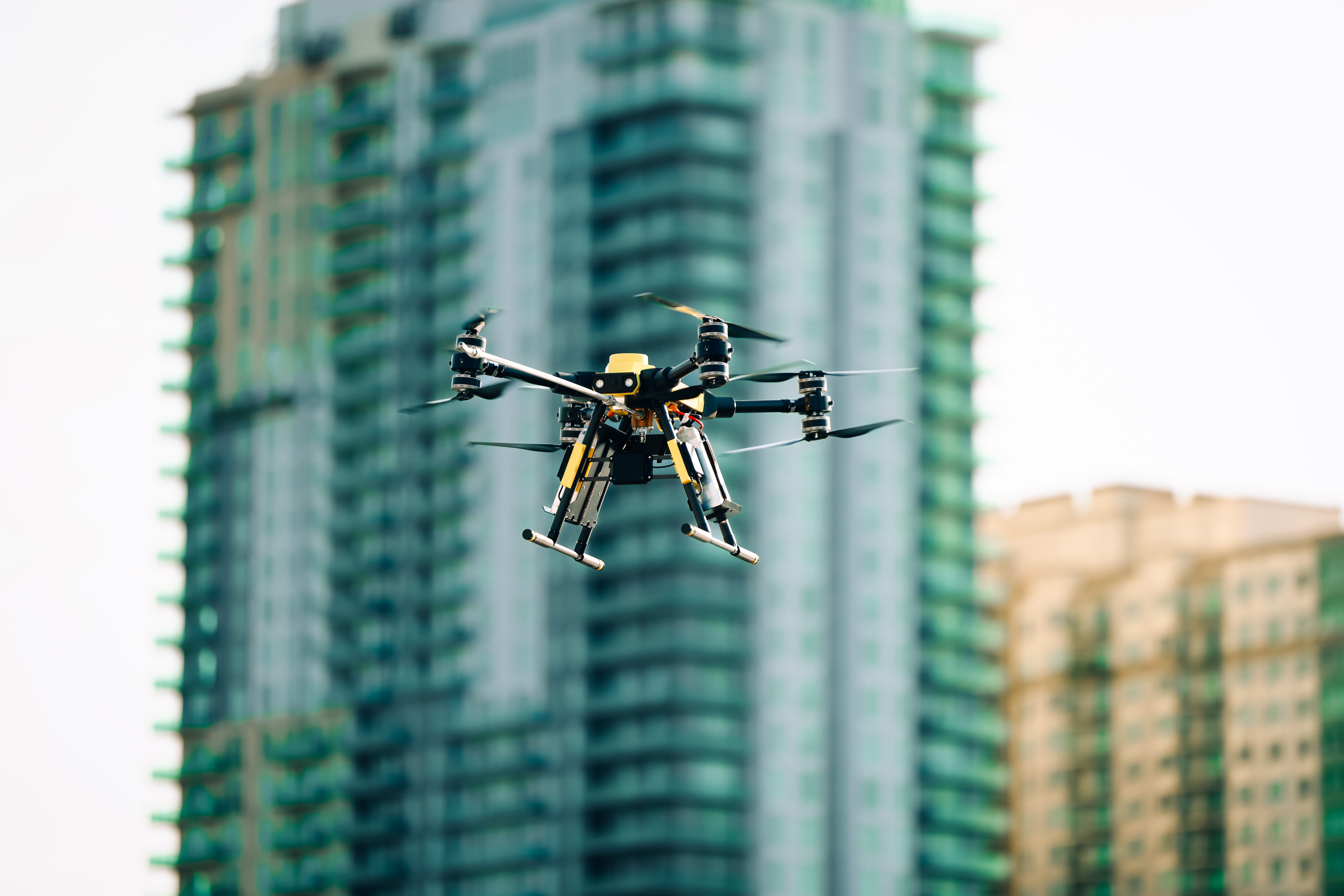
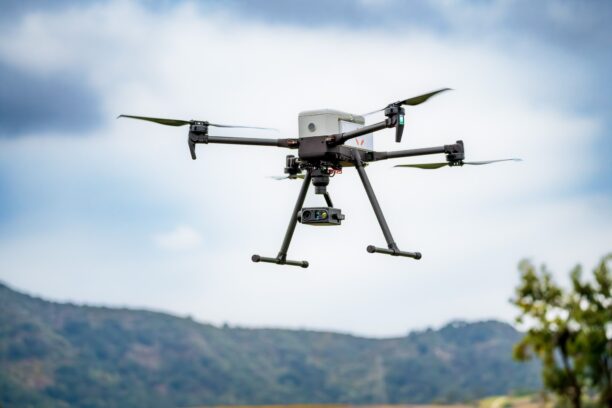
UAVs pose a relatively new and unique threat to officials planning to provide security for large, well-attended events and for high-value infrastructure.
“Drones are inexpensive, widely available, and increasingly capable. They can be used for surveillance, disruption, or to create panic—even without sophisticated payloads. The barrier to entry is low, which shifts the problem from preventing a single high-end attack to managing a wide range of lower-cost, opportunistic threats,” he said.
Government shutdown’s impact on security preparations
Another factor likely to impact security officials’ ability to rapidly ramp up counter-UAS measures is the partial government shutdown, which is affecting the continued operations of the federal Department of Homeland Security. Miller said that while the shutdown will not halt ongoing security operations for the World Cup and America250 events, it will likely degrade future preparedness efforts.
“The security posture remains in place, but it operates under significant stress. Workforce strain leads to real degradation in vigilance and response time. Over time, small failures begin to creep in, missed signals, slower reactions, and reduced coordination,” he said.
This can lead to creating gaps in the efforts to coordinate security for multiple, simultaneous events, such as those that will be taking place at widespread locations across the country this summer. A continuation of the shutdown is likely to force federal agencies to make difficult decisions about where to concentrate limited resources.
“My experience in the Secret Service taught me that the most important work happens long before the opening ceremony; quietly, deliberately and collaboratively. That’s exactly the kind of work that gets disrupted during a shutdown. Training slows, coordination weakens, and the system loses some of the cohesion it depends on in real time.”
Iran war presents heightened threats
Additionally, the ongoing U.S. war with Iran presents a heightened threat level for agencies preparing security plans for upcoming events. Miller said Iran has long focused on U.S. infrastructure as providing potential targets of terrorist attacks. He cited an incident in 2013 in which seven Iranian citizens with ties to Iran’s Islamic Revolutionary Guard Corps were indicted by a federal grand jury in New York on computer hacking charges. One of the Iranians was charged with obtaining unauthorized access into the supervisory control and data acquisition (SCADA) systems of the Bowman Dam in Rye, New York.
“Iran has evolved from probing infrastructure to fielding a full-spectrum cyber capability, combining disruption, destruction, espionage and influence operations. What makes Iran unique is not just its technical skill, but its ability to integrate low-cost tactics, proxy actors and real-world targeting into a coordinated strategy, something we’re now seeing play out in active conflict,” Miller said.
He said that although there is no clear evidence that Iran is planning to conduct terrorist actions on U.S. soil, the war is serving as a proving ground for tactics that could be used in future attacks on the homeland.
“What we’re seeing is the real-time development and validation of low-cost drone strategies, swarming, targeting and integration with cyber effects that are inherently transferable. The bigger concern isn’t intent, it’s that the playbook is being built in public, and the barrier to entry is getting lower,” he said.
Better coordination needed for counter-UAS
Miller said federal security officials need to have better coordination among themselves in order for the U.S. to stand up a comprehensive nationwide counter-drone defense system and to avoid embarrassing incidents such as those that resulted in two recent airspace shutdowns in West Texas.
“What we saw in El Paso wasn’t a failure of technology, it was a failure of integration. When agencies aren’t aligned on who’s operating what in the airspace, you end up with friendly drones being treated as threats. That’s a serious vulnerability, especially as drone activity increases along the border,” he said.
The lack of coordination represents another instance of where the government shutdown impacts real-world vulnerabilities. “Shutdowns slow or stop the very training, exercises and interagency planning needed to close that gap,” Miller said. “Our adversaries are well-practiced, and we are still working through integration challenges in real time.”
Read more:
- Will States Be Ready with Counter Drone Tech for the FIFA World Cup?
- New York Preps Counter-UAS for FIFA
- FEMA Awards $250 Million Counter-UAS Grant for FIFA World Cup Security
 Jim Magill is a Houston-based writer with almost a quarter-century of experience covering technical and economic developments in the oil and gas industry. After retiring in December 2019 as a senior editor with S&P Global Platts, Jim began writing about emerging technologies, such as artificial intelligence, robots and drones, and the ways in which they’re contributing to our society. In addition to DroneLife, Jim is a contributor to Forbes.com and his work has appeared in the Houston Chronicle, U.S. News & World Report, and Unmanned Systems, a publication of the Association for Unmanned Vehicle Systems International.

Leave a Reply