• Skip to main content
  • Skip to secondary menu
  • Skip to primary sidebar
  • Skip to secondary sidebar
  • Skip to footer
  • DroneRacingLife
  • DroneFlyers
  • Newsletter
DroneLife

DRONELIFE

Stay up to date on all the latest Drone News

  • News
  • Products
  • Industries
    • Agriculture
    • Construction
    • Delivery
    • Dual Use
    • Inspection
    • Public Safety
    • Surveying
  • Enthusiasts
  • Regulations
  • Business
  • Video
  • Podcasts

From Reactive Response to Predictive Defense: How Utilities Are Using Drones to Reduce Wildfire Risk

December 22, 2025 by staff Leave a Comment

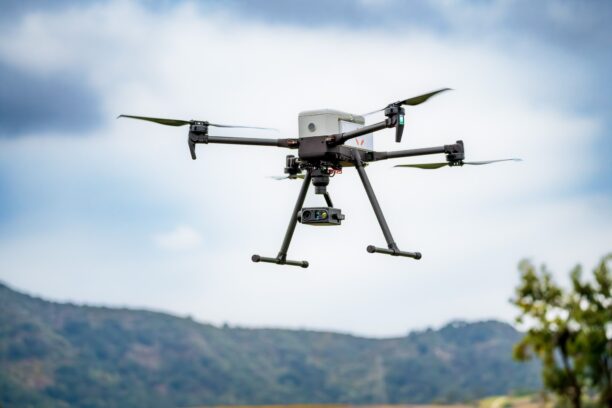
As extreme weather and wildfire risk continue to threaten utility infrastructure across North America, many grid operators are rethinking how they identify and manage ignition hazards. Drones are increasingly central to that shift, enabling utilities to move beyond reactive vegetation management toward predictive, data-driven risk mitigation strategies. In this guest post, Jeremiah Karpowicz of Transmission and Distribution at Clarion Energy Group.explains how this transition is redefining how aerial data, automation, and operational planning come together to support grid resilience and community safety.  DRONELIFE does not pay or accept payment for guest posts.

How drones are rewriting the wildfire mitigation playbook for utilities

by Jeremiah Karpowicz, Content Director for Transmission and Distribution at Clarion Energy Group.

Multiple reports and resources have detailed why North American utilities are turning to drones as essential tools to help solve challenges with extreme weather and decaying infrastructure. The risks associated with not being proactive around such efforts are more evident than ever after California was hit by the Pacific Palisades wildfires in January of 2025. The wildfires left millions without power and caused upwards of $50 billion in economic damage.

The depth and scope of this destruction shows just how vulnerable utility infrastructure is to extreme weather. Drones can help utilities define their grid resilience strategies to directly address these vulnerabilities, but what does a transition from a reactive vegetation clearance method to a predictive one actually look like? And what tools and technology are available to enable these strategies and applications?

These are just a few of the questions that will be answered during the Wildfire Risk Mitigation & Vegetation Management Symposium. Taking place at DTECH on February 4th, 2026 in San Diego, CA, this workshop will break down what it means to create a foundation of success for modern wildfire risk mitigation based on how utilities of all types are using drone technology.

How Utilities are Using Aerial Data to Master Wildfire Risk

In the utility sector, the chasm between a good idea and full-scale deployment is where most drone programs end up living. Bridging that gap isn’t about hardware or technology, but about people and process. Several of the largest utilities in the United States have outlined how to connect all of these dots, developing operational blueprints that transform raw aerial data into actionable risk mitigation. These use cases prove that automation and high-frequency drone inspections can be scaled across thousands of miles of line without breaking a budget.

Out in California, PG&E has utilized a programmatic drone inspection program to completely change various inspection and maintenance processes. By leveraging high-resolution imagery and advanced data analytics, they have improved the accuracy and safety of inspections across transmission, distribution, and substation assets. Their integration of aerial inspection and workflow automation has allowed them to enhance reliability and improve asset performance in a measurable way.

Elsewhere in the western region of the United States, utilities like the Public Service Company of New Mexico (PNM) have created replicable roadmaps for building wildfire resilience under real-world constraints. Using drones and other tool for remote inspection and monitoring of critical infrastructure, they’ve been able to detail what it means to mitigate risk with a continuous, granular view of ignition threats. These tools have empowered their inspection teams to take strategic, defensible steps before fires ignite without breaking the budget.

Xcel Energy’s multi-year grid modernization journey has taken various twists and turns, but the throughline is a commitment to tools that will both boost both operational efficiency and community safety. Their deployment of a consolidated ADMS/OMS has done both by transforming outage management and wildfire risk reduction through advanced capabilities like Fault Location, Isolation, and Service Restoration (FLISR) and targeted fire mitigation measures.

Representatives from all of these utilities will present these specifics at the symposium, but experts from NYPA, SDG&E, Ameren, and Southern California Edison will also lead a transparent discussion on the operational realities of their UAS programs. However, these programs are only as successful as the technologies that power them, which is why understanding the nuances of the current tech landscape is just as essential.

Tools and Strategies for Wildfire Management

We’ve long talked about how drones and other new pieces of technology shouldn’t be framed as a silver bulletbut instead as components of a multi-layered risk management ecosystem. Using this approach, drone program advocates can address bottom-line realities like total cost of ownership and the operational friction of integration in a language that resonates with both executive stakeholders and field operators. That said, doing so requires a clear understanding of the major technology categories currently shaping wildfire mitigation.

Evaluating remote sensing systems, airborne techniques, predictive analytics platforms, advanced weather monitoring, and specialized vegetation management software through a comparative lens is an essential part of any drone adoption process. It’s why the symposium will feature presentations and a discussion that analyze general adoption costs alongside the fundamental advantages and limitations of each. These details will allow utilities to establish frameworks to determine which solutions best align with their specific mitigation programs, operational needs, and resource constraints.

By focusing on concrete action items, utilities can enhance their technological maturity and ensure that data captured in the air effectively informs decisions on the ground. This process turns raw imagery into actionable intelligence in a way that allows drone programs to scale, although real success with wildfire mitigation and vegetation management is about more than technology.

Resilience Powered by People and Enabled by Technology

As tempting as it is to want or believe that a new tool like a drone is going to solve all of your problems, technology is only as effective as the strategy it’s plugged into. And both need people to understand what it means to enable success. It’s why connecting with others who have done exactly that for utilities of all types is so essential.

While the technical specifics will always vary based on an organization’s unique grid footprint or internal team structure, bigger lessons around efficiencies and cost reductions for utilities when adopting and using drones to improve wildfire resilience are universal. What’s unique in the utility space is that stakeholders are open to sharing these details in ways that simply don’t happen in other industries. As recent wildfire damage has shown, doing so isn’t just a matter of streamlining operations or reducing costs, but also saving lives for teams and communities across the nation.

Learn more about the Wildfire Risk Mitigation & Vegetation Management Symposium that will take place at DTECH on February 4th, 2026 in San Diego, CA.

Jeremiah Karpowicz is the Content Director for Transmission and Distribution at Clarion Energy Group, driving the conference development for DTECH events as well as reporting on the energy industry via Factor This. With over a decade of experience as a content strategist and digital leader, he possesses a rare talent for building industry connections that wouldn’t otherwise materialize. He’s passionate about using content and conversations to expand DTECH’s events and publications to new audiences and greater impact. 
 

Filed Under: DL Exclusive, Drone News, Drone News Feeds, drone technology, Featured – Safety and Security, Fire, Fire and Police, Firefighter, News Tagged With: aerial data, drone inspections, extreme weather, grid resilience, Public Safety, UAS programs, utility drones, utility infrastructure, vegetation management, wildfire mitigation

Reader Interactions

Leave a Reply Cancel reply

Your email address will not be published. Required fields are marked *

Primary Sidebar

LATEST

Teledyne FLIR OEM Launches Lepton XDS Dual Thermal-Visible Camera Module

Compact MSX-Enabled System Targets Rapid OEM Integration Across Embedded and Industrial Applications Teledyne FLIR OEM has introduced the Lepton® XDS,…

Continue Reading Teledyne FLIR OEM Launches Lepton XDS Dual Thermal-Visible Camera Module

DJI Seeks Court Review as FCC Covered List Expansion Reshapes U.S. Drone Market

Petition challenges December ruling affecting foreign-made UAS and components The U.S. drone industry continues to adjust to a significant regulatory…

Continue Reading DJI Seeks Court Review as FCC Covered List Expansion Reshapes U.S. Drone Market

Parallel Flight Given FAA Exemption for Heavy Lift Operations

Parallel Flight Technologies has received a 49 U.S.C. §44807 exemption from the Federal Aviation Administration, authorizing domestic commercial operations of…

Continue Reading Parallel Flight Given FAA Exemption for Heavy Lift Operations

Everdrone Launches E3 Emergency Medical Drone with Expanded Payload

Swedish drone developer Everdrone has unveiled the E3, its next-generation emergency medical drone. Built entirely in-house, the E3 delivers a major performance…

Continue Reading Everdrone Launches E3 Emergency Medical Drone with Expanded Payload

NASA Working Group Targets Autonomous Multi-Aircraft UAS Operations

A NASA-sponsored working group is pushing forward efforts to make autonomous, multi-drone fleet operations a routine part of the national…

Continue Reading NASA Working Group Targets Autonomous Multi-Aircraft UAS Operations

DHS Offers Counter-UAV Siting Advice For World Cup Communities

By Dronelife Features Editor Jim Magill (Editor’s note: This following story is part of an ongoing series of stories on…

Continue Reading DHS Offers Counter-UAV Siting Advice For World Cup Communities

Rapid Mapping for a 24/7 Defense Environment: SimActive on Speed, Security, and Scalable Intelligence

As defense budgets rise and geopolitical tensions reshape operational priorities, militaries are investing heavily in technologies that can turn raw…

Continue Reading Rapid Mapping for a 24/7 Defense Environment: SimActive on Speed, Security, and Scalable Intelligence

SkySafe on the Drone Radio Show! Drone Detection and Airspace Intelligence

Melissa Swisher is Chief Revenue Officer at SkySafe, a company delivering the intelligence organizations need to detect, analyze, and act…

Continue Reading SkySafe on the Drone Radio Show! Drone Detection and Airspace Intelligence

SimActive Integrates Phase One iXM-FS130 for High-Resolution Aerial Mapping

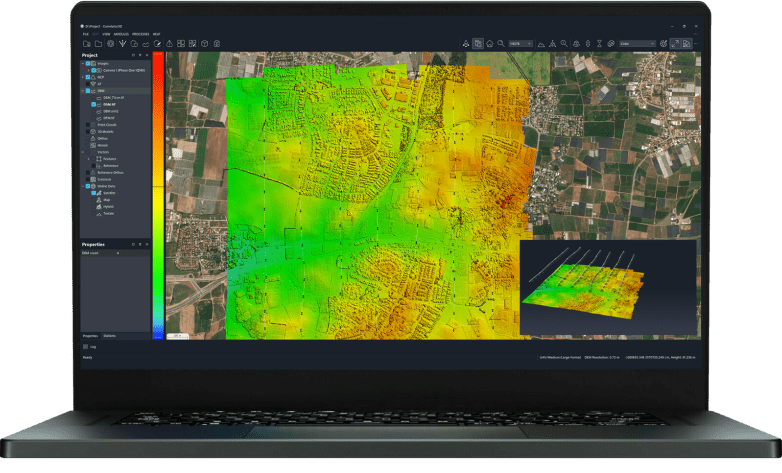
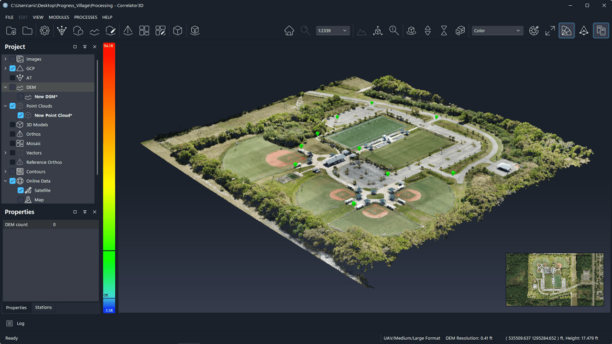
Correlator3D enables sub-centimeter processing for fixed-wing survey missions SimActive has announced full support for the Phase One iXM-FS130 sensor in…

Continue Reading SimActive Integrates Phase One iXM-FS130 for High-Resolution Aerial Mapping

WISPR Systems’ SkyScout 2+ Achieves Green UAS Certification

WISPR Systems announced that its SkyScout 2+ has earned Green UAS Certification from the Association for Uncrewed Vehicle Systems International (AUVSI). The designation confirms…

Continue Reading WISPR Systems’ SkyScout 2+ Achieves Green UAS Certification

Secondary Sidebar

Footer

SPONSORED

Inspired Flight Gremsy IF800 VIO F1 drones geo week

What Will It Take to Strengthen U.S. Drone Manufacturing? A Conversation with Inspired Flight’s CEO

Global Mapper Mobile data collection

Collection Ground Control Points with Global Mapper Mobile

Military Drone Mapping Solutions

How SimActive’s Correlator3D™ is Revolutionizing Military Mapping: An Exclusive Interview with CEO Philippe Simard

Photogrammetry Accuracy Standards

SimActive Photogrammetry Software: Enabling Users to Meet Accuracy Standards for Over 20 Years

NACT Engineering Parrot ANAFI tether indoor shot

Smart Tether for Parrot ANAFI USA from NACT Engineering

Blue Marble, features global mapper, features Blue Marble

Check Out These New Features in Global Mapper v25 from Blue Marble

About Us | Contact Us | Advertise With Us | Write for Us | Privacy Policy | Terms of Service

The Trusted Source for the Business of Drones.

This website uses cookies and third party services. By clicking OK, you are agreeing to our privacy policy. ACCEPT

Manage consent

Privacy Overview

This website uses cookies to improve your experience while you navigate through the website. Out of these, the cookies that are categorized as necessary are stored on your browser as they are essential for the working of basic functionalities of the website. We also use third-party cookies that help us analyze and understand how you use this website. These cookies will be stored in your browser only with your consent. You also have the option to opt-out of these cookies. But opting out of some of these cookies may affect your browsing experience.
Necessary
Always Enabled
Necessary cookies are absolutely essential for the website to function properly. These cookies ensure basic functionalities and security features of the website, anonymously.
CookieDurationDescription
cookielawinfo-checkbox-analytics11 monthsThis cookie is set by GDPR Cookie Consent plugin. The cookie is used to store the user consent for the cookies in the category "Analytics".
cookielawinfo-checkbox-functional11 monthsThe cookie is set by GDPR cookie consent to record the user consent for the cookies in the category "Functional".
cookielawinfo-checkbox-necessary11 monthsThis cookie is set by GDPR Cookie Consent plugin. The cookies is used to store the user consent for the cookies in the category "Necessary".
cookielawinfo-checkbox-others11 monthsThis cookie is set by GDPR Cookie Consent plugin. The cookie is used to store the user consent for the cookies in the category "Other.
cookielawinfo-checkbox-performance11 monthsThis cookie is set by GDPR Cookie Consent plugin. The cookie is used to store the user consent for the cookies in the category "Performance".
viewed_cookie_policy11 monthsThe cookie is set by the GDPR Cookie Consent plugin and is used to store whether or not user has consented to the use of cookies. It does not store any personal data.
Functional
Functional cookies help to perform certain functionalities like sharing the content of the website on social media platforms, collect feedbacks, and other third-party features.
Performance
Performance cookies are used to understand and analyze the key performance indexes of the website which helps in delivering a better user experience for the visitors.
Analytics
Analytical cookies are used to understand how visitors interact with the website. These cookies help provide information on metrics the number of visitors, bounce rate, traffic source, etc.
Advertisement
Advertisement cookies are used to provide visitors with relevant ads and marketing campaigns. These cookies track visitors across websites and collect information to provide customized ads.
Others
Other uncategorized cookies are those that are being analyzed and have not been classified into a category as yet.
SAVE & ACCEPT