
By DRONELIFE Features Editor Jim Magill
With the holiday season in full swing, many people are looking forward to a turkey dinner with all the trimmings. However, with agricultural labor shortages and other rising costs, turkey growers are finding themselves hard-pressed to keep this staple of the festive meal affordable for the average family.
A new study released by a team of researchers at Pennsylvania State University is demonstrating how using drones and artificial intelligence (AI) technology to study turkey behavior can reduce operating costs for farmers and improve the lives and health of the birds themselves.
The development of new technologic tools such as these is necessary to ensure that farmers are able to economically meet the increasingly growing global demand for animal protein, said Enrico Casella, a Penn State assistant professor of data science for animal systems.
“We certainly don’t want to just have more animals. We should keep the same animals we have and do something to raise them more efficiently and more productively, and I think that’s where this work fits in,” said Casella, the director of the drone-enabled monitoring study.
The research involved flying a small drone equipped with a 360-degree camera inside poultry houses to record behaviors of hundreds of birds, including feeding, drinking, sitting, standing, perching, huddling and wing flapping. The video images are the fed into a computer-vision model called YOLO [You Only Look Once] to train, test and validate the AI program.
Casella said the program started with the use of DJI Neo drones, known for their small size — 150 grams — and excellent camera quality, which allow the researcher to record footage while flying over the birds. “Its primary purpose is for social media and selfie shots. It can track you, can follow you. But obviously we just used it manually,” he said.
In the initial aspect of the study the team recorded drone video of 160 turkeys — from five to 32 days old — four times a day at the Penn State Poultry Education and Research Center. At first, the team was concerned that the presence of a UAV flying overhead would disturb the young turkeys and disrupt them from following their usual behaviors.
“The birds sometimes did have some reactions,” Casella said. “But overall, what we noticed was that piloting the drone in the cinematic mode, which is the smoother mode, was actually quite helpful. Usually it’s a quick change of direction of the drone or the high speed that seems to scare the birds more.”
In addition, the researchers soon learned that allowing the drone to hover, rather than fly in a straight line, allowed the turkeys to quickly adapt to the addition to their environment. “So, it really seems like it’s not necessarily the drone that bothers them, the visual of it, but it’s the sound and probably the propellers creating wind under it,” he said.
The Penn State study tracked eight different behaviors that are common in turkey flocks. The team annotated more than 19,000 individual animal activities and fed all these annotations into the computer-vision model.
Among the data points collected was the incidence of mortality among the young birds. The early detection of such data could be critically important to farmers in ensuring the overall health of their flock. “If there is for example, mortality, then you risk pathogens spreading in the flock and creating even more issues in other animals,” Casella said.
The YOLO computer-vision model the researchers used was a relatively simple program, which made it easy for the non-computer scientists on the team to master.
“My team is quite interdisciplinary; I have mostly animal scientists who are trying to learn how to code and use AI, and this model of YOLO is really the first step for students to learn computer vision,” Casella said. “And it’s quite robust. It gives you the ability to try different model sizes where the larger the size, the more complex data sets you can feed to the model.”
The team tested several YOLO models and found that although the most powerful model could accurately detect specific behavior 98% of the time, the performance of the smaller model was not far behind in accuracy of detection. Casella said he believes that even more accurate performance could be achieved if the researchers were able to install the YOLO software aboard the drone itself.
“I actually think, with more computational expertise than (we have) now … we could actually build even more efficient models than YOLO and probably we could take into account the historical information of what each bird was doing in the previous trainings as well,” he said.
Casella said that after testing the technology at the Penn State research farm, the team recently repeated its testing in a large commercial poultry house, with promising results.
“Actually, the reaction of the animals was even better than what we saw in our farm. And these were animals that were 15 weeks old that had never been exposed to anything like that before. So, we were very happy with the response there,” he said.
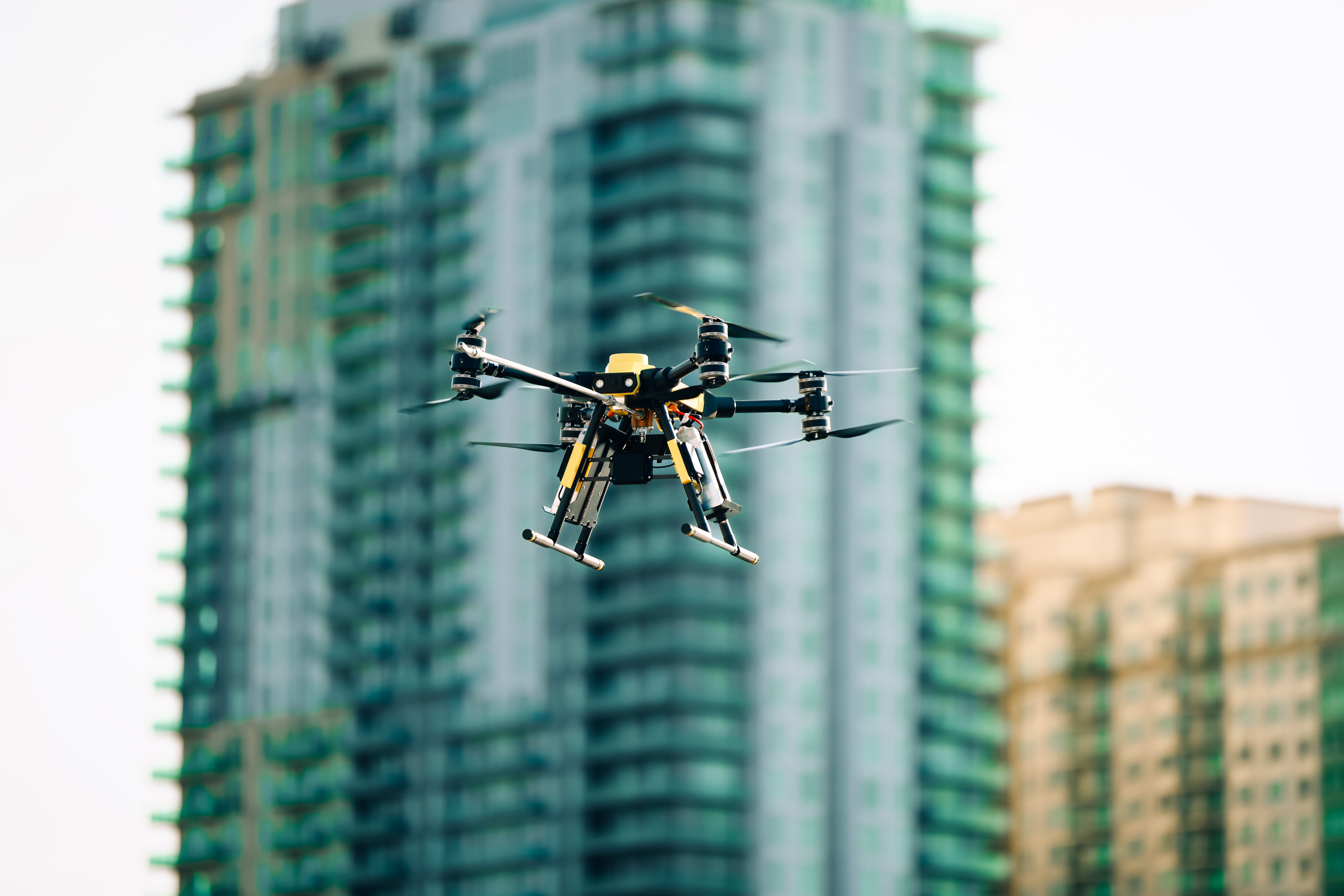
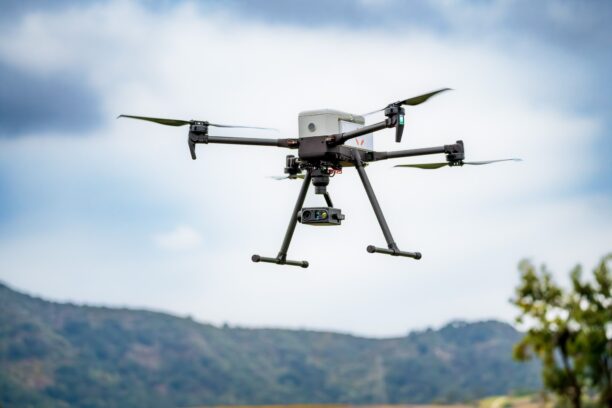
Currently, the team is experimenting with the use of slightly larger drones with more data-capture capabilities, such as thermal cameras, which could open up more possibilities to study the birds’ behavior. Casella said one such UAV under consideration is a DJI agriculture-grade model designed to monitor crops. However, he said the team is having difficulty getting the drone to fly indoors, possibly because of the lack of a good GPS signal inside the poultry house.
Increased efficiency, better health outcomes
Casella said using drones and AI tools could help to deal with the severe labor shortage confronting the poultry business, as well as the agricultural industry as a whole. Recent data suggests that the turnover rate for agricultural workers is 60% annually.
“You can imagine how staffing and training these people is time-consuming and it’s really not productive,” he said.
The idea for using drones and AI tools to study turkey behavior stems from the need to preserve scarce human resources and to free human farm workers from having to perform repetitive mundane tasks, Casella said.
“Monitoring flocks is just really labor-intensive and time-consuming. Traditionally, maybe twice a day there will be an employee that walks the poultry house,” he said. Commercial poultry houses are huge operations, typically measuring anywhere from one to two football fields in length.
“So, you have to do these walks multiple times up and down to really have a good understanding of what’s going on with the flock. Is there any issue?” he said. “Is there any mortality?
“And so, I thought, how can we make these visual checks better? And I thought drones could be a great way to do that.”
Drone monitoring also can serve as a tool where if a potential issue is detected, then a human employee can go and check visually in order to deal with the problem in a timely manner. “So, it basically frees up time for other things that can make the production more cost-effective and more successful as well,” Casella said.
Finally, the airborne monitoring would serve to improve the health and well-being of the animals themselves, “because you’ll be able to monitor their behavior and therefore welfare more frequently,” he said.
Read More
- From New Hampshire to the World: ePropelled Expands with Smart Power for Drones
- Matternet and Dave’s Hot Chicken Launch Drone Delivery Pilot in Los Angeles
- Drones Deliver Hope: How Texas Wildlife Officials Used UAVs to Aid Flood Victims
 Jim Magill is a Houston-based writer with almost a quarter-century of experience covering technical and economic developments in the oil and gas industry. After retiring in December 2019 as a senior editor with S&P Global Platts, Jim began writing about emerging technologies, such as artificial intelligence, robots and drones, and the ways in which they’re contributing to our society. In addition to DroneLife, Jim is a contributor to Forbes.com and his work has appeared in the Houston Chronicle, U.S. News & World Report, and Unmanned Systems, a publication of the Association for Unmanned Vehicle Systems International.
Leave a Reply