
As the debate over proposed bans on Chinese drone platforms continues, we present this guest post from Michael Thompson, drone pilot, FAA Safety Team representative and the founder and lead instructor of a drone business, Connecting Skies, LLC. Here, Michael writes about how a ban on Chinese drone platforms could impact the pilots and business owners like him who currently rely upon them. DRONELIFE neither accepts nor makes payment for guest posts.
America’s Newly Evolved Workforce: The True effects of a Chinese Drone Ban
By Michael Thompson, FAA Safety Team representative and Founder & Lead Instructor, Connecting Skies, LLC
While lobbyists and lawmakers remain hyper-focused on Blue UAS and NDAA-compliant drones for police and defense sectors, they’re overlooking the commercial and civilian side of America’s drone ecosystem. The military accounts for 49% of the North American drone market. Law enforcement and public safety represent another 15%. But the remaining 36% are made up of blue-collar professionals, small businesses, and contractors who use drones not as a business, but as a tool that makes their real work faster, safer, and more efficient.
These are roofers, infrastructure inspectors, farmers, engineers, surveyors, and insurance adjusters who rely on Chinese-manufactured drones for their day-to-day work.
The use cases are extensive and economically vital:
- Precision Agriculture: Mapping fields for crop yield predictions and soil efficiency.
- Utility & Infrastructure: Monitoring power lines, pipelines, towers, and bridges.
- Insurance & Real Estate: Conducting thermal scans for roof inspections and property valuations.
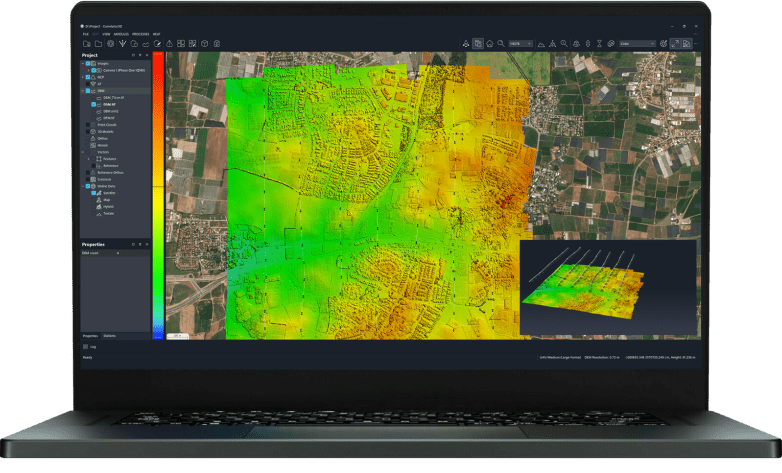
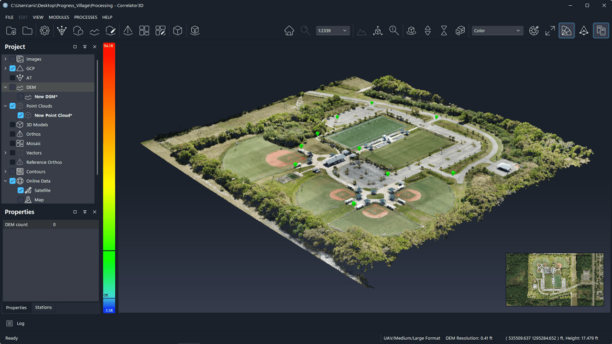
- AI & Data: Capturing high-resolution images for training machine learning models and generating 3D reality data.
We’ve crossed into a new industrial revolution, one in which there are more small businesses using drones than there are ‘drone companies’. These businesses aren’t just flying drones— they’re feeding AI pipelines, improving workplace safety, and optimizing American industry.
The Ripple Effect
If legislation is passed banning Chinese-manufactured drones and parts, the consequences will be immediate and far-reaching:
- Service Delays & Shutdowns: Inspection firms, data providers, and infrastructure consultants stall operations.
- Import Bans Take Effect: Sales, imports, and part of new Chinese-manufactured drones will be prohibited leaving no cost-effective replacement and higher barrier to entry into the drone industry.
- Operations Stall: Businesses that rely on affordable drones for inspections, mapping, and data collection will face costly delays or shut down altogether.
- AI Development Slows: Companies that depend on fresh aerial imagery to train machine learning models—such as Skycatch, which transforms drone-collected visual data into actionable 3D models and Ortho mosaics for industries like construction and mining, will lose critical input.
This is not hypothetical, it’s already happening.
“Prak is our repair guy, and he’s doing his best—but parts are taking so long to come in, I’ve actually started talking people out of using us,” said Gary Gualdin, owner of IFLYDRONES.COM, a commercial drone services company. “The delays are so bad, I’d rather lose business than damage our reputation. If they go through with a full ban on Chinese drones and parts, I honestly don’t know how we will keep going.”
Industries That Will Be Hit the Hardest
Without access to affordable, high-performance Chinese-manufactured drones, these sectors stand to lose critical capabilities that drive efficiency, safety, and economic output.
Here are real companies using Chinese-manufactured drones to deliver critical data:
Precision Agriculture
• AgEagle’s Measure Ground Control Clients: The platform supports data collection and prescription mapping for agriculture clients using Chinese drones to capture NDVI and field insights.
Utility & Infrastructure Inspection
- SkySkopes: Deploys Chinese drones with advanced sensors for powerline and substation inspections.Insurance & Real Estate
- Loveland Innovations: Pairs their IMGING platform with Chinese drones to automate roof inspections and support faster insurance claim resolutions.
- Zeitview (formerly DroneBase): Uses Chinese drones for aerial imaging and analytics in real estate, solar energy, and infrastructure portfolios.
AI & Reality Data Collection
- FlyGuys: A nationwide pilot network collecting high-resolution data with Chinese drones for LiDAR, Ortho mosaics, and 3D digital twin generation that supports AI model development.
- DroneDeploy: Their software platform frequently integrates with Chinese-manufactured drones for use in construction, agriculture, mining, and energy—delivering actionable insights from aerial data
The Small Businesses on the Front Lines
This isn’t just about billion-dollar firms or government contracts—it’s about the small businesses and independent professionals keeping America’s drone economy alive. Small companies like Flying Fitz Photography, Sentinel Robotics, IFLYDRONES, Connecting Skies LLC (my company), and thousands of other small business who are providing vital everyday services to their communities: we are all on the front lines.
Even as a consultant focused on standardizing flight skills training and regulatory compliance, I rely on Chinese-manufactured drones to train pilots on the same platforms they use in the field. Real-world readiness requires real-world tools, and today, that means DJI and Autel. If a ban takes effect, it will surely decimate my industry. 100s of 1000s of small businesses will lose the infrastructure that supports a safe, skilled, and scalable drone workforce.
NDAA-compliant (Blue UAS) drones are not yet viable substitutes for prosumer/commercial platforms:
- Cost Barriers: The Department of Homeland Security’s SAVER market survey shows that many Blue UAS platforms list for $10,000–$20,000, compared with $1,500–$4,000 for comparable Chinese-manufactured drones such as the DJI Mavic series U.S. Department of Homeland Security.
- Performance Issues: A recent overview of top American-made, Blue UAS systems notes they were designed for military/public safety—not for extended battery life or cinematic imaging—whereas consumer models like Mavic 3 deliver up to 46 min flight time and a mechanical 4 K gimbal for smooth video Dronefly.
- Limited Ecosystems: The DoD’s Blue UAS Framework lists only core airframes and a handful of certified payloads and controllers. In contrast, DJI’s SDK supports hundreds of third-party accessories, sensors, and software modules for mapping, agriculture, inspection, and more Defense Intelligence University.
- Training Overhead: While Part 107 pilots can fly DJI/Autel “out of the box,” transitioning to Blue UAS platforms often requires new recurrent training on custom ground stations, proprietary flight apps, and hardened firmware—creating both cost and operational downtime faa.gov.
A path forward for a smoother transition.
National security must remain a priority, but not at the expense of America’s commercial drone workforce. A more practical policy approach should:
- Delay Implementation: Allow time for U.S. and allied manufacturers to ramp up production of competitive, affordable systems.
- Create a Cybersecurity Standard for our workforce: The Blue UAS list was designed for battlefield conditions, not maintenance men doing building inspections or farmers doing agriculture spraying to produce more food and less waste. Our workforce has evolved we need drones for consumer/commercial use.
- Subsidize Transitions: Offer funding to state and local agencies, as well as small businesses with government contracts, to prevent mass service disruption and economic fallout.
The Stakes for America’s Future
There’s no quick fix for a Made-in-America drone solution. The ecosystem that exists today is not the enemy; it is the foundation.
As the FAA Safety Team Lead Representative Drone Pro for Virginia, I’ve trained, and trained with police officers, fire fighters, and private industry professionals who rely on drone technology to make their jobs safer and better.
According to the Association for Uncrewed Vehicle Systems International (AUVSI), UAS integration in the United States has already generated over 70,000 jobs in its first three years— and is projected to surpass 100,000 total jobs by 2025, alongside an $82 billion economic impact auvsi.net.
These figures include a mix of direct (manufacturing, piloting, maintenance), indirect (supply-chain, software development), and induced (support services, training) employment across agriculture, inspection, public safety, surveying, and more.
So, while precise real-time counts vary by source, the best current estimate is that drones have created on the order of 100,000 jobs in America—and that number continues to climb as commercial and civilian use expands rapidly.
If Chinese drones are banned without a sustainable transition plan, we lose all economic competitive advantage our country has gained. This race is not just about drones, it’s about our new American workforce that has evolved to be safer, highly efficient, highly productive and more advanced than ever.
 Michael Thompson is the 2025 FAA Safety Team National Nominee and current Virginia FAA Safety Team Representative of the Year. He is the founder of Connecting Skies LLC, a company dedicated to the safe, ethical, and scalable integration of drones into our communities and workforce. Contact: michael@connectingskies.com
Leave a Reply