• Skip to main content
  • Skip to secondary menu
  • Skip to primary sidebar
  • Skip to secondary sidebar
  • Skip to footer
  • DroneRacingLife
  • DroneFlyers
  • Newsletter
DroneLife

DRONELIFE

Stay up to date on all the latest Drone News

  • News
  • Products
  • Industries
    • Agriculture
    • Construction
    • Delivery
    • Dual Use
    • Inspection
    • Public Safety
    • Surveying
  • Enthusiasts
  • Regulations
  • Business
  • Video
  • Podcasts

AI, Drones, and the Future of Farming: A Game Changer for Plant Disease Detection and Food Security

March 18, 2025 by Miriam McNabb Leave a Comment

As plant diseases continue to threaten global food security, AI-powered drones and advanced machine learning models are revolutionizing early detection methods, offering scalable, efficient, and accurate solutions for modern agriculture.  DRONELIFE is pleased to publish this guest post from Khawla Almazrouei, a Robotics Engineer at Technology Innovation Institute.  DRONELIFE neither accepts nor makes payment for guest posts.

Why AI and Drones Will Shape the Future of Plant Disease Detection and Global Food Security

By Khawla Almazrouei, Robotics Engineer, Technology Innovation Institute

USDA photo. Original public domain image

Ensuring a stable and sustainable food supply is one of the most pressing challenges of the 21st century, but innovation in plant disease detection can offer solutions to strengthen agricultural resilience.

As the global population is projected to reach 10.3 billion by 2100, food security remains under constant threat from plant diseases, which cause significant crop losses, disrupt supply chains, and undermine agricultural sustainability.

Every year, up to 40% of global crop production is lost due to plant pests and diseases, costing the global economy an estimated $220 billion, according to the Food and Agriculture Organization.

Nations that rely heavily on food imports, such as the UAE, are particularly vulnerable to supply chain disruptions that can be caused by plant diseases. Advancing detection methods is crucial to mitigating these risks and ensuring food security.

Shortcomings of traditional methods

Traditional plant disease detection methods typically rely on visual inspection by experienced farmers and agricultural experts, analysis that compares the light reflectance of healthy and infected plants, and molecular methods that allows the amplification and quantification of pathogen DNA within plant tissues.

While these methods can be effective, they are often inefficient, costly and labor intensive.

As research progresses, detection methods need to become more accessible, accurate, and scalable.

Recent research from the Technology Innovation Institute’s Autonomous Robotics Research Center and the University of Sharjah in Abu Dhabi highlights the potential of AI-based methods to improve detection.

The study, A Comprehensive Review on Machine Learning Advancements for Plant Disease Detection and Classification, identifies image-based analysis using machine learning, particularly deep learning, as the most promising approach.

More efficient models

Machine learning models can analyze leaf, fruit, or stem images to spot diseases based on characteristics such as color, texture, and shape. Among the most widely used techniques, Convolutional Neural Networks (CNN) extract visual features with high accuracy, improving disease classification significantly.

Some models combine different techniques, such as Random Forest and Histogram of Oriented Gradients (HOG), to further enhance precision. However, CNNs require extensive datasets to be effective, posing a challenge for agricultural settings with limited labeled data.

As innovation progresses, newer technologies like Vision Transformers (ViTs) have shown even greater potential. Originally designed for natural language processing, ViTs apply self-attention mechanisms to images, allowing them to process entire images as sequences of patches. Unlike CNNs, which focus on local image features, ViTs can capture global relationships across an entire image.

ViTs present several advantages. They are highly accurate, they’re scalable since they can analyze vast datasets, and unlike traditional deep learning models, they offer more transparency in their decision-making processes.

Hybrid models combining CNNs and ViTs have also shown they can significantly increase performance and accuracy. For example, CropViT is a lightweight transformer model that can achieve a remarkable accuracy of 98.64% in plant disease classification.

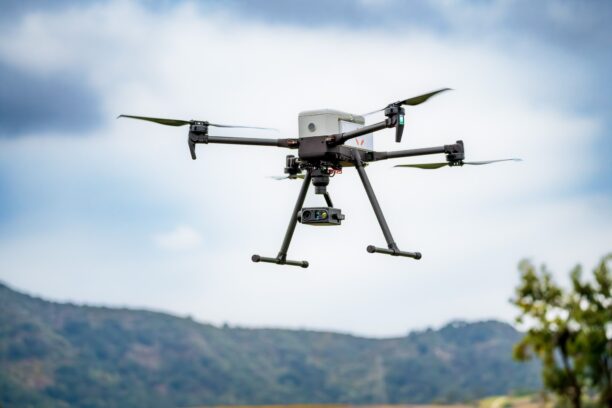
To enhance large-scale monitoring, drones equipped with AI-powered cameras present a promising solution for real-time disease detection.  By capturing high-resolution images and analyzing them using machine learning, drones can detect diseases early, reducing the reliance on manual inspections and improving response times.

From research to real-world impact

Despite progress and innovation, several challenges remain in bringing AI-based plant disease detection to widespread adoption.

Many AI models are trained on limited datasets that don’t fully reflect real-world agricultural conditions.

Unlike controlled lab environments, real-world agricultural settings introduce unpredictable factors such as varying light conditions, soil quality, and weather patterns, which can affect AI model accuracy.

To further improve AI models, they must be trained on diverse datasets encompassing various plant species, disease types and environment conditions and must be optimized to perform reliably across diverse geographies, crop types and farming practices.

To fully realize these advancements and contribute to global food security, all stakeholders, including researchers, agritech companies and policymakers must collaborate to develop standardized datasets for AI training, refine AI models, and integrate scalable solutions.

By promoting innovative methods and addressing existing challenges, AI-driven plant disease detection can transition from promising research to real-world impact, strengthening the resilience of global agriculture and securing the future of food production.

Read more:

  • Terra Drone Agri Launches Drone-Based Bagworm Control for Malaysian Oil Palm Plantations
  • New Japanese Agriculture Spray Drone: 1.5 Hectares on 1 Battery
  • These Two Videos Demonstrate Why We Need Drones for Agriculture More than Ever\

Eng. Khawla Almazrouei is a robotics engineer at the Autonomous Robotics Research Center (ARRC) under the Technology Innovation Institute (TII) in Abu Dhabi, specializing in perception, sensor fusion, and AI for unmanned ground vehicles. With a background in Computer Engineering and AI from the United Arab Emirates University and a master’s from the University of Sharjah, she focuses on dynamic obstacle avoidance, reinforcement learning for path planning, and sensor architecture. Her research, published in top journals and conferences, advances hardware acceleration, perception algorithms, and real-time sensor integration, improving UGV performance in challenging environments.

 

Miriam McNabb

Miriam McNabb is the Editor-in-Chief of DRONELIFE and CEO of JobForDrones, a professional drone services marketplace, and a fascinated observer of the emerging drone industry and the regulatory environment for drones. Miriam has penned over 3,000 articles focused on the commercial drone space and is an international speaker and recognized figure in the industry.  Miriam has a degree from the University of Chicago and over 20 years of experience in high tech sales and marketing for new technologies.
For drone industry consulting or writing, Email Miriam.

TWITTER:@spaldingbarker

Subscribe to DroneLife here.
Filed Under: Agriculture, Applications, DL Exclusive, Drone News, Drone News Feeds, Drones in the News, News Tagged With: agricultural AI, AI in agritech, AI-powered plant disease detection, crop disease detection, deep learning in agriculture, drone agriculture, food security technology, machine learning in farming, precision farming, smart farming solutions

Reader Interactions

Leave a Reply Cancel reply

Your email address will not be published. Required fields are marked *

Primary Sidebar

LATEST

The $20 Counter-Drone Tool You Probably Already Own

U.C. Irvine researchers thwart target-tracking drones with umbrellas By DRONELIFE Features Editor Jim Magill A team of scientists at the…

Continue Reading The $20 Counter-Drone Tool You Probably Already Own

30,000 Attack Drones: Inside the Pentagon’s New Drone Dominance Strategy

Lawmakers and defense officials debate whether the U.S. is ready for large-scale drone warfare as the Pentagon launches a major…

Continue Reading 30,000 Attack Drones: Inside the Pentagon’s New Drone Dominance Strategy

EagleNXT Expands Defense Technology Portfolio with Investment in Autonomous Loitering Munition Developer

Strategic investment expands autonomous defense capabilities and opens path for potential U.S. collaboration EagleNXT has announced a strategic investment in…

Continue Reading EagleNXT Expands Defense Technology Portfolio with Investment in Autonomous Loitering Munition Developer

Autonomous Black Hawk Program Advances Toward Contested Logistics Missions

Near Earth Autonomy and collaborators complete integration milestones for the RUC-60 optionally crewed Black Hawk ahead of mission testing in…

Continue Reading Autonomous Black Hawk Program Advances Toward Contested Logistics Missions

Drones in the Arctic: Federico Borsari on Security, Surveillance, and NATO’s Strategic Frontier

On this episode of the Drone Radio Show: Federico Borsari, Non-Resident Fellow with the Center for European Policy Analysis, talks…

Continue Reading Drones in the Arctic: Federico Borsari on Security, Surveillance, and NATO’s Strategic Frontier

From Birds to Drones: Robin Radar Technology Joins World Cup Security Effort

‘It’s a bird, no it’s a drone’ – Robin Radar can tell the difference By DRONELIFE Features Editor Jim Magill…

Continue Reading From Birds to Drones: Robin Radar Technology Joins World Cup Security Effort

ePropelled Expands Electronic Propulsion Portfolio with New Motor Controllers and Intelligent Power Systems

Expanded ESC and power management lineup supports growing demand for integrated propulsion systems across uncrewed platforms Electric propulsion developer ePropelled…

Continue Reading ePropelled Expands Electronic Propulsion Portfolio with New Motor Controllers and Intelligent Power Systems

MyDefence Opens U.S. Counter-Drone Production Facility in Oklahoma City

New manufacturing site expands domestic supply of plug-and-play counter-UAS technology for U.S. defense and security partners MyDefence has opened a…

Continue Reading MyDefence Opens U.S. Counter-Drone Production Facility in Oklahoma City

New York Preps Counter-UAS for FIFA

(Editor’s note: This story is part of a series of reports on efforts to establish new counter-UAS protocols in the…

Continue Reading New York Preps Counter-UAS for FIFA

Kaizen Signs Agricultural UAV Agreement with Uzbekistan

Kaizen Aerospace, a heavy-lift autonomous aerial systems company, has signed a Memorandum of Cooperation with Uzbekistan’s Ministry of Agriculture and…

Continue Reading Kaizen Signs Agricultural UAV Agreement with Uzbekistan

Secondary Sidebar

Footer

SPONSORED

Inspired Flight Gremsy IF800 VIO F1 drones geo week

What Will It Take to Strengthen U.S. Drone Manufacturing? A Conversation with Inspired Flight’s CEO

Global Mapper Mobile data collection

Collection Ground Control Points with Global Mapper Mobile

Military Drone Mapping Solutions

How SimActive’s Correlator3D™ is Revolutionizing Military Mapping: An Exclusive Interview with CEO Philippe Simard

Photogrammetry Accuracy Standards

SimActive Photogrammetry Software: Enabling Users to Meet Accuracy Standards for Over 20 Years

NACT Engineering Parrot ANAFI tether indoor shot

Smart Tether for Parrot ANAFI USA from NACT Engineering

Blue Marble, features global mapper, features Blue Marble

Check Out These New Features in Global Mapper v25 from Blue Marble

About Us | Contact Us | Advertise With Us | Write for Us | Privacy Policy | Terms of Service

The Trusted Source for the Business of Drones.

This website uses cookies and third party services. By clicking OK, you are agreeing to our privacy policy. ACCEPT

Manage consent

Privacy Overview

This website uses cookies to improve your experience while you navigate through the website. Out of these, the cookies that are categorized as necessary are stored on your browser as they are essential for the working of basic functionalities of the website. We also use third-party cookies that help us analyze and understand how you use this website. These cookies will be stored in your browser only with your consent. You also have the option to opt-out of these cookies. But opting out of some of these cookies may affect your browsing experience.
Necessary
Always Enabled
Necessary cookies are absolutely essential for the website to function properly. These cookies ensure basic functionalities and security features of the website, anonymously.
CookieDurationDescription
cookielawinfo-checkbox-analytics11 monthsThis cookie is set by GDPR Cookie Consent plugin. The cookie is used to store the user consent for the cookies in the category "Analytics".
cookielawinfo-checkbox-functional11 monthsThe cookie is set by GDPR cookie consent to record the user consent for the cookies in the category "Functional".
cookielawinfo-checkbox-necessary11 monthsThis cookie is set by GDPR Cookie Consent plugin. The cookies is used to store the user consent for the cookies in the category "Necessary".
cookielawinfo-checkbox-others11 monthsThis cookie is set by GDPR Cookie Consent plugin. The cookie is used to store the user consent for the cookies in the category "Other.
cookielawinfo-checkbox-performance11 monthsThis cookie is set by GDPR Cookie Consent plugin. The cookie is used to store the user consent for the cookies in the category "Performance".
viewed_cookie_policy11 monthsThe cookie is set by the GDPR Cookie Consent plugin and is used to store whether or not user has consented to the use of cookies. It does not store any personal data.
Functional
Functional cookies help to perform certain functionalities like sharing the content of the website on social media platforms, collect feedbacks, and other third-party features.
Performance
Performance cookies are used to understand and analyze the key performance indexes of the website which helps in delivering a better user experience for the visitors.
Analytics
Analytical cookies are used to understand how visitors interact with the website. These cookies help provide information on metrics the number of visitors, bounce rate, traffic source, etc.
Advertisement
Advertisement cookies are used to provide visitors with relevant ads and marketing campaigns. These cookies track visitors across websites and collect information to provide customized ads.
Others
Other uncategorized cookies are those that are being analyzed and have not been classified into a category as yet.
SAVE & ACCEPT