• Skip to main content
  • Skip to secondary menu
  • Skip to primary sidebar
  • Skip to secondary sidebar
  • Skip to footer
  • DroneRacingLife
  • DroneFlyers
  • Newsletter
DroneLife

DRONELIFE

Stay up to date on all the latest Drone News

  • News
  • Products
  • Industries
    • Agriculture
    • Construction
    • Delivery
    • Dual Use
    • Inspection
    • Public Safety
    • Surveying
  • Enthusiasts
  • Regulations
  • Business
  • Video
  • Podcasts

FAA and Drone Regulation: Should the FAA Have Exclusive Control?

May 19, 2020 by Miriam McNabb 16 Comments

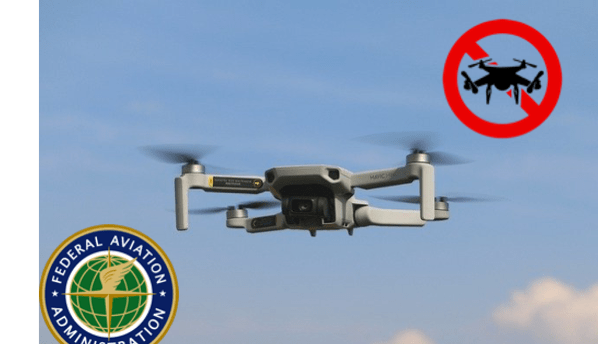
FAA Drone RegulationsThe FAA is working hard to integrate drones into the airspace and ensure the safety of both manned and unmanned aircraft.  But how much control should the FAA have, and would a “patchwork” approach actually hold some advantages for the drone industry?  Our own opinion pieces have supported a single point of regulation; in this challenge to the prevailing view, attorney Jonathan Hayden, Esq. writes that exclusive FAA control over drone regulations may not be best for business.

The following is a guest post by Jonathan Hayden, Esq., attorney at Boston-based Riemer and Braunstein, LLP.  DRONELIFE neither accepts nor makes payment for guest posts.

Why the Drone Community Should Not Embrace Exclusive FAA Control of Drone Regulations

When discussing drone regulations there are two common assumptions within the drone community: first, the FAA, and only the FAA, has sole regulatory authority over all drone flights in the United States; and second, the FAA’s exclusive authority is good for the drone community.  While the extent of the FAA’s regulatory authority is regularly discussed within the drone and legal communities, the question of whether the FAA having exclusive authority for drones is a positive thing for the drone community receives scant attention, as many within the drone community assume sole FAA authority is preferable to the localized rules that would result from landowners having the right to exclude drones from the airspace immediately above their land and state governments establishing the bulk of the country’s drone regulations.  However, it is a serious miscalculation for the drone community to advocate for the FAA to have such extensive, far-reaching authority, and if the FAA ever had such authority, many within the drone community would likely rue the day they advocated for it.

For example, imagine a scenario twenty years from now: the FAA has unchallenged regulatory authority over drone flights nationwide and neither landowners nor state and local governments have any authority.  Over the past twenty years, major drone companies and industry lobbying associations have provided significant information and advice to the FAA about drone technology to assist in the development of numerous drone regulations.  The FAA professional staff working on drone issues is mostly comprised of experts that previously worked for major drone manufacturers and drone service providers.  This results in the FAA regulating drones with a focus on the needs and interests of larger companies and industries within the drone community, a dynamic that is not odd or even controversial, as many government agencies find experts from the ranks of a regulated industry’s experts and employees.

Within that world, a struggling farmer seeking to increase his farm’s crop yields purchases a drone to help track and monitor his farmland from the air, flying the drone only at low altitudes, above his own land.  The farmer’s successful use of this technology will provide him with the same information in minutes that previously would have taken a whole day to collect and regular use of this technology has the potential to dramatically increase the farm’s profitability.  Shortly after he starts using the drone, the FAA informs the farmer that all future uses of the drone are prohibited because the farmer has violated multiple regulations.  Specifically, the FAA requires that the pilot of any drone being used for commercial purposes have completed extensive training under the supervision of a certified drone pilot, training which can usually only be completed by pilots employed with large drone companies.  Clearly such a requirement would not concern a large drone company, and may be desirable to such a company, but it also eliminates the opportunity for entrepreneurs or small business to use drones and new and innovative ways.

The farmer’s neighbor is a drone hobbyist who owns a large piece of land and only flies the drone over her own property to take pictures and video of her own land.  One day, this neighbor receives an FAA citation stating that her drone use violated numerous regulations prohibiting drone flights that could impact commercial drone deliveries, that future violations are subject to $10,000 fines, and that the FAA and local law enforcement will regularly monitor the property for compliance.  The letter does not indicate how the neighbor could fly her drone to avoid future infractions, leaving her unable to know how she can continue to fly her drone without hiring an attorney, or wading through thousands of pages of FAA regulations.  While these regulations would prohibit many average hobbyist drone uses, in a world twenty years from now, where drone deliveries are an important part of the national economy, it would not be surprising for the FAA to enact regulations to prevent non-delivery drones from interfering with delivery drones.

In both of these hypotheticals, the FAA has the power to prohibit landowners from flying drones over their own land for their own purposes, at great cost to a small business and a hobbyist.  While these theoretical regulations do not currently exist, they are examples of the types of regulations that could easily happen if the FAA has total authority to regulate all drone flights nationwide, as the same legal principles and arguments claiming that landowners have no control over the airspace above their land also assert that the FAA can control and regulate a private landowner’s drone flights over his or her own land.

An alternative regulatory structure that would better ensure a vibrant drone community where no single regulatory body, like the FAA, can ground normal, popular drone uses nationwide, is to limit the FAA’s drone authority to ensuring the safety and security of traditional, manned flight, while state governments set the rules to regulate the remaining issues related to the time, place, and manner of drone flights, and recognizing the inherent authority, subject to state and federal laws, of landowners to control drone activity within the airspace immediately above their land.  The states who seize this regulatory authority to the fullest will miss out on the benefits of robust drone activity within their borders, while other states would give drones free reign and enjoy the benefits drones can offer.

Clearly a nationwide patchwork of drone laws and regulations means that drone businesses operating in multiple states will have increased difficulty ensuring that its drones and business practices comply with all state and local laws.  However, this varied patchwork will also create the opportunity for smaller drone businesses with knowledge and expertise of unique local regulations to flourish and succeed, businesses which would likely never have such an opportunity if the FAA creates a single set of drone regulations for the entire country.  This arrangement will also acknowledge the reality that concerns about drones trespassing over private land are very different in rural Iowa than they are in New York City, or suburban Seattle.

Ultimately, whether the FAA has sole, exclusive authority to regulate drone flights nationwide, and the role to be played by state and local governments, will be determined by Congress, state governments, and the courts, and how this issue will be resolved is far from certain.  While some large companies may believe they will be able to influence federal policy in the decades to come, and thus have less to fear from the FAA controlling all drone policy nationwide, the rest of the drone community should not hope for the FAA to achieve such authority, as the results could be catastrophic for smaller members of the drone community.  A nationwide patchwork of state and local regulations may be unwieldy at times, but it would also create more opportunity for smaller drone entrepreneurs and hobbyists to be heard by their local, drone-regulating bodies and co-exist with large drone businesses, allowing for increased innovation from those small drone entrepreneurs.

Jonathan Hayden, Esq., is drone enthusiast and attorney at Riemer & Braunstein, LLP.  Jonathan has written articles about private property rights and drone regulations for publications including Unmanned Aerial.

Miriam McNabb

Miriam McNabb is the Editor-in-Chief of DRONELIFE and CEO of JobForDrones, a professional drone services marketplace, and a fascinated observer of the emerging drone industry and the regulatory environment for drones. Miriam has penned over 3,000 articles focused on the commercial drone space and is an international speaker and recognized figure in the industry.  Miriam has a degree from the University of Chicago and over 20 years of experience in high tech sales and marketing for new technologies.
For drone industry consulting or writing, Email Miriam.

TWITTER:@spaldingbarker

Subscribe to DroneLife here.
Filed Under: Drone News Feeds, Featured, Featured - FAA and Regulations, Legal, News, Selected - FAA and Regulations Tagged With: drone laws, Drone Regulation, FAA, FAA drone regulation, FAA drone regulations

Reader Interactions

Trackbacks

  1. Mississippi Drone Laws Set Very Scary Standards | Aerial Division says:
    January 29, 2021 at 10:56 pm

    […] Bill 2262 creates a problem with Federal preemption, the concept that the FAA controls the airspacee.  The proposed bill “would create such things […]

    Reply
  2. Proposed Mississippi Drone Laws Set “Very Scary Standards” Says Drone Service Providers Alliance – Drones Crunch says:
    January 29, 2021 at 5:20 pm

    […] Bill 2262 creates a problem with Federal preemption, the concept that the FAA controls the airspacee.  The proposed bill “would create such […]

    Reply
  3. Mississippi Drone Laws Set Very Scary Standards | Gadgets says:
    January 29, 2021 at 12:14 pm

    […] Bill 2262 creates a problem with Federal preemption, the concept that the FAA controls the airspacee.  The proposed bill “would create such things […]

    Reply
  4. Mississippi Drone Legal guidelines Set Very Scary Requirements - Drone Market says:
    January 29, 2021 at 10:43 am

    […] Invoice 2262 creates an issue with Federal preemption, the idea that the FAA controls the airspacee.  The proposed invoice “would create things like a […]

    Reply
  5. Mississippi Drone Laws Set Very Scary Standards - Drone Market says:
    January 29, 2021 at 10:42 am

    […] Bill 2262 creates a problem with Federal preemption, the concept that the FAA controls the airspacee.  The proposed bill “would create such things […]

    Reply
  6. Proposed Mississippi Drone Laws Set “Very Scary Standards” Says Drone Service Providers Alliance | Drone Films Limited says:
    January 29, 2021 at 10:19 am

    […] Bill 2262 creates a problem with Federal preemption, the concept that the FAA controls the airspacee.  The proposed bill “would create such […]

    Reply
  7. Proposed Mississippi Drone Laws Set “Very Scary Standards” Says Drone Service Providers Alliance - The Drone Page says:
    January 29, 2021 at 10:05 am

    […] Bill 2262 creates a problem with Federal preemption, the concept that the FAA controls the airspacee.  The proposed bill “would create such things […]

    Reply
  8. Aquiline Drones Launches Online Biz Training Program – DronezToGO says:
    July 7, 2020 at 3:37 pm

    […] areas include pilot training, FAA certification, cloud computing, analytics, command-and-control operations, industry-specific applications and […]

    Reply
  9. FAA and Drone Regulation: Should the FAA Have Exclusive Control? – DroneLife - On Sale Drones says:
    May 21, 2020 at 9:20 pm

    […] FAA and Drone Regulation: Should the FAA Have Exclusive Control?  DroneLife […]

    Reply
  10. FAA and Drone Regulation: Should the FAA Have Exclusive Control? - On Sale Drones says:
    May 19, 2020 at 2:14 pm

    […] Source […]

    Reply
  11. FAA and Drone Regulation: Should the FAA Have Exclusive Control? ⋆ says:
    May 19, 2020 at 1:10 pm

    […] The complete article is here […]

    Reply
  12. FAA and Drone Regulation: Should the FAA Have Exclusive Control? | Gadgets says:
    May 19, 2020 at 11:29 am

    […] Source link […]

    Reply
  13. FAA and Drone Regulation: Should the FAA Have Exclusive Control? - Eledonk Electronics says:
    May 19, 2020 at 11:18 am

    […] post FAA and Drone Regulation: Should the FAA Have Exclusive Control? appeared first on […]

    Reply
  14. FAA and Drone Regulation: Ought to the FAA Have Unique Command? - Drone Market says:
    May 19, 2020 at 11:03 am

    […] Provide hyperlink […]

    Reply
  15. FAA and Drone Regulation: Should the FAA Have Exclusive Command? - Drone Market says:
    May 19, 2020 at 11:03 am

    […] Supply hyperlink […]

    Reply
  16. FAA and Drone Regulation: Should the FAA Have Exclusive Control? | Drone Magazine says:
    May 19, 2020 at 10:38 am

    […] Source […]

    Reply

Leave a Reply Cancel reply

Your email address will not be published. Required fields are marked *

Primary Sidebar

LATEST

What Starlink Actually Changes for Police Drones: A Look at BRINC’s Guardian

BRINC Guardian with Starlink: A New Standard for Drone as First Responder?Satellite connectivity, redundancy, and real-world range could reshape police…

Continue Reading What Starlink Actually Changes for Police Drones: A Look at BRINC’s Guardian

Spokane PD Adds Skydio Drones Ahead of FIFA World Cup Security Push

Spokane PD to get 4 Skydio drones for World Cup security By DRONELIFE Features Editor Jim Magill The Spokane, Washington…

Continue Reading Spokane PD Adds Skydio Drones Ahead of FIFA World Cup Security Push

Theft of Agricultural Spray Drones in New Jersey Raises Security Questions

Incident highlights long-standing concerns about drone misuse and growing focus on counter-UAS preparedness A reported theft of agricultural spraying drones…

Continue Reading Theft of Agricultural Spray Drones in New Jersey Raises Security Questions

Volocopter Unveils VoloXPro and Expands into Pilot Training Market, Air Sports

New ultralight multicopter targets private pilots, training organizations, and future air taxi operators Volocopter has introduced the VoloXPro, a new…

Continue Reading Volocopter Unveils VoloXPro and Expands into Pilot Training Market, Air Sports

Matternet Launches NHS Drone Deliveries in Central London

New service connects major hospital campuses to move critical medical items in minutes Matternet has launched drone delivery operations for…

Continue Reading Matternet Launches NHS Drone Deliveries in Central London

As Drone Delivery Expands, Communities Remain Uncertain

County denies Walmart bid to start drone deliveries By DRONELIFE Features Editor Jim Magill A board of Georgia county officials…

Continue Reading As Drone Delivery Expands, Communities Remain Uncertain

Rogue Drone Detected. Now What?

SkySafe and Motorola Solutions integration highlights the next step in managing low-altitude airspace At the Motorola Solutions Summit 2026 this…

Continue Reading Rogue Drone Detected. Now What?

New DJI Drones Launch Globally, But Not in the U.S.

Court filing highlights FCC restrictions as new products debut without U.S. availability Drone giant DJI has introduced new consumer drones,…

Continue Reading New DJI Drones Launch Globally, But Not in the U.S.

NYC Tests Cargo Drones to Cut Traffic and Speed Medical Deliveries

Port Authority Launches Yearlong Cargo Drone Trial Over East River. Skyports partnership aims to test middle-mile delivery, reduce congestion, and…

Continue Reading NYC Tests Cargo Drones to Cut Traffic and Speed Medical Deliveries

AirData and BRINC Integration Brings Automated Flight Records to Public Safety Drone Programs

New integration captures flight data automatically, supporting scalable and auditable drone operations AirData has announced a new integration with BRINC,…

Continue Reading AirData and BRINC Integration Brings Automated Flight Records to Public Safety Drone Programs

Secondary Sidebar

Footer

SPONSORED

Inspired Flight Gremsy IF800 VIO F1 drones geo week

What Will It Take to Strengthen U.S. Drone Manufacturing? A Conversation with Inspired Flight’s CEO

Global Mapper Mobile data collection

Collection Ground Control Points with Global Mapper Mobile

Military Drone Mapping Solutions

How SimActive’s Correlator3D™ is Revolutionizing Military Mapping: An Exclusive Interview with CEO Philippe Simard

Photogrammetry Accuracy Standards

SimActive Photogrammetry Software: Enabling Users to Meet Accuracy Standards for Over 20 Years

NACT Engineering Parrot ANAFI tether indoor shot

Smart Tether for Parrot ANAFI USA from NACT Engineering

Blue Marble, features global mapper, features Blue Marble

Check Out These New Features in Global Mapper v25 from Blue Marble

About Us | Contact Us | Advertise With Us | Write for Us | Privacy Policy | Terms of Service

The Trusted Source for the Business of Drones.

This website uses cookies and third party services. By clicking OK, you are agreeing to our privacy policy. ACCEPT

Manage consent

Privacy Overview

This website uses cookies to improve your experience while you navigate through the website. Out of these, the cookies that are categorized as necessary are stored on your browser as they are essential for the working of basic functionalities of the website. We also use third-party cookies that help us analyze and understand how you use this website. These cookies will be stored in your browser only with your consent. You also have the option to opt-out of these cookies. But opting out of some of these cookies may affect your browsing experience.
Necessary
Always Enabled
Necessary cookies are absolutely essential for the website to function properly. These cookies ensure basic functionalities and security features of the website, anonymously.
CookieDurationDescription
cookielawinfo-checkbox-analytics11 monthsThis cookie is set by GDPR Cookie Consent plugin. The cookie is used to store the user consent for the cookies in the category "Analytics".
cookielawinfo-checkbox-functional11 monthsThe cookie is set by GDPR cookie consent to record the user consent for the cookies in the category "Functional".
cookielawinfo-checkbox-necessary11 monthsThis cookie is set by GDPR Cookie Consent plugin. The cookies is used to store the user consent for the cookies in the category "Necessary".
cookielawinfo-checkbox-others11 monthsThis cookie is set by GDPR Cookie Consent plugin. The cookie is used to store the user consent for the cookies in the category "Other.
cookielawinfo-checkbox-performance11 monthsThis cookie is set by GDPR Cookie Consent plugin. The cookie is used to store the user consent for the cookies in the category "Performance".
viewed_cookie_policy11 monthsThe cookie is set by the GDPR Cookie Consent plugin and is used to store whether or not user has consented to the use of cookies. It does not store any personal data.
Functional
Functional cookies help to perform certain functionalities like sharing the content of the website on social media platforms, collect feedbacks, and other third-party features.
Performance
Performance cookies are used to understand and analyze the key performance indexes of the website which helps in delivering a better user experience for the visitors.
Analytics
Analytical cookies are used to understand how visitors interact with the website. These cookies help provide information on metrics the number of visitors, bounce rate, traffic source, etc.
Advertisement
Advertisement cookies are used to provide visitors with relevant ads and marketing campaigns. These cookies track visitors across websites and collect information to provide customized ads.
Others
Other uncategorized cookies are those that are being analyzed and have not been classified into a category as yet.
SAVE & ACCEPT