• Skip to main content
  • Skip to secondary menu
  • Skip to primary sidebar
  • Skip to secondary sidebar
  • Skip to footer
  • DroneRacingLife
  • DroneFlyers
  • Newsletter
DroneLife

DRONELIFE

Stay up to date on all the latest Drone News

  • News
  • Products
  • Industries
    • Agriculture
    • Construction
    • Delivery
    • Dual Use
    • Inspection
    • Public Safety
    • Surveying
  • Enthusiasts
  • Regulations
  • Business
  • Video
  • Podcasts

Analysis Puts Remote ID for Drones Costs 9X Higher than FAA Estimate: DJI Urges FAA to Reconsider

March 3, 2020 by Miriam McNabb 7 Comments

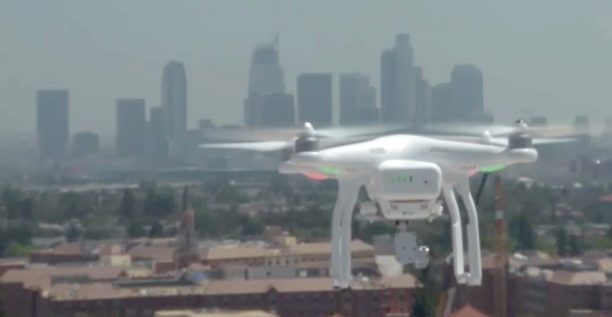
image public domain

The comment period for the Remote ID for Drones NPRM closed yesterday.  There were more than 50,000 comments posted on the NPRM, including and 89 page comment by the world’s leading drone manufacturer, DJI.  While DJI has been active in developing and implementing technology that could simplify Remote ID for users, the company fears that the rule’s requirements place an unreasonable burden on all stakeholders, from manufacturers to individual pilots to industrial clients, who will end up shouldering the costs of a burdensome solution.

In a press release issued today, DJI says that an independent economic study finds that costs of compliance with the proposal far exceed the FAA’s estimate – and in fact are 9 times higher.  DJI is urging the FAA to take the comments into consideration and reconsider the rule.
The following is a DJI press release.
DJI Urges FAA To Reconsider Flawed Remote ID Rule
Independent Economic Analysis Finds Costs Nine Times As High As FAA Estimate 
March 3, 2020 – DJI, the world’s leader in civilian drones and aerial imaging technology, has filed an 89-page formal comment urging the U.S. Federal Aviation Administration (FAA) to allow drone pilots to choose which method of Remote Identification to use with their drones, which would significantly reduce the costs and complications of Remote ID while boosting compliance.

DJI’s filing includes an independent economic study that concludes the FAA’s Remote ID proposal would prove nine times as costly as the FAA’s estimates, imposing $5.6 billion worth of burdens on society over the next decade. The analysis finds many of those costs could be obviated if drone pilots could choose between two different methods of compliance, rather than doing both as the FAA proposed.

The economic analysis was prepared by Dr. Christian Dippon, Managing Director at NERA Economic Consulting, who considered the societal costs of the FAA’s proposed rule. He concluded the average monthly cost of a Remote ID network-based service for a drone user would be $9.83, rather than the FAA’s $2.50 estimate; that demand for drones would fall 10 percent if the FAA’s proposals were imposed as written; and that total costs over ten years would be $5.6 billion instead of the FAA’s $582 million estimate.

“We have known for years that Remote ID will be required by governments worldwide and will provide members of the public with confidence in productive drone uses, but the FAA’s deeply flawed proposal poses a real threat to how American businesses, governments, educators, photographers and enthusiasts can use drones,” said DJI Vice President of Policy & Legal Affairs Brendan Schulman. “We hope our detailed economic analysis and comments, as well as tens of thousands of comments from other concerned parties, will encourage the FAA to develop a more risk-based, balanced and efficient Remote ID rule, so our customers and the entire industry are not hurt by the final outcome.”

DJI’s comment was one of more than 51,000 filed by the FAA’s March 2 deadline, and is expected to be available soon at this link. DJI’s comment is also available for download at this link. NERA’s economic analysis is available for download at this link.

Remote ID allows authorities to identify and monitor airborne drones in near-real time, so they can see the location of the drone as well as a serial number to identify its owner. Congress tasked the FAA in 2016 with exploring consensus-based technology standards that could lead to Remote ID regulatory solutions. Late last year, the FAA proposed that almost all drones should broadcast that information directly to nearby receivers, as well as transmit it over wireless networks to a service provider’s database, with an anticipated monthly subscription fee for that service. DJI and many other drone stakeholders have instead said the FAA should let drone operators choose whether to use broadcast or network solutions for Remote ID. Any new Remote ID rule is unlikely to take effect before 2024.

DJI’s comment also expands on many other points DJI has made previously about the risks of the FAA’s proposal, which would hurt people who have safely and successfully used drones across the country for years, hamper the adoption of a technology that is bringing enormous value to America, and create costs and complications that far outweigh the benefits of the FAA’s broadcast-and-network approach. Most importantly, a burdensome proposal undermines the government’s own goals for Remote ID.

“A Remote ID requirement that is costly, burdensome, complex, or subject to multiple points of failure, will be a requirement that fails,” DJI wrote in its submission. “We offer these comments, many of which are highly critical of aspects of the FAA’s proposal, in the sincere interest of promoting a good final rule for the FAA, the U.S. Government, and the UAS industry.”

DJI has advocated for favorable solutions to Remote ID for years, recognizing that authorities need to understand drone activity in real time in order to allow full integration of drones in the skies. DJI recently demonstrated a “Drone-to-Phone” broadcast Remote ID solution which uses an open, non-proprietary industry standard and provides Remote ID information on commonly-available smartphones without imposing any extra cost or effort on drone operators. This demonstration showed that Remote ID can be accomplished in a way that is far cheaper and easier than what the FAA has proposed.

Miriam McNabb

Miriam McNabb is the Editor-in-Chief of DRONELIFE and CEO of JobForDrones, a professional drone services marketplace, and a fascinated observer of the emerging drone industry and the regulatory environment for drones. Miriam has penned over 3,000 articles focused on the commercial drone space and is an international speaker and recognized figure in the industry.  Miriam has a degree from the University of Chicago and over 20 years of experience in high tech sales and marketing for new technologies.
For drone industry consulting or writing, Email Miriam.

TWITTER:@spaldingbarker

Subscribe to DroneLife here.
Filed Under: Drone News Feeds, Featured, News Tagged With: AeroScope, DJI, remote ID for drones, Remote ID NPRM

Reader Interactions

Trackbacks

  1. DJI on U.S. Government Drone Regulation and Fear-Based Policies: “Everyone Pays” - The Drone Page says:
    August 27, 2020 at 1:34 pm

    […] if nothing changes, fear-based policy is going to cost you money, make it more complicated to fly, and delay your ability to fly in expanded operations,” Shulamna […]

    Reply
  2. Analysis Puts Remote ID for Drones Costs 9X Higher than FAA Estimate | 'GLJ Media Group' Daily Blog says:
    March 5, 2020 at 9:06 am

    […] By: Miriam McNabb, Dronelife […]

    Reply
  3. Analysis Puts Remote ID for Drones Costs 9X Higher than FAA Estimate: DJI Urges FAA to Reconsider – Best Drone Company says:
    March 3, 2020 at 4:57 pm

    […] Source link […]

    Reply
  4. Evaluation Places Distant ID for Drones Prices 9X Increased than FAA Estimate: DJI Urges FAA to Rethink - Drone Stuff Pro says:
    March 3, 2020 at 4:16 pm

    […] Supply hyperlink […]

    Reply
  5. Analysis Puts Remote ID for Drones Costs 9X Higher than FAA Estimate: DJI Urges FAA to Reconsider | Gadgets says:
    March 3, 2020 at 3:42 pm

    […] Source link […]

    Reply
  6. Analysis Puts Remote ID for Drones Costs 9X Higher than FAA Estimate: DJI Urges FAA to Reconsider | Drone Magazine says:
    March 3, 2020 at 3:34 pm

    […] Source […]

    Reply
  7. Analysis Puts Remote ID for Drones Costs 9X Higher than FAA Estimate: DJI Urges FAA to Reconsider ⋆ says:
    March 3, 2020 at 3:15 pm

    […] The complete article is here […]

    Reply

Leave a Reply Cancel reply

Your email address will not be published. Required fields are marked *

Primary Sidebar

LATEST

Japan’s Drone Industry Runs 10-Day Kumamoto Earthquake Response Through JUIDA-D³

This article published in collaboration with JUIDA, the Japan UAS Industrial Development Association.     JUIDA-coordinated teams flew indoor searches at…

Continue Reading Japan’s Drone Industry Runs 10-Day Kumamoto Earthquake Response Through JUIDA-D³

Czech Zuri Introduces Uncrewed Cargo Tiltrotor for Civil and Defense Operations

The Czech aircraft company opens ground testing on Technology Demonstrator 2.0 in Prague and targets flight testing in 2027 and…

Continue Reading Czech Zuri Introduces Uncrewed Cargo Tiltrotor for Civil and Defense Operations

Corvus Robotics Names Co-Founder CEO and Closes $20M Round

Founding CTO takes over as Jackie Wu moves to the board for health reasons, and Corvus Robotics announces the broadest…

Continue Reading Corvus Robotics Names Co-Founder CEO and Closes $20M Round

A Drone Factory at Sea: Firestorm Labs Tests Onboard Manufacturing with U.S. Navy

Firestorm produced more than 1,000 components for Squall UAVs and other critical equipment during a two-week voyage aboard the USS…

Continue Reading A Drone Factory at Sea: Firestorm Labs Tests Onboard Manufacturing with U.S. Navy

“If You Fly, We Can’t”: Drone Incursions Still Disrupt Wildfire Response Across the West

Five unauthorized drone flights over Oregon’s Wrights Spring Fire grounded firefighting aircraft, highlighting a growing safety problem during wildfire operations.…

Continue Reading “If You Fly, We Can’t”: Drone Incursions Still Disrupt Wildfire Response Across the West

First Breach Completes First Drone Flight as Company Begins Nasdaq Trading

Maryland defense manufacturer targets large-scale U.S. production of two attritable drone platforms beginning in 2027 First Breach Inc. has completed…

Continue Reading First Breach Completes First Drone Flight as Company Begins Nasdaq Trading

Gremsy USA Launches Blue UAS-Cleared Payload Line as Drone Supply Chains Shift

Vietnamese-founded gimbal specialist expands U.S. production with NDAA-compliant EO/IR payloads for government, public safety and enterprise drones Gremsy USA has…

Continue Reading Gremsy USA Launches Blue UAS-Cleared Payload Line as Drone Supply Chains Shift

SiFly Raises $20 Million to Scale U.S. Production of Long-Endurance Drones

Series A funding will support Q12 manufacturing, customer deliveries, and development of the company’s DronePort system SiFly Aviation has raised…

Continue Reading SiFly Raises $20 Million to Scale U.S. Production of Long-Endurance Drones

Flying Lion Launches Remote Staffing Service for 24/7 DFR Operations

New service combines remote pilots with pilot management software to help public safety and security organizations extend drone coverage Flying…

Continue Reading Flying Lion Launches Remote Staffing Service for 24/7 DFR Operations

U.S. Army Thermal Imaging Program Targets Next-Generation Drone Sensors

Teledyne FLIR OEM joins DUTCH initiative focused on performance, SWaP-C, and high-volume domestic production Teledyne FLIR OEM has been selected…

Continue Reading U.S. Army Thermal Imaging Program Targets Next-Generation Drone Sensors

Secondary Sidebar

Footer

SPONSORED

What Is the Best Commercial Cleaning Drone in 2026? Specs, Prices, and a Head-to-Head Comparison

Inspired Flight Gremsy IF800 VIO F1 drones geo week

What Will It Take to Strengthen U.S. Drone Manufacturing? A Conversation with Inspired Flight’s CEO

Global Mapper Mobile data collection

Collection Ground Control Points with Global Mapper Mobile

Military Drone Mapping Solutions

How SimActive’s Correlator3D™ is Revolutionizing Military Mapping: An Exclusive Interview with CEO Philippe Simard

Photogrammetry Accuracy Standards

SimActive Photogrammetry Software: Enabling Users to Meet Accuracy Standards for Over 20 Years

NACT Engineering Parrot ANAFI tether indoor shot

Smart Tether for Parrot ANAFI USA from NACT Engineering

About Us | Contact Us | Advertise With Us | Write for Us | Privacy Policy | Terms of Service

The Trusted Source for the Business of Drones.

This website uses cookies and third party services. By clicking OK, you are agreeing to our privacy policy. ACCEPT

Manage consent

Privacy Overview

This website uses cookies to improve your experience while you navigate through the website. Out of these, the cookies that are categorized as necessary are stored on your browser as they are essential for the working of basic functionalities of the website. We also use third-party cookies that help us analyze and understand how you use this website. These cookies will be stored in your browser only with your consent. You also have the option to opt-out of these cookies. But opting out of some of these cookies may affect your browsing experience.
Necessary
Always Enabled
Necessary cookies are absolutely essential for the website to function properly. These cookies ensure basic functionalities and security features of the website, anonymously.
CookieDurationDescription
cookielawinfo-checkbox-analytics11 monthsThis cookie is set by GDPR Cookie Consent plugin. The cookie is used to store the user consent for the cookies in the category "Analytics".
cookielawinfo-checkbox-functional11 monthsThe cookie is set by GDPR cookie consent to record the user consent for the cookies in the category "Functional".
cookielawinfo-checkbox-necessary11 monthsThis cookie is set by GDPR Cookie Consent plugin. The cookies is used to store the user consent for the cookies in the category "Necessary".
cookielawinfo-checkbox-others11 monthsThis cookie is set by GDPR Cookie Consent plugin. The cookie is used to store the user consent for the cookies in the category "Other.
cookielawinfo-checkbox-performance11 monthsThis cookie is set by GDPR Cookie Consent plugin. The cookie is used to store the user consent for the cookies in the category "Performance".
viewed_cookie_policy11 monthsThe cookie is set by the GDPR Cookie Consent plugin and is used to store whether or not user has consented to the use of cookies. It does not store any personal data.
Functional
Functional cookies help to perform certain functionalities like sharing the content of the website on social media platforms, collect feedbacks, and other third-party features.
Performance
Performance cookies are used to understand and analyze the key performance indexes of the website which helps in delivering a better user experience for the visitors.
Analytics
Analytical cookies are used to understand how visitors interact with the website. These cookies help provide information on metrics the number of visitors, bounce rate, traffic source, etc.
Advertisement
Advertisement cookies are used to provide visitors with relevant ads and marketing campaigns. These cookies track visitors across websites and collect information to provide customized ads.
Others
Other uncategorized cookies are those that are being analyzed and have not been classified into a category as yet.
SAVE & ACCEPT