
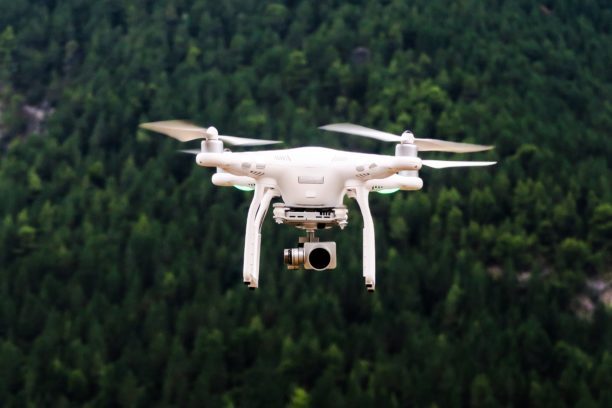
 The world’s largest drone manufacturer, Chinese-based DJI, has responded to the U.S. Department of the Interior’s announcement that they would down their fleet of drones except for emergency response, amid government concerns over security. Although DJI drones represent only a small fraction of fleet, some proposals from lawmakers suggest limiting not only Chinese-manufactured drones, but also those that include Chinese-manufactured parts, including cameras and gimbals. Currently, that leaves government agencies without a comparable alternative: and leaves the DOI able to use drone technology to respond to disasters – but not to help manage lands to prevent them.
From DJI ViewPoints blog:
How The U.S. Department Of The Interior’s New Drone Policy Hurts America
In its broad mission to effectively manage over 500 million acres of land across the United States and its territories, the Department of the Interior has in recent years turned to drone technology to help get the job done. The DOI’s fleet of 810 civilian drones – only about 20 percent of which are DJI products – is the largest in the federal government and has become a trusted, invaluable resource for the agency. In 2018 alone, the DOI flew more than 10,000 drone missions to support everything from surveying migrating birds to fighting wildfires. It even used drones to support volcano monitoring and response efforts which were instrumental in the rescue of a Hawaii resident trapped by flowing lava.
That’s why we’re troubled by a new department policy that takes aim at drone technology. According to the policy, DOI employees can no longer fly drones made by foreign-owned companies or those made with foreign-manufactured components, with undefined cybersecurity concerns as the sole rationale. This policy has grounded the DOI’s entire drone program and all of the benefits that come with it. It is an alarming, politically driven decision that puts lives and property at risk.
First and foremost, the concerns raised by the agency regarding cybersecurity are not grounded in reality. As we said last year, we worked diligently with DOI officials, who themselves worked with independent cybersecurity professionals and experts at NASA over the course of 15 months to create a safe and secure drone solution that met DOI’s rigorous requirements. The result of this collaboration was our Government Edition (GE) solution which provides additional safeguards so drone data is not intentionally or accidentally shared with unauthorized parties. Just a few months later, at the request of the Department of Homeland Security, our GE drones were independently evaluated a second time by the Department of Energy’s Idaho National Lab, which also found no areas of concern related to data leakage.
Moreover, the vast majority of DOI missions are obviously not sensitive in the first place. A recent report shows that the programs impacted by this political decision include “missions to monitor fish, waterfowl and soil conditions.” In many if not most cases, the data DOI collects in these missions, as an agency using federal funds, is publicly releasable and available to anyone upon request.
With all of this in mind, we disagree with the DOI’s new policy because it treats a technology’s country of origin as a litmus test for its performance, security and reliability. Further, this decision makes clear that the U.S. government’s concerns about DJI drones have little to do with security and are instead part of a politically motivated agenda to reduce market competition and support domestically produced drone technology, regardless of its merits. It’s unfortunate that the government is letting politics play such an outsized role here, as people will likely suffer as a result, and lives may even be lost.
A Flawed Approach to Security
The DOI’s country of origin benchmark for security is ineffective and politically motivated, and ultimately does not address any real problem. It is not unreasonable for any government to prefer to buy products produced in its own country, but that sentiment simply doesn’t reflect the realities of today’s global technology supply chain. By the DOI’s own admission, all of the more than 800 drones it has procured are made in China or have components made there, including drones from companies headquartered in the US and Europe. The report from the Idaho National Lab recognizes this reality, saying, “[e]ven for the few small U.S-based companies that manufacture UAS’s in the U.S., the technical and economic viability of their UAS products relies on electronic components manufactured in China.”
Therefore, following its own policy to its logical conclusion would mean that the agency plans on keeping these drones grounded indefinitely, wasting the millions of dollars spent on procuring them. This policy might also require a restriction on other equipment used across DOI. How many DOI employees use smartphones, laptops, tablets, radios, weather monitors, cameras and other electronic equipment containing Chinese components in their jobs?
The Cost and Consequences
The DOI is beginning to acknowledge the negative implications of its decision, and the agency’s own 2018 report illustrates just how widespread the impact will be. By the DOI’s math, drones are anywhere from 32 percent to 63 percent less expensive to operate than airplanes, and four times less expensive than helicopters. These savings are even more pronounced given that the leading cause of death for wildlife biologists on the job is small plane or helicopter crashes. Last year, for example, a U.S. Forest Service helicopter crashed, killing one employee and injuring two other people, while on a mission to drop ignition spheres in a controlled-burn fire prevention operation – the same activity DOI did with drones before they were grounded by this policy.
Recent reports also indicate that some within the Fish and Wildlife Service and the U.S. Geological Survey have already raised concerns about long-term impacts the grounding may have on wildfire prevention and wildlife protection. Even worse, the DOI’s Bureau of Land Management has already cancelled several drone pilot training courses, causing a butterfly effect that will deprive operators of valuable information and experience critical to safely completing their missions.
In 2018 alone, drones saved an estimated $14.8 million over the cost of traditional ground-based methods. According to a DOI official, using a drone rather than a traditional approach can allow the DOI to perform a task in one-seventh the time, at one-tenth the cost. The DOI estimates that drones have saved $50 million just by detecting wildfires early, giving them time to protect critical land and infrastructure that may have otherwise been lost.
A Solution that Works
Instead of focusing on country of origin, a more effective solution would be to treat drones as any other information technology asset like a laptop or smartphone, and set clear industry-wide technology standards and requirements that ensure their safe and secure operation, much like those the DOI shared with us when we developed our Government Edition solution. Drone manufacturers would in turn ensure their products are built to meet the standards that are prescribed for the intended mission.
Similar to the approach currently used by Germany’s Interior Ministry, these standards could be focused on areas like functionality, safety and security. However, with the current lack of clear industry-wide guidance on standards, we believe that drone operators, including U.S. government and public safety agencies, deserve to make their own careful, fact-based evaluations and informed decisions about technology purchases, free from the influence of political priorities.
Permalink: https://content.

Miriam McNabb is the Editor-in-Chief of DRONELIFE and CEO of JobForDrones, a professional drone services marketplace, and a fascinated observer of the emerging drone industry and the regulatory environment for drones. Miriam has penned over 3,000 articles focused on the commercial drone space and is an international speaker and recognized figure in the industry. Miriam has a degree from the University of Chicago and over 20 years of experience in high tech sales and marketing for new technologies.
For drone industry consulting or writing, Email Miriam.
TWITTER:@spaldingbarker
Subscribe to DroneLife here.
[…] whose drones comprised a small portion of the DOI fleet, blasted the move, “which inappropriately treats a technology’s country of origin as a litmus […]