• Skip to main content
  • Skip to secondary menu
  • Skip to primary sidebar
  • Skip to secondary sidebar
  • Skip to footer
  • DroneRacingLife
  • DroneFlyers
  • Newsletter
DroneLife

DRONELIFE

Stay up to date on all the latest Drone News

  • News
  • Products
  • Industries
    • Agriculture
    • Construction
    • Delivery
    • Dual Use
    • Inspection
    • Public Safety
    • Surveying
  • Enthusiasts
  • Regulations
  • Business
  • Video
  • Podcasts

Is Geofencing the Best Solution to Rogue Pilots?

April 20, 2016 by Malek Murison Leave a Comment

You’ve probably seen in the news that a drone collided with a plane outside of Heathrow airport, London. Understandably, it’s a big story that has attracted plenty of attention. But it’s fair to say that the world’s media, and indeed some senior figures in governments and police departments, have reacted disproportionately, with many suggesting that it’s high time for regulatory bodies to take further action against drone pilots.

In all seriousness, we probably need to gain a little perspective on this issue. First of all, while there is absolutely no doubt that the incident was the result of reckless flying by one individual pilot, the crash did occur over Richmond Park, almost 8 miles away from Heathrow airport. This wasn’t a case of an idiot flying a drone the road from one of the world’s busiest air traffic centres. However, it was the case that the drone pilot in question was flying well above the legal UK limit of 400ft – as high as 1700ft, if reports are to be believed.

Second, exactly how dangerous drones are to commercial airliners is yet to be fully determined. As much as the wider media have labelled the incident as a ‘collision’, proportionally it’s as much a mid-air ‘collision’ as the last time I walked into a mosquito. The plane was immediately cleared for its next flight after a brief inspection. Ironically, had it been an EasyJet plane, it would have been inspected by a drone. Having said that, there are of course still risks involved – You’ll remember that back in 2009, an Airbus A320 (incidentally the same model hit by the drone on Saturday) had to make an emergency landing in the Hudson River after multiple bird strikes resulted in a double engine failure.

A Mercatus study by Eli Dourado and Samuel Hammond last month took a closer look at the risks that drones pose to commercial aircraft. Using data from past bird strikes to assess how the likelihood that drones might crash into planes and how much damage they might cause, the pair estimated that a fatal collision between a plane and a drone will occur once every 187 million years. If past accidents are anything to go by, it would appear as though swarms of drones would be required to genuinely bring down an aircraft. That’s certainly unlikely to happen (legally) any time soon, so maybe planes are fine, for now.
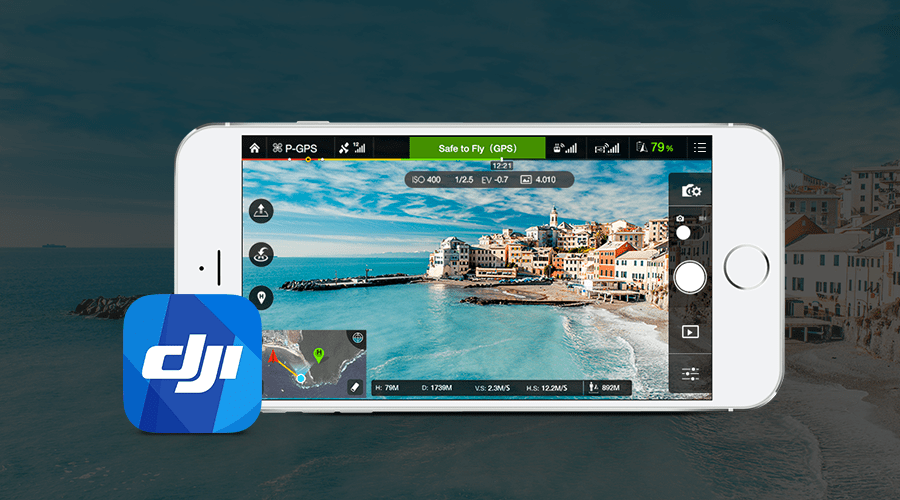
Geofencing with DJI Go

The best thing that regulatory bodies and pilots can hope for is that manufacturers start incorporating software features that restrict illegal flights. DJI has already taken steps to do this, perhaps as a positive gesture towards officials at the FAA and other national aviation authorities. Geofencing could be a real opportunity for the public to be convinced that drones can be used safely. Yes, it’s a bit like buying a Ferrari and having its speed limited to 60mph, but for the UAV industry to truly take off, incidents like the one in London, and other near misses that are frequently reported, must be cut out.

Currently DJI’s Geospatial Environment Online (GEO) provides drone pilots with real-time information on where they cannot fly, such as the airspace over airports, major sporting events or prisons. By default, its drones should not take off in or fly into these areas. The company has been making proactive steps since releasing an update setting up a no-fly zone over the White House last year, one week after a drone crash landed on its lawn. 3DR have made similar moves with regards to geofencing, but there are two obvious issues here. The first is that geofencing is in no way being applied across the board by all manufacturers. And the second is that DJI users, for example, have the power to temporarily self-authorize their flights in no-fly zones.

Until enforced geofencing comes as standard, limiting both the altitude drones can reach and where they can reach it, it’s likely that we will see more controversial incidents involving planes and drones in the future. The whole industry will suffer as a result.

Malek Murison
Malek Murison

Malek Murison is a freelance writer and editor with a passion for tech trends and innovation. He handles product reviews, major releases and keeps an eye on the enthusiast market for DroneLife.
Email Malek
Twitter:@malekmurison

Subscribe to DroneLife here.
Filed Under: Commentary, Drone News, Enthusiasts, Featured - Enthusiasts, News Tagged With: collision, crash, DJI, geofencing, plane, regulations

Reader Interactions

Leave a Reply Cancel reply

Your email address will not be published. Required fields are marked *

Primary Sidebar

LATEST

Drone Activity Disrupts Jersey Airport for Two Consecutive Nights

Police are appealing for witnesses after multiple drones entered restricted airspace on October 30 and 31. The Government of Jersey…

Continue Reading Drone Activity Disrupts Jersey Airport for Two Consecutive Nights

Navy DRPM RAS Seeks Cargo Drones for Marine Corps

The new robotic and autonomous systems portfolio office will host a cargo drone demonstration in Huntsville in early 2027. Strong…

Continue Reading Navy DRPM RAS Seeks Cargo Drones for Marine Corps

Blue Marble Geographics Introduces New Global Mapper Subscription for GIS and Drone Mapping

Three subscription tiers bring mapping, terrain analysis, lidar processing, and photogrammetry tools into a unified offering. Blue Marble Geographics has…

Continue Reading Blue Marble Geographics Introduces New Global Mapper Subscription for GIS and Drone Mapping

DOE Launches Battery Manufacturing Initiative to Strengthen U.S. Supply Chain

New national consortium aims to reduce production costs and speed commercialization of advanced batteries, including those used in drones. The…

Continue Reading DOE Launches Battery Manufacturing Initiative to Strengthen U.S. Supply Chain

FEMA’s $250 Million Counter-Drone Grant Deadline Approaches: Applications Due November 16

Nationwide funding supports counter-UAS capabilities for state and local agencies, but questions remain about whether the funding will meet demand.…

Continue Reading FEMA’s $250 Million Counter-Drone Grant Deadline Approaches: Applications Due November 16

Matternet Gains Access to More Than 2,300 North American Hospitals Through Swisslog Healthcare Partnership

New distribution agreement could give Matternet a competitive advantage in hospital drone delivery by leveraging an established healthcare sales network.…

Continue Reading Matternet Gains Access to More Than 2,300 North American Hospitals Through Swisslog Healthcare Partnership

FCC Opens 50 MHz of Cellular Spectrum for Drone Operations

New rules remove a decades-old restriction on airborne use of the 800 MHz Cellular band. The Federal Communications Commission (FCC)…

Continue Reading FCC Opens 50 MHz of Cellular Spectrum for Drone Operations

Zipline Announces Quieter Drone Deliveries as Communities Raise Noise Concerns

New flight software reduces modeled sound exposure by 68%, addressing a growing concern as drone delivery expands into residential areas.…

Continue Reading Zipline Announces Quieter Drone Deliveries as Communities Raise Noise Concerns

FCC Proposes New Rules for Drone Communications and Counter-Drone Radar

November vote would expand low-altitude aviation data links, support drone-detection radar, and update satellite connectivity rules. The Federal Communications Commission…

Continue Reading FCC Proposes New Rules for Drone Communications and Counter-Drone Radar

New State Drone Laws Create Patchwork of Restrictions, Raising Concerns for Operators

New restrictions in California, Arizona, and Alabama highlight differences in state regulations and raise questions about federal airspace authority. By…

Continue Reading New State Drone Laws Create Patchwork of Restrictions, Raising Concerns for Operators

Secondary Sidebar

Footer

SPONSORED

drone cleaning

Do Cleaning Drones Actually Work? 15 Apellix Before-and-After Jobs Show the Results

What Is the Best Commercial Cleaning Drone in 2026? Specs, Prices, and a Head-to-Head Comparison

Inspired Flight Gremsy IF800 VIO F1 drones geo week

What Will It Take to Strengthen U.S. Drone Manufacturing? A Conversation with Inspired Flight’s CEO

Global Mapper Mobile data collection

Collection Ground Control Points with Global Mapper Mobile

Military Drone Mapping Solutions

How SimActive’s Correlator3D™ is Revolutionizing Military Mapping: An Exclusive Interview with CEO Philippe Simard

Photogrammetry Accuracy Standards

SimActive Photogrammetry Software: Enabling Users to Meet Accuracy Standards for Over 20 Years

About Us | Contact Us | Advertise With Us | Write for Us | Privacy Policy | Terms of Service

The Trusted Source for the Business of Drones.

This website uses cookies and third party services. By clicking OK, you are agreeing to our privacy policy. ACCEPT

Manage consent

Privacy Overview

This website uses cookies to improve your experience while you navigate through the website. Out of these, the cookies that are categorized as necessary are stored on your browser as they are essential for the working of basic functionalities of the website. We also use third-party cookies that help us analyze and understand how you use this website. These cookies will be stored in your browser only with your consent. You also have the option to opt-out of these cookies. But opting out of some of these cookies may affect your browsing experience.
Necessary
Always Enabled
Necessary cookies are absolutely essential for the website to function properly. These cookies ensure basic functionalities and security features of the website, anonymously.
CookieDurationDescription
cookielawinfo-checkbox-analytics11 monthsThis cookie is set by GDPR Cookie Consent plugin. The cookie is used to store the user consent for the cookies in the category "Analytics".
cookielawinfo-checkbox-functional11 monthsThe cookie is set by GDPR cookie consent to record the user consent for the cookies in the category "Functional".
cookielawinfo-checkbox-necessary11 monthsThis cookie is set by GDPR Cookie Consent plugin. The cookies is used to store the user consent for the cookies in the category "Necessary".
cookielawinfo-checkbox-others11 monthsThis cookie is set by GDPR Cookie Consent plugin. The cookie is used to store the user consent for the cookies in the category "Other.
cookielawinfo-checkbox-performance11 monthsThis cookie is set by GDPR Cookie Consent plugin. The cookie is used to store the user consent for the cookies in the category "Performance".
viewed_cookie_policy11 monthsThe cookie is set by the GDPR Cookie Consent plugin and is used to store whether or not user has consented to the use of cookies. It does not store any personal data.
Functional
Functional cookies help to perform certain functionalities like sharing the content of the website on social media platforms, collect feedbacks, and other third-party features.
Performance
Performance cookies are used to understand and analyze the key performance indexes of the website which helps in delivering a better user experience for the visitors.
Analytics
Analytical cookies are used to understand how visitors interact with the website. These cookies help provide information on metrics the number of visitors, bounce rate, traffic source, etc.
Advertisement
Advertisement cookies are used to provide visitors with relevant ads and marketing campaigns. These cookies track visitors across websites and collect information to provide customized ads.
Others
Other uncategorized cookies are those that are being analyzed and have not been classified into a category as yet.
SAVE & ACCEPT