• Skip to main content
  • Skip to secondary menu
  • Skip to primary sidebar
  • Skip to secondary sidebar
  • Skip to footer
  • DroneRacingLife
  • DroneFlyers
  • Newsletter
DroneLife

DRONELIFE

Stay up to date on all the latest Drone News

  • News
  • Products
  • Industries
    • Agriculture
    • Construction
    • Delivery
    • Dual Use
    • Inspection
    • Public Safety
    • Surveying
  • Enthusiasts
  • Regulations
  • Business
  • Video
  • Podcasts

Will Drones Infringe Upon Your Fourth Amendment Rights?

April 10, 2014 by Greg Galizio 1 Comment

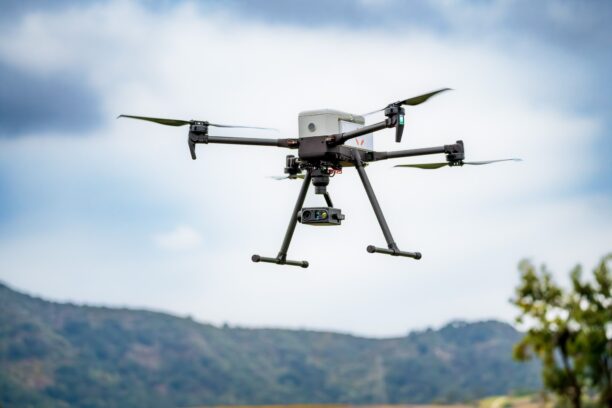
The advent of domestic drones in America may not be simply a matter of when—but more importantly how?  The capabilities of domestic drone technology have been well documented; from commercial delivery to border patrol, from real estate photography to rescue missions, the range of drone application seems boundless.

The worrisome application of UAV technology resides in criminal surveillance investigation. In light of the potential threat to privacy rights that drones impose, many states have enacted -or are considering– legislation that regulates the use of drones in criminal investigations. But in the absence of Federal law and consistent state laws, the courts may soon be confronted with the question of whether drone surveillance can be restrained by the Fourth Amendment’s guarantee “against unreasonable searches.”

Generally, if a court deems a particular police action to be a “search” under the Fourth Amendment, it triggers the requirement for a warrant.  But when does law enforcement’s operation of advanced technology amount to the legal definition of a “search?”  A look to the Supreme Court of the United States’ past case law on technology and police surveillance may hold the answer.

In Katz v. United States, the nation’s highest court held that police’s use of technology, which intrudes upon an individual’s reasonable expectation of privacy, is a search.  While the Katz decision welcomed the Court into the 20th century’s technology, is begs the question: when is an expectation of privacy reasonable under the Fourth Amendment?

Aerial Surveillance  

In a trilogy of 1980s cases (Florida v. Riley, California v. Ciraolo & Dow Chemical v. U.S.) the Supreme Court ruled that aerial surveillance (airplane or helicopter) of a private backyard does not invade an individual’s reasonable expectation of privacy if conducted within public navigable airspace.  Simply put, if police comply with FAA regulations, any and all naked-eye observations from the air do not require a warrant.  If privacy rights are to be protected in the 21st century, the Court must distinguish aerial, “naked-eye” observations from the operation of a police drone upon a private residence.

Thermal Imaging

In Kyllo v. United States, police used a thermal imaging device on a suspected marijuana grower’s home in order to observe heat signatures from its interior.  Despite the absence of a traditional, physical intrusion upon the home, the Court defined this action as a search because such technology was not in “general public use.”  The Kyllo case presents the perplexing question upon the rise in drone technology—just when will emerging technology be deemed in “general public use”?

GPS Vehicle Monitoring   

If police attach a global positioning system device (GPS) upon a suspect’s vehicle to monitor their movements without a warrant, it is a search under the Fourth Amendment.  In a bizarre majority opinion for the 21st century, Justice Antonin Scalia focused on whether the GPS physically violated an “18th-century guarantee against un- reasonable searches” rather than focusing on whether the technology intrudes upon a reasonable expectation of privacy.  Justice Scalia’s opinion resembles the Court’s antiquated physical-intrusion approach prior to Katz.  Because the central holding of Jones overly focuses on the physical intrusion of technology and refused to answer the case from a privacy-interest approach, the case serves as an unhelpful precedent for future drone technology cases.

Police Drug-Detection Dog

In Florida v. Jardines, the Supreme Court decided that police’s warrantless use of a drug-detection dog upon the front porch of a private residence is a search, thus triggering Fourth Amendment protections.  While a drug-sniffing dog may not seem analogous to digital technology, Justice Elena Kagan asserted that such use of a drug-sniffing dog “is to the poodle down the street as high-powered binoculars are to a piece of plain glass. Like the binoculars, a drug-detection dog is a specialized device for discovering objects not in plain view (or plain smell).”  Justice Kagan went onto to say, when a technological “device is not ‘in general public use,’ and is used against a home, it unreasonably violates” an individual’s reasonable expectation of privacy.”

What do we make of these cases in their application to drone technology?  

  • The Court’s approach to Aerial Surveillance must evolve.  Given that an operator may be hundred of yards if not miles away from an UAV, this surveillance should never be considered to be a “naked-eye observation.”
  • Any device used to provide information from the interior of a home is likely to be deemed a search—so long it is “not in general public use.”
  • The “general public use” evaluation of technology is ill equipped to define the future balance between advancing technology and privacy rights.
  • The ambiguity between the Supreme Court’s relevant case law further solidifies the need for states and Congress to adapt statutory restrictions and warrant requirement for police drone technology.  But in the absence of specific Federal legislation, as Director of The National Constitution Center Jeffrey Rosen concluded: “if we are to preserve in the twenty-first century the same amount of privacy that people took for granted in the eighteenth, the Court may have to act.”

Filed Under: Legal, News Tagged With: Antonin Scalia, Drone Law, Elena Kagan, FAA, Fourth Amendment, Supreme Court

Reader Interactions

Comments

  1. Jerry G says

    April 11, 2014 at 12:48 pm

    Excellent article, our laws will have to keep catching up to technology.

    Reply

Leave a Reply Cancel reply

Your email address will not be published. Required fields are marked *

Primary Sidebar

LATEST

Inside the Future of Drones: Policy, Security with Michael Robbins, CEO and President of AUVSI on the Drone Radio Show

Michael Robbins, CEO and President of AUVSI, talks with host Randy Goers about the real forces shaping the uncrewed systems…

Continue Reading Inside the Future of Drones: Policy, Security with Michael Robbins, CEO and President of AUVSI on the Drone Radio Show

Beijing’s Drone Ban Goes Into Effect Today: A New Model for Urban UAV Control

China’s capital targets sales, storage, and transport as well as operations, raising questions for global drone policy Beijing has introduced…

Continue Reading Beijing’s Drone Ban Goes Into Effect Today: A New Model for Urban UAV Control

Elsight’s Halo Makes the Blue UAS List: What That Means for Allied Suppliers

New designation highlights growing focus on secure communications as a critical component in U.S. drone policy Elsight’s Halo connectivity platform…

Continue Reading Elsight’s Halo Makes the Blue UAS List: What That Means for Allied Suppliers

Sweden’s Everdrone Opens Borås Base for Defibrillator Drone Deliveries

Sweden’s Västra Götaland Region adds a fourth E3 base, extending Everdrone’s autonomous AED network to roughly 300,000 residents. The Västra…

Continue Reading Sweden’s Everdrone Opens Borås Base for Defibrillator Drone Deliveries

Near Earth Autonomy Wins MARV-EL Contract for Marine Corps Logistics Drone

Naval Air Systems Command picks the Pittsburgh autonomy specialist to build an uncrewed Bell 505 with Bell Textron, Moog, and…

Continue Reading Near Earth Autonomy Wins MARV-EL Contract for Marine Corps Logistics Drone

Elistair Khronos Tethered Drone Joins France’s ORION 2026 Exercise

The automated DroneBox provides persistent aerial surveillance during NATO-style multi-domain operations involving 12,500 troops and 1,200 drones. Elistair’s Khronos automated…

Continue Reading Elistair Khronos Tethered Drone Joins France’s ORION 2026 Exercise

New Senate Bill Targets Drone Threats to Critical Infrastructure

Senate Bill Seeks to Expand Counter-UAS Authority at Critical Infrastructure SitesLegislation outlines authority, training, and funding as drone threats gain…

Continue Reading New Senate Bill Targets Drone Threats to Critical Infrastructure

Can Drones Replace High-Speed Police Pursuits? BRINC’s Guardian Points to a New Model

At the recent Motorola Solutions [NYSE: MSI], BRINC CEO Blake Resnick outlined a vision that challenges one of policing’s most…

Continue Reading Can Drones Replace High-Speed Police Pursuits? BRINC’s Guardian Points to a New Model

Can America Build a Fully Domestic Drone? Lithium Discovery Moves the Needle

New USGS findings highlight potential for domestic lithium supply, but key gaps remain in the battery chain A new study…

Continue Reading Can America Build a Fully Domestic Drone? Lithium Discovery Moves the Needle

Public Safety Drone Review: May 5, 2026 with BRINC CEO Blake Resnick

Join the Live Discussion on May 5 Register here for the May Public Safety Drone Review. The next Public Safety…

Continue Reading Public Safety Drone Review: May 5, 2026 with BRINC CEO Blake Resnick

Secondary Sidebar

Footer

SPONSORED

Inspired Flight Gremsy IF800 VIO F1 drones geo week

What Will It Take to Strengthen U.S. Drone Manufacturing? A Conversation with Inspired Flight’s CEO

Global Mapper Mobile data collection

Collection Ground Control Points with Global Mapper Mobile

Military Drone Mapping Solutions

How SimActive’s Correlator3D™ is Revolutionizing Military Mapping: An Exclusive Interview with CEO Philippe Simard

Photogrammetry Accuracy Standards

SimActive Photogrammetry Software: Enabling Users to Meet Accuracy Standards for Over 20 Years

NACT Engineering Parrot ANAFI tether indoor shot

Smart Tether for Parrot ANAFI USA from NACT Engineering

Blue Marble, features global mapper, features Blue Marble

Check Out These New Features in Global Mapper v25 from Blue Marble

About Us | Contact Us | Advertise With Us | Write for Us | Privacy Policy | Terms of Service

The Trusted Source for the Business of Drones.

This website uses cookies and third party services. By clicking OK, you are agreeing to our privacy policy. ACCEPT

Manage consent

Privacy Overview

This website uses cookies to improve your experience while you navigate through the website. Out of these, the cookies that are categorized as necessary are stored on your browser as they are essential for the working of basic functionalities of the website. We also use third-party cookies that help us analyze and understand how you use this website. These cookies will be stored in your browser only with your consent. You also have the option to opt-out of these cookies. But opting out of some of these cookies may affect your browsing experience.
Necessary
Always Enabled
Necessary cookies are absolutely essential for the website to function properly. These cookies ensure basic functionalities and security features of the website, anonymously.
CookieDurationDescription
cookielawinfo-checkbox-analytics11 monthsThis cookie is set by GDPR Cookie Consent plugin. The cookie is used to store the user consent for the cookies in the category "Analytics".
cookielawinfo-checkbox-functional11 monthsThe cookie is set by GDPR cookie consent to record the user consent for the cookies in the category "Functional".
cookielawinfo-checkbox-necessary11 monthsThis cookie is set by GDPR Cookie Consent plugin. The cookies is used to store the user consent for the cookies in the category "Necessary".
cookielawinfo-checkbox-others11 monthsThis cookie is set by GDPR Cookie Consent plugin. The cookie is used to store the user consent for the cookies in the category "Other.
cookielawinfo-checkbox-performance11 monthsThis cookie is set by GDPR Cookie Consent plugin. The cookie is used to store the user consent for the cookies in the category "Performance".
viewed_cookie_policy11 monthsThe cookie is set by the GDPR Cookie Consent plugin and is used to store whether or not user has consented to the use of cookies. It does not store any personal data.
Functional
Functional cookies help to perform certain functionalities like sharing the content of the website on social media platforms, collect feedbacks, and other third-party features.
Performance
Performance cookies are used to understand and analyze the key performance indexes of the website which helps in delivering a better user experience for the visitors.
Analytics
Analytical cookies are used to understand how visitors interact with the website. These cookies help provide information on metrics the number of visitors, bounce rate, traffic source, etc.
Advertisement
Advertisement cookies are used to provide visitors with relevant ads and marketing campaigns. These cookies track visitors across websites and collect information to provide customized ads.
Others
Other uncategorized cookies are those that are being analyzed and have not been classified into a category as yet.
SAVE & ACCEPT