
The company says prepositioning drones at restaurants can cut delivery costs by 60% and reduce delivery times by half.
Flytrex has introduced a rooftop docking system and AI-based fleet positioning for drone delivery. The company says the combined system cuts delivery costs by 60% and customer delivery times by half.
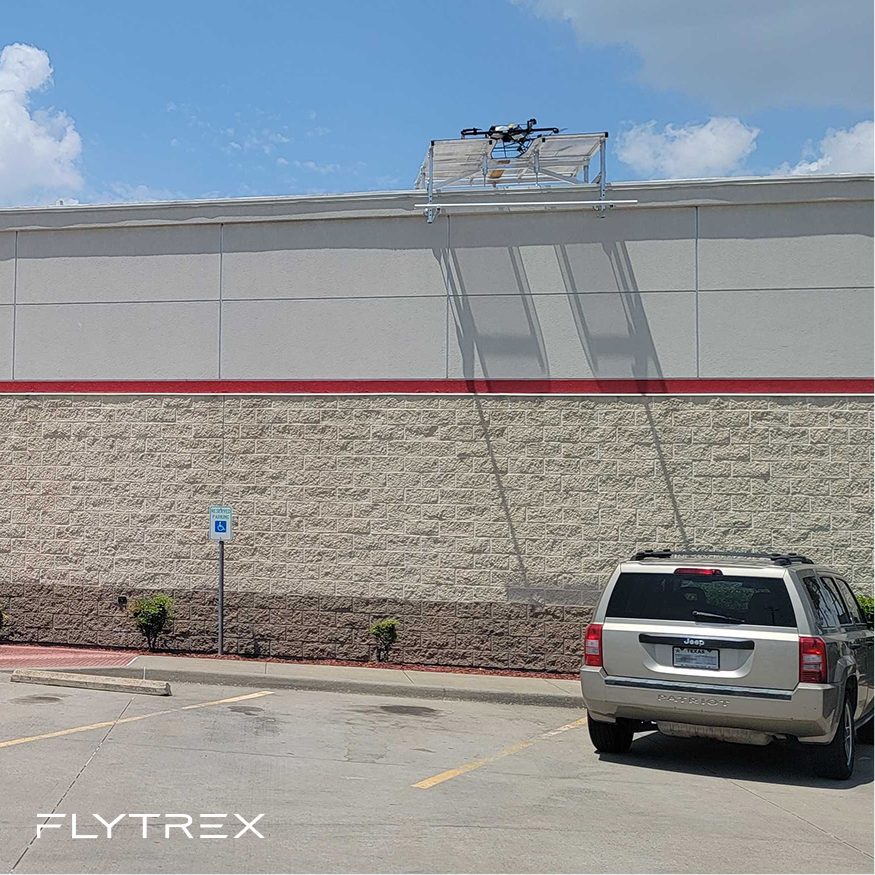
The system places drones at restaurants before customers submit their orders. Flytrex uses demand forecasts to decide where and when to position each aircraft.
The company is launching the technology at active merchant locations across the Dallas-Fort Worth area. It is also installing the system at more than 100 additional sites.
The model addresses a costly step in many drone delivery networks. Operators often launch an aircraft from a central location after an order is ready. The drone must fly to the restaurant before starting the customer delivery.
Flytrex aims to remove that pickup flight. It also eliminates the need for runners to carry orders to a separate launch site.
Turning Restaurant Rooftops Into Delivery Sites
Flytrex installs each dock on an existing rooftop or elevated area near the restaurant. According to the company, the system requires no added real estate or structural changes.
A drone lands on the dock before an order arrives and shuts down its motors. Once the food is ready, the aircraft lowers a hook into a loading position. A restaurant employee clips the packaged order onto the hook without touching the drone. The aircraft then flies directly to the customer.
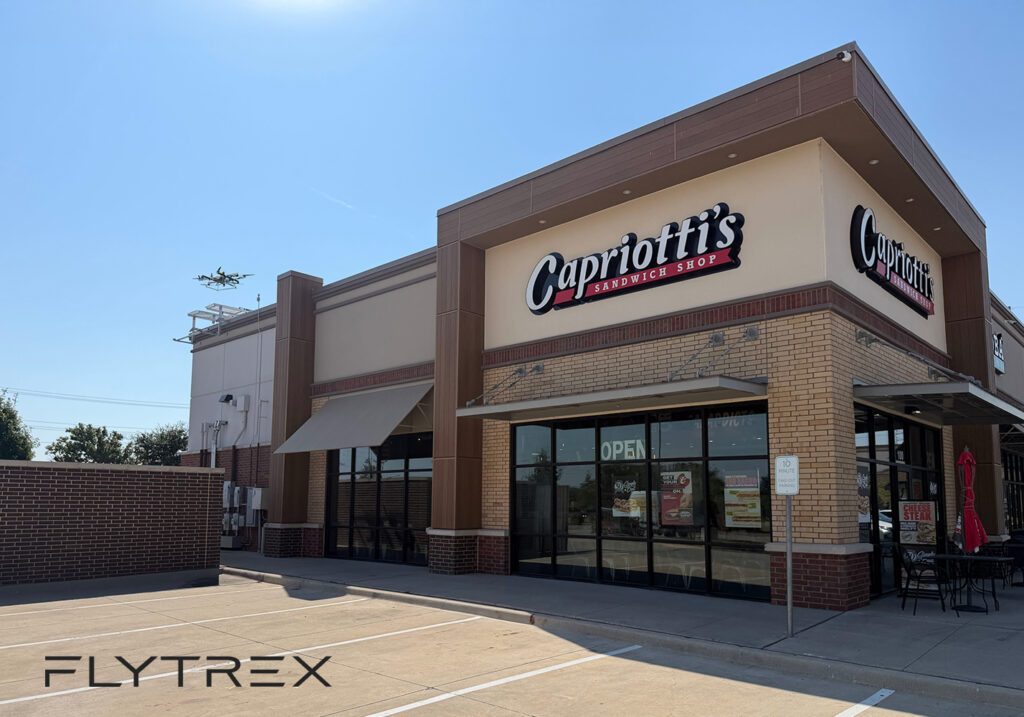
“Every drone delivery company has promised food in minutes. The truly challenging part has never been the flight; it’s the last few hundred feet between the kitchen and the aircraft,” said Amit Regev, Co-Founder and CEO of Flytrex. “The Dock and predictive modeling turn every restaurant into part of the autonomous network. Our system knows where the next order is coming from before it’s placed, the drone is already waiting on the roof, restaurant staff loads it in seconds, and it’s in the air on its way to the customer. No courier, no runner, no Flytrex employee at the restaurant. That is what drone delivery was always supposed to look like, and it’s what makes it faster, smarter and dramatically lower cost.”
Using Demand Data to Position Drones
Flytrex’s machine-learning models analyze past demand, location, time of day and other network data. The software predicts which restaurants are most likely to receive orders. It then sends available drones to those locations in advance.
The approach could allow each aircraft to complete more deliveries. Flytrex says it can also support faster service and fresher food.
Using existing buildings may help the company expand without creating dedicated pickup facilities. The model will still depend on suitable sites and regulatory approval for planned operations.
Expanding the Delivery Network
The announcement follows several expansion milestones for Flytrex. The company says it has completed more than 250,000 U.S. deliveries.
In 2025, Uber invested in Flytrex through a partnership focused on Uber Eats orders. Flytrex also partnered with DoorDash in the Dallas-Fort Worth market.
The company later received FAA approval for beyond visual line of sight operations. That approval supports longer routes and wider network growth.
In April 2026, Flytrex introduced its Sky2 delivery drone through a partnership with Little Caesars. The aircraft can carry up to 8.8 pounds, enough for two large pizzas.
Flytrex also opened a manufacturing facility in Pilot Point, Texas. The company says the site can produce about 1,000 drones per year.
The rooftop system marks an operational shift: moving drones close to expected orders before they arrive. If it works at scale, Flytrex could serve more merchants with the same fleet and fewer ground staff.
Read more:
- Flytrex and Nash Partner to Route Drone and Courier Deliveries Across Dallas-Fort Worth
- Flytrex and Wing Report Zero Airspace Conflicts for Multi-Operator Drone Delivery
- The Challenge of Drone Pizza Delivery: Flytrex Finally Solved It

Miriam McNabb is the Editor-in-Chief of DRONELIFE and CEO of JobForDrones, a professional drone services marketplace, and a fascinated observer of the emerging drone industry and the regulatory environment for drones. Miriam has penned over 3,000 articles focused on the commercial drone space and is an international speaker and recognized figure in the industry. Miriam has a degree from the University of Chicago and over 20 years of experience in high tech sales and marketing for new technologies.
For drone industry consulting or writing, Email Miriam.
TWITTER:@spaldingbarker
Subscribe to DroneLife here.

Leave a Reply