
Université de Sherbrooke researchers demonstrate a new approach to landing multirotors on steep, irregular ice surfaces
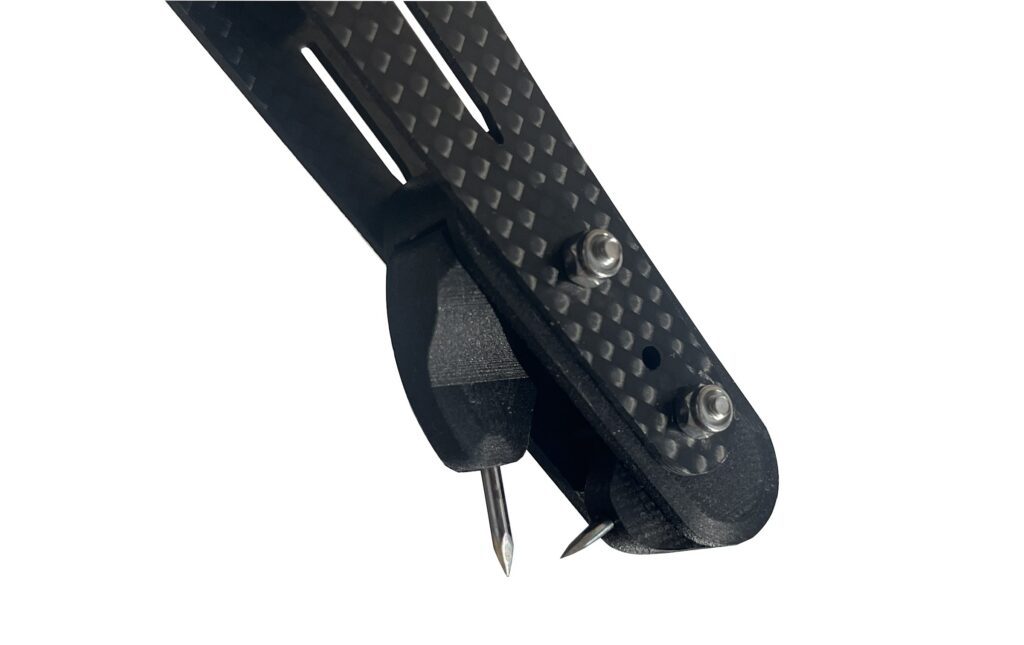
Cats may seem an unlikely source of inspiration for drone landing gear. But retractable claws helped researchers at Canada’s Université de Sherbrooke address a difficult problem: landing a drone on steep, slippery ice.

The result is the Ice Dart, a multirotor designed to land and remain perched on steep ice surfaces.
Researchers Isaac Tunney, John Bass, and Alexis Lussier Desbiens developed the system at Université de Sherbrooke. Their work was published in IEEE Transactions on Field Robotics as “The Ice Dart: Landing on Steep Ice Using Spiny Feet, Dissipative Landing Gear and Reverse Thrust.”
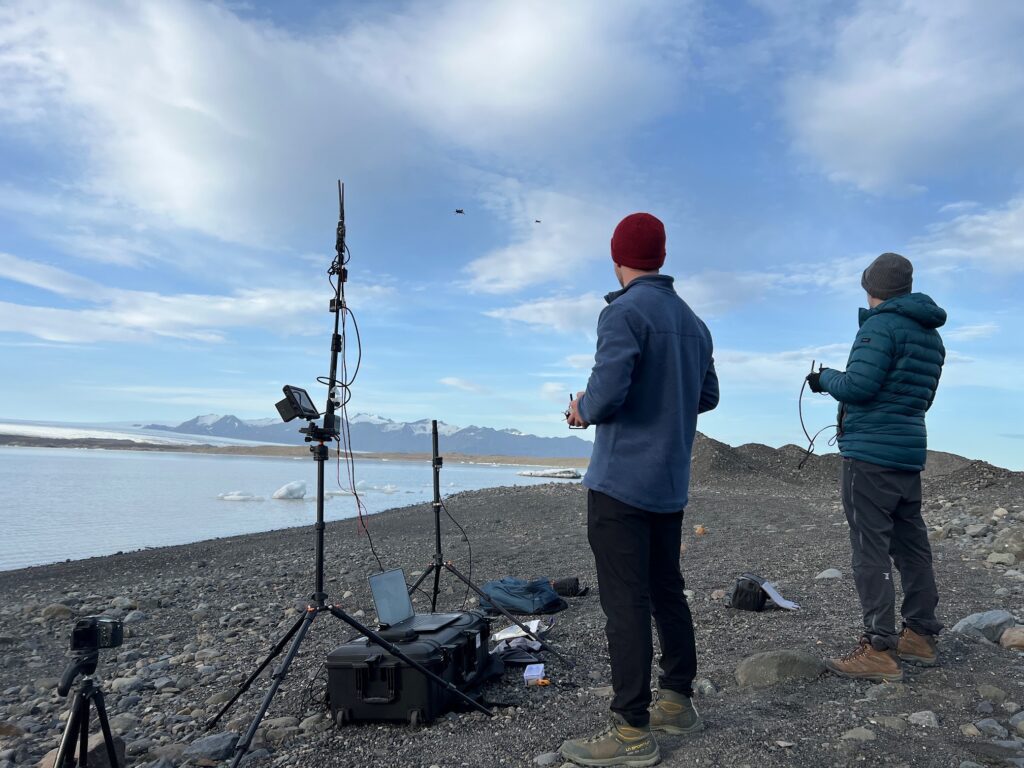
The team tested Ice Dart on natural icebergs and glaciers in Iceland. Across 24 field landings, the aircraft handled slopes of up to 58 degrees and winds exceeding 30 km/h, according to information provided by the researchers. Controlled testing demonstrated landings on ice slopes of up to 60 degrees and touchdown speeds of up to 3 meters per second.
Claws, Shock Absorption and Reverse Thrust
Landing on steep ice requires the aircraft to absorb the impact while gaining enough grip to avoid sliding or tipping.
Ice Dart combines three approaches.
Retractable spines inspired by a cat’s claws deploy during landing to grip the ice. Friction-based landing gear dissipates energy during impact. The aircraft also uses reverse thrust at touchdown to help stabilize the landing.
Together, these technologies expand the conditions in which a multirotor can land.
Ice Dart builds on earlier research by the same Université de Sherbrooke team. Tunney, Bass, and Lussier Desbiens have studied methods for landing multirotors on steep surfaces and high-speed moving vehicles. Their previous work also used friction shock absorbers and reverse thrust to increase the landing envelope.
The Ice Dart takes that research into a particularly difficult natural environment.
Landing Instead of Hovering
The ability to land on ice could also extend the usefulness of small drones for sensing missions.
A multirotor must continuously power its motors while hovering. Landing allows it to remain in place without using energy to stay airborne. This could allow a drone to serve as a temporary sensing station on an iceberg or other natural surface.
Potential applications identified by the researchers include iceberg tracking, maritime safety, environmental research, and Arctic surveillance and domain awareness.
The Iceland trials demonstrate the system outside controlled laboratory conditions, including on irregular natural ice and in wind.
More broadly, Ice Dart is part of the Université de Sherbrooke team’s effort to expand where multirotor drones can land. The researchers have previously demonstrated landings on moving boats, vehicles traveling at high speeds, and steep rooftops.
With Ice Dart, they have added glaciers and icebergs to that list.
Research: The Ice Dart: Landing on Steep Ice Using Spiny Feet, Dissipative Landing Gear and Reverse Thrust, Isaac Tunney, John Bass and Alexis Lussier Desbiens, IEEE Transactions on Field Robotics.
Read more:
- University of Kentucky Researcher Wins NSF Award for Drone Fleet Safety Research
- Drone Blow Sampling Helps Researchers Track Sick Whales
- How Tiny Bat-Inspired Drones Could Transform Search and Rescue Operations

Miriam McNabb is the Editor-in-Chief of DRONELIFE and CEO of JobForDrones, a professional drone services marketplace, and a fascinated observer of the emerging drone industry and the regulatory environment for drones. Miriam has penned over 3,000 articles focused on the commercial drone space and is an international speaker and recognized figure in the industry. Miriam has a degree from the University of Chicago and over 20 years of experience in high tech sales and marketing for new technologies.
For drone industry consulting or writing, Email Miriam.
TWITTER:@spaldingbarker
Subscribe to DroneLife here.

Leave a Reply