• Skip to main content
  • Skip to secondary menu
  • Skip to primary sidebar
  • Skip to secondary sidebar
  • Skip to footer
  • DroneRacingLife
  • DroneFlyers
  • Newsletter
DroneLife

DRONELIFE

Stay up to date on all the latest Drone News

  • News
  • Products
  • Industries
    • Agriculture
    • Construction
    • Delivery
    • Dual Use
    • Inspection
    • Public Safety
    • Surveying
  • Enthusiasts
  • Regulations
  • Business
  • Video
  • Podcasts

From Munich Security Conference to Capability Priorities — Why Drones and C-UAS Are Now Core to Europe’s Defense Doctrine

February 17, 2026 by Miriam McNabb Leave a Comment

As Europe’s premier strategic security forum, the 62nd Munich Security Conference (MSC 2026) offered more than its usual round of geopolitical speeches and headline-grabbing bilateral meetings. This year, amid heightened threats and deepening questions about transatlantic guarantees, a quieter but no less significant shift was visible in the language used by European policymakers and strategic analysts: unmanned systems, both drones and counter-UAS, are no longer marginal capabilities but essential elements of Europe’s defense doctrine.

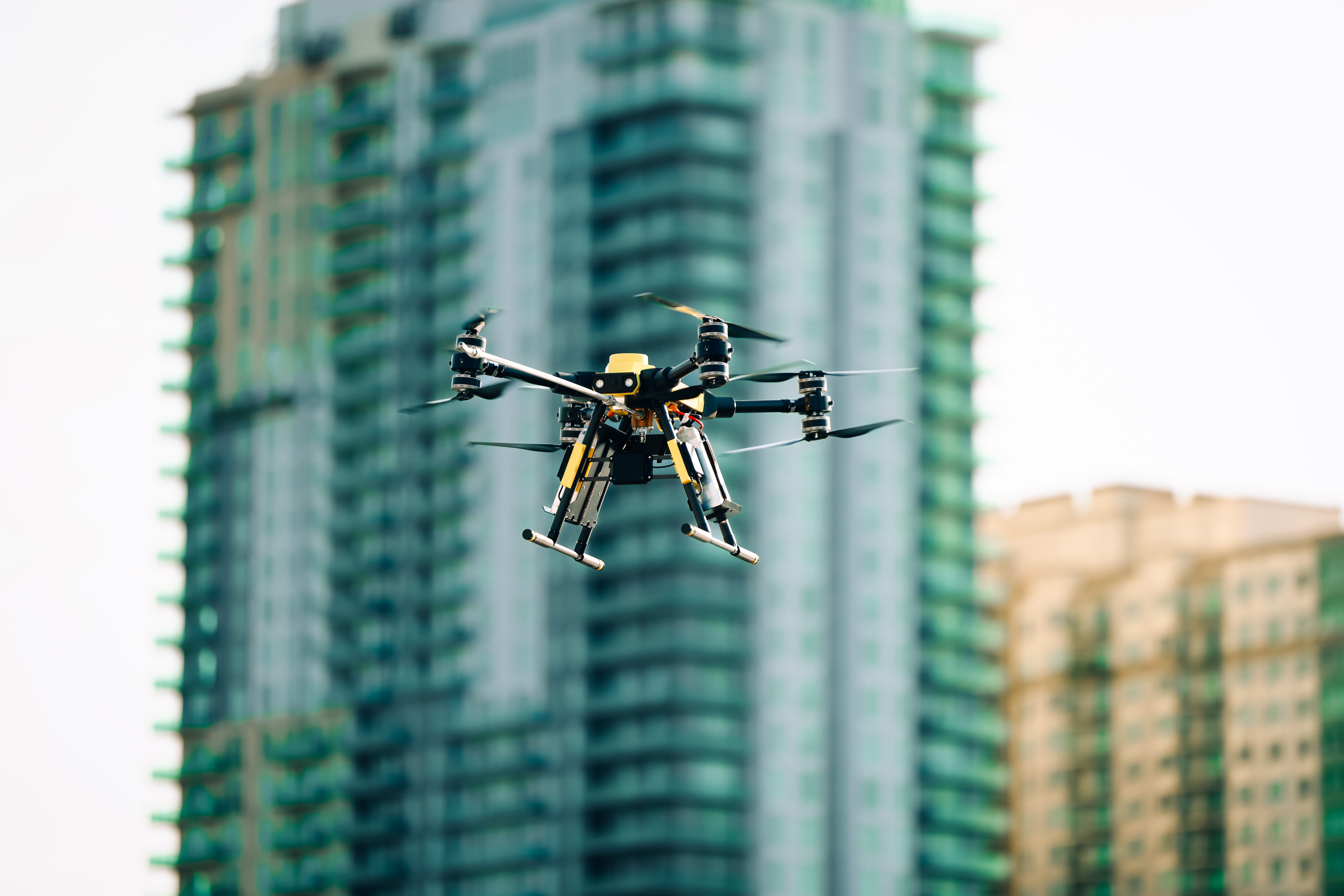
European drone defense

A Strategic Inflection Point

Held from February 13–15 in Munich, Germany, MSC 2026 took place against what the official Munich Security Report 2026, titled Under Destruction, describes as a “moment of profound uncertainty” for European security. Russia’s ongoing war in Ukraine, hybrid pressure across the continent, and skepticism over the durability of longstanding alliances all contributed to a notion that the security environment has fundamentally shifted.

Across this backdrop, Europe’s defense planning is being recalibrated from reactive crisis management to sustained readiness. One clear signal of that evolution appears in how drones have been framed not as niche technologies but as capability priorities on par with traditional defense functions such as air and missile defense.

Drones as a “Shared Capability Priority”

New language from the Munich Security Report 2026 itself underscores how unmanned systems have moved from peripheral concerns into the center of European defense planning. The report calls for “rapid agreement on shared capability priorities” and highlights significant gaps in critical areas, including air defense, intelligence, and other key systems that modern conflict increasingly depends on. It states that to confront emerging threats, Europe must build “sustained increases in defense spending” and align on “critical capability priorities,” implicitly encompassing unmanned platforms and the ecosystems that support them.

The report explicitly documents how hybrid activity, including a “sharp escalation in suspected Russian … unauthorized drone overflights” across several NATO and EU states, has tested Europe’s current defenses and exposed operational vulnerabilities. In doing so, it reinforces that persistent ISR, airspace monitoring, and rapid response mechanisms are now indispensable components of the continent’s collective security architecture, not optional add-ons.

Lessons from Ukraine and the Security Imperative

European Commission President Ursula von der Leyen, in speech excerpts from the Conference, underscored the broader security context shaping policy priorities for the bloc. According to press coverage of her remarks, she stressed that Europe must “learn security lessons from Ukraine” and be prepared to act decisively ahead of emerging threats.

Von der Leyen also amplified the call for a more robust collective defense posture, urging EU member states to activate and “bring to life” the bloc’s mutual defense clause, framing it as a binding security obligation rather than a symbolic commitment.

While her comments did not mention drones by name, the strategic logic she outlined – collective readiness, shared capability development, and reduced reliance on external guarantees – maps directly onto the Munich Security Report’s elevation of unmanned systems in capability planning.

A Doctrine Adapted to Hybrid Threats

What distinguishes Europe’s current security discourse and differentiates it from past iterations is how threats are perceived. Beyond classical military engagements, Europe now confronts hybrid and gray-zone activity, where non-traditional vectors like drone overflights, cyberattacks, and airspace violations blend into persistent strategic pressures.

Past incidents such as drone incursions into German airspace and violations of allied territory underscore the need for comprehensive detection and response capabilities.

This perspective naturally elevates both UAS and C-UAS technology from tactical tools to strategic enablers: platforms that provide situational awareness at speed, serve as force multipliers under constrained conditions, and offer defense planners flexible, distributed capability at a relatively accessible cost.

Industrial and Procurement Realities

An important theme in the MSC report is Europe’s defense industrial fragmentation and its implications for capability autonomy. The report highlights how national procurement practices have often relied heavily on third-country suppliers, particularly from outside Europe, limiting joint operational and industrial coherence.

For unmanned systems developers and suppliers, this signals both a challenge and an opportunity:

  • As European governments emphasize standardized, interoperable UAS/C-UAS procurement, demand could grow for open architectures, modular systems, and scalable production approaches;

  • At the same time, national siloes could slow aggregated capability build-up unless collaborative procurement mechanisms such as joint EU or NATO purchasing initiatives are adopted more broadly.

The notion of “buying together” rather than “buying alone” appeared in multiple high-level discussions at Munich, reflecting a shared recognition that Europe’s security industrial base must evolve if it is to deliver on the strategic aims articulated in the MSC report and by policymakers like von der Leyen.

What This Means for European Defense Doctrine

Taken together, the directional cues from MSC 2026 and European leadership suggest an emergent doctrine where:

  1. Drones and counter-drone systems are core components of defense planning, not add-ons;

  2. Persistent airspace situational awareness and rapid attribution are prioritized over perimeter security alone;

  3. Interoperable, scalable procurement frameworks are increasingly necessary to field UAS/C-UAS capabilities at speed and scale; and

  4. Shared readiness and defense sovereignty are no longer abstract concepts but concrete policy goals driving capability investment.

This doctrinal evolution reflects a broader realignment of European strategic priorities — one shaped not by transient headlines, but by hard insights into the realities of modern warfare and security ecosystems. In that sense, drones are not simply technologies on a checklist. They are building blocks of a renewed defense architecture capable of responding to hybrid pressures, conventional threats, and the uncertainties of a fragmented strategic environment.

Read more:

  • EU Commission Releases Action Plan For European Counter-UAS
  • European Capital for European Security: Quantum Systems Announces New Financing
  • Europe’s Drone Disruptions Expose a Bigger Airspace Awareness Gap

Miriam McNabb

Miriam McNabb is the Editor-in-Chief of DRONELIFE and CEO of JobForDrones, a professional drone services marketplace, and a fascinated observer of the emerging drone industry and the regulatory environment for drones. Miriam has penned over 3,000 articles focused on the commercial drone space and is an international speaker and recognized figure in the industry.  Miriam has a degree from the University of Chicago and over 20 years of experience in high tech sales and marketing for new technologies.
For drone industry consulting or writing, Email Miriam.

TWITTER:@spaldingbarker

Subscribe to DroneLife here.
Filed Under: Anti-drone technology, Applications, C-UAS, Defense, defense, Drones in the News, Dual Use, News Tagged With: airspace security, Counter UAS, defense industrial base Europe, drone policy Europe, EU security strategy, European Commission, European defense policy, hybrid threats, MSC 2026, Munich Security Conference, NATO interoperability, unmanned systems, Ursula von der Leyen

Reader Interactions

Leave a Reply Cancel reply

Your email address will not be published. Required fields are marked *

Primary Sidebar

LATEST

The Challenge of Drone Pizza Delivery: Flytrex Finally Solved It

Flytrex, Little Caesars join in first-of-kind pizza delivery By DRONELIFE Features Editor Jim Magill Over the past several years, residents…

Continue Reading The Challenge of Drone Pizza Delivery: Flytrex Finally Solved It

Headed to XPONENTIAL 2026? Don’t Miss These Partners, Panels, and Dual-Use Innovations in Detroit

From May 11-14, the annual AUVSI Xponential conference will bring the global autonomous systems industry to Detroit. This year’s conference…

Continue Reading Headed to XPONENTIAL 2026? Don’t Miss These Partners, Panels, and Dual-Use Innovations in Detroit

Rogue Cortex and UAS Nexus Launch Modular FPV Drone Developer Kit

Salt Lake City partnership pairs UAS Nexus’ Platform One airframe with Rogue Cortex’s SDK to give engineers a production-grade FPV…

Continue Reading Rogue Cortex and UAS Nexus Launch Modular FPV Drone Developer Kit

Titan Batteries Opens European Drone Battery Plant in Tilburg

The Idaho-based UAV power supplier becomes the first major drone battery maker to operate full-scale production on two continents. Titan…

Continue Reading Titan Batteries Opens European Drone Battery Plant in Tilburg

Detroit Trucking Hub Adds Birdstop Drone Monitoring with TSPS

Birdstop’s Fealty drone system delivers real-time truck parking visibility at the U.S.-Canada border in partnership with Detroit-based TSPS. Birdstop has…

Continue Reading Detroit Trucking Hub Adds Birdstop Drone Monitoring with TSPS

NASA Picks Pierce Aerospace for Bay Area Remote ID Sensor Network

Pierce Aerospace to Build Remote ID Network for NASA Across Silicon Valley and Bay Area Metis Technology Solutions taps the…

Continue Reading NASA Picks Pierce Aerospace for Bay Area Remote ID Sensor Network

Laminar-Flow Drone From Otto Aerospace Clears Flight-Test Campaign for DARPA

The Fort Worth aeronautics company validates its low-drag airframe at Spaceport America in support of DARPA’s Energy Web Aircraft program.…

Continue Reading Laminar-Flow Drone From Otto Aerospace Clears Flight-Test Campaign for DARPA

Military Selects First Bases for Directed-Energy Counter-Drone Program

Five military installations selected to support development of advanced drone defense systems The U.S. Department of Defense has announced the…

Continue Reading Military Selects First Bases for Directed-Energy Counter-Drone Program

AirData Joins Commercial Drone Alliance as Industry Prepares for Part 108

Company says its platform is built to support compliance and operational oversight for scaled BVLOS drone operations As the U.S.…

Continue Reading AirData Joins Commercial Drone Alliance as Industry Prepares for Part 108

UK Government Backs Drone Expansion with £50 Million Investment

Windracers among companies recognized as UK moves to scale routine drone operations and advanced air mobility The UK government has…

Continue Reading UK Government Backs Drone Expansion with £50 Million Investment

Secondary Sidebar

Footer

SPONSORED

Inspired Flight Gremsy IF800 VIO F1 drones geo week

What Will It Take to Strengthen U.S. Drone Manufacturing? A Conversation with Inspired Flight’s CEO

Global Mapper Mobile data collection

Collection Ground Control Points with Global Mapper Mobile

Military Drone Mapping Solutions

How SimActive’s Correlator3D™ is Revolutionizing Military Mapping: An Exclusive Interview with CEO Philippe Simard

Photogrammetry Accuracy Standards

SimActive Photogrammetry Software: Enabling Users to Meet Accuracy Standards for Over 20 Years

NACT Engineering Parrot ANAFI tether indoor shot

Smart Tether for Parrot ANAFI USA from NACT Engineering

Blue Marble, features global mapper, features Blue Marble

Check Out These New Features in Global Mapper v25 from Blue Marble

About Us | Contact Us | Advertise With Us | Write for Us | Privacy Policy | Terms of Service

The Trusted Source for the Business of Drones.

This website uses cookies and third party services. By clicking OK, you are agreeing to our privacy policy. ACCEPT

Manage consent

Privacy Overview

This website uses cookies to improve your experience while you navigate through the website. Out of these, the cookies that are categorized as necessary are stored on your browser as they are essential for the working of basic functionalities of the website. We also use third-party cookies that help us analyze and understand how you use this website. These cookies will be stored in your browser only with your consent. You also have the option to opt-out of these cookies. But opting out of some of these cookies may affect your browsing experience.
Necessary
Always Enabled
Necessary cookies are absolutely essential for the website to function properly. These cookies ensure basic functionalities and security features of the website, anonymously.
CookieDurationDescription
cookielawinfo-checkbox-analytics11 monthsThis cookie is set by GDPR Cookie Consent plugin. The cookie is used to store the user consent for the cookies in the category "Analytics".
cookielawinfo-checkbox-functional11 monthsThe cookie is set by GDPR cookie consent to record the user consent for the cookies in the category "Functional".
cookielawinfo-checkbox-necessary11 monthsThis cookie is set by GDPR Cookie Consent plugin. The cookies is used to store the user consent for the cookies in the category "Necessary".
cookielawinfo-checkbox-others11 monthsThis cookie is set by GDPR Cookie Consent plugin. The cookie is used to store the user consent for the cookies in the category "Other.
cookielawinfo-checkbox-performance11 monthsThis cookie is set by GDPR Cookie Consent plugin. The cookie is used to store the user consent for the cookies in the category "Performance".
viewed_cookie_policy11 monthsThe cookie is set by the GDPR Cookie Consent plugin and is used to store whether or not user has consented to the use of cookies. It does not store any personal data.
Functional
Functional cookies help to perform certain functionalities like sharing the content of the website on social media platforms, collect feedbacks, and other third-party features.
Performance
Performance cookies are used to understand and analyze the key performance indexes of the website which helps in delivering a better user experience for the visitors.
Analytics
Analytical cookies are used to understand how visitors interact with the website. These cookies help provide information on metrics the number of visitors, bounce rate, traffic source, etc.
Advertisement
Advertisement cookies are used to provide visitors with relevant ads and marketing campaigns. These cookies track visitors across websites and collect information to provide customized ads.
Others
Other uncategorized cookies are those that are being analyzed and have not been classified into a category as yet.
SAVE & ACCEPT