• Skip to main content
  • Skip to secondary menu
  • Skip to primary sidebar
  • Skip to secondary sidebar
  • Skip to footer
  • DroneRacingLife
  • DroneFlyers
  • Newsletter
DroneLife

DRONELIFE

Stay up to date on all the latest Drone News

  • News
  • Products
  • Industries
    • Agriculture
    • Construction
    • Delivery
    • Dual Use
    • Inspection
    • Public Safety
    • Surveying
  • Enthusiasts
  • Regulations
  • Business
  • Video
  • Podcasts

What Happened When (If) a Drone Hit a Helicopter? What the Real Data Shows.

July 7, 2020 by Miriam McNabb 9 Comments

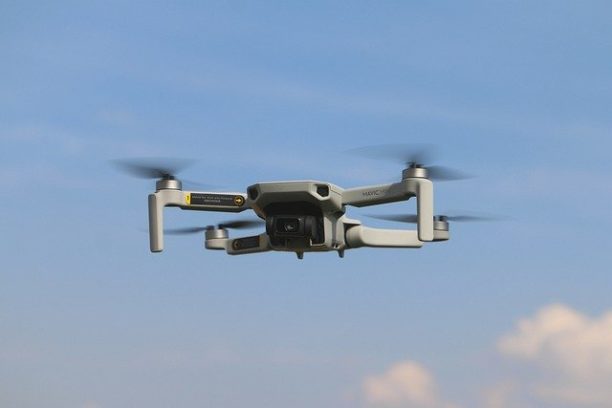
coronavirus and dronesNews and Commentary.  A National Transportation Safety Board (NTSB) report issued last week says that a drone hit a helicopter (probably.)  If it happened, it’s a blot on the drone community for flying in the way of manned aircraft.  But if it happened, it’s further proof that even if drone operators don’t always follow the rules, drones don’t necessarily pose an imminent and life threatening risk to manned aircraft.

According to the NTSB report, a Los Angeles news helicopter was flying in Class G airspace, above 400 feet in altitude under visual rules, when they heard a loud noise.  Originally, the helicopter pilot thought that the noise indicated a bird strike.  Following safety protocols, the pilot made a “precautionary landing.” Examination of the helicopter showed a small dent in the horizontal stabilizer, damage that the NTSB report categorized as “minor.”

Did a Drone Hit the Helicopter?

No drone was found, no drone parts were found, and no drone was seen – but the NTSB report concludes that “Although no drone was located, preventing complete certainty, all the available evidence was consistent with a collision with a small UAS.”

It may be true, although many such incidents have proven later to be caused by other flying objects.  If so, it may indicate that a drone operator wasn’t following regulations, but the report points out that even that isn’t perfectly clear:

The reported collision occurred in Class G airspace, but higher than the 14 CFR Part 107 regulatory maximum of 400 feet agl for small drones. A provision in Part 107 allows for operations above 400 feet if the drone is within 400 feet laterally of a tall structure. Downtown Los Angeles was approximately 1⁄4 mile away from the collision site, therefore, although the altitude and location are not authorized for drones without a waiver, it is not inconceivable that a drone operator could have been operating near the tall buildings, and deviated or exceeded the lateral requirements.

If the collision occured, it’s an unfortunate incident and indicates the need for unmanned traffic systems, which are developing quickly.  It shouldn’t, however, be used as an example proving the inherent danger of drones: or the “criminal” or “clueless” behavior of drone operators.  If a drone hit a helicopter, the event provides one more piece of evidence that when drones do hit manned aircraft, the manned aircraft wins.

The Risk of Drone Collisions

Evaluating drone risk is difficult. Different studies, the vast majority of which rely upon simulation, have evaluated the risk as anything from “minimal” to “extreme.”  These studies don’t provide adequate information on which to base regulation.  In fact, the only data that we do have results on the rare occurrences when drones actually do collide with manned aircraft: and that has yet to show serious damage.

That’s not a coincidence, says Paul Rossi of Nine Ten Drones, a N.C.-based drone training and services company. Rossi has a military background in aviation maintenance: and as an unmanned pilot, he’s focused on safety.  Rossi says that in his experience, “commercial off the shelf (COTS) drones just don’t have the size or weight to cause catastrophic damage to a manned aircraft.”  As systems become more complex, and larger drones become more common, the situation may change – but “the current commonly used aircraft aren’t likely to down a manned aircraft,” says Rossi.

Pilots, manufacturers, and regulators around the world agree with him: but it’s hard to prove.  Real drone incident data is the only way to truly evaluate risk, and right now, it’s hard to come by.  It’s a point that manufacturers like DJI have been making for years as the industry struggles to win over public opinion and reach a point of risk-based regulation.

The Part of the Operator

Nobody in the drone industry would argue that education and a culture of safety shouldn’t be a priority.  The FAA is investing in. education, as is the drone industry.  Community-based organizations like the AMA and commercial organizations all agree that training pilots is important.

Expecting every operator who can purchase a drone to follow the rules exactly isn’t necessarily a realistic goal, however – any more than it is to expect all automobile drivers to follow every traffic law.  It’s a standard that cannot be achieved despite the industry’s best efforts, and it shouldn’t be the requirement before both recreational and commercial drones are enabled to work to their potential.

Miriam McNabb

Miriam McNabb is the Editor-in-Chief of DRONELIFE and CEO of JobForDrones, a professional drone services marketplace, and a fascinated observer of the emerging drone industry and the regulatory environment for drones. Miriam has penned over 3,000 articles focused on the commercial drone space and is an international speaker and recognized figure in the industry.  Miriam has a degree from the University of Chicago and over 20 years of experience in high tech sales and marketing for new technologies.
For drone industry consulting or writing, Email Miriam.

TWITTER:@spaldingbarker

Subscribe to DroneLife here.
Filed Under: Drone News Feeds, News Tagged With: Drone collision, drone hit helicopter, NineTenDrones, NTSB, Paul Rossi

Reader Interactions

Trackbacks

  1. What Happened When (If) a Drone Hit a Helicopter? What the Real Data Shows. | taktik(z) GDI (Government Defense Infrastructure) says:
    July 10, 2020 at 12:52 pm

    […] Source: DroneLife […]

    Reply
  2. What Happened When (If) a Drone Hit a Helicopter? What the Real Data Shows. | taktik(z) GDI (Government Defense Infrastructure) says:
    July 10, 2020 at 12:52 pm

    […] Source: DroneLife […]

    Reply
  3. What Happened When (If) a Drone Hit a Helicopter? What - Go Drones Blog says:
    July 8, 2020 at 9:24 am

    […] The NTSB report that a drone hit a helicopter (probably) in December. What happened in that incident says a lot about drone safety. Source […]

    Reply
  4. What Happened When (If) a Drone Hit a Helicopter? What the Real Data Shows. | Aerial Division says:
    July 8, 2020 at 1:11 am

    […] Source link […]

    Reply
  5. What Happened When (If) a Drone Hit a Helicopter? What the Real Data Shows. ⋆ says:
    July 7, 2020 at 6:30 pm

    […] The complete article is here […]

    Reply
  6. What Happened When (If) a Drone Hit a Helicopter? What the Real Data Shows. - Eledonk Electronics says:
    July 7, 2020 at 4:49 pm

    […] post What Happened When (If) a Drone Hit a Helicopter? What the Real Data Shows. appeared first on […]

    Reply
  7. What Happened When (If) a Drone Hit a Helicopter? What the Real Data Shows. - Drone Shop says:
    July 7, 2020 at 4:22 pm

    […] Source link […]

    Reply
  8. What Happened When (If) a Drone Hit a Helicopter? What the Real Data Shows. | Drone Magazine says:
    July 7, 2020 at 2:54 pm

    […] Source […]

    Reply
  9. What Happened When (If) a Drone Hit a Helicopter? What the Real Data Shows. | Gadgets says:
    July 7, 2020 at 2:37 pm

    […] Source link […]

    Reply

Leave a Reply Cancel reply

Your email address will not be published. Required fields are marked *

Primary Sidebar

LATEST

Airspace Security at 2026 JUNO Awards

RF-Cyber counter-drone system enables non-disruptive protection for large public event D-Fend Solutions announced that its EnforceAir counter-drone system was deployed…

Continue Reading Airspace Security at 2026 JUNO Awards

Will States Be Ready with Counter Drone Tech for the FIFA World Cup?

Funding snafu, other issues delay counter-UAS ramp-up in Maryland, elsewhere By DRONELIFE Features Editor Jim Magill (Editor’s note: This is…

Continue Reading Will States Be Ready with Counter Drone Tech for the FIFA World Cup?

Strait of Hormuz Tensions Highlight a Growing Role for Small Drone Surveillance

Maritime risk, insurance pressure, and degraded navigation signals point to new use cases for commercial UAV systems Ongoing tension in…

Continue Reading Strait of Hormuz Tensions Highlight a Growing Role for Small Drone Surveillance

From Missions to Management: The Shift Defining Public Safety Drone Programs [DRONELIFE Exclusive Interview]

As public safety drone use scales, data, compliance, and coordination define success Public safety drone programs have reached an inflection…

Continue Reading From Missions to Management: The Shift Defining Public Safety Drone Programs [DRONELIFE Exclusive Interview]

Can One Drone Safely Stop Another? Vector and Wrap Think So

Vector teams with Wrap to create killer-drone system By DRONELIFE Features Editor Jim Magill Vector, a Utah-based technology company that…

Continue Reading Can One Drone Safely Stop Another? Vector and Wrap Think So

American Drone Network and BRANDT Partner to Advance Agricultural Drone Spraying

Collaboration focuses on improving application efficiency, product performance, and pilot training American Drone Network (ADN) has announced a new partnership…

Continue Reading American Drone Network and BRANDT Partner to Advance Agricultural Drone Spraying

Honeywell and Odys Aviation Introduce Airborne Layer for Counter-UAS Defense

New system highlights the need for layered protection against evolving drone threats As drone threats continue to evolve, defense strategies…

Continue Reading Honeywell and Odys Aviation Introduce Airborne Layer for Counter-UAS Defense

The Real FCC Drone Debate: Who Controls the Airwaves?

A closer look at how spectrum policy and licensing could determine the future of U.S. drone operations The FCC is…

Continue Reading The Real FCC Drone Debate: Who Controls the Airwaves?

Why Japan’s AAM Roadmap May Be the Most Realistic in the World

A phased, system-wide approach focuses on operations, infrastructure, and public acceptance Japan’s leading AAM provider, SkyDrive, has translated the country’s…

Continue Reading Why Japan’s AAM Roadmap May Be the Most Realistic in the World

DroneShield Opens European Headquarters in Amsterdam Amid Growing Counter-Drone Demand

DroneShield has officially opened its new European headquarters in Amsterdam, The Netherlands. The move strengthens the counter-drone company’s operational presence…

Continue Reading DroneShield Opens European Headquarters in Amsterdam Amid Growing Counter-Drone Demand

Secondary Sidebar

Footer

SPONSORED

Inspired Flight Gremsy IF800 VIO F1 drones geo week

What Will It Take to Strengthen U.S. Drone Manufacturing? A Conversation with Inspired Flight’s CEO

Global Mapper Mobile data collection

Collection Ground Control Points with Global Mapper Mobile

Military Drone Mapping Solutions

How SimActive’s Correlator3D™ is Revolutionizing Military Mapping: An Exclusive Interview with CEO Philippe Simard

Photogrammetry Accuracy Standards

SimActive Photogrammetry Software: Enabling Users to Meet Accuracy Standards for Over 20 Years

NACT Engineering Parrot ANAFI tether indoor shot

Smart Tether for Parrot ANAFI USA from NACT Engineering

Blue Marble, features global mapper, features Blue Marble

Check Out These New Features in Global Mapper v25 from Blue Marble

About Us | Contact Us | Advertise With Us | Write for Us | Privacy Policy | Terms of Service

The Trusted Source for the Business of Drones.

This website uses cookies and third party services. By clicking OK, you are agreeing to our privacy policy. ACCEPT

Manage consent

Privacy Overview

This website uses cookies to improve your experience while you navigate through the website. Out of these, the cookies that are categorized as necessary are stored on your browser as they are essential for the working of basic functionalities of the website. We also use third-party cookies that help us analyze and understand how you use this website. These cookies will be stored in your browser only with your consent. You also have the option to opt-out of these cookies. But opting out of some of these cookies may affect your browsing experience.
Necessary
Always Enabled
Necessary cookies are absolutely essential for the website to function properly. These cookies ensure basic functionalities and security features of the website, anonymously.
CookieDurationDescription
cookielawinfo-checkbox-analytics11 monthsThis cookie is set by GDPR Cookie Consent plugin. The cookie is used to store the user consent for the cookies in the category "Analytics".
cookielawinfo-checkbox-functional11 monthsThe cookie is set by GDPR cookie consent to record the user consent for the cookies in the category "Functional".
cookielawinfo-checkbox-necessary11 monthsThis cookie is set by GDPR Cookie Consent plugin. The cookies is used to store the user consent for the cookies in the category "Necessary".
cookielawinfo-checkbox-others11 monthsThis cookie is set by GDPR Cookie Consent plugin. The cookie is used to store the user consent for the cookies in the category "Other.
cookielawinfo-checkbox-performance11 monthsThis cookie is set by GDPR Cookie Consent plugin. The cookie is used to store the user consent for the cookies in the category "Performance".
viewed_cookie_policy11 monthsThe cookie is set by the GDPR Cookie Consent plugin and is used to store whether or not user has consented to the use of cookies. It does not store any personal data.
Functional
Functional cookies help to perform certain functionalities like sharing the content of the website on social media platforms, collect feedbacks, and other third-party features.
Performance
Performance cookies are used to understand and analyze the key performance indexes of the website which helps in delivering a better user experience for the visitors.
Analytics
Analytical cookies are used to understand how visitors interact with the website. These cookies help provide information on metrics the number of visitors, bounce rate, traffic source, etc.
Advertisement
Advertisement cookies are used to provide visitors with relevant ads and marketing campaigns. These cookies track visitors across websites and collect information to provide customized ads.
Others
Other uncategorized cookies are those that are being analyzed and have not been classified into a category as yet.
SAVE & ACCEPT