
Barely a week goes by without the UK media rolling out yet another ‘near-miss’ drone collision story. Fear sells papers and the threat of imminent death makes for compelling clickbait, so it’s to be expected.
However, when that narrative threatens to have a detrimental impact on an industry still finding its feet we should all be worried.
This week, the Press Association has released an analysis of data from the UK Airprox Board, the body responsible for collating and assessing near miss incidents between aircraft in UK airspace.
The headline, understandably, is that reports of near misses between drones and manned aircraft have tripled in the last three years. And there’s no disputing that.
You can read the syndicated story in the Telegraph, the Evening Standard, BT, Irish News and The Daily Mail, to name a few.
29 such incidents were reported in 2015. 71 were reported in 2016. 92 incidents were recorded in 2017, according to Press Association analysis of UK Airprox Board (UKAB) data.
Before we dig into those numbers and supply some details that were left out of the Press Association’s analysis, it’s obvious that any amount of near misses is too many. There is no excuse for drone pilots to be crossing paths with manned aircraft, particularly near airports during takeoff and landing procedures.
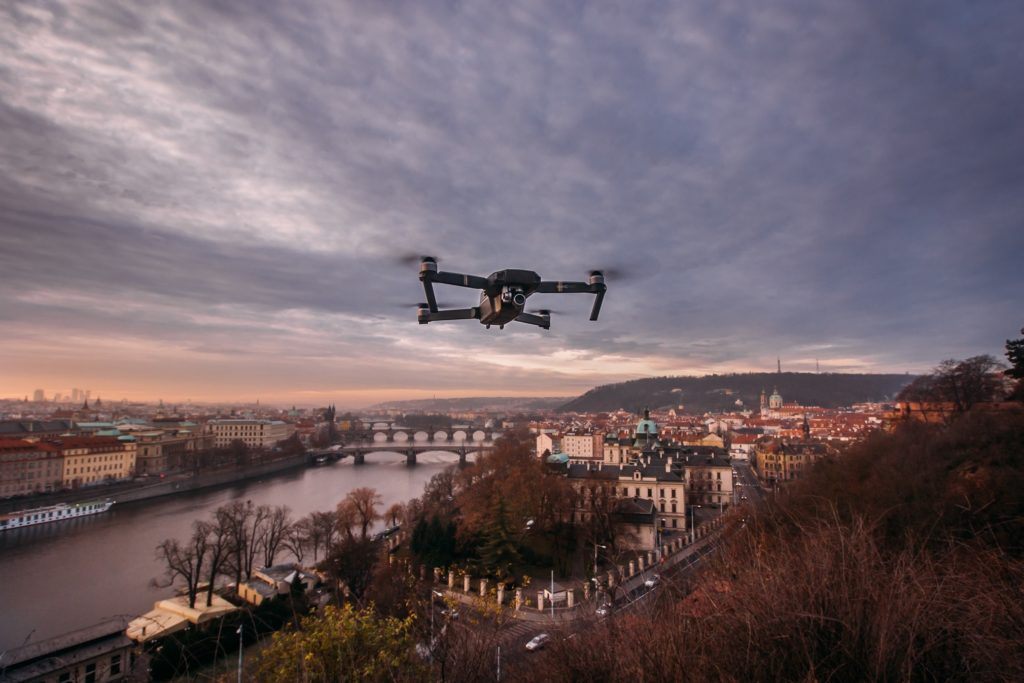
Triple Sounds Worse Than It Is
Assuming that these reports of near misses are accurate – (pilots have been known to mistake drones for plastic bags and bats in the past) – simply saying that the number has tripled since 2015 is a true statement that doesn’t tell the whole story.
For starters, the growth in the consumer drone market has been huge since 2015. These incidents have tripled from a near-standing start.
The UK’s Civil Aviation Authority (CAA) estimated that Christmas 2017 would lead to 1.5 million more drones in UK skies. The Christmas before, the same body stated that 3 million people in the UK were considering purchasing a drone.
Even if those estimated were wildly inaccurate, we can safely say that the number of drone pilots in the UK numbers in the tens of thousands, maybe even more. The CAA certainly believes there is a huge amount of drones out there.
Let’s say that the number of drones sold to UK consumers lies in the millions since 2015. 29, 71 and 92 near misses in 2015, 2016, and 2017 respectively does not suggest that drone pilots are, on the whole, a menace, a threat or irresponsible. This is a tiny, tiny minority we are talking about. Rarely would the coverage suggest this to be the case.
UK air traffic peaked at around 2.5 million total flights in 2017.
That means that last year each UK flight had a 0.004% chance of being involved in a near miss with a drone – if our maths is correct. This is not the epidemic the headlines would lead you to believe. Your death, though inevitable (sorry), is still more likely to occur from you being struck by lightning. We’re talking about ridiculous unlikely numbers here.
And that’s only in terms of the chance of a collision. That’s before we’ve even talked about the potential danger of a collision.
Read more: Collisions: How to Break the Cycle of Conjecture, Fear & Drone Negativity
One-sided Sensationalism
Unfortunately for professional and enthusiast drone pilots flying in the UK, coverage of these incidents is only going one way at the moment. With the UK Government’s Drone Bill expected in the coming weeks, realism is required more than ever.
Last year, a (let’s say ‘interesting’) study part-funded by the UK’s Department for Transport found that a drone weighing 2kg could critically damage a plane windscreen in the event of a mid-air collision. You can read more about that study here (Concern Over UK Drone Collision Study is Justified). It’s safe to say that the DfT study set the media tone rather than offer reasonable conclusions.
A more recent CAA report appears to offer more context and common sense on the matter.
“There have been seven confirmed cases of direct in-flight contact between drones and civil or military manned aircraft worldwide. There have been no known collisions between small drones and manned aircraft in the UK. However, the number of occasions where pilots have reported suspected drones in proximity to their aircraft in the UK is increasing.” – CAA Report: Drone Safety Risk: An assessment, 2018
The report continues to add some much-needed substance to a topic which has so far been awash with nonsense in the UK media…
The CAA has undertaken an assessment of available information about the likelihood
of an unintentional drone collision and the severity of any possible impact between
an aircraft and a smaller unmanned vehicle (defined as under 2kg in this report). The
findings are:– The drones most likely to end up in proximity to manned aircraft are smaller
drones, typically of 2kg or less, flown by operators who either do not know the
aviation safety regulations or have chosen to ignore them.– It is considered unlikely that a small drone would cause significant damage to a
modern turbo-fan jet engine; even if it did, a multi-engine aircraft would still be
likely to be able to land safely.– The likelihood of a small drone being in proximity of a passenger aircraft when it is
travelling fast enough to potentially damage a windscreen is currently observed to
be about 2 per million flights, where proximity means within visual line of sight of
the aircraft.– The likelihood of a small drone actually hitting a passenger aircraft windscreen at
sufficient speed to rupture it is very much smaller than the probability of it being in
the proximity of an aircraft.– The windscreens of small helicopters and light aircraft are more susceptible to
rupture if struck by a small drone, even when flying below normal cruising speed.– Helicopters face more particular risks because of the additional susceptibility of
helicopter rotors to damage from a collision with a drone, and their operating
patterns which typically involve lower-level flying and take-off and landing from a
range of sites.
Read more: Drone Manufacturers Alliance Comments on Drone Collision Study
Choosing Facts Carefully
The widely published Press Association story mentions the DfT study without acknowledging the widespread criticism it received from the industry.
It also states that “Available for as little as £30 and often boasting built-in cameras, sales of the gadgets have risen sharply in recent years.”
And it is here that we get into dangerous territory. Implying that £30/$40 drones are capable and likely to knock passenger planes out of the sky is both absurd and irresponsible.
The vast majority of drones available for under $500 are going to struggle to break the 400ft altitude limit, let alone weigh enough to pose a significant risk to a manned aircraft.
The reality is that the overwhelming majority of drone pilots spend large amounts of money on their aircraft and don’t put them in harm’s way intentionally.
The Press Association article also fails, much as the DfT study did, to recognize that drones are getting smaller. The most popular models on the market weigh under 1kg, not to mention new releases from DJI such as the Mavic Air – less than half of the weight category mentioned in the widely published piece.
It’s not too much of a jump to suggest that they will continue, to a point, to get lighter and smaller in future.
Final Thoughts
There is no denying that the number of near-misses between drones and manned aircraft in the UK is on the rise, just as it is in most countries around the world.
However, news outlets – particularly one as established as the Press Association – have a duty to provide more context when reporting these facts. They also have a duty to report in a balanced manner, with input from drone industry leaders, not just retired pilots who can’t help but provide a one-sided opinion.
The point that these reports fail to mention is that near-misses are outliers, not incidents representative of the majority of pilots. We know that, but does the public?
Fear sells papers and attracts clicks, which explains why this story has been published by so many outlets. Unfortunately fear also gets in the way of our capacity to reason. We need an objective view of the situation in our skies – This isn’t helping.

Malek Murison is a freelance writer and editor with a passion for tech trends and innovation. He handles product reviews, major releases and keeps an eye on the enthusiast market for DroneLife.
Email Malek
Twitter:@malekmurison
Subscribe to DroneLife here.
[…] Let's say that the number of drones sold to UK consumers lies in the millions since 2015. 29, 71 and 92 near misses in 2015, 2016, and 2017 respectively does not suggest that drone pilots are, on the whole, a menace, a threat or irresponsible. This is a tiny, tiny minority we are talking about. Rarely …See Original Article […]