(Source: Washington Post)
 As the latest revolutionary digital technology takes off, entrepreneurs are finding themselves battling federal regulators for permission just to experiment with new applications.
This time, it’s not the FCC (smartphone apps), the FTC (the Internet of Things), the FDA (genetic testing), the Department of Transportation (driverless cars), the Federal Reserve (bitcoin), state and local utility commissions (the sharing economy) or the SEC (crowdfunding).
This time it’s the Federal Aviation Administration, which has been struggling since 2012 to develop rules for safely integrating unmanned aerial vehicles (UAV), aka drones, into U.S. airspace.
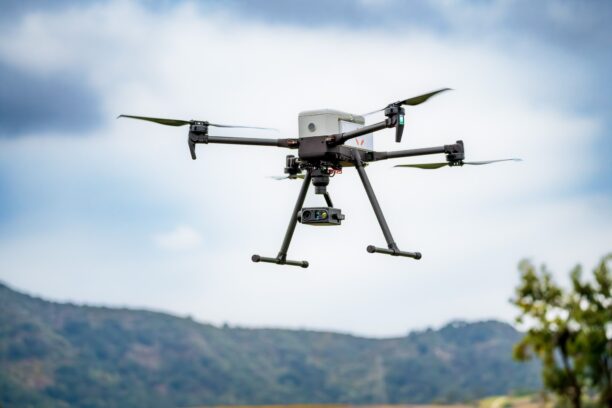
To be clear, we’re not talking here about the lethal, multi-million dollar military aircraft that are changing the nature of warfare. We’re talking about small, consumer-friendly devices that sell today to hobbyists and others for less than $300.
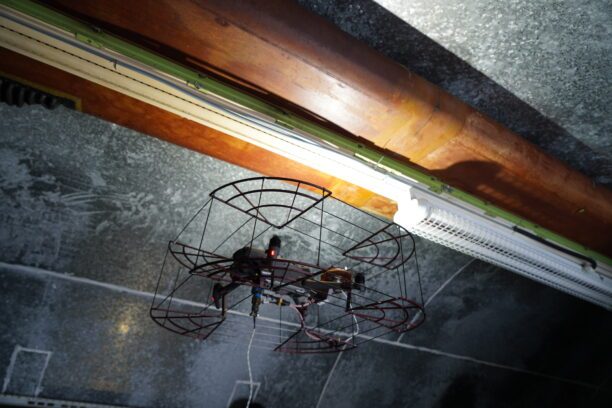
That’s about the same as the price of a smartphone, and the similarity is no coincidence. Most of the parts used in today’s fast-growing drone market come from smartphone component suppliers. The CPUs, GPS hardware, sensors, cameras, accelerometers, gyroscopes and even software are the same. And drones often use phones and tablets as their remote control. UAVs are basically flying smartphones.
So as the production of over a billion smartphones relentlessly drives down the price of these components through economies of scale, drones are set to benefit from a similar pattern of price/performance improvement, following the same faster-cheaper-smaller principle that drives all digital products and services. Once large-scale adoption begins, the sky’s the limit.
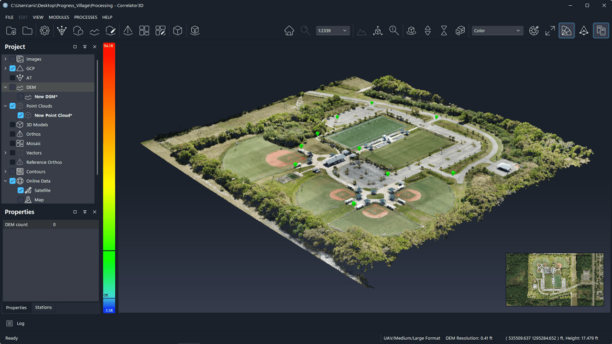
What will we do with our drones? UAVs have already proven themselves ready to disrupt everything from agriculture and natural resource management to law enforcement, delivery services, photography and mapping. Amazon, for one, has already demonstrated the feasibility of local delivery by drone. Widespread use could revolutionize retail and take-out food distribution, reducing traffic, pollution and fossil fuel consumption.
The FAA conservatively estimates that, within a decade, private drones will constitute a $90 billion industry. Already, according to the Consumer Electronic Association, 2014 sales of UAVs are forecast at $84 million and 250,000 units. By 2018, CEA predicts consumer drone sales will approach $300 million and about a million units.
Pretty impressive, especially for a technology that is technically illegal.
That’s right: for now, consumers may only operate UAVs below 400 feet, and only for noncommercial uses. All other uses are prohibited. (After a small drone crashed in New York, the FAA has argued inconsistently that drones may not be operated anywhere near major airports.)
That leaves drone enthusiasts operating in something close to the opposite of the largely “permissionless” ecosystem that has spawned much of the digital revolution elsewhere. Even testing new UAV applications requires a special exemption from the FAA—hardly the best environment for developing new products and services.
And the FAA hasn’t been shy about enforcing its prohibition. It regularly sends cease-and-desist letters for uses it deems commercial or dangerous. A Dutch tourist was recently fined over $3,000 for crashing a drone at Yellowstone National Park.
That could soon change. In 2012, Congress ordered the FAA to develop rules that would allow commercial UAVs to operate safely in U.S. airspace by 2015. (Safety, obviously, is key.)
But we’re still waiting for the rules. The agency has already missed several self-imposed deadlines, and in June a government audit concluded the agency will miss Congress’s deadline. Rules for small drones were promised three years ago, with the FAA now saying they will come later this year.
That delay could prove disastrous. Typically, the United States is first to explore the potential for new digital inventions. But with drone-based agricultural and delivery services already taking off in Europe and elsewhere, the United States could lose its edge in developing new markets for drones and their still largely unknown uses.
Though the FAA has yet to set a date for its new rules, there are small signs of progress. Late last month, for example, the agency granted the application of some filmmakers for an exemption to use UAV-mounted cameras on set.
That may be the first step toward freeing up drones for news gathering and commercial services including delivery. With the filmmaking exemption granted, applications for other commercial use exemptions are now increasing.
But even with eventual federal safety rules in place, the drone market will still face regulatory obstacles. In the absence of FAA guidelines, state and even local governments have leapt into the breach, passing confusing and incompatible regulations — and often prohibitions — on drone use.
Some communities have been motivated by obvious safety concerns, but more often the proscriptions are motivated by unease about privacy.
So far, the privacy concerns have mostly been speculative. UAVs, like nearly every other mobile device, have high-definition cameras that continue to improve exponentially in both quality and capacity. So, like Google Glass and other new video technologies, UAVs tend to invoke a visceral “creepy” response in consumers, who imagine the worst possible uses such technologies might be put to against unsuspecting victims. They imagine drones hovering at their windows, back yards, or public protests.
Continue Reading at WashingtonPost.com…

Alan is serial entrepreneur, active angel investor, and a drone enthusiast. He co-founded DRONELIFE.com to address the emerging commercial market for drones and drone technology. Prior to DRONELIFE.com, Alan co-founded Where.com, ThinkingScreen Media, and Nurse.com. Recently, Alan has co-founded Crowditz.com, a leader in Equity Crowdfunding Data, Analytics, and Insights. Alan can be reached at alan(at)dronelife.com

Leave a Reply